2025 LLM Career Transition Roadmap: A Three-Phase Plan from Foundations → Frameworks → Real-World Projects

A three-phase LLM development learning path: foundations, frameworks & skills, and real-world projects.
This article presents a systematic roadmap for transitioning into LLM application development across three phases: Phase 1 builds foundations in Python, neural networks, and Transformer architecture (2-4 weeks); Phase 2 covers mastering LangChain and LlamaIndex frameworks plus three core skills — RAG, Agent development, and model fine-tuning (4-8 weeks); Phase 3 completes the skills loop through hands-on projects like intelligent customer service, document analysis, and automated Agents. The article highlights the massive AI talent gap and argues that now is the optimal window for career transition.
With the explosive growth of large language model (LLM) technology, more and more developers and professionals are eyeing career transition opportunities in this field. But faced with a complex technology stack — LangChain, RAG, Agent, fine-tuning… many people don't know where to start.
This article outlines a proven learning path for LLM application development, divided into three phases to help you systematically plan your transition and avoid unnecessary detours.
Phase 1: Build a Solid Foundation in LLM Fundamentals
The first step in any technology transition is building strong fundamentals, and the LLM field is no exception. This phase requires mastering three core knowledge areas:
-
Python Programming: The universal language of AI and the starting point for everything. Proficiency in data structures, object-oriented programming, and commonly used libraries (NumPy, Pandas, etc.) is essential. Python has become the language of choice in AI not only because of its clean, readable syntax, but because it boasts the most comprehensive machine learning ecosystem — from data processing (Pandas, NumPy) to deep learning frameworks (PyTorch, TensorFlow) to LLM application development (LangChain, Transformers library). Nearly every AI toolchain supports Python as its primary language.
-
Neural Network Fundamentals: Understanding core concepts like feedforward networks, backpropagation, loss functions, and optimizers is a prerequisite for understanding LLMs. Backpropagation is the core mechanism of neural network training — it uses the chain rule to propagate errors from the output layer back to the input layer, computing each parameter's contribution to the final loss (i.e., gradients), which optimizers (such as Adam or SGD) then use to update parameters. Understanding this process is crucial for later grasping parameter update strategies in model fine-tuning.
-
Transformer Architecture: The foundation of all mainstream LLMs today (GPT, BERT, LLaMA, etc.). Deeply understanding key components like Self-Attention, Multi-Head Attention, and Positional Encoding is essential. The Transformer architecture was first introduced by the Google team in the 2017 paper "Attention Is All You Need," originally for machine translation tasks. Its core innovation was completely abandoning the previously dominant Recurrent Neural Network (RNN) and Convolutional Neural Network (CNN) structures, relying entirely on attention mechanisms to capture long-range dependencies in sequences. Self-attention allows the model to attend to all other positions in the input sequence when processing each token, computing attention weights through Query, Key, and Value matrix operations. Multi-Head Attention splits the attention computation into multiple parallel "heads," enabling the model to learn information from different representation subspaces. Positional Encoding compensates for Transformer's lack of sequential order awareness by generating unique encoding vectors for each position using sine and cosine functions.
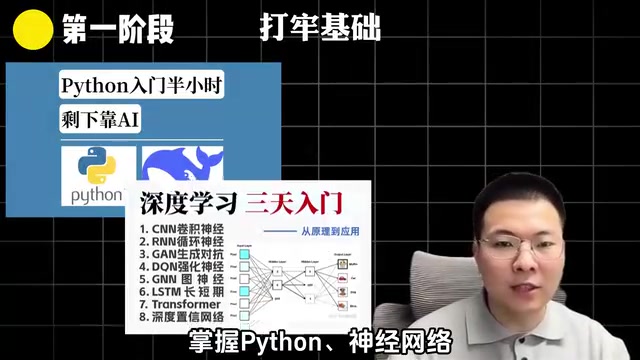
This phase doesn't require you to become a theoretical expert, but you must achieve a level where you "know not just the what, but the why." Plan to spend 2-4 weeks of focused study to build a solid foundation for the framework learning and hands-on development that follows.
Phase 2: Master Two Major Frameworks and Three Core Skills
Once your foundation is solid, Phase 2 represents the critical inflection point of the entire LLM transition path. You need to master two major frameworks and three key skills simultaneously.
Two Major Frameworks: LangChain and LlamaIndex
1. LangChain — The Leading Framework for LLM Application Development
LangChain is used to build Agent logic chains, providing a complete set of capabilities including Prompt management, chain-based invocations, tool integration, and memory management. Combined with LangGraph, you can build complex multi-step Agent workflows, while LangSmith provides a complete toolchain for monitoring, debugging, and evaluation.
LangChain was open-sourced by Harrison Chase in October 2022 and quickly became one of the most popular frameworks in LLM application development. Its design philosophy is to modularize and chain the LLM invocation process — developers can assemble Prompt templates, model calls, output parsing, tool usage, and other steps like building blocks. LangGraph is a library within the LangChain ecosystem specifically for building stateful, multi-step Agent workflows. Based on the concept of graphs, it allows developers to define nodes (processing logic) and edges (transition conditions), enabling complex Agent behavior patterns like loops and conditional branching. LangSmith is the accompanying observability platform, providing trace tracking, Prompt version management, automated evaluation, and other enterprise-grade features to help developers rapidly transition from prototypes to production environments.
2. LlamaIndex — The Go-To Tool for External Data Indexing and Retrieval
When you need LLMs to "understand" enterprise private documents, databases, or knowledge bases, LlamaIndex is the best choice. It offers mature solutions for data connection, index construction, and query optimization.
LlamaIndex (originally named GPT Index) was created by Jerry Liu in 2022, focusing on solving the connection problem between LLMs and external data. Its core workflow includes: data connection (supporting hundreds of data sources including PDF, Word, databases, APIs, etc.), data indexing (splitting documents into chunks, generating vector embeddings, and storing them in vector databases), and query engines (retrieving the most relevant document fragments based on user questions and passing them to the LLM for answer generation). LlamaIndex provides multiple index structures, including vector indexes, list indexes, tree indexes, and keyword indexes, allowing developers to choose the optimal solution based on data characteristics and query requirements.
Three Core Skills: RAG, Agent, and Model Fine-tuning
These three skills directly correspond to the core requirements of current AI positions:
-
RAG (Retrieval-Augmented Generation): Enhances LLM response quality by retrieving from external knowledge bases, effectively addressing model hallucination and knowledge currency issues. This is currently the most widely deployed enterprise technology solution, and almost every LLM job description mentions it. The concept of RAG was formally introduced by Meta AI (formerly Facebook AI Research) in a 2020 paper. Its core idea is to retrieve relevant document fragments from an external knowledge base before the LLM generates an answer, injecting these fragments as context into the Prompt so the model generates answers based on real data. RAG effectively addresses three major LLM pain points: hallucination (the model fabricating non-existent information), knowledge currency (training data has a cutoff date), and insufficient domain knowledge. RAG technology has evolved into multiple advanced paradigms, including Naive RAG, Advanced RAG (introducing re-ranking, query rewriting, and other optimizations), and Modular RAG (modularizing the RAG pipeline for more flexible composition).
-
Agent Development: Giving LLMs the ability to autonomously plan, invoke tools, and execute tasks. From simple single-turn tool calls to complex multi-Agent collaboration, Agent development is the key step in evolving LLMs from "chatbots" to "intelligent assistants." The concept of AI Agents originates from long-standing research on autonomous intelligent agents in the AI field, but has gained entirely new implementation paths in the LLM era. Current mainstream Agent architectures typically include four core modules: Planning — decomposing complex tasks into executable sub-steps; Memory — including short-term working memory and long-term experiential memory; Tool Use — calling external tools like search engines, code executors, and APIs; Action — executing specific operations and observing results. Typical Agent reasoning frameworks include ReAct (Reasoning + Acting, alternating between reasoning and action), Plan-and-Execute (plan first, then execute), and multi-Agent collaboration frameworks like AutoGen and CrewAI.
-
Model Fine-tuning: Customized training of foundation models for specific domains or tasks, including full-parameter fine-tuning, LoRA, QLoRA, and other mainstream methods. Model fine-tuning is the core application of transfer learning in the LLM era. Full-parameter fine-tuning requires updating all model parameters, demanding extremely high computational resources (e.g., fine-tuning a 7B parameter model may require tens of GB of VRAM). To address this, Parameter-Efficient Fine-Tuning (PEFT) methods emerged. LoRA (Low-Rank Adaptation) is the most representative approach, proposed by Microsoft in 2021. Its core idea is to freeze the pre-trained model weights and only train injected low-rank decomposition matrices, typically requiring training of only 0.1%-1% of the original model's parameters while achieving results close to full-parameter fine-tuning. QLoRA further introduces 4-bit quantization on top of LoRA, making it possible to fine-tune billion-parameter models on a single consumer-grade GPU (such as RTX 4090), dramatically lowering the hardware barrier for fine-tuning.
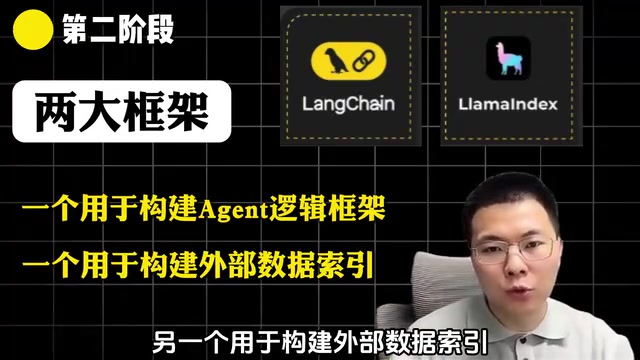
This phase should take 4-8 weeks. Learn by doing — each skill should have corresponding code practice. Reading documentation without writing code is time wasted.
Phase 3: Project-Driven Practice to Complete the Skills Loop
After learning theory and frameworks, real-world projects are the only true measure of your learning outcomes. Interviewers don't care what you studied — they care what you built. Choose projects from these common LLM application scenarios:
-
Intelligent Customer Service System: Build a Q&A system based on enterprise knowledge bases using RAG technology. The typical tech stack for such projects includes: using LlamaIndex or LangChain for document parsing and vectorization, selecting vector databases like Milvus, Pinecone, or Chroma for embedding storage, retrieving relevant document fragments through semantic search, and finally using an LLM to generate natural language answers. Key challenges include retrieval accuracy optimization and context management in multi-turn conversations.
-
Document Analysis Assistant: Use LlamaIndex to implement intelligent parsing and Q&A for multi-format documents.
-
Automated Workflow Agent: Use LangGraph to build intelligent agents capable of autonomously completing multi-step tasks. For example, building an Agent that can automatically conduct market research — it can independently search for information, organize data, and generate analytical reports, all without human intervention.
-
Vertical Domain Chatbot: Create specialized assistants for specific industries (such as healthcare, legal, or finance) through model fine-tuning.
Each project should include the complete development lifecycle: Requirements Analysis → Architecture Design → Code Implementation → Testing & Evaluation → Deployment. Being able to execute this entire pipeline is sufficient for most AI application development positions on the market. For the deployment phase, familiarize yourself with Docker containerized deployment, building inference service interfaces with FastAPI/Flask, and basic model inference optimization techniques (such as vLLM for accelerated inference, quantized model deployment, etc.) — these are essential skills for turning prototypes into production-grade applications.
The AI Talent Gap Continues to Widen — The Transition Window Is Still Open
From a macro perspective, talent demand in AI is growing rapidly. According to multiple reports by CCTV (China Central Television), the AI talent gap in China is projected to reach 5 million by 2030. This means that over the next 5-6 years, professionals with LLM application development capabilities will remain in a sustained state of demand exceeding supply.
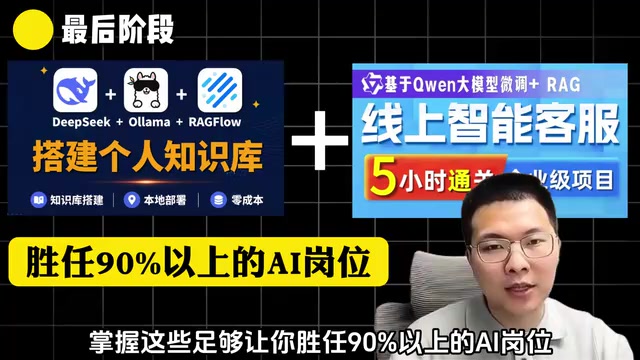
In terms of job types, current market positions related to LLMs are primarily divided into several tiers: AI Application Development Engineers (focused on RAG and Agent development, relatively lower barrier to entry, highest demand), AI Algorithm Engineers (focused on model training and fine-tuning, requiring strong mathematics and deep learning foundations), and AI Architects (responsible for overall AI system architecture design, requiring full-stack capabilities). For most career transitioners, AI Application Development Engineer is the most realistic entry point, with salary levels typically ranging from 25K-50K RMB per month (in tier-1 cities), with clear upward trajectory as experience accumulates.
Whether you're looking to introduce AI capabilities into your current role to boost efficiency, or planning a complete career change into the AI field, now is a worthwhile time window to invest in. The key is taking action and staying consistent — don't be a three-minute enthusiast watching from the sidelines; become a dedicated learner who practices.

Final Thoughts: Maintaining Learning Momentum Matters More Than Starting
The learning curve for LLM technology is real, but it's far from insurmountable. Following the three-phase path of "Foundations → Frameworks/Skills → Real-World Projects," combined with systematic learning resources, most developers with programming experience can complete an initial transition within 2-3 months.
It's worth noting that AI technology iterates extremely fast — learning is never a one-and-done affair. Maintaining sensitivity to new technologies, continuously following version updates to frameworks like LangChain and LlamaIndex, and staying current with the latest advances in RAG and Agent development are essential for maintaining competitiveness in this rapidly evolving field. Take 2024-2025 as an example: the RAG space has seen new paradigms like GraphRAG (knowledge graph-based retrieval augmentation) and Agentic RAG (integrating Agent capabilities into RAG pipelines); the Agent space has seen important developments like MCP (Model Context Protocol, standardizing tool invocation interfaces) and multi-Agent frameworks. Maintaining a learning rhythm, regularly following arXiv papers, trending GitHub projects, and tech community discussions, is key to staying competitive.
In 2025, the LLM track still offers significant opportunities — but the window for those who hesitate is closing fast.
Related articles
 Tutorials
ChatGPT Plus Subscription Guide: Are GPT-5.5, image-2, and Codex Worth the Upgrade?
A detailed look at ChatGPT Plus features — GPT-5.5, image-2, and Codex — with a Plus vs Pro comparison and a complete step-by-step subscription guide for users outside the US.
 Tutorials
Harness AI Engineering in Practice: Using Claude Code to Master Enterprise-Level E-Commerce Development
Deep dive into Harness AI Engineering: master enterprise e-commerce development with Claude Code using the Rules, Skills, Wiki, and Changes framework.
 Tutorials
Cursor + Codex Dual-IDE Collaboration: A Practical Methodology for Open-Source Project Customization
A complete methodology for open-source project customization based on real-world experience, detailing the Cursor+Codex dual-IDE workflow, seven-stage process, MVP validation, and AI source code reading techniques.