Deep Dives
In-depth AI analysis, industry observations, and technical insights — slow down and read.
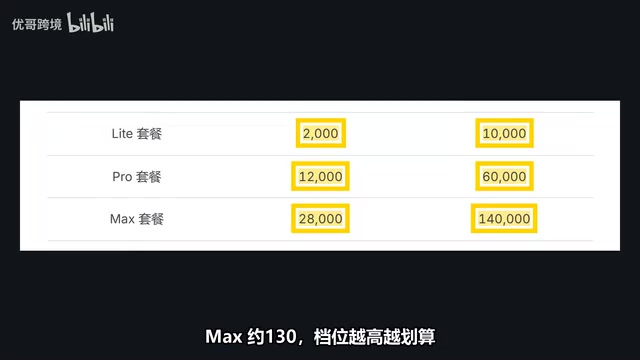
Domestic AI Coding Plans Compared: How to Choose Between Zhipu, Kimi, and MiniMax
Compare Zhipu GLM Coding Plan, Kimi Code, and MiniMax M-Plan on pricing, points/quota rules, and model changes, plus scenario-based selection advice.

JetBrains Open-Sources AI IDE ThinkRail: Multi-Workspace Parallelism and Spec-Driven Development
ThinkRail is an open-source agentic IDE from the JetBrains Innovation Hub built on Pi, featuring multi-workspace parallelism, Git worktree isolation, spec-driven development, and diff review. Completely free under Apache 2.0.

Higgsfield: How AI Video Is Moving from the 1-Minute to the 10-Minute Era
Higgsfield shares AI video breakthroughs from 1 minute to over 10 minutes, covering Astra's text rendering, external tool use for 3D modeling, voice-to-movie, and productivity gains for small creative teams.

Stack Overflow for Agents Triples Registrations via ChatGPT Plugin
Stack Overflow VP of Product Alex Lado reveals that Stack Overflow for Agents tripled registrations overnight after joining the ChatGPT plugin marketplace. This article breaks down its full path from knowledge intelligence layer positioning to building the product with Codex in two weeks and choosing plugin distribution, offering a reference for AI product growth.
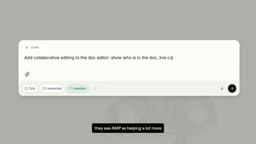
Amp Leans on OpenAI Models to Take AI Agents Beyond Code
Amp team reveals its AI Agent vision: beyond coding, covering the full workflow. OpenAI models handle most tokens, Sign in with ChatGPT boosts quota, and super-fast models plus email automation point toward general work agents.

How Azure Front Door Uses a New DDoS Defense Paradigm in the AI Era
Azure Front Door principal engineer Karthik reveals a new AI-era DDoS defense paradigm: shifting from attack-vector mitigation to holistic resource protection using probabilistic data structures and JA4 signatures for real-time good/bad traffic distinction, already live internally and patent-pending.

AI-Generated Pixel Character Animation: Frame Planning, Consistency Tips, and Godot Reskinning in Practice
This tutorial covers the complete workflow for AI-generated pixel character animation: frame planning, consistency tips, copyright notes, manual retouching, Godot import, state switching, and enemy asset creation. Learn to keep seven animations consistent with the same character, avoid common pitfalls, and verify in-game.

A Complete Guide to Local RAGFlow Deployment and RAG in Practice
A complete RAGFlow learning path based on a Bilibili tutorial outline: Linux VM and Docker local deployment, knowledge base setup, chat and search features, Agent workflow nodes, Ollama local model integration, web embedding, and HTTP/Python API calls, plus the special aspects of MCP support.

Multi-Agent Context Passing: The Lossy Compression Problem Every Interviewer Asks About
Multi-agent interview question: how is context passed? Bilibili creator Peng Yu breaks down four passing strategies, the four-word principle of externalize/curate/compress/isolate, a seven-field summary checklist, and three anti-patterns.

The Complete DeepSeek Harness Tutorial: From Installation to Advanced Agent Modes
A complete DeepSeek Harness tutorial: Node.js installation, API Key setup, workspace management, and a deep dive into Standard, PTC, and Collection-Resolution modes with real-world Token comparisons.

Doubao Agent Complete Beginner's Tutorial: Build Intelligent Agent Workflows from Scratch
Doubao Agent beginner's tutorial: a PPT-to-PDF comparison reveals the essential difference between chat AI and agents, covering Doubao's plug-and-play setup, Feishu connectors, skill marketplace, and cloud computer, plus a 28-point course system.

Qwen Opensources Investigation Traces: How Open-Weight Models Prove Their Innocence
Qwen open-sources investigation traces of model anomalies, including raw tokens and minimal reproduction scripts. Developers found strange links when running Qwen3.8 locally; prefilling reliably reproduces it. This article analyzes the auditability value of open-weight models and its practical significance for developers.

The Doctoral Student's Method Research Dilemma: When Even the Advisor Has No Answers
A healthcare ML PhD student on Reddit describes an advisor who can't define method research, limited lab data, and aggressive feedback. The article analyzes the blurry line between method research and incremental improvement, explores method innovation under small data, and offers practical advice on self-training without guidance and communicating with advisors.

Breaking the VRAM Bottleneck: ZeRO-3 + LoRA Enables Large-Scale Self-Distillation
Reddit open-source project sdft_zero3 uses LoRA shared backbone and dual adapters to enable large-scale self-distillation under ZeRO-3, solving the EMA teacher VRAM bottleneck.

v0.40.12 Pre-release: MLX Inference Speedup and Gemma Vision Detail Optimization
v0.40.12 pre-release breakdown: MLX backend boosts prompt speed for gemma/flint/laguna, improves small-image detail in Gemma 4 compact vision tower, adds DFlash2, and syncs llama.cpp to b11901.

The Oldest GUI Apps Still Running on Windows 11
Starting from a Hacker News thread, explore why Windows 11 can still run GUI programs from decades ago, analyzing Win32 compatibility mechanisms, divergent community views on backward compatibility, and lessons in long-termism for developers.

Claude Tag API Released: Manage Claude in Slack Channels with Code
The Claude Tag API beta is released. Enterprise admins can enable Claude per Slack channel via code, set instructions and models, define guest policies, and mount Access bundles for code-based, scalable, and compliant AI assistant management.

OpenAI Unveils Three More Major Scientific Discoveries, Introduces "Shepherd" Expert Review Mechanism
OpenAI unveils three major discoveries in math, computer science, and physics, introducing external experts as "shepherds" to guide research—an analysis of this strategic shift and what remains unverified.

Neuron Explorer Tool Released: Inspect and Directly Edit Every Neuron in Qwen3.5-4B
Neuron Explorer for Qwen3.5-4B is a new tool for neuron-level interpretability: observe each neuron's state and edit it directly. A look at its positioning, value, and limits.

Single RTX 6000 Pro Runs Qwen3.8-Flash-Next at NVFP4, Reaching 184 tok/s
A Hacker News share shows a single RTX 6000 Pro running Qwen3.8-Flash-Next at NVFP4 reaching 184 tok/s. This article analyzes what the speed means, the trade-offs of NVFP4 quantization, and the limits of single-card local deployment, reminding readers of comparability issues caused by missing test parameters.