500+ AI Research Tools: Automating the Entire Research Workflow

An open-source repo of 500+ AI tools automates the entire academic research pipeline.
An open-source repository cataloging over 500 active AI research tools is gaining attention for systematically covering every stage of academic research—from literature discovery and automated reviews (powered by RAG and Stanford's STORM) to code generation, experiment reproduction, and LaTeX typesetting. With contributions from Microsoft, ByteDance, and Stanford, the tools could save researchers up to 80% of their time.
AI Research Automation: From Assistive Tools to Full-Pipeline Revolution
AI's role in academic research has evolved far beyond simple literature search and grammar correction — it now covers the entire research workflow through end-to-end automation. An open-source repository cataloging over 500 actively maintained AI research automation tools has been attracting widespread attention. Its value lies not just in the sheer number of tools, but in how systematically it maps out every stage of the research process where AI can either replace or enhance human effort.
For researchers, what truly drains time and energy is rarely the core creative thinking — it's the repetitive, mechanical labor: searching for papers, organizing literature reviews, writing code, running experiments, and formatting manuscripts. If AI research tools can handle all of these, the productivity gains would be on an entirely different scale. According to estimates from those who shared the repository, using these tools strategically can help researchers save approximately 80% of their time.

A Tool Matrix Covering the Entire Research Lifecycle
What makes this repository stand out is that it spans the complete research pipeline — not just one isolated stage.
From Topic Discovery to Literature Review
Research begins with identifying a direction and surveying existing work. Traditionally, researchers had to invest enormous time reading vast volumes of literature just to find a viable entry point. With AI research tools, they can now rapidly complete research direction discovery, relevant literature retrieval, and automated literature review generation, dramatically shortening the preliminary survey phase.
The core underlying technology for this stage is Retrieval-Augmented Generation (RAG). The basic principle: before a large language model generates a response, it first retrieves relevant document excerpts from an external knowledge base (such as a paper database or experimental dataset), then feeds those excerpts as context into the model. This effectively reduces "hallucinations" — instances where the model fabricates non-existent citations or data. In research contexts, RAG is typically combined with vector databases (such as Pinecone or Weaviate) to convert the abstracts and full texts of millions of papers into high-dimensional vectors, enabling precise literature retrieval through semantic similarity. Compared to traditional keyword search, RAG-based retrieval understands research intent and can surface conceptually related papers even when the exact terminology differs.

STORM, developed at Stanford University, is a standout tool for this stage. STORM (Synthesis of Topic Outlines through Retrieval and Multi-perspective Question Asking) works by simulating the perspectives of experts from different fields, driving information retrieval through iterative rounds of questioning, and ultimately producing well-structured, long-form surveys. Its design draws inspiration from Wikipedia's editorial process — define the outline first, then fill in each section. Unlike standard RAG, STORM introduces a "perspective-aware questioning" mechanism that uncovers knowledge gaps from multiple angles, helping researchers rapidly build a comprehensive understanding of a field and significantly improving the breadth and depth of the resulting survey.
From Writing Code to Reproducing Experiments
During the experimental phase, AI tools can take on tasks like automatically writing code and running experiments — particularly valuable in fields such as computer science, bioinformatics, and physics simulations that rely heavily on programming-based validation.
Going further, some tools can even directly reproduce complete papers with citations. This capability is closely tied to the longstanding "Replication Crisis" in academia — a 2016 survey in Nature found that over 70% of researchers had attempted to reproduce someone else's experiment and failed, primarily because code wasn't open-sourced, experimental environment configurations were opaque, and hyperparameters weren't fully disclosed. AI reproduction tools address this by parsing the natural language descriptions in a paper's methods section to automatically reconstruct experimental code and data processing pipelines, while using containerization technologies (such as Docker) to lock in the experimental environment. This technically lowers the barrier to reproduction. AI can not only generate experimental code but also replicate results from existing papers — something that cannot be overlooked for validating research reliability and conducting comparative experiments, and which carries significant implications for advancing the Open Science movement.

From Writing Papers to Automated Typesetting
At the output stage, AI can assist in drafting the paper body and even handle tedious tasks like automatic LaTeX formatting. LaTeX is the standard typesetting language in academia — especially in mathematics, physics, and computer science — evolved from Donald Knuth's TeX system. Its core strengths lie in its exceptional handling of mathematical formulas, reference management (BibTeX), and cross-platform consistency. However, LaTeX has a steep learning curve, verbose syntax, and debugging typesetting errors can consume significant researcher time. In recent years, AI tools have begun supporting direct generation of LaTeX code from natural language descriptions, or automatic conversion of Word/Markdown documents into LaTeX source files formatted to the submission requirements of arXiv, IEEE, ACM, and other journals. Some tools also integrate with the Overleaf (online LaTeX editor) API, compressing what once took hours of typesetting work into just minutes. For researchers who regularly work with LaTeX, this is a substantial efficiency breakthrough.
Big Tech Enters the Arena: Research Agents as a New Competitive Frontier
Notably, this space isn't limited to academic institutions — major technology companies are actively involved. The repository includes research agent tools from organizations including Microsoft, ByteDance, and Stanford, among many others.
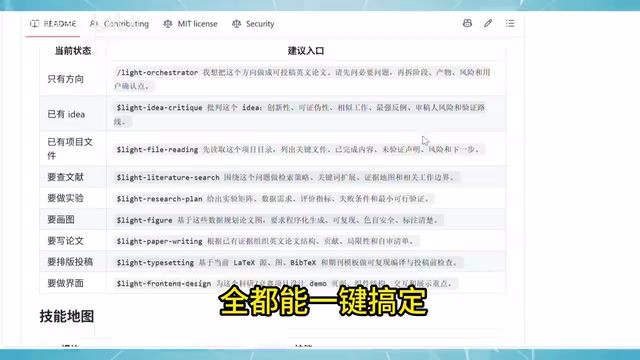
Microsoft's research agent, ByteDance's related research tools, and Stanford's STORM all represent the current frontier of research automation. The concentrated entry of big tech players signals that the commercial and academic value of research automation is gaining broad recognition, and that the maturity and usability of these tools is rapidly improving.
From a technology trend perspective, research agents are emerging as one of the key application directions for large language models. Research agents combine large language models (LLMs) with autonomous agent technology, and their core architecture typically comprises four modules: a planning module (decomposing complex research tasks into subtasks), a memory module (maintaining long-term context and knowledge bases), a tool-calling module (accessing search engines, code execution environments, databases, and other external tools), and a reflection module (self-evaluating and correcting outputs). Compared to general-purpose conversation, research contexts demand far higher standards of accuracy, reproducibility, and logical rigor — they require processing papers spanning dozens of pages, executing complex mathematical derivations, invoking external computing resources to run experiments, and ensuring the traceability of cited sources. This drives continuous advancement in retrieval augmentation, tool-calling, and multi-step reasoning capabilities, and has led major tech companies to invest in research agents as a dedicated R&D direction rather than simply repurposing general-purpose chat models.
A Balanced View: Opportunities and Boundaries of AI Research Tools
Despite the tremendous potential AI research tools demonstrate, a clear-eyed perspective remains essential.
AI is an accelerator, not a replacement. These tools excel at handling repetitive, mechanical work. True research innovation — asking meaningful questions, designing clever experiments, making deep interpretations of results — still depends on the researcher's professional judgment, and this is unlikely to change in the near term.
Academic integrity is a non-negotiable boundary. Auto-generated content must undergo rigorous human review, especially anything involving citations, data, and conclusions. Blindly trusting AI output is a serious risk. While RAG technology significantly reduces the rate of hallucinations, it has not entirely eliminated the risk of erroneous citations. Literature reviews can be made more efficient with AI, but the formation of academic viewpoints must be grounded in the researcher's own deep understanding.
Tool quality varies widely — select carefully. Among 500+ tools, there are mature projects backed by major institutions alongside early-stage experimental works from individual developers. It's advisable to prioritize tools with active communities, thorough documentation, and verified real-world use cases.
Conclusion
The era of AI research automation is reshaping how academic work gets done. From topic selection, literature review, code writing, and experiment reproduction, to paper writing and LaTeX typesetting, AI has extended its reach into every stage of the research pipeline. RAG-based retrieval augmentation, STORM-style multi-perspective survey generation, and autonomous agent-based multi-step reasoning and execution together form the technical foundation of this paradigm shift in research. For researchers, proactively embracing these AI tools — delegating tedious, repetitive work to AI and reserving more energy for genuine creative thinking — may well be the wisest approach in this era. That said, the prerequisite for using tools well is always a deep respect for academic rigor.
Key Takeaways
Related articles

The Complete Machine Learning Learning Roadmap: From Anxiety to Clarity
Overwhelmed by machine learning? This practical ML roadmap breaks the journey into three phases—math basics, classical ML, and deep learning—with mindset tips and project strategies for engineers.

Smear Campaign Against a Legal MIT Fork? The Legal and Ethical Boundaries of Open Source Forking
A developer legally forked a MIT-licensed project and allegedly faced sock puppet smear reviews. This article explores the legal and ethical boundaries of open source forking vs. plagiarism.

A Game With No Assets: Generating All Graphics and Sound Effects in Real-Time Using Sine Waves
Indie developer Zanzlanz built a game with zero asset files—all textures and sounds are generated in real-time using sine wave math functions. Exploring the tech behind procedural generation.