AI Agent Development Roadmap: A Four-Stage Guide from Zero to Production

A structured four-stage roadmap for mastering AI Agent development from fundamentals to real-world deployment.
This guide breaks AI Agent development into four progressive stages: mastering core theory (planning, memory, tool use), understanding paradigms like ReAct, advancing into multi-agent collaboration and prompt tuning, and deploying complete end-to-end projects. It also covers practical tooling including DeepSeek R1, Coze, Dify, and vector databases for building production-ready agents.
Why Agent Development Is the Core Competency in the LLM Era
If you're still working at the level of basic RAG pipelines and simple API calls, you may already be falling behind what today's AI roles actually demand. As large language models evolve rapidly, the bar for developers is quietly rising — the ability to independently build intelligent Agents is the real hard-skill differentiator.
It's worth first understanding RAG's limitations: Retrieval-Augmented Generation (RAG), introduced by Meta AI in 2020, follows a standard pipeline of document chunking, vector embedding, similarity retrieval, and prompt injection. It effectively addresses knowledge cutoff and hallucination issues in LLMs. However, RAG is fundamentally single-turn and passive — it cannot handle complex tasks that require multi-step reasoning, cross-tool collaboration, or dynamic feedback loops. Agent architecture bridges this gap by introducing planning loops and tool orchestration, overcoming RAG's fundamental limitations in dynamic task handling.
Unlike traditional applications, Agents possess three defining capabilities: autonomous planning, tool invocation, and closed-loop resolution of complex tasks. Rather than passively responding to instructions, an Agent understands goals, breaks them into steps, calls external tools, and iterates until the task is complete. Whether you're job hunting, taking on freelance projects, or building intelligent products, AI Agent development has become an essential skill.
Many argue we're now in a critical window for "Agent deployment." Learning Agent development systematically today is like registering one of the first WeChat public accounts or being an early mover on short-video platforms — the earlier you build a solid foundation, the greater your competitive advantage.
The Four Stages of AI Agent Development
The following learning roadmap breaks Agent development into four progressive stages, giving beginners a clear path forward.

Stage 1: Foundation — Mastering Core Theory
The goal of this stage is to build a complete mental model of Agents. You need to understand the three core components of an intelligent agent:
- Planning Module: Responsible for task decomposition and step orchestration
- Memory Module: Manages short-term and long-term contextual information
- Tool Use: Connects to external APIs, databases, and real-world business systems
All three modules have deep technical roots. The planning module draws on task decomposition ideas from symbolic AI, with modern implementations relying on the Chain-of-Thought capabilities of LLMs. The memory module maps to caching and persistent storage in computer science — in Agents, this divides into working memory (current conversation context) and long-term memory (vector database retrieval). Tool use originates from the Function Calling mechanism, first introduced by OpenAI in 2023 for the GPT series, enabling models to trigger external APIs in a structured way — it has since become the industry-standard interface specification.
You'll also need to understand the basic mechanics of large language models and clarify the relationships between key concepts, laying a solid foundation for everything that follows. This stage may seem elementary, but it's the step most people skip — and the one they can least afford to.
Stage 2: Core Advancement — Understanding ReAct and Other Key Paradigms
The goal here is to move from "knowing the concepts" to understanding the underlying mechanics. You need to deeply understand how Agents actually work and master the dominant paradigms — most importantly, the ReAct paradigm: enabling a model to alternate between Reasoning and Acting in a continuous loop, achieving genuine autonomous decision-making.
ReAct was jointly proposed by Princeton University and Google Research in 2022 and published at ICLR 2023. Its core innovation is interleaving Chain-of-Thought reasoning with action execution, forming a closed loop of "think → act → observe → re-think." Compared to pure reasoning methods, ReAct significantly reduces hallucination rates, because environmental feedback after each action continuously recalibrates the model's subsequent reasoning. Beyond ReAct, paradigms such as Plan-and-Execute and Reflexion are also important references in engineering practice — understanding when to apply each will help you make better architectural decisions in real projects.
Only by understanding these operational mechanics can you diagnose why an Agent fails and know how to optimize it, rather than just being a library user.
Stage 3: Skill Reinforcement — Multi-Agent Collaboration and Prompt Optimization
Once the fundamentals and core principles are solid, you enter the deeper waters of output optimization. Key topics at this stage include:
- Reinforcement Learning: Enabling Agents to continuously optimize strategies through environmental interaction
- Multi-Agent Collaboration: Understanding how multiple Agents divide responsibilities and work together as a coordinated "AI team"
- Prompt Tuning Techniques: Getting Agents to produce more precise, targeted outputs
Multi-agent collaboration is a current frontier. The theoretical foundations of Multi-Agent Systems (MAS) trace back to distributed AI research in the 1980s, and in the LLM era they have been brought to production by frameworks like AutoGen (Microsoft), CrewAI, and LangGraph — supporting role definition, task routing, and message bus mechanisms. The core challenge lies in orchestration and state consistency: avoiding information conflicts or duplicate execution across multiple Agents is an active area of research. Imagine a team of specialized Agents — one for copywriting, one for video production, one for customer support — each handling their domain in coordination. This is the technical foundation for the vision of "AI working for you."
Stage 4: Production Deployment — Running a Complete End-to-End Project
Theory must ultimately translate into tangible, demonstrable results. It's recommended to complete 2–3 full projects, such as:
- An intelligent decision-making assistant
- An automated office productivity Agent
- A multi-agent collaborative system
Running the full cycle of "develop → debug → optimize" is the only way to truly land the technology in real business contexts — and it directly strengthens your resume and your ability to win freelance work.
Using DeepSeek and Mainstream Platforms to Build Agents Quickly
For beginners, today's tooling ecosystem is mature enough that you don't need to build from scratch to create a functional agent.
Building a Private Knowledge Base
A knowledge base is the "memory foundation" of an Agent, and its technical core is a vector database — representative products include Chroma, Milvus, Pinecone, and Qdrant. The underlying mechanism converts unstructured data like text into high-dimensional vectors via an embedding model, which are then stored and retrieved using cosine similarity or ANN (Approximate Nearest Neighbor) algorithms. It's worth noting that in enterprise-grade deployments, chunking strategy, metadata filtering, and re-ranking mechanisms have a decisive impact on answer quality — these details are often the line between success and failure in production environments.
Platforms like Cherry Studio and Tencent's IMA allow both individuals and enterprises to quickly set up private knowledge bases through no-code interfaces, enabling Agents to answer based on proprietary content and dramatically improving accuracy and utility.
Implementation Paths for Basic and Advanced Agents
On the implementation side, you can build using platforms like Coze, Dify, and VS Code plugins. These platforms lower the barrier to Agent development through visual workflow orchestration:
- Basic Agents: Primarily conversational assistants — simple to configure and quick to get started
- Advanced Agents: Combine Workflows to implement complex business logic — the core of current productivity applications
- Deep Research Extensions: Give Agents the ability to autonomously search and conduct multi-round research
Also worth noting: the emergence of high-performance reasoning models like DeepSeek R1 has given Agents significantly stronger planning and reasoning capabilities. DeepSeek R1, released by DeepSeek in early 2025, uses reinforcement learning (the GRPO algorithm) to end-to-end optimize the Chain-of-Thought process. It achieves performance comparable to OpenAI's o1 series on benchmarks for mathematical reasoning, code generation, and logical planning — and was released as open source. For Agent development, R1's extended chain-of-thought capability means the model can perform deeper task decomposition and counterfactual reasoning internally, generating more reliable action plans and reducing execution drift — making truly capable Agents more accessible than ever.
A Realistic View of Agent Value and Limitations
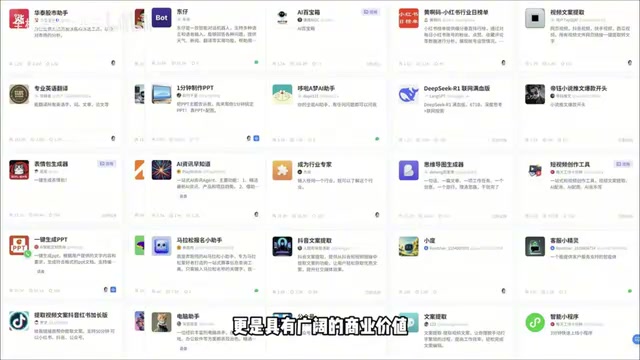
For individuals, an Agent acts like a capable assistant — helping with productivity, content creation, and even monetization. For businesses, the commercial potential is enormous.
That said, a word of caution: claims like "works for you 24/7 and saves tens of thousands in outsourcing costs" tend to be exaggerated. Agents are not magic — they require thoughtful scenario design, continuous tuning, and human oversight. The real value isn't in replacing human labor overnight, but in automating repetitive, process-driven work so people can focus on higher-value decisions and creative work.
Rather than chasing the hype of "zero to expert in 7 days," take the steady path: Foundation → Core Advancement → Skill Reinforcement → Production Deployment. Master the underlying logic of AI Agent development, and you'll be well-positioned to ride this wave of intelligent agents — on solid ground.
Key Takeaways
Related articles

The Truth Behind Codex 'Build a Website in 5 Minutes': AI Isn't Creating Sites—It's Helping You Copy Them
Exposing the truth behind viral Codex 5-minute website videos: creators aren't building original sites with AI—they're copying shared prompts or scraping others' work. Learn AI coding tools' real limits.

Getting Started with AI Agent Development: A Complete Guide from Concept to Practice
A comprehensive guide to AI Agent architecture and development, covering automated marketing, intelligent customer service, and investment analysis scenarios with single and multi-agent collaboration.

The Truth Behind Codex 'Build a Website in 5 Minutes': AI Isn't Creating Sites — It's Helping You Copy Them
Exposing the truth behind viral Codex 5-minute website videos: creators aren't building original sites with AI — they're copying shared prompts or scraping others' work.