AI-Assisted Reverse Engineering in Practice: Analyzing Douyin's Encrypted Parameters and Environment Spoofing

Using DeepSeek to reverse-engineer Douyin's encrypted parameters and auto-generate browser environment spoofing code.
This article covers a real-world case of using LLMs like DeepSeek to assist in reverse engineering Douyin's anti-scraping mechanisms. By feeding encryption logic and interface details to the AI, the model identified detection points and generated 600+ lines of browser environment spoofing code covering prototype chain checks, Property Descriptor checks, and function toString spoofing. The AI-generated X-Bogus signatures passed server validation in testing, though the author emphasizes AI is a force multiplier — not a replacement for solid reverse engineering fundamentals.
Introduction: AI Is Reshaping the Reverse Engineering Workflow
Reverse engineering has always been the most time-consuming and technically demanding part of web scraping development. When dealing with complex encrypted parameters and environment detection mechanisms on platforms like Douyin (TikTok), traditional manual analysis often requires enormous effort to spoof browser environments and debug code. However, as large language models like DeepSeek continue to improve, more and more reverse engineers are turning to AI to assist with analysis and code generation — dramatically boosting productivity.
This article is based on a real-world case where a reverse engineer used DeepSeek and other LLMs to assist in analyzing Douyin's encrypted parameters. We'll explore how AI is applied in reverse engineering, what results it actually delivers, and the key considerations to keep in mind.
The Core Approach to AI-Assisted Reverse Engineering
Feeding Encryption Logic to the LLM for Analysis
In traditional reverse analysis, engineers must manually read obfuscated JavaScript code, understand the encryption algorithm logic, and then re-implement it in Python or Node.js. This process is not only tedious but also error-prone.
Front-end code on large platforms like Douyin typically goes through multiple layers of obfuscation, including: variable/function name randomization (replacing semantic names with meaningless strings like _0x1a2b), control flow flattening (converting normal if/else and loop structures into state-machine-based switch statements to obscure logic), string encryption (replacing plaintext strings with ciphertext decrypted at runtime), and code splitting with dynamic loading. Dealing with this kind of obfuscated code traditionally requires breakpoint debugging in Chrome DevTools, static analysis using AST (Abstract Syntax Tree) parsing tools, and hooking key functions to trace data flow.
The AI-assisted approach is fundamentally different: you provide the LLM with information about Douyin's encrypted endpoints and descriptions of detection points, and let the model automatically analyze the algorithm logic and generate usable code. DeepSeek and similar LLMs excel at code generation because their pre-training ingested massive amounts of open-source code repositories, technical documentation, and Q&A data from sources like Stack Overflow — giving them strong pattern recognition for common encryption algorithms (such as RC4, AES, and custom hash functions). In this case, after the engineer provided Douyin's interface descriptions to DeepSeek, the model was able to identify the detection mechanisms and generate targeted bypass solutions.

Auto-Generating Browser Environment Spoofing Code
Douyin's anti-scraping mechanisms involve extensive browser environment detection, including prototype chain checks, Property Descriptor checks, and function protection (toString spoofing). Manually patching these environments one by one is an enormous amount of work.
Understanding how these detection mechanisms work helps clarify where AI assistance adds the most value. For prototype chain detection: in a real browser, objects like window.navigator and HTMLElement have a fixed prototype chain structure, whereas automated environments (such as headless Puppeteer or plain Node.js) often have missing or anomalous nodes in these chains. Property Descriptor detection uses Object.getOwnPropertyDescriptor() to verify whether a property is a native implementation — native properties typically have specific combinations of configurable and writable flags that manually injected properties fail to match. Function toString spoofing detection is another critical point: native browser APIs return function xxx() { [native code] } from toString(), while JavaScript-rewritten functions cannot naturally return this format. Anti-scraping systems call Function.prototype.toString.call(targetFn) to detect whether a function is a native implementation.
In this practice run, the AI model generated approximately 600+ lines of browser environment spoofing code, covering the following key detection points:
- Prototype chain checks: Ensuring that object prototype chains in the simulated environment match those of a real browser
- Property Descriptor checks: Correctly setting
configurable,enumerable,writable, and other property attributes - Function protection: Making custom functions'
toString()return values match those of native functions, preventing detection by anti-scraping systems
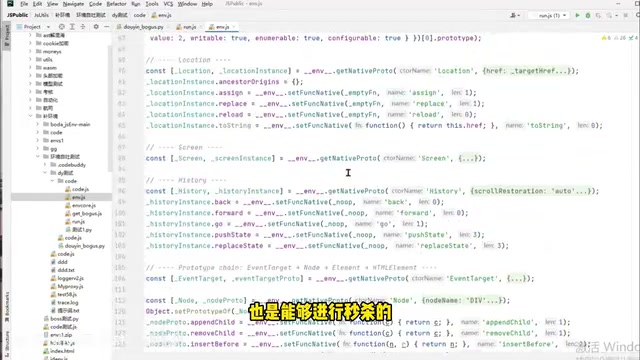
This environment code was described as "remarkably comprehensive," representing a significant efficiency gain compared to manually patching the environment step by step.
Validating the Douyin X-Bogus Parameter Generation
Signature Parameter Generation and Data Collection Testing
X-Bogus (also known as AppleCost) is a signature parameter that Douyin/TikTok clients attach when making API requests. It is ByteDance's proprietary request legitimacy verification mechanism. The parameter is generated by hashing and encoding a combination of the request URL, request body, device fingerprint, timestamp, and other multi-dimensional data — and the server validates it to identify requests from non-standard clients. Alongside X-Bogus, parameters like _signature and msToken work together to form Douyin's multi-layered anti-scraping system. The core challenge with this system is that the signing algorithm is deeply obfuscated within front-end JavaScript and rotates periodically, while also incorporating browser environment fingerprinting — making it very easy for signing code executed in non-browser environments like Node.js to be flagged as anomalous.
After processing with the AI-generated code, the engineer ran real-world tests on Douyin's X-Bogus and other encrypted parameters. Based on the demo results, the generated signature parameters successfully passed server-side validation and data collection completed normally.
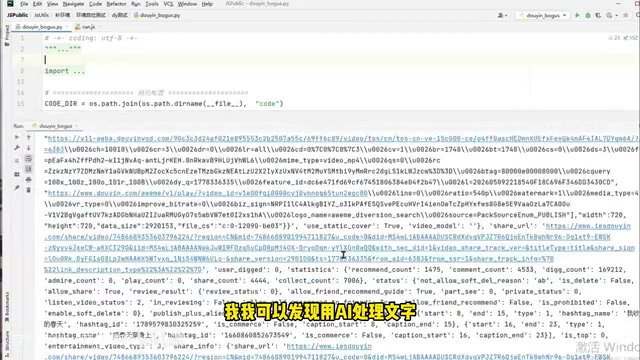
Manual Invocation to Verify the Signing Function
To confirm the reliability of the results, the engineer also ran a manual test — directly calling the AI-generated signing function, which produced the correct encrypted parameter values upon execution, validating the feasibility of the entire workflow.
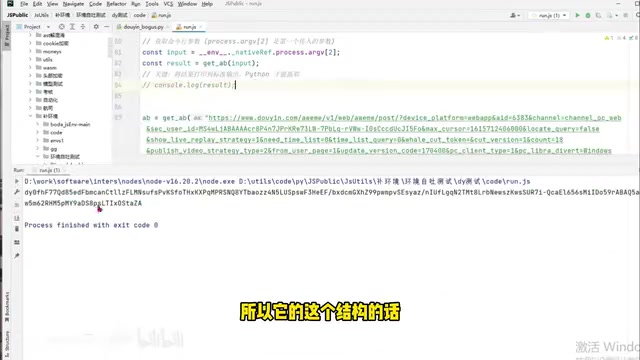
Based on the test results, the AI-generated code performed well in terms of functional correctness and is suitable for use in real-world data collection scenarios.
A Realistic View of AI's Role in Reverse Engineering
AI Is a Force Multiplier, Not a Magic Key
While this case demonstrates impressive results from AI in reverse engineering, a few critical points deserve clear-eyed recognition:
-
AI requires high-quality input: The quality of the model's output is highly dependent on the quality of the information you provide. Notably, output quality correlates strongly with the information density of your prompts — providing structured details like specific function signatures, input/output examples, and known algorithm characteristics yields far more precise code than vague natural language descriptions. If you don't understand the fundamentals of reverse engineering, you won't be able to ask the AI the right questions — or judge whether its output is correct.
-
Debugging skills remain irreplaceable: AI-generated code won't necessarily run correctly on the first try. When issues arise, engineers still need the ability to debug and troubleshoot.
-
Platform anti-scraping keeps evolving: Encryption algorithms on platforms like Douyin are updated regularly, meaning AI-generated solutions may become obsolete quickly and require continuous follow-up and adjustment.
Four Tips for Effectively Leveraging AI in Reverse Engineering
As the original author emphasized: "How to make good use of AI to assist your work — that's what really matters."
Related articles
 Tutorials
ChatGPT Plus Subscription Guide: Are GPT-5.5, image-2, and Codex Worth the Upgrade?
A detailed look at ChatGPT Plus features — GPT-5.5, image-2, and Codex — with a Plus vs Pro comparison and a complete step-by-step subscription guide for users outside the US.
 Tutorials
Harness AI Engineering in Practice: Using Claude Code to Master Enterprise-Level E-Commerce Development
Deep dive into Harness AI Engineering: master enterprise e-commerce development with Claude Code using the Rules, Skills, Wiki, and Changes framework.
 Tutorials
Cursor + Codex Dual-IDE Collaboration: A Practical Methodology for Open-Source Project Customization
A complete methodology for open-source project customization based on real-world experience, detailing the Cursor+Codex dual-IDE workflow, seven-stage process, MVP validation, and AI source code reading techniques.