Alibaba Cloud Website Architecture Design: A Complete Practical Guide from DNS to Auto Scaling

A full request-chain walkthrough of core Alibaba Cloud website architecture products
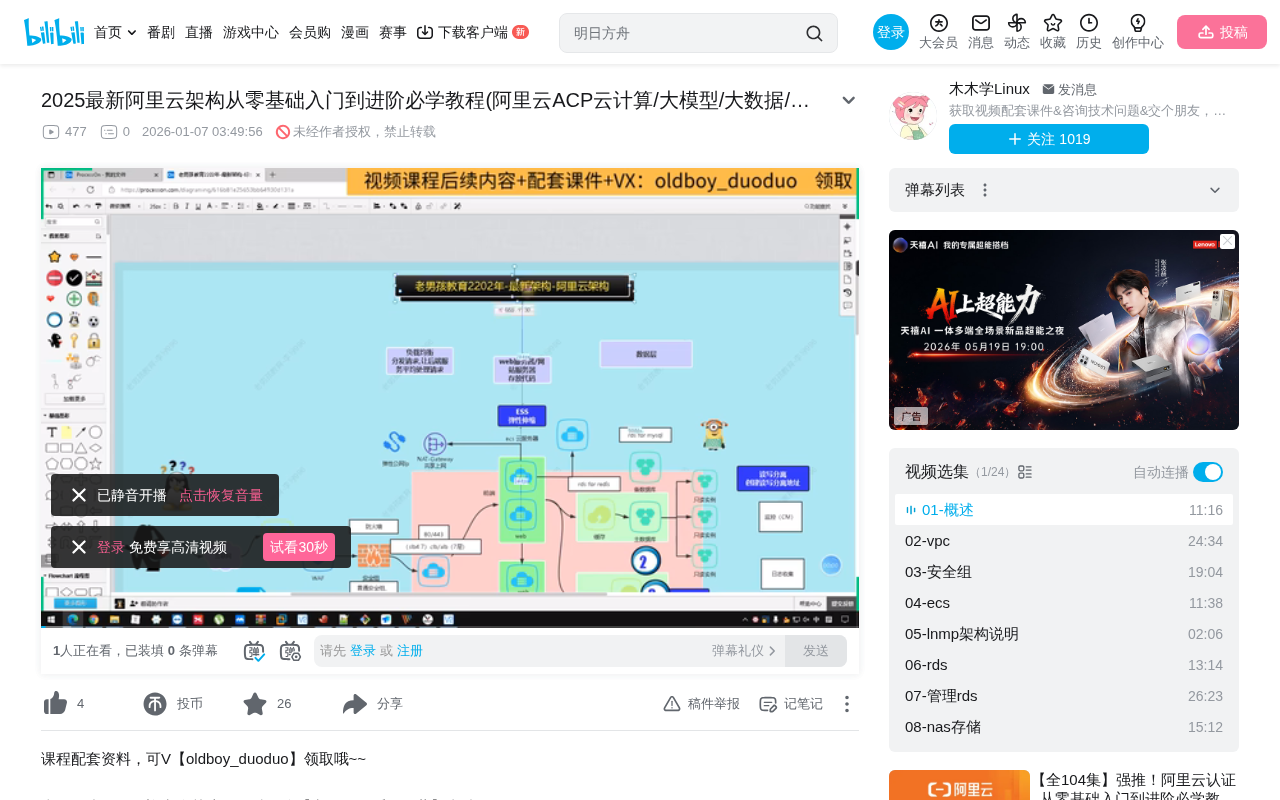
This article follows the complete request chain of a user accessing a website, systematically introducing the core products in Alibaba Cloud architecture. From DNS Cloud Resolution as the entry point, to CDN content distribution for static resource acceleration, to WAF application-layer firewall for security protection, it explains the key components and technical principles of cloud architecture design layer by layer.
Cloud Servers Have Become the Standard for Production Environments
In real-world production environments and daily operations, cloud servers (public cloud) have completely replaced traditional virtual machines as the mainstream infrastructure choice. In the domestic market, Alibaba Cloud holds an absolute leading position; globally, Amazon AWS started earliest and has the broadest coverage, while Alibaba Cloud has now ranked among the top three to four worldwide.
This article follows the complete request chain of a user accessing a website, systematically covering the core products and services involved in Alibaba Cloud website architecture, helping you build a holistic understanding of cloud architecture design.
The Entry Point of User Requests: DNS Resolution, CDN Acceleration, and WAF Protection
DNS Resolution: The Starting Point of All Access
When a user enters a URL in their browser, the first step is DNS domain name resolution. DNS (Domain Name System) is one of the core infrastructures of the internet, essentially a distributed hierarchical naming system. Resolution requests pass sequentially through local DNS cache, recursive resolvers, root name servers, Top-Level Domain (TLD) servers, and authoritative name servers, ultimately returning the corresponding IP address — the entire process typically completes within milliseconds.
In the Alibaba Cloud ecosystem, this service is called DNS Cloud Resolution. As long as you've purchased a domain on Alibaba Cloud, you can configure A records, CNAME records, and other DNS records directly in the console — A records map a domain directly to an IPv4 address, CNAME records point one domain to another (commonly used for CDN integration), and the TTL (Time To Live) value determines how long a resolution result remains in cache, directly affecting how quickly DNS changes take effect. The entire resolution process is identical to traditional DNS principles; Alibaba Cloud simply wraps it in a visual management interface.
CDN Content Distribution: A Powerful Tool for Static Resource Acceleration
After DNS resolution, the next layer is CDN (Content Delivery Network). The core mechanism of CDN is deploying numerous edge nodes (PoP, Point of Presence) globally or nationwide to cache content at the node closest to the user. When a user initiates a request, it is routed to the optimal edge node through DNS CNAME resolution and intelligent scheduling algorithms (such as geography-based DNS resolution).
The core function of Alibaba Cloud CDN is to cache a website's static resources (such as images, CSS, JS files, etc.) and distribute them to edge nodes geographically closest to users, significantly improving page load speed and reducing origin server pressure. Modern CDNs also support dynamic acceleration (by optimizing origin-pull paths), HTTPS offloading, HTTP/2 and HTTP/3 protocol support, and edge computing capabilities. Alibaba Cloud CDN is backed by Alibaba's global network infrastructure, with particularly dense node coverage within China.
For websites with many images and high traffic volumes, integrating Alibaba Cloud CDN can significantly improve user experience while effectively reducing bandwidth costs.
WAF Firewall: Application-Layer Security Protection
After CDN, there is another critical security barrier — WAF (Web Application Firewall). To understand WAF, you first need to understand the OSI (Open Systems Interconnection) model: this model divides network communication into seven layers. Traditional firewalls operate at Layer 3 (Network Layer) and Layer 4 (Transport Layer), only filtering based on IP addresses and port numbers without understanding the specific content of HTTP requests. WAF operates at Layer 7 (Application Layer), capable of deep parsing HTTP/HTTPS traffic and identifying malicious payloads hidden within normal requests.
SQL injection attacks work by inserting
Related articles
 Tutorials
ChatGPT Plus Subscription Guide: Are GPT-5.5, image-2, and Codex Worth the Upgrade?
A detailed look at ChatGPT Plus features — GPT-5.5, image-2, and Codex — with a Plus vs Pro comparison and a complete step-by-step subscription guide for users outside the US.
 Tutorials
Harness AI Engineering in Practice: Using Claude Code to Master Enterprise-Level E-Commerce Development
Deep dive into Harness AI Engineering: master enterprise e-commerce development with Claude Code using the Rules, Skills, Wiki, and Changes framework.
 Tutorials
Cursor + Codex Dual-IDE Collaboration: A Practical Methodology for Open-Source Project Customization
A complete methodology for open-source project customization based on real-world experience, detailing the Cursor+Codex dual-IDE workflow, seven-stage process, MVP validation, and AI source code reading techniques.