Apple's Vibe Coding Showcase: What Did College Students Build with Mac + AI?

Apple's Guangzhou student showcase reveals how Vibe Coding is turning Mac into the go-to AI development platform.
Apple hosted a college student AI showcase in Guangzhou, highlighting Vibe Coding — the trend of using AI to turn natural language into working software. Students built impressive projects including an anti-sedentary smart chair, an AR-controlled robotic arm, and a dental training simulator. The event also underscores Apple's strategic push to dominate the AI programming hardware market across its entire Mac lineup.
A Creative AI Showcase
Apple recently hosted an AI showcase for college students in Guangzhou, where students from various universities used Macs and AI tools to create a series of imaginative, fun, and practical projects. Behind this exhibition lies Apple's strategic positioning within the growing Vibe Coding movement.
Vibe Coding is a programming philosophy that has gained widespread traction in developer circles: you don't need to master every line of code — as long as you have an idea, AI can translate natural language into working software. The concept was formally introduced by OpenAI co-founder Andrej Karpathy in early 2025. It's powered by code-specialized large language models (such as GitHub Copilot, Claude, and GPT-4o) and dramatically expanded context windows — advances that have made the pipeline from "describe an idea → generate a running program" smooth enough for non-technical creators to participate in software development. This showcase was the concept brought vividly to life.
The Students' Most Creative Works
The most memorable part of the exhibition was the sheer imagination on display.
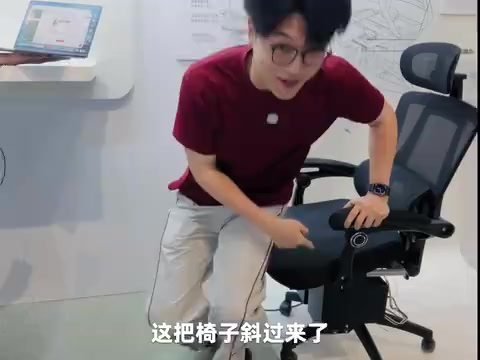
The anti-sedentary smart chair was arguably the most "out there" project of the show. The chair features built-in prolonged sitting detection: stay seated too long and the cushion starts vibrating to remind you; ignore it, and the chair will actually tilt to nudge you out of your seat. This slightly theatrical interaction design is exactly the kind of humor only young creators would think to build in.
Another standout was an AR-controlled robotic arm. According to the creators, it was demonstrated at Apple Park, where both Tim Cook and Apple's incoming CEO tried it firsthand. The interaction is quintessentially Apple: simply "pinch" within the camera's AR view and the robotic arm responds in real time; it also supports iPhone motion control. Two key technical pipelines power this system: the augmented reality layer relies on ARKit's real-time spatial awareness (plane detection and gesture tracking) to overlay a virtual control interface onto the real world; the robotic arm control layer translates gesture commands into precise stepper motor movements via low-latency Bluetooth or Wi-Fi, while the iPhone motion control component uses the Core Motion framework to read gyroscope data and map device orientation to real-time joint angle adjustments.
The dental simulator app also deserves a mention. Designed for dental students, it simulates the full workflow of fitting a patient with braces and provides scored feedback on each step — helping students accumulate clinical experience through a "cyber practice" environment. It's a compelling example of AI-powered applications landing in professional education.

Real Experiences from Student Developers
Three Mac student users were also invited on stage to share their firsthand experiences with AI-assisted programming.
One student, surnamed Wang, gave a particularly moving talk — candidly sharing that he has ADHD (Attention Deficit Hyperactivity Disorder) and walking the audience through his approach to maintaining focus and staying consistent with coding. ADHD is a neurodevelopmental difference characterized by persistent difficulty sustaining attention and impaired executive function. Yet cognitive science research also notes that individuals with ADHD can enter states of "hyperfocus" when working on tasks they find highly engaging or that offer immediate feedback. AI-assisted programming fits this profile remarkably well: the instant generation and execution of code dramatically shortens the "idea → result" feedback loop, reducing the cognitive exhaustion that typically comes from long debugging sessions — which is a core reason why AI coding tools hold unique value for the neurodivergent community.
He closed with a line that stuck:
"Fake it until you make it" — act as if you can do it, until you actually can.
This isn't just a mindset for learning to code. It's a genuine reflection of how AI is lowering the barrier to creation, letting more ordinary people participate in building things.
Apple Is Quietly Cornering the Vibe Coding Market
After walking through the entire exhibition, one clear conclusion emerged: Apple is steadily positioning itself at the center of the Vibe Coding hardware market. Mac has become one of the most popular devices for AI-assisted development, and Apple's product lineup conveniently covers every need from beginner to professional.

Breaking it down:
- MacBook (entry-level): Affordable and accessible for users with no programming background who want to try Vibe Coding for the first time.
- MacBook Air: The sweet spot between performance and portability — widely regarded as the ideal machine for everyday AI-era development.
- MacBook Pro (top-tier): Thanks to the M-series chip's Unified Memory Architecture (UMA) — where the CPU, GPU, and Neural Engine share a single memory pool, eliminating the constant memory-copy overhead of traditional discrete GPU setups — the top-tier model can run quantized coding models at the 70B parameter scale locally (deployed via llama.cpp or Apple's own MLX framework), with all inference happening on-device and no internet connection required. For enterprise users, this means code and business logic never leave the machine, fundamentally eliminating the data leakage risk of cloud API calls while meeting compliance requirements like GDPR and data residency regulations.

This full-price-range product strategy leaves Apple with virtually no weak spots in the AI programming hardware space.
The AI Era: Anyone Can Be a Creator
What looked like a lighthearted college student showcase reflects something deeper: a fundamental shift in our time. With AI as your co-pilot, you may no longer need to systematically learn how to write code. AI becomes your translator, turning ideas in your head directly into running programs.
From a vibrating anti-sedentary chair, to an AR-controlled robotic arm, to a professional dental simulator — these projects exist because the technical barrier to entry has dropped dramatically. And through its comprehensive hardware ecosystem, Apple is positioning itself as the infrastructure provider for this creativity revolution. For anyone with an idea and the will to build something, this is an era worth being excited about.
Key Takeaways
Related articles

The Truth Behind Codex 'Build a Website in 5 Minutes': AI Isn't Creating Sites—It's Helping You Copy Them
Exposing the truth behind viral Codex 5-minute website videos: creators aren't building original sites with AI—they're copying shared prompts or scraping others' work. Learn AI coding tools' real limits.

Getting Started with AI Agent Development: A Complete Guide from Concept to Practice
A comprehensive guide to AI Agent architecture and development, covering automated marketing, intelligent customer service, and investment analysis scenarios with single and multi-agent collaboration.

The Truth Behind Codex 'Build a Website in 5 Minutes': AI Isn't Creating Sites — It's Helping You Copy Them
Exposing the truth behind viral Codex 5-minute website videos: creators aren't building original sites with AI — they're copying shared prompts or scraping others' work.