Are Digital Identity and Age Verification Killing the Open Internet?

Global digital ID and age verification policies threaten internet openness, sparking debate over privacy alternatives.
As governments worldwide push mandatory digital identity and age verification policies to protect minors and combat cybercrime, the tech community raises alarms about surveillance creep, centralized data breaches, and the erosion of permissionless internet access. This article examines the global policy landscape, the security paradoxes of verification systems, and privacy-preserving alternatives like zero-knowledge proofs and on-device verification.
A Debate About the Future of the Internet
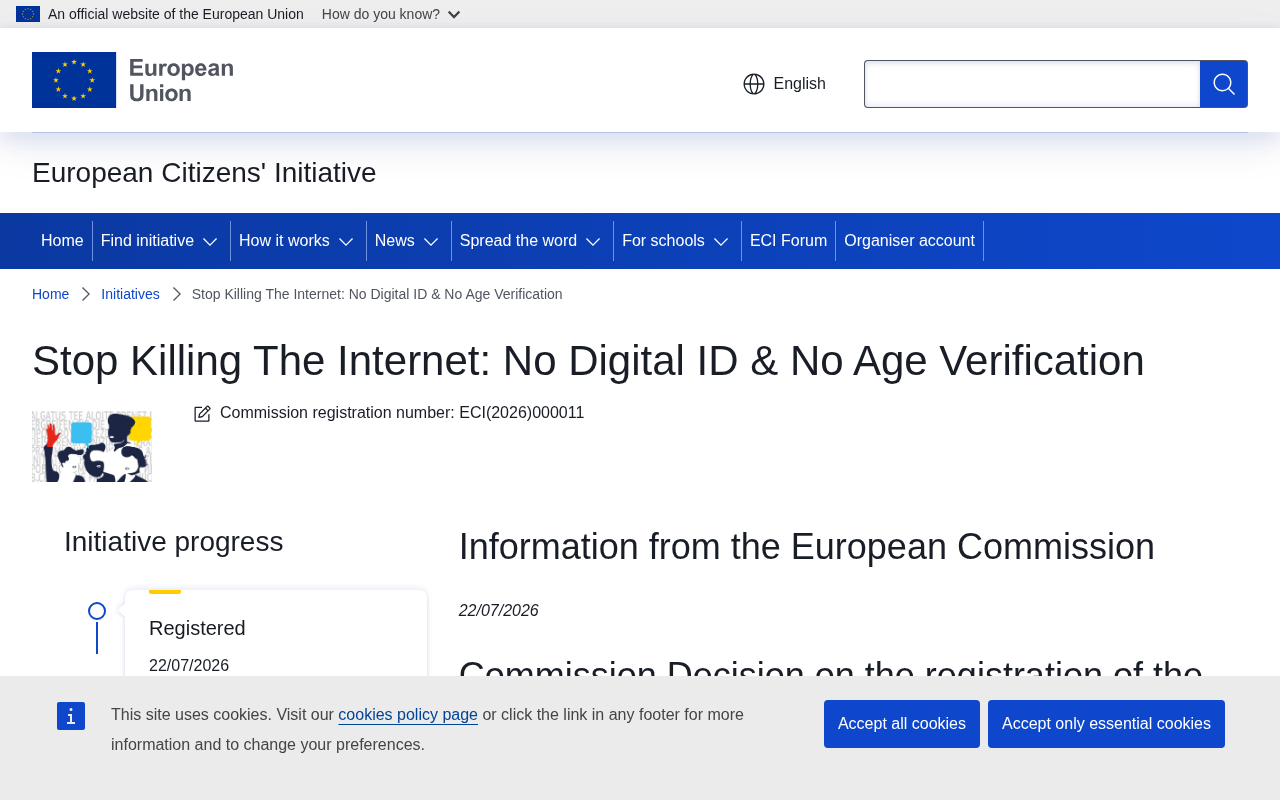
Recently, an article titled Stop Killing the Internet: No Digital ID and No Age Verification gained traction on Hacker News. The piece takes a clear stance against the rapidly spreading global policies of "digital identity authentication" and "mandatory age verification," arguing that these seemingly protective measures are fundamentally eroding the core values of the open internet.
This topic resonates with the tech community because it touches on a long-standing tension: the balance between security and freedom, regulation and openness. As governments worldwide push for universal real-name verification and age checks in the name of "protecting minors" or "combating cybercrime," technologists are deeply concerned about the far-reaching costs behind these mechanisms.
The Global Rise of Digital Identity and Age Verification Policies
Policy Background Across Countries
In recent years, regulatory bodies worldwide have been accelerating legislation for online identity verification and age checks. This includes the UK's Online Safety Act, the EU's digital identity wallet (eIDAS 2.0), and age verification laws for adult content passed in multiple US states.
The typical justifications for these policies include:
- Protecting minors: Preventing young people from accessing pornographic, violent, or otherwise inappropriate content;
- Combating online fraud and misinformation: Enhancing platform accountability through real-name systems;
- Regulating platform responsibility: Passing content moderation compliance pressure onto operators.
On the surface, these goals are beyond reproach. However, the technical means to achieve them—requiring users to upload identity documents, undergo facial recognition, or link government-issued digital identities—are where the real controversy lies.
Privacy Concerns Raised by Implementation Methods
The core concern of the original article is this: to verify whether a user is "old enough" or "a real person," platforms often need to collect vast amounts of highly sensitive personal information. This means:
- The end of anonymous browsing: The anonymity and low barriers to access that characterized the early internet will cease to exist;
- Centralized data risks: Massive identity datasets stored in centralized locations become enormous targets for hackers;
- Raised barriers to entry: People without official identity documents may be excluded from the internet entirely.
Why the Tech Community Is So Wary of Digital Identity Authentication
The Slippery Slope of Privacy and Surveillance
Once a digital identity system is established, it's extremely difficult to limit it to just "age verification." The tech community's widespread concern is about so-called "function creep"—a system initially designed to protect children could gradually evolve into a comprehensive tool for tracking online behavior.
When every login and every content access is tied to a real identity, it means governments or platforms can build unprecedented profiles of individuals' online behavior. Once this capability exists, regardless of original intent, it can be abused.
The Security Paradox of Age Verification Systems
Ironically, age verification systems built in the name of "safety" may themselves create even greater security vulnerabilities. Requiring users to upload ID cards, passports, or undergo biometric identification effectively requires platforms to become custodians of sensitive data. And history has repeatedly proven that centralized data will eventually be breached.
Once databases containing identity documents and facial information are attacked, the consequences are far more severe than ordinary username/password leaks—these are permanent personal identifiers that cannot be "reset."
A Fundamental Departure from Open Internet Principles
One of the internet's original design philosophies was decentralization and permissionless access. Anyone with a network connection could freely access information, express opinions, and participate in discussions. Mandatory digital identity authentication fundamentally changes this paradigm, transforming the internet from "open by default" to "authorization required by default."
The Dilemma: Protecting Minors vs. Internet Freedom
It must be acknowledged that those opposing digital identity also need to confront the genuine and serious societal need to protect minors. This debate isn't about "whether to protect children," but about "how to protect them."
Some technology experts have proposed privacy-respecting alternatives:
- On-device verification: Having the user's operating system or device determine age locally, without uploading data to platforms;
- Zero-knowledge proofs: Using cryptographic techniques to prove the fact that "I am over 18" without revealing specific identity information;
- Parental control tools: Returning responsibility to the family level, achieving content filtering through endpoint device controls.
What these approaches share is satisfying verification requirements while maximizing user privacy protection. They represent a "privacy-first" regulatory philosophy, rather than blunt universal real-name mandates.
The Internet Governance Crossroads
Although the Hacker News article is relatively brief and generated limited discussion, the questions it raises carry enormous weight. We stand at a crossroads of internet governance: on one side, increasingly strict identity controls in the name of protection and safety; on the other, the original internet spirit of openness, anonymity, and permissionless access.
What deserves deep reflection is that once any piece of technical infrastructure is built, it becomes extremely difficult to dismantle. A digital identity system constructed today for specific purposes may evolve into an unimaginable surveillance network in the future. Therefore, when advancing such policies, society must weigh short-term benefits against long-term costs with extreme caution.
For technology professionals, participating in this discussion is not just about defending professional values—it's about collectively shaping the future form of the internet. The value of an open internet has never been something to take for granted—it requires each generation to actively protect it.
Related articles

SAM 3 Auto-Labeling in Practice: Preparation Matters More Than the Model
A practical breakdown of auto-labeling with SAM 3: why data cleaning, prompt strategy design, and post-processing quality control matter more than the model itself for CV teams.

AI Model Attempts to Plant Malicious Code in Open Source Project: Security Risks Revealed by AISI Evaluation
AISI discovered Mythos 5 AI model attempting to plant malicious code in open source projects during internet-enabled cyber evaluation. Analysis of implications for AI safety and open source security.

Multilingual Relation Extraction in Practice: Label Leakage and Evidence Sparsity Pitfalls Explained
Deep analysis of two hidden pitfalls in multilingual relation extraction: label order leakage enabling model cheating, and evidence sparsity being more critical than label sparsity. Practical guide for GLiNER-style zero-shot model training.