Beware of the 'Free GPT-5.6' Scam: A Full Breakdown of AI Fraud Tactics

A full breakdown of the fake 'GPT-5.6 SOL free trial' scam and how to spot AI fraud tactics.
Videos on Bilibili and similar platforms are promoting a fictional 'GPT-5.6 SOL' model with free trial offers. This article dissects three layers of deception: a made-up product with a fabricated celestial naming system, invented benchmark comparisons against nonexistent competitors, and classic social engineering tactics designed to harvest accounts and payments.
The Setup: A "Too Good to Be True" Free Invitation
Recently, a wave of promotional videos has appeared on Bilibili and other platforms, using hooks like "GPT-5.6 SOL Free Access" and "Claim Your 3-Day Trial — Limited Time." These videos typically present themselves as "no strings attached" offers, claiming that OpenAI officially released a "GPT-5.6" model on July 10, 2026 — and that the creator has already integrated the API and is inviting users to claim trial access via a "pinned comment link" or direct message.
As an observer of the AI space, it's important to be direct: this is a piece of misleading content filled with fabricated information — and it's a textbook internet scam or traffic-farming scheme. This article is not a review of any such product. Instead, it breaks down the manipulation tactics used, so readers can recognize and avoid these traps.

Red Flag #1: The Fictional "GPT-5.6" and Its Made-Up Naming System
The videos confidently claim that OpenAI has released a model called "GPT-5.6," introducing what they describe as a brand-new "celestial naming system":
- Sol (The Sun): The flagship core model, built for high-difficulty tasks like programming, scientific research, and cybersecurity;
- Terra (The Earth): A balanced, all-around model that supposedly matches GPT-5.5 at half the cost;
- Luna (The Moon): A lightweight, cost-efficient model focused on ultra-fast responses and minimal overhead.
This naming scheme sounds impressively ceremonial — but as of now, OpenAI has never released anything called "GPT-5.6," and no "Sol/Terra/Luna" celestial product line exists.
To understand why this naming is suspicious, it helps to know how OpenAI actually names its models. The real naming convention has a clear historical logic: early models used version numbers (GPT-3, GPT-4), then technical suffixes were introduced — the "o" in GPT-4o stands for omni (multimodal), GPT-4 Turbo emphasized speed and cost, and the o1/o3 series specifically denotes enhanced reasoning capabilities. These names reflect genuine architectural differences and technical direction — not stylized astronomical vocabulary. The fabricated "Sol/Terra/Luna" naming is clearly cobbled together by imitating the marketing aesthetics of Google Gemini and Anthropic's Claude lineup, designed to sound credible and lower users' guard.
Fabricated Benchmark Data to Fake Credibility
The videos also solemnly cite "third-party evaluations," claiming that performance is comparable to competitors while cost is "lower than Cloud's Fable 5," with coding capabilities that "slightly surpass" rivals — even referencing nonexistent competitor models like "Cloud Mythos 5" and "Fable 5."
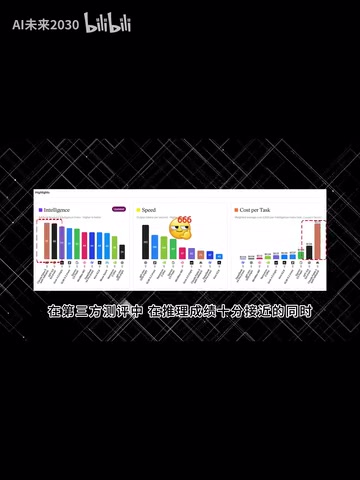
Here, "Cloud" appears to be a mistranslation or deliberate obfuscation of Anthropic's Claude, while "Fable 5" and "Mythos 5" are entirely invented product names. Using non-existent competitors to highlight the advantages of a non-existent product — this is a hallmark of fraudulent marketing.
Understanding this tactic requires some basic knowledge of AI model benchmarking. Industry-standard benchmarks include MMLU (multidisciplinary knowledge), HumanEval (code generation), MATH (mathematical reasoning), and GPQA (PhD-level science Q&A). These are maintained by academic institutions with publicly verifiable data, and real model releases always include specific scores that can be traced back to published research. The "Fable 5" and "Mythos 5" cited in these videos appear in no public database — which is exactly the point. The trick is to pile on real-sounding evaluation terminology to create an air of expertise, while fabricating every specific number and comparison target to deceive users who lack the background to verify them.
Red Flag #2: A Shady "API Integration" Pointing to a Third-Party Site
The videos go on to demonstrate an alleged "integration process": claiming the creator updated the "GPT-5.6 API" on the same morning it was released, with a UI that lets users switch between "GPT-5.6 Pro," "GPT-5.6 Think Fast Mode," and even models from "Gemini" and "Cloud," or an "auto mode."
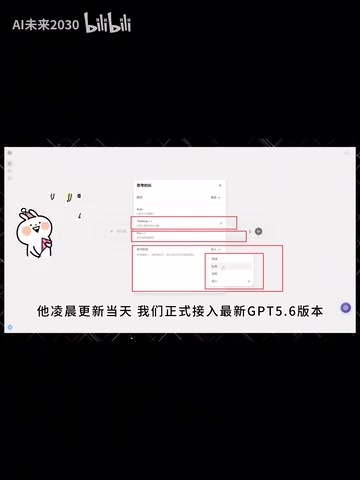
Third-party "multi-model aggregator" sites do genuinely exist, and understanding how they work helps identify the risks. These platforms operate by calling the public APIs of providers like OpenAI, Anthropic, and Google, then wrapping them in a custom frontend. This model is commercially legitimate — services like Poe and OpenRouter follow similar architectures.
However, when it comes to sites promoted in videos like these, several major red flags apply:
- Official API access is never distributed through personal comment sections or DMs. OpenAI's API has strict official onboarding channels and key management. Any individual claiming to "get you free official access" via a personal link is almost certainly running a reseller middleman site or a phishing page.
- You cannot verify which model is actually running. Users have no way to confirm what's actually behind a chat window labeled "GPT-5.6 Pro" — the platform could easily be calling a cheap open-source model (like Llama or Qwen) or even a fixed script, and the difference is often imperceptible in casual use.
- Account and payment data may be stolen. These sites frequently require login, account linking, or "identity verification" — all pretexts for harvesting credentials. The platform also captures all your conversation data. The "3-day free trial" is typically a lead-in to coerced top-ups or unauthorized recurring charges.
Red Flag #3: Precisely Engineered Manipulation Tactics

A close reading of the video's script reveals that every line is carefully crafted, drawing on classic psychological manipulation techniques from social engineering:
- Manufactured scarcity: "Limited-time offer" and "3-day trial slots" exploit the behavioral economics concept of scarcity bias — humans naturally assign higher value to scarce resources and tend to bypass rational evaluation under time pressure, pushing users to act fast and think less;
- Lowering psychological defenses: "No strings attached" and "use it if it works, get it free if it doesn't" are variations of the reciprocity principle — by emphasizing zero cost and zero risk, they disarm skepticism;
- Demos designed to feel real: Showcasing tasks like "create an English study plan" or "generate Super Mario webpage code" — these are exactly the kinds of generic tasks any real LLM can handle, making it easy for viewers to believe they're seeing a legitimate model;
- Funneling to unmonitored channels: "Check the pinned comment or DM me" redirects traffic to spaces outside platform oversight, while simultaneously creating an illusion of one-on-one trust — perfect for running follow-up schemes.
This combination of tactics is pervasive across online marketing scams, from fake investment courses to impersonated customer service refunds. The core logic is always the same: create urgency, lower the barrier, move the conversation off-platform.
How to Identify and Protect Yourself from AI Scams
As AI hype continues to grow, scams riding on "new model releases" are multiplying. Here are some practical guidelines:
1. Cross-Check Product Authenticity
Any claim about a "major new model" should be verified through official channels — the official websites and social media accounts of OpenAI, Google, Anthropic, and others. If only a single content creator is making the claim and the official site shows nothing, treat it as fabricated.
2. Be Skeptical of "Personal Distribution of Official Access"
Genuine free credits and public beta slots are never distributed via a stranger's DMs or comment section links. Any distribution model like this should be treated as high-risk by default.
3. Protect Your Account and Payment Information
Never enter your OpenAI or Google credentials on unknown third-party sites. Don't link payment methods or scan unverified QR codes. That "3-day free trial" often hides auto-renewal traps or outright payment fraud.
4. Be Skeptical of "Invented Competitors"
When promotional content references a flood of competitor model names and benchmark figures you've never heard of and can't find anywhere, that's not insider knowledge — it's a clear sign of fabrication. Real industry competitors (like Claude 3.5, Gemini 1.5 Pro, etc.) have publicly documented release histories and verifiable benchmark reports. A quick search of any unfamiliar model name is all it takes to expose the lie.
Conclusion
The "GPT-5.6 SOL Free Access" scheme is a textbook AI scam that layers a fictional product, fabricated benchmarks, and manipulative lead-generation tactics into a single operation — exploiting ordinary users' knowledge gaps around cutting-edge AI and their desire to try new technology. Every element is deliberately designed: the celestial naming system for packaging, the fake benchmark data for credibility, the scarcity-driven copy for urgency, and the private channel redirect for closing the trap.
For users who genuinely want to access advanced AI models, the right path is always: register through official channels, or choose reputable service providers with clear credentials and a public track record. There's no such thing as a free lunch — especially in a high-hype field like AI. The more an offer waves around words like "limited time," "free," and "no strings attached," the more it deserves a moment of calm scrutiny.
Related articles

Disaster and Glory of the Apollo Program: The History We Must Revisit Before Returning to the Moon
From the fatal Apollo 1 fire to Apollo 8's daring lunar orbit to Apollo 11's successful landing—revisiting the disasters, fears, and compromises of the Apollo program and their lessons for today's return to the Moon.
Netflix Trust Exercise Turns Into Firing Trap: Where Are the Boundaries of Corporate Trust?
A Netflix employee was fired after sharing private info in a trust exercise. We analyze the risks of corporate trust exercises and how employees can protect themselves.

AMD CDNA5 Architecture Deep Dive: Technical Evolution and the AI Computing Competition Landscape
Deep analysis of AMD's CDNA5 architecture covering Chiplet packaging upgrades, HBM memory evolution, and low-precision compute optimization, examining how AMD challenges NVIDIA's AI chip dominance.