Building a Space Shooter with Zero Coding Skills: 12 Iterations, 3,000 Lines of AI-Generated Code

Two non-coders built a space shooter game through 12 AI-assisted iterations and 3,000 lines of generated code.
Two people with zero programming experience built a space shooter featuring enemy waves, leveling, Boss battles, and a weapon system — purely by describing requirements to an AI and copy-pasting the generated HTML code across 12 iterations. The project demonstrates how AI lowers the game development barrier from 'learn to code' to 'describe what you want,' while also exposing the performance limits of single-file architecture and the inherent constraints of AI code generation.
From Snake to Space Shooter: Two Non-Programmers' AI Game Dev Journey
Two people with absolutely no programming background built a fully featured space shooter — complete with enemy waves, leveling, Boss battles, and a weapon system — simply by describing what they wanted to an AI. This isn't science fiction. It's the real story of Bilibili creator Songsong and his friend A Peng.
Their starting point couldn't have been simpler: a single sentence prompted an AI to generate a Snake game. That easy win gave them the confidence to tackle something far more ambitious — a space shooter they called "Cosmic Spaceship Adventure."
Game Setting and Design
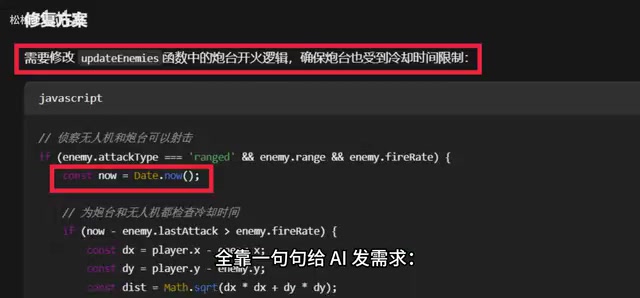
The game is set in 2148. Humanity has discovered an alien beacon, and the player — a pilot — accidentally drifts into the "Forgotten Asteroid Belt." Nanomachine-controlled asteroids swarm the area, and the player must survive, collect energy, and activate three beacons.
Core gameplay includes:
- Dodge and shoot: Evade planetary turret fire and destroy asteroid enemies
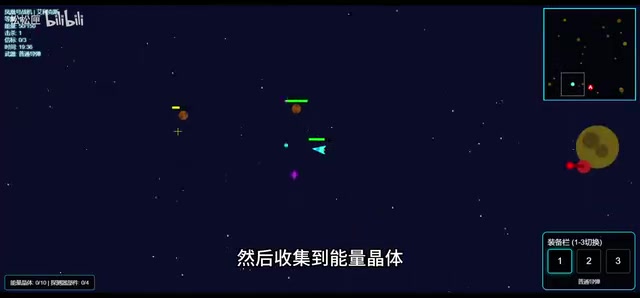
- Resource collection: Defeat enemies to gather energy crystals and weapon components
- Beacon activation: Accumulate enough resources to light up each beacon and trigger a Boss fight
- Weapon unlocks: Progressively unlock a laser cannon and an ion cannon (area attack) to ramp up firepower
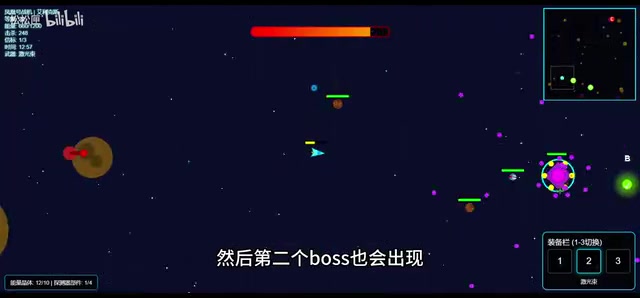
The game is structured in three stages, each tied to one beacon and one Boss. Clearing the game means defeating all three.
The Full Development Process: 12 Iterations Documented
A Zero-Skill Workflow Driven Entirely by Conversation
The development process was about as bare-bones as it gets: describe a feature to the AI, receive generated code, copy-paste it into Notepad, rename the file with an .html extension, and open it in a browser. No IDE, no version control, no debugger — just copy and paste.
This approach works thanks to the complete browser-based game runtime that HTML5 established after its official standardization in 2014. The built-in Canvas API handles rendering, the Web Audio API manages sound, and the JavaScript engine runs game logic — making the browser itself a game platform that requires no additional software. Consolidating everything into a single HTML file offers a unique advantage for AI-assisted development: the AI can output the entire codebase at once, and the user doesn't need to understand file dependencies. Just paste and run. However, as the codebase grew into the thousands of lines, this single-file architecture introduced hidden risks — the browser's JavaScript engine starts hitting performance bottlenecks with complex game logic, which turned out to be one of the root causes behind the frequent freeze bugs that appeared later.
After 12 major iterations, the final codebase exceeded 3,000 lines — all produced through the loop of "describe a requirement → AI generates code → copy-paste → test and give feedback."
A Clear Path of Incremental Feature Additions
Their description reveals a well-defined feature progression:
- Base version: basic ship movement and shooting
- Added health system and leveling mechanics
- Expanded the map, added planetary obstacles
- Introduced an equipment inventory system
- Redesigned the ship's appearance, added drone attacks
- Balanced weapon damage and tuned Boss difficulty
Behind this iteration path lies a concrete demonstration of AI code generation capabilities. Leading large language models like GPT-4 and Claude were trained on billions of lines of open-source code from GitHub, enabling them to map natural language descriptions to code implementations. When a user says "the ship's health decreases when hit," the model searches its parameter space for similar game logic patterns and generates the corresponding JavaScript event listeners and state management code. This process is known as Program Synthesis, a classic research area in AI. Notably, the code AI generates doesn't truly "understand" game logic — it's a statistical pattern-based prediction. This is precisely why 12 iterations still produced all sorts of bizarre bugs.
Describing Bugs in Plain Language for AI to Fix
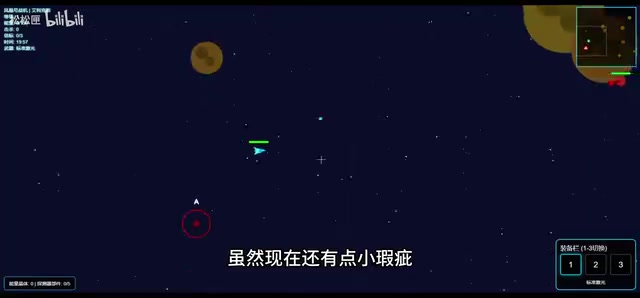
Development hit plenty of snags: the game freezing mid-session, mysterious objects flying all over the screen, and all manner of absurd bugs. But they found a surprisingly effective solution — describing the problem in plain language and asking the AI to trace through the code and fix it.
This "descriptive debugging" stands in sharp contrast to traditional software development practices. Conventional debugging requires developers to use breakpoint debuggers to trace execution line by line, inspect variable values and call stacks in real time via tools like Chrome DevTools, and bring substantial technical expertise to the table. Descriptive debugging, in essence, offloads the cognitive burden of problem localization to the AI — a practice that corresponds to the academic research area of Natural Language Program Repair. Multiple studies published in 2023 found that when bug descriptions include specific trigger conditions (e.g., "freezes after defeating the second Boss") and observable symptoms (e.g., "screen locks up but audio keeps playing"), AI repair accuracy is significantly higher than when only an error message is provided. This aligns closely with the practical finding in this case: the more specifically you describe the bug's behavior, the higher the fix success rate.
While this approach isn't particularly efficient, the fact that someone with no coding knowledge can describe "the game freezes halfway through" and have the AI locate and fix the issue is itself a compelling demonstration of AI-assisted programming.
The Practical Value and Limits of AI-Assisted Programming
Genuinely Lowering the Bar for Game Development
The most valuable takeaway from this project isn't the quality of the game itself — it's what it reveals about how AI has shifted the barrier to entry for game development from "you need to learn a programming language" to "you need to clearly describe what you want."
Related articles
 Tutorials
ChatGPT Plus Subscription Guide: Are GPT-5.5, image-2, and Codex Worth the Upgrade?
A detailed look at ChatGPT Plus features — GPT-5.5, image-2, and Codex — with a Plus vs Pro comparison and a complete step-by-step subscription guide for users outside the US.
 Tutorials
Harness AI Engineering in Practice: Using Claude Code to Master Enterprise-Level E-Commerce Development
Deep dive into Harness AI Engineering: master enterprise e-commerce development with Claude Code using the Rules, Skills, Wiki, and Changes framework.
 Tutorials
Cursor + Codex Dual-IDE Collaboration: A Practical Methodology for Open-Source Project Customization
A complete methodology for open-source project customization based on real-world experience, detailing the Cursor+Codex dual-IDE workflow, seven-stage process, MVP validation, and AI source code reading techniques.