ChatGPT Plus Subscription Guide: Are GPT-5.5, image-2, and Codex Worth the Upgrade?

Is ChatGPT Plus worth it? A full breakdown of GPT-5.5, image-2, Codex, and how to subscribe safely.
This guide evaluates whether ChatGPT Plus is worth subscribing to in 2025, covering the key new features — GPT-5.5's enhanced reasoning, image-2's upgraded image generation, and Codex for developers. It also explains the risks of cheap third-party top-ups and provides a clear, step-by-step subscription walkthrough for users who can't pay directly via the OpenAI website.
Is ChatGPT Plus Worth Subscribing To?
ChatGPT has been around for over three years, and its feature updates have been nothing short of relentless. OpenAI has rolled out the GPT-5.5 model, image-2 (an upgraded version of DALL·E 3) for image generation, and Codex as a dedicated programming assistant — all of which significantly raise the value proposition of a Plus subscription. For many users outside the US, safely and reliably completing the upgrade remains a real challenge. This guide covers both the functional value of Plus and the practical steps to subscribe.
Breaking Down the Core Plus Features
GPT-5.5: A Meaningful Leap in Reasoning
GPT-5.5 is the flagship conversational model available to Plus subscribers. Compared to the free tier's GPT-4o mini, it delivers noticeably better performance on complex reasoning, long-document comprehension, and multi-turn conversation coherence. For users handling demanding tasks like professional document analysis, code review, or academic writing, the performance gap is immediately apparent.
Technical background: The GPT model family is built on the Transformer architecture, trained on massive text corpora and aligned using Reinforcement Learning from Human Feedback (RLHF). RLHF is a training method that steers model outputs to better match human preferences — human annotators rank multiple model responses, and those rankings are used to train a "reward model" that guides the main model's generation. GPT-5.5 improves on parameter scale, context window length, and Chain-of-Thought reasoning, making it more reliable on tasks that require multi-step logical inference. This Chain-of-Thought capability allows the model to "show its work" rather than jumping straight to a conclusion, significantly reducing errors in professional use cases.
image-2: A Major Upgrade to Image Generation
image-2 (the upgraded DALL·E 3) is one of the most talked-about additions in this update cycle. It delivers a qualitative leap over its predecessor in image fidelity, comprehension of complex prompts, and accurate rendering of text within images. In practice, the generated images are sharp and detailed — whether you're using them for content creation, design prototyping, or social media visuals, the results are consistently impressive.
Technical background: The DALL·E series is built on diffusion model technology. Diffusion models generate images by iteratively denoising from random noise, which gives them advantages over earlier GAN (Generative Adversarial Network) approaches in terms of training stability and output diversity — GANs are prone to "mode collapse," while diffusion models more reliably cover a diverse output distribution. image-2 strengthens CLIP text-image alignment over its predecessor, enabling more precise semantic understanding of complex prompts. Particularly noteworthy is its breakthrough in rendering legible text within images — accurately generating readable text has long been one of the hardest unsolved problems in AI image generation, and image-2 makes significant strides here.
Codex: Setting a New Bar for AI-Assisted Coding
Codex is OpenAI's model purpose-built for programming tasks, supporting code generation, debugging, refactoring, and explanation across the full development workflow. For developers, Codex's ability to handle multi-file projects and understand cross-file dependencies goes well beyond what a general-purpose chat model can do for code completion — it's a genuine productivity multiplier.
Technical background: Codex is a fine-tuned model specifically optimized for programming, trained on large volumes of open-source code (such as public GitHub repositories). The core difference between a code-specialized model and a general-purpose chat model lies in its deep understanding of programming language syntax, cross-file dependencies, and execution logic. Codex pioneered AI-assisted programming and went on to inspire commercial products like GitHub Copilot, marking a shift from AI "understanding code" to AI "generating runnable code." Compared to general models, Codex has a more precise grasp of variable scope, function call chains, and API interface conventions — making it far more practically useful in real engineering projects.
Must-Read Before Subscribing: The Risks of Cheap Top-Up Services
Before walking through the subscription process, one point deserves special emphasis: never use low-price third-party top-up services.
Many users have turned to platforms like Taobao or Xianyu looking for cheap account top-ups, but these services typically operate through shared accounts or fraudulent credit cards, carrying an extremely high risk of account bans. If your account gets banned, you don't just lose the subscription fee — more critically, all your chat history and personalized data will be permanently lost, with virtually no chance of a successful appeal.
Why data loss is so costly: The chat history, Custom Instructions, and Memory data stored in your ChatGPT account represent a personalized knowledge asset built up through your interactions with the AI. OpenAI's Terms of Service explicitly state that accounts are non-transferable; using shared accounts or fraudulent payment methods is a violation that, once flagged by the risk control system, results in a permanent ban with no data recovery. Unlike traditional software subscriptions, the value of AI conversation data compounds over time — the writing style preferences you've cultivated, the professional context you've accumulated — all of it disappears with the account. The hidden cost of losing an account far exceeds the subscription fee itself.
A standard-price subscription (around $20/month) may seem more expensive upfront, but the account security it provides makes it the better long-term value.
How to Subscribe to ChatGPT Plus: A Step-by-Step Guide
Because users outside the US often can't complete a subscription directly on the OpenAI website using a local credit card, the most common approach is to use a third-party self-service top-up platform with a card key (activation code). Here's the complete process:
Step 1: Get a Card Key
Purchase a ChatGPT Plus card key from a trusted third-party platform. After your order is confirmed, the platform will provide a card key (activation code) and a self-service top-up URL.
Step 2: Log Into Your ChatGPT Account
In the same browser, log into your ChatGPT account at chat.openai.com. This step is critical — the top-up platform needs to read the login session from the same browser to identify your account.
Step 3: Open the Self-Service Top-Up Page
Using the same browser, navigate to the top-up URL provided. Enter your card key in the designated field and click "Verify Now."
Step 4: Submit Your Account Information
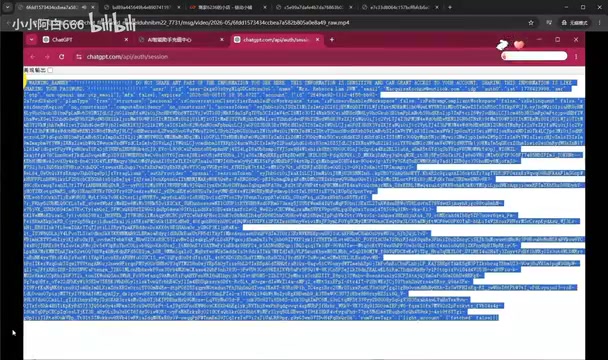
Once verification passes, the page will prompt you to submit your account information. Click "Fetch Data While Logged In" — the system will redirect you to a page containing your account data. Copy the entire contents of that page and paste it back into the designated area on the top-up page.
Step 5: Confirm the Top-Up
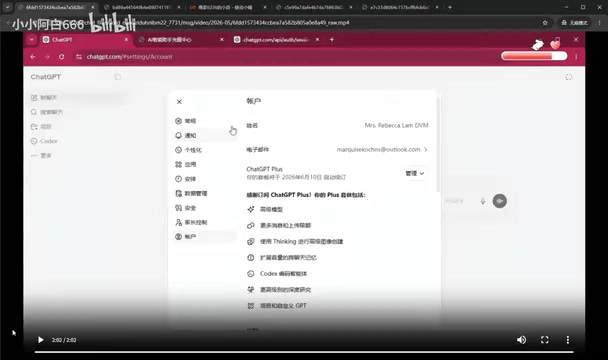
Click "Start Top-Up." A confirmation prompt will appear showing your account details — verify everything looks correct, then click "Confirm Top-Up." Once the process completes, return to the ChatGPT website and refresh the page. A "Plus" badge in the bottom-left corner confirms a successful upgrade. You can check your subscription expiration date under Avatar → Settings → Account.
The entire process requires no technical background — any user can complete it by following the steps.
Plus vs. Pro: Which Should You Choose?
| Plan | Monthly Cost (Reference) | Best For |
|---|---|---|
| ChatGPT Plus | ~$20 | Everyday use, content creation, light development |
| ChatGPT Pro | ~$200+ | High-frequency professional users, enterprise needs |
OpenAI's tiered subscription model (Freemium + Tiered Subscription) is the dominant commercial strategy among AI service providers. The free tier lowers the barrier to entry by limiting model versions and usage frequency; Plus gives individual professional users access to flagship models; Pro provides priority compute access for high-volume use cases. This tiered design is fundamentally a differentiated pricing structure for GPU compute resources — LLM inference costs are extremely high, with every conversation consuming significant GPU compute. Tiered subscriptions allow OpenAI to maintain service quality while running a sustainable business.
For most individual users, Plus is more than sufficient to cover everyday AI-assisted needs. The Pro plan offers higher usage limits and priority access, suited for users who need heavy API usage or extended continuous work sessions.
Verdict: Is a Plus Subscription Worth It?
All things considered, the value of ChatGPT Plus is pretty clear:
- image-2's image generation has reached commercial-grade quality, making it highly attractive for content creators
- GPT-5.5's reasoning capabilities far outpace the free tier on complex tasks, acting as a genuine force multiplier for knowledge workers
- Codex's programming assistance is a real productivity tool for developers, not just a novelty
If your work or study involves frequent AI assistance, the monthly Plus fee is a reasonable and worthwhile investment. On the other hand, if you only use it occasionally, the free GPT-4o tier is capable enough for basic needs.
One final reminder: subscribe through legitimate channels — account security is the foundation of long-term use. The potential losses from cheap top-up services far outweigh whatever you save.
Key Takeaways
- ChatGPT Plus gained GPT-5.5, image-2 image generation, and Codex in 2025, significantly increasing its subscription value
- image-2 is built on diffusion model technology, delivering high-fidelity images with greatly improved text rendering and complex prompt comprehension — ideal for content creation
- Users can upgrade to Plus via third-party self-service platforms using card keys, with a straightforward process that requires no technical knowledge
- Cheap third-party top-ups carry a real risk of account bans, with permanent loss of chat history and personalized data — always use legitimate channels
- Plus (~$20/month) suits most individual users; Pro is designed for high-frequency professional users or enterprise-level needs
Related articles
 Tutorials
Harness AI Engineering in Practice: Using Claude Code to Master Enterprise-Level E-Commerce Development
Deep dive into Harness AI Engineering: master enterprise e-commerce development with Claude Code using the Rules, Skills, Wiki, and Changes framework.
 Tutorials
Cursor + Codex Dual-IDE Collaboration: A Practical Methodology for Open-Source Project Customization
A complete methodology for open-source project customization based on real-world experience, detailing the Cursor+Codex dual-IDE workflow, seven-stage process, MVP validation, and AI source code reading techniques.
 Tutorials
Cursor Multi-Agent in Practice: Building a Full-Stack Next.js Blog in 50 Minutes
Build a full-stack blog in 50 minutes using Cursor IDE's multi-Agent mode with Next.js, Clerk auth, and Supabase. Learn the 4-phase AI Agent workflow and key integration pitfalls.