Claude Code v2.1.141 Update Analysis: From AI Coding Tool to Engineering Workbench

Claude Code v2.1.141 pushes AI coding tools from "usable" to "trustworthy" through engineering refinements
Claude Code v2.1.141 may lack explosive new features, but through notification feedback optimization, plugin HTTPS installation, workspace isolation, CWD filtering, a "Summarize to here" function, and 30+ bug fixes, it systematically addresses engineering challenges for long-term AI coding tool usage, demonstrating a clear evolution from personal tool to enterprise-grade team engineering platform.
A Minor Version That Reveals a Major Direction
Claude Code v2.1.141 looks like just another incremental version bump—no explosive new features, no viral demo videos. But look closely at its updates—notification feedback, plugin installation, workspace permissions, session management, plus over 30 stability fixes—and you'll realize it's seriously addressing the core question of whether an AI coding tool can be used long-term.
The gap between a tool going from "usable" to "pleasant" to "trustworthy" often isn't about model capability—it's about these seemingly trivial engineering details.
Notification Feedback Optimization: Essential UX for Long-Running Tasks
This version introduces updates related to Terminal Sequences. Terminal Sequences refer to the mechanism of sending control signals to the terminal via ANSI escape codes or OS-specific protocols—modern terminal emulators (like iTerm2, Windows Terminal) support triggering desktop notifications, setting title bars, changing icon states, and more through specific escape sequences. This field doesn't seem flashy, but it addresses a very real problem: not everyone stares at their terminal waiting for results.
You might be running tasks in a desktop environment, integrating Claude Code into automation pipelines, or letting agents run lengthy operations in the background. When an agent task might run for minutes or even tens of minutes, relying on users to actively poll terminal output is unrealistic—the industry already has mature practices, such as macOS's terminal-notifier, Linux's notify-send, and cross-platform notifications via OSC (Operating System Command) sequences. The moment the feedback loop breaks, the experience becomes awkward. "Finished but you don't know" versus "finished and you know immediately"—for an AI coding tool, these are completely different things.
Once an AI coding tool starts running long tasks, agents, and automation, notification feedback is no longer an edge feature—it's part of the baseline experience. Updates like this don't look cool, but they're critical.
Plugin Installation via HTTPS: Accommodating Real Enterprise Development Environments
Another noteworthy detail is the introduction of the CLAUDE_CODE_PLUGIN_PREFER_HTTPS environment variable.
SSH and HTTPS are the two mainstream protocols for software package and plugin distribution, each with its own use cases and limitations. SSH relies on key-pair authentication, which is convenient on personal dev machines, but in CI/CD pipelines, Docker containers, and cloud sandboxes, managing and injecting SSH keys often becomes an extra operational burden—and many enterprise firewalls block port 22 by default. HTTPS naturally works with most network policies, supports token-based authentication, and integrates seamlessly with existing package management infrastructure—GitHub has required Personal Access Tokens instead of passwords for HTTPS authentication since 2021 and has been gradually guiding users from SSH to HTTPS workflows.
Many corporate machines—CI environments, containerized environments—aren't always set up for SSH. Switching to HTTPS, which is easier to deploy, significantly lowers the barrier for plugin installation. This shows that Claude Code isn't just catering to individual developers' convenience—it's also thinking about how to make the plugin ecosystem easier to scale.
Whether an AI development tool has platform potential often depends not just on how powerful its features are, but on how smooth extensions are to install and how painless environment compatibility is. Behind this small variable lies serious thinking about enterprise deployment scenarios.
Workspace Isolation: From Personal Tool to Team Engineering Tool
Now look at the ANTHROPIC_WORKSPACE_ID variable. It looks very technical, but it's actually answering a fundamental question: What scope should this token govern?

Workspace ID is a core concept in multi-tenant system design, widely used in tools like Slack, GitHub Organizations, and VS Code. Its essence is establishing logical boundaries on the same infrastructure to isolate data and permissions across different teams, projects, or customers—highly similar to the "Namespace" concept in cloud-native architecture, and aligned with AWS IAM resource boundaries and Google Cloud's project isolation model.
If you're just using it personally, you might not feel the impact. But once you enter scenarios with teams, multiple projects, and multiple workspaces, this becomes very real: preventing accidental cross-project data access, supporting per-workspace billing and auditing, allowing different teams to use different model configurations or plugin sets. AI coding tools need more than just model invocation—they need to know which boundary they're working within.
This is where Claude Code starts looking more like an engineering tool—it's not just pursuing "being able to answer," but also handling identity, scope, and isolation at the infrastructure level.
Two Most Practical Updates: CWD Filtering and "Summarize to Here"
The two most noteworthy small updates in this version are Claude Agents CWD filtering and the "Summarize to here" function in the rewind menu.
The former solves the task location problem—you can filter agents by directory without manually scrolling through a pile of sessions. The latter addresses the burden of long sessions—here it's helpful to understand some background: although LLM context windows have expanded from early 4K to million-level tokens, research shows that models processing ultra-long contexts exhibit a "Lost in the Middle" phenomenon, with significantly lower information utilization for content in the middle compared to the beginning and end, and longer contexts mean higher inference costs and latency. "Summarize to here" is essentially a manually triggered context compression strategy, sharing principles with the summary indexing mechanism in RAG (Retrieval-Augmented Generation), allowing users to proactively distill conclusions at key points—preserving important information while freeing up effective context space for subsequent conversations.
Looking at these two updates together is interesting—they're both addressing continuous collaboration:
- How to put tasks in the right place
- How to compress earlier conclusions so that subsequent collaboration can continue
This direction is more pragmatic than simply improving model capability, because it directly affects the efficiency ceiling when using AI coding assistants daily.
30+ Bug Fixes: Not Marginal Details—They're the Foundation of Trust
Things like Markdown table rendering, permission prompt logic, history management, background agent status categorization, and feedback after long-thinking timeouts—these aren't the things that easily get screenshotted and shared. But they significantly affect trust.
Once an AI coding tool actually enters a project, users' expectations shift quickly. It's no longer just about "can it write code"—
Related articles
 Product Reviews
The Programmer's Desk Setup Guide: Building a Workspace That Feels Like Home
Discover how programmers build productive, comfortable workspaces. From multi-monitor setups to ergonomic design, explore the desk philosophy that drives focus and flow.
 Product Reviews
Qoder vs Cursor Real-World Comparison: Which $20/Month AI IDE Is Better?
Hands-on comparison of Qoder vs Cursor AI IDEs: Agent autonomy, human interaction count, and architecture decisions. Qoder needed only 2 interactions vs Cursor's 8.
 Product Reviews
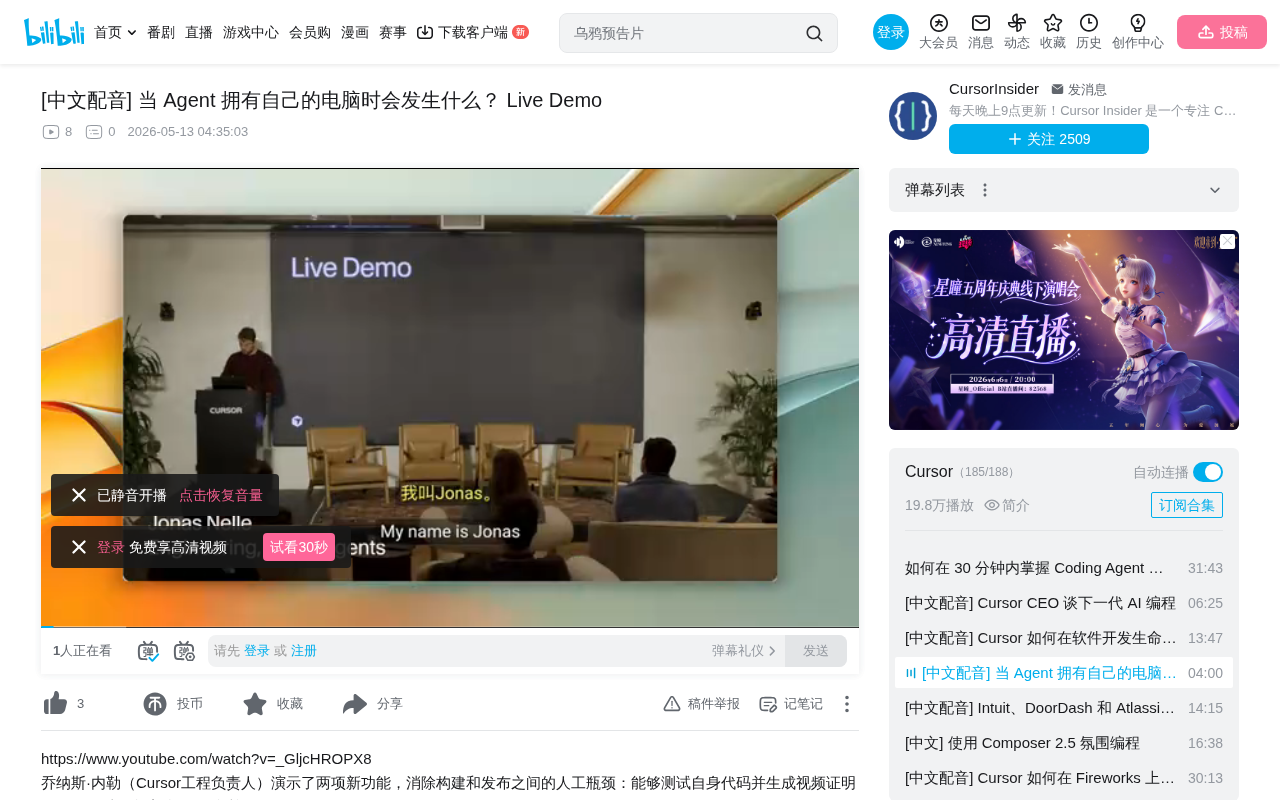
Cursor Cloud Agent Demo: Eliminating Bottlenecks Across the Entire Software Development Lifecycle
Deep analysis of Cursor's Cloud Agent demo showing how cloud VMs, automated test artifacts, and a full-chain control plane systematically eliminate human bottlenecks across the software development lifecycle.