Deep Analysis of the Alibaba-Claude Ban: The Battle for Autonomous Control of AI Coding Tools
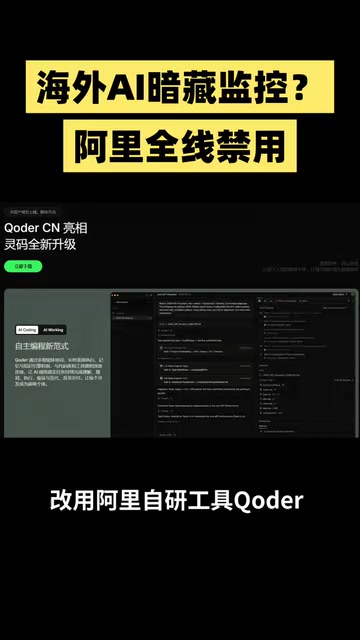
Alibaba bans Claude Code as Chinese tech giants shift to in-house AI coding tools amid data sovereignty concerns.
Alibaba banned all Anthropic products including Claude Code, while ByteDance and Tencent switched to in-house solutions. Sparked by alleged 'surveillance code' and escalating IP and export-control disputes, this analysis examines the security logic, data sovereignty battle, and industry trend behind China's 'de-overseas-ization' of AI coding tools.
The Full Story: The Mutual Ban Between Alibaba and Claude
Recently, a rather landmark incident occurred in China's AI coding sector: a "mutual ban" unfolded between Alibaba and the overseas AI tool provider Anthropic (maker of the Claude product line).
Background on Anthropic: Anthropic is an AI safety company co-founded in 2021 by Dario Amodei and Daniela Amodei, siblings and former OpenAI research leaders, headquartered in San Francisco. With "AI safety" as its core mission, the company's Claude series of models stands out in code generation, long-text processing, and instruction following. On the financial front, Anthropic has secured large-scale strategic investments from tech giants such as Google and Amazon—Amazon in particular has invested a cumulative total of over $4 billion. Amazon Web Services (AWS) happens to be a core cloud provider for the U.S. Intelligence Community (IC), holding the highest-level security clearances. This capital connection ties Anthropic deeply to U.S. national security infrastructure, meaning it faces far more complex compliance pressures than an ordinary SaaS company when handling China-related business. Its stance toward Chinese enterprise users is essentially nested within the broader framework of U.S. technology export controls.
According to a tech content creator on Bilibili, Alibaba issued an internal notice on July 10 requiring all employees to stop using any Anthropic products—whether the coding-specific Claude Code or general-purpose chat LLMs, all were banned outright. As an alternative, Alibaba required employees to switch to in-house tools, with all code sealed within the internal network and strictly prohibited from leaving it.
On the risks of Claude Code and agentic coding tools: Claude Code is a command-line AI coding assistant launched by Anthropic, allowing developers to invoke Claude models directly in the terminal to complete code generation, debugging, refactoring, and other tasks. Unlike traditional autocomplete tools such as GitHub Copilot, Claude Code adopts an agentic architecture, implementing the "Tool Use / Function Calling" paradigm—the model not only outputs code text but can also proactively trigger system-level operations such as file read/write, terminal command execution, and network requests, embedding itself deeply into a developer's local codebase. From a security architecture standpoint, such tools effectively introduce a highly privileged autonomous agent into the developer's local environment. The actual boundary of the information it can access is determined by runtime permissions and project structure, rather than by a user's single query—making the "attack surface" far larger than that of traditional development tools.
Worth special attention is that agentic AI coding tools also face an emerging threat: prompt injection attacks. Attackers can embed malicious instructions in code comments, README files, or third-party dependencies. When the AI agent reads this content, it may be manipulated into performing unintended actions—for example, quietly modifying sensitive configurations, exfiltrating code snippets, or bypassing security checks. This makes AI coding tools not only a potential channel for data leakage but also a new entry point for supply chain attacks. Enterprise security teams typically classify such tools as "high-risk third-party integrations," requiring dedicated sandbox isolation or network egress auditing measures. It is precisely because of this that the question of data flow naturally becomes a key focus of enterprise security compliance reviews—and it is also the core reason why this round of tightening regulation began first at the AI coding tool layer.
At the same time, Anthropic was also conducting a large-scale purge of its Chinese users. Both paying customers and long-time loyal users faced account bans, while channels for appeals and refunds were nearly shut down. What makes this standoff unusual is that in the past, it was typically the U.S. side unilaterally restricting Chinese tech companies, whereas this time both sides took action almost simultaneously.
As an aside, the core information in this article comes from a single Bilibili source, and some details still lack cross-verification through official channels. Readers should maintain rational judgment.
The Trigger: "Surveillance Logic" Exposed in the Code
According to the leaked account, the direct trigger for this incident was a piece of controversial code revealed within the developer community. Some developers claimed to have discovered a "secret logic" in Claude Code that had been running for about four months.
Allegedly, this code would make judgments based on the geographic location of a user's device—once it detected a location in specific cities such as Shanghai or Urumqi, it would tag the user with a "surveillance label." The leak further stated that leading Chinese internet companies such as ByteDance and Alibaba had been pre-listed on a so-called "monitoring list."

Even more concerning was the method of data transmission. The leak claimed that the relevant information was not uploaded in plaintext but was converted into covert forms such as punctuation marks and quietly transmitted back within normal data flows.
Assessing the technical feasibility and credibility of covert data transmission: The technique described in the leak corresponds, at a technical level, to data steganography or covert channel techniques—encoding information within a carrier (such as Unicode variants, zero-width characters, HTTP header field ordering, or TLS handshake characteristics) so that it is difficult to detect under routine traffic monitoring. For commercial AI tools, network requests are themselves frequent and voluminous, providing natural cover for concealing additional information. However, from the standpoint of motive, Anthropic—as a company whose brand core is "AI safety"—would face an extremely poor risk-reward ratio by deliberately implanting such a mechanism. Once reproducibly confirmed, the company's reputation would suffer devastating damage. A more Occam's-razor-compliant explanation is that its routine user behavior analysis or anti-abuse mechanisms triggered false positives in specific geographic regions, or that the leaker misread normal telemetry data. Telemetry is a standard mechanism in modern software, used to collect operational information such as crash reports and feature usage frequency. Its transmission format can indeed be difficult for non-experts to interpret intuitively, providing objective grounds for misjudgment. This does not mean the accusation is necessarily false, but rather that in the absence of independent technical verification, one should keep an equally open mind toward both possibilities. The technical community generally takes a cautious stance toward such accusations—theoretical feasibility exists, but a reproducible reverse-engineering report is needed to constitute valid evidence. The lack of such independent technical verification is currently the most critical evidentiary gap in this accusation.
If true, this description of "covert transmission" would directly touch the core red line of enterprise data security—especially now that AI coding tools are deeply embedded in R&D workflows and the codebase itself is a company's most sensitive asset.
Anthropic officially explained the relevant mechanism as measures to "prevent abuse and prevent model theft." But the leaker questioned this: the explanation happened to be released on the very same day as the announcement of a new model, a rather delicate timing.

It must be emphasized that the technical details of the aforementioned "surveillance code" currently derive mainly from one-sided descriptions within the developer community, with no independent, reproducible technical verification publicly released. Until authoritative analysis emerges, the relevant accusations should be regarded as "pending verification."
Long-Standing Grievances: A Chain Reaction of Lawsuits and Reports
Based on the timeline pieced together from the leak, the conflict between the two sides did not accumulate overnight.
Allegedly, about half a month before the incident became public, Anthropic had reported Alibaba for "stealing and replicating" its AI capabilities. Meanwhile, on another front, Alibaba sued the U.S. Department of Defense, seeking legal remedy over being placed on the Entity List.
Model distillation and the intellectual property dilemma: Model distillation refers to using the outputs of a large "teacher model" to train a smaller "student model," thereby replicating its capabilities at low cost. This technique was first systematically proposed by Geoffrey Hinton and others in 2015. Originally a benign engineering method for model compression and deployment, it has evolved into a complex legal gray area in the context of commercial AI competition. Whether a large model's "capabilities" and "knowledge" constitute objects eligible for intellectual property protection remains without clear precedent in major jurisdictions worldwide. The U.S. Copyright Office has clearly stated that AI-generated content is generally not protected by copyright, but model weights themselves may constitute trade secrets. At the contract law level, the Terms of Service (ToS) of major AI providers typically include clauses prohibiting "using API outputs to train competing models," but their enforceability is questionable—especially when the accused party is located in a different jurisdiction. This legal ambiguity makes "model distillation accusations" essentially a tool of commercial pressure rather than a litigation claim with clear legal consequences, particularly against the backdrop of U.S.-China tech competition.
On one side is an intellectual property dispute over model capabilities, and on the other is a legal battle over the Entity List. These two threads intertwine, elevating this conflict from the level of commercial competition to a more complex geopolitical tech rivalry.
Not Just Alibaba: A Collective Shift Among Leading Tech Giants
Notably, Alibaba is not the only one taking action. According to the leak, leading Chinese internet companies such as ByteDance and Tencent have quietly discontinued overseas AI coding tools and switched entirely to in-house solutions.
The competitive landscape and capability gap of domestic in-house tools: Against the backdrop of restrictions on overseas tools, China's AI coding tool sector is undergoing an accelerated reshuffle. Representative domestic alternatives currently include Baidu Comate, Alibaba Cloud's Tongyi Lingma, Tencent Cloud AI Code Assistant (based on the Hunyuan model), Huawei CodeArts Snap, and ByteDance's internal tools. The core advantages of these products lie in their local data deployment capabilities and deep adaptation to the domestic development ecosystem; their main shortcomings are concentrated in agentic task execution and complex multi-step reasoning—agentic architectures place extremely high demands on a model's instruction-following precision, as a single erroneous shell command execution can cause irreversible file damage. This imposes strict requirements on a model's ability to "proactively ask when uncertain," which happens to be a relatively weak dimension for current domestic models. Notably, improving agentic coding capabilities depends heavily on the "process supervision" training paradigm—not only scoring the final code result but also evaluating the quality of intermediate reasoning steps, which requires large amounts of alignment data from real development scenarios. The large-scale internal deployment by leading tech giants will generate substantial real-world agentic task data, and this kind of high-quality alignment training data is key to a capability leap—which is precisely why "policy-forced adoption" may objectively accelerate the maturation of domestic agentic AI coding capabilities.

This means that the "de-overseas-ization" of AI coding tools has gradually evolved from a defensive choice by individual companies into an industry-wide trend. For developers who rely on such tools daily to boost efficiency, the restructuring of the toolchain has become unavoidable.
Deep Analysis: Decoupling Descends from Lithography Machines to Coding Tools
In the past, when tech decoupling was mentioned, the public's first association was often with "cutting-edge" hardware such as lithography machines and high-end chips, which seemed far removed from the daily work of ordinary developers.
But this incident reveals a new reality: decoupling is continually "descending" toward the application layer. The tools programmers use every day when they open their computers to write code now also face the real pressure of switching to domestic alternatives.
The Entity List regime and the extension of controls to software services: The Entity List regime of the U.S. Department of Commerce's Bureau of Industry and Security (BIS) initially targeted mainly hardware export controls, but as the digital economy has deepened, the scope of control has gradually extended to cloud services, SaaS tools, and AI models. The chip export control rules issued by BIS in 2023 already brought model training above certain compute thresholds into consideration for control. A deeper, framework-level risk stems from the "Deemed Export" provision in the Export Administration Regulations (EAR)—providing inference services for advanced AI models to controlled entities could, in theory, be deemed a "functionally equivalent technology transfer." The core logic of the "Deemed Export" concept is that disclosing controlled technology to foreign nationals is effectively equivalent to exporting that technology to their home country; extending this logic to AI inference services means that each API call could be regarded as a micro "technology transfer event." This interpretive framework has not yet been explicitly adopted by the courts, but it is already sufficient to create compliance concerns for companies like Anthropic that have U.S. institutional shareholders, prompting them to proactively impose restrictions on Chinese enterprise users. It is foreseeable that as the strategic value of AI capabilities continues to rise, the U.S. Department of Commerce will further refine control rules targeting "AI Model as a Service" (AIaaS), gradually clarifying the current policy gray areas—but the direction of clarification is likely to be tightening rather than loosening. From the early Huawei chip cutoff, to EDA software restrictions, and now to friction at the AI coding tool level, the decoupling chain has extended from semiconductor hardware fully into the software and AI service layers, reaching the daily toolchains of ordinary R&D personnel.
Examined from a more macro perspective, this incident reflects several questions worth pondering:
First, data sovereignty is becoming a core issue. Regardless of whether the "surveillance code" accusations can ultimately be fully verified, enterprises' concerns about core code assets leaking out are real and reasonable. Now that AI coding tools are deeply embedded in R&D workflows, code itself is one of a company's most sensitive assets, and sealing it within the internal network is an understandable defensive choice.
Second, the intellectual property boundaries of AI capabilities are increasingly blurred. "Distillation," "learning," and "replication" between large models are technically difficult to delineate clearly and legally lack precedent-setting rulings, providing continuous room for dispute in mutual commercial accusations. The two sides accusing each other of "stealing models" is a direct manifestation of this dilemma.
Third, autonomous control moves from slogan to implementation. Technological autonomy is often not a proactively pursued goal but a result forced by external circumstances. When one faces potential security risks on one hand while being shut out by the service provider on the other, turning to in-house development becomes almost the only rational path forward.
Conclusion: Stay Prudent, Await Further Verification
This incident undoubtedly sounds an alarm for China's AI coding ecosystem. For developers and enterprises, it clearly signals that tool choice is no longer merely a matter of efficiency, but also concerns data security and compliance risk.
However, as readers, we still need to remain prudent. Currently, many key details—especially the technical proof of the "surveillance code"—come mainly from a single leak channel and lack independent verification from multiple parties. In an environment where the authenticity of information in the AI field is hard to discern, we must both take the deeper trends it reflects seriously and avoid rushing to conclusions when evidence is insufficient.
What is certain is that the path toward autonomous control of AI coding tools has evolved from an industry trend into a real issue right before our eyes. Whether domestic tools can truly rise to meet this historic, "forced" opportunity in terms of capability and experience will be the most worthwhile development to keep watching in the days ahead.
Related articles

Mecanum Wheel Motion Simulation Platform: A Detailed Guide to Low-Cost VR Haptic Solutions
A detailed look at a Mecanum wheel-based omnidirectional motion simulation platform using VR trackers for 3-DOF motion simulation and recentering correction — a viable low-cost VR immersion solution.

LangChain Managed DeepAgents: Hosted Agent Infrastructure So You Can Focus on Core Logic
LangChain launches Managed DeepAgents public beta, hosting evals, memory, OAuth, Slack integration, and sandbox infrastructure so developers can focus on Agent core logic.

Stripe's In-House AI Platform Architecture Explained: A Practical Guide to Enterprise AI Implementation
Deep dive into how Stripe built its internal AI platform, covering unified model access layers, RAG knowledge integration, security governance frameworks, and lessons for enterprise AI implementation.