DeepSeek Open-Sources DSpark: 50%–400% LLM Inference Speedup Without Retraining

DeepSeek's DSpark achieves 50%–400% LLM inference speedup without any retraining or quantization.
DeepSeek has open-sourced DSpark (DeepSpecs), a speculative decoding framework that accelerates LLM inference by 50%–400% without retraining or quantization. It combines a semi-autoregressive draft model to suppress suffix decay with a confidence-scheduled verification mechanism to reduce production waste. Already deployed in V4 Flash and V4 Pro, it supports Qwen and Gemma with full code and checkpoints released.
DeepSeek's New Move: 50%–400% Inference Speedup — No Retraining, No Quantization
In the race to build larger models, raw parameter counts and compute budgets matter — but what users actually feel is inference speed. DeepSeek's recently open-sourced DSpark (repository name: DeepSpecs) targets exactly this pain point.
According to technical breakdowns, DSpark delivers 50% to 400% inference acceleration using the exact same model, with zero retraining or quantization. More importantly, this isn't just a research paper result — DeepSeek has already deployed it in production for V4 Flash and V4 Pro, and has fully open-sourced both the training code and draft model checkpoints.
Why LLM Generation Gets "Stuck": The Memory Bandwidth Bottleneck
To understand DSpark's value, we first need to understand why LLM generation is slow.
LLMs are fundamentally "next-token predictors": they generate one token at a time, feeding each output back into the network to produce the next. A six-token sentence requires six complete forward passes to generate sequentially.
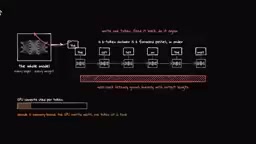
Latency scales linearly with answer length, and the deeper bottleneck is that decoding is memory-bandwidth-bound. During token-by-token generation, GPUs spend most of their time waiting for data to be transferred, rather than actually computing.
This bottleneck stems from a fundamental trade-off in modern GPU architecture. GPUs have powerful parallel compute units (CUDA cores or tensor cores), but these units must continuously read model weights from HBM (High Bandwidth Memory) to operate. For a 70B-parameter model, the weights alone occupy 140 GB (in FP16), and nearly all weights must be transferred from HBM to compute units for every single token generated. Even top-tier GPUs like the H100, with ~3.35 TB/s of HBM bandwidth, fall far short of their peak compute throughput — resulting in significant "compute underutilization." This stands in sharp contrast to batch inference, where multiple sequences share a single weight read, amortizing memory bandwidth costs and dramatically improving GPU utilization.
Speculative Decoding: Draft Small, Verify Big
DSpark's core mechanism is Speculative Decoding.
Speculative decoding was independently proposed by Google DeepMind and Google Brain teams in 2022–2023, grounded in the mathematical theory of rejection sampling. A key theorem guarantees that as long as the target model's acceptance/rejection of draft tokens follows a specific probability rule, the final output distribution is mathematically identical to what the target model would produce independently — a theoretical guarantee of lossless acceleration, not an engineering compromise.
Numerous variants have since emerged: the Eagle series uses feature-level autoregressive prediction (reusing intermediate layers from the target model); Medusa adds multiple parallel decoding heads atop the model; D-Flash takes the aggressive approach of fully parallelizing draft generation. Each approach essentially trades off "draft speed" vs. "draft accuracy." DSpark's semi-autoregressive architecture is the latest exploration of this trade-off.
The core idea: a small, fast draft model generates an entire block of tokens at once (e.g., 6 tokens), and the large target model validates all 6 in a single forward pass, compressing 6 serial passes into 1.
The verification mechanism is equally elegant: the target model retains the longest correct prefix, stops at the first incorrect guess, fills in the correct token, and continues from there in the next round. Critically, the final output is byte-for-byte identical to what the large model would have produced independently — a truly lossless speedup.
Speculative decoding isn't new. The real question is: why is DeepSeek's implementation faster than alternatives?
Decomposing the Latency Formula: Three Levers to Pull
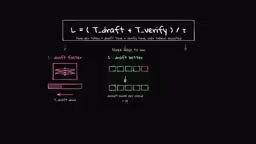
Per-token latency breaks down as:
Time per token = (Draft time + Verification time) ÷ Tokens accepted per round
This formula reveals three optimization axes:
- Faster draft model: reduce draft time
- Higher draft quality: more tokens accepted per round, fewer target model corrections
- Smarter verification: reduce verification time
The Problems with Two Traditional Draft Approaches
Autoregressive drafters (e.g., Eagle 3): generate tokens sequentially, each depending on the previous result. Accurate but slow, with limited block size.
Parallel drafters (e.g., D-Flash): generate an entire block in one shot. Fast, but since tokens are generated independently, the "tail" of the block increasingly diverges from the correct trajectory and tends to get rejected. The paper calls this suffix decay.
The root cause of suffix decay is the strong sequential dependency in natural language. The probability distribution of the Nth word depends heavily on the specific content of the preceding N-1 words (a chain of conditional probabilities). When a parallel drafter generates the token at position k, it has no awareness of what position k-1 actually output — it can only condition on the original context. The further back you go, the more this information deficit accumulates. Experiments typically show a declining acceptance rate curve: the first 2–3 tokens see 70%–90% acceptance, while tokens at positions 6–8 can drop below 30%, wasting substantial GPU compute on predictions that are nearly guaranteed to be rejected.
DSpark's Two Core Innovations
Innovation 1: Semi-Autoregressive Drafting to Suppress Suffix Decay
DSpark's design philosophy: keep the fully parallel heavy draft backbone (similar to D-Flash — fast, generating all positions at once), and attach a lightweight serial head on top, giving each token awareness of the previous token's output.
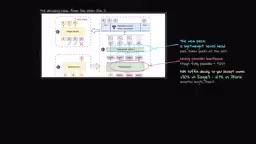
This design precisely eliminates suffix decay: DSpark's accepted block length is approximately 30% longer than Eagle 3 and 16%–18% better than D-Flash, producing more valid tokens per round.
Innovation 2: Confidence-Scheduled Verification to Reduce Production Waste
Speculative decoding has a hidden cost in production: when the target model verifies a full block, it processes all positions — including tail tokens that are almost certainly going to be rejected — wasting GPU resources.
DSpark introduces a confidence head that scores each token and predicts its acceptance probability. The hardware scheduler dynamically decides based on real-time server load: verify the full block under low load; verify only the high-confidence prefix under high load, prioritizing resources for requests that truly need them.
This addresses an engineering problem that is rarely discussed in academic speculative decoding research: real-world inference traffic is highly uneven. Concurrent request volumes between off-peak hours and peak hours can differ by more than 10x. The confidence head is essentially a lightweight classifier (typically only a few dozen MB) that outputs probability estimates for each draft token being accepted by the target model. When server load exceeds a threshold, the scheduler can truncate low-confidence tail tokens and reallocate the saved compute to queued requests. This dynamic strategy significantly improves P99 latency (the 99th-percentile latency, a key metric for tail user experience) under high load — a critical design consideration when translating academic research into production systems.
Production Performance and Open Compatibility
DSpark's most compelling aspect is its production validation. At the same total throughput, each user receives tokens 57%–85% faster, with no additional hardware investment.
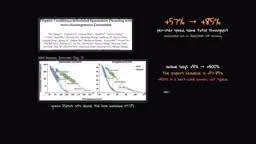
Furthermore, the draft head isn't tied to DeepSeek's own models — it's a universal module that can be attached to any model, with current support for Qwen and Gemma showing strong results (with matching hardware). This means other inference serving teams can adopt this approach directly.
Community Reproduction: Mechanism Verified, but Draft Model Selection Is Critical
One developer attempted reproduction on a Mac M2 Max: pairing a 0.6B draft model with an 8B target model actually resulted in slower inference. The reason: the draft model was only ~3.5x faster than the target model, whereas the ideal speedup ratio should be 10x to 30x.
This constraint has sound underlying logic: working through the latency formula, if the draft model is only 3.5x faster than the target model, the total time overhead of running the draft model often cancels out the time saved during verification, even if 4 tokens are accepted per round. The ideal ratio (10–30x) typically implies a draft model with roughly 1/50 to 1/10 of the target model's parameter count. DeepSeek specifically trained dedicated draft heads rather than simply reusing existing small open-source models — this is the core engineering barrier to real-world deployment. DSpark's true value lies not just in its algorithmic innovations, but in fully open-sourcing these production-validated draft model checkpoints.
That said, the mechanism itself was validated: draft acceptance rates matched the paper's patterns — higher acceptance on code and reasoning tasks, lower on open-ended chat — and 3 out of 4 prompt types produced byte-for-byte identical outputs. This confirms that realizing the speedup benefits requires purpose-trained draft heads, not arbitrarily paired small models.
Summary
DSpark's core logic can be summarized as: a small draft model proposes batches of token candidates, while the large model completes verification in a single forward pass. Two key technical contributions: semi-autoregressive drafting eliminates suffix decay (accepting more tokens per round), and confidence-scheduled verification reduces resource waste under real-world load.
Bottom line: 50%–80% inference speedup in production, support for mainstream models including Qwen and Gemma, and fully open-sourced code. For developers and teams focused on LLM inference efficiency, the DeepSpecs repository is well worth following closely.
Key Takeaways
Related articles

The Truth Behind Codex 'Build a Website in 5 Minutes': AI Isn't Creating Sites—It's Helping You Copy Them
Exposing the truth behind viral Codex 5-minute website videos: creators aren't building original sites with AI—they're copying shared prompts or scraping others' work. Learn AI coding tools' real limits.

Getting Started with AI Agent Development: A Complete Guide from Concept to Practice
A comprehensive guide to AI Agent architecture and development, covering automated marketing, intelligent customer service, and investment analysis scenarios with single and multi-agent collaboration.

The Truth Behind Codex 'Build a Website in 5 Minutes': AI Isn't Creating Sites — It's Helping You Copy Them
Exposing the truth behind viral Codex 5-minute website videos: creators aren't building original sites with AI — they're copying shared prompts or scraping others' work.