Does Yelling at AI Make It Smarter? Breaking Down LLM Behavior and Prompting Techniques

Yelling at AI doesn't make it smarter — clearer prompts do. Here's the science behind it.
When users feel like insulting an AI gets better results, it's usually the clearer phrasing — not the insults — that's actually working. This article explains how Transformer-based LLMs process context, why different models behave differently due to RLHF alignment strategies, and how prompt engineering techniques can dramatically improve your results without the frustration.
A Phenomenon That's Equal Parts Funny and Frustrating
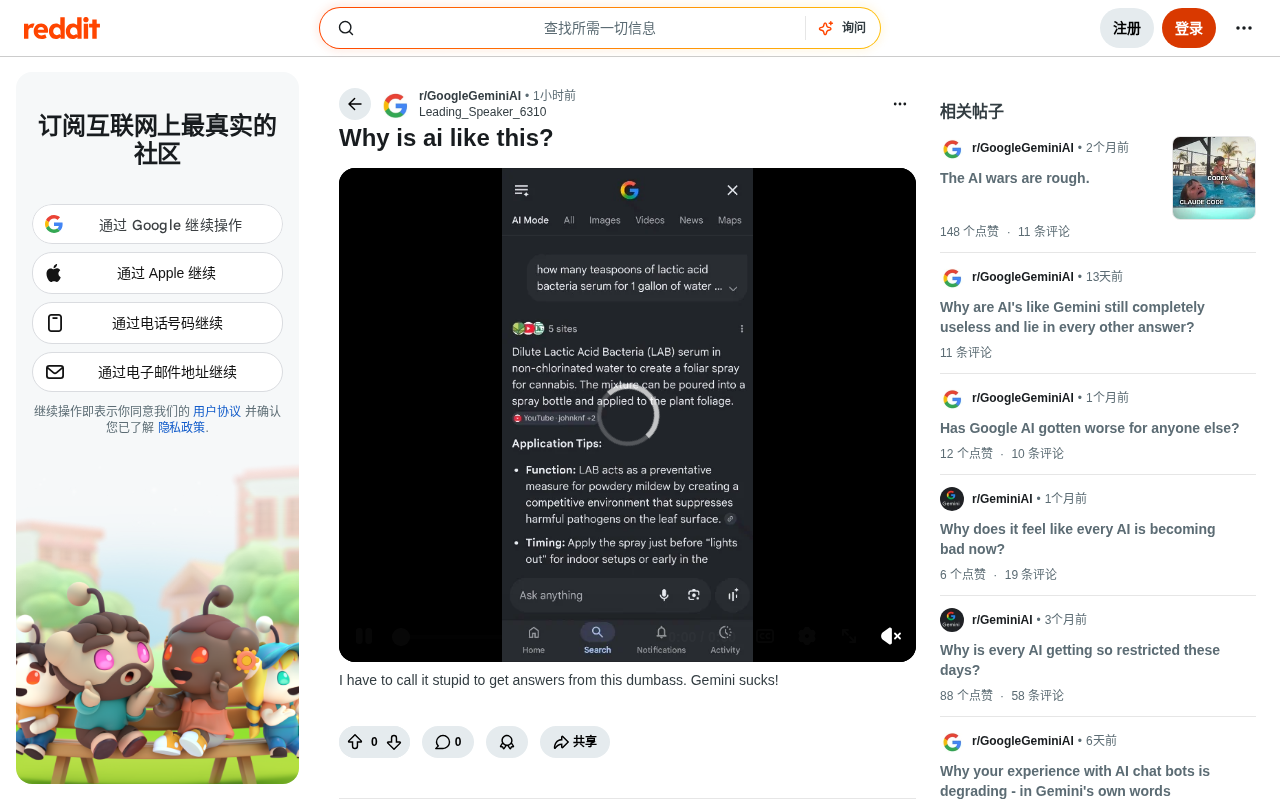
Recently on Reddit, a user posted a soul-searching question: "Why is AI like this?" They complained about having to "insult" the AI first — calling it "stupid" or a "dumbass" — before getting a decent response from models like Gemini, bluntly declaring "Gemini sucks!"
What looks like an emotional rant actually reflects a widespread confusion among everyday users interacting with large language models (LLMs): why does a harsh or even rude tone sometimes work better? Does AI really respond better to pressure? This deserves a serious look from a technical perspective.
AI Has No Emotions — But Tone Does Affect Output
LLMs Are Fundamentally Probability Predictors
First, let's clear up a common misconception: large language models don't have real emotions or personalities. When you call one "stupid," it doesn't feel hurt, nor does it suddenly "try harder" to give a better answer. At its core, a model predicts the most probable next word based on patterns learned from massive amounts of training text.
This capability is built on the Transformer architecture — introduced by Google in the 2017 paper Attention Is All You Need. Its core mechanism is Self-Attention, where the model dynamically computes relevance weights between all words in the input sequence when generating each new word, capturing long-range semantic dependencies. When a user inputs emotionally charged text, the Transformer encodes the entire input as a representation in high-dimensional vector space — carrying not just semantic meaning, but also implicit signals about tone, style, and urgency.
This means every word you type — including emotional language — becomes part of the model's context, fundamentally changing the mathematical input it receives. This shifts the probability distribution during decoding, ultimately affecting both the style and focus of the output. When you use more forceful, specific, and directive language, the context carries higher "information density," and the model tends to produce more focused, direct responses.
Why "Yelling" Sometimes Works — Not for the Reason You Think
When users feel like they only get good answers after lashing out, the insult itself usually isn't what's doing the work. What actually happens is that when people get frustrated, they instinctively describe their problem more clearly and specifically.
For example, a vague "write me something" becomes "listen up, I need a Python script that runs directly — no fluff." The second version clearly states intent and constraints, so naturally the AI delivers a more useful result.
What's actually working is the clearer instruction — not the act of insulting. This is a classic misattribution error many users make in their interactions.
Is Gemini Actually "Bad" — Or Is It a Prompting Problem?
Why Different LLMs Have Different "Personalities": The Technical Root of Alignment Strategy
The Reddit post specifically called out Google's Gemini. To be fair, different AI companies do make genuinely different choices in their alignment strategies.
AI alignment refers to the technical effort to make a model's behavior conform to human intentions and values. The dominant approach today is Reinforcement Learning from Human Feedback (RLHF): human annotators rank model outputs, a "reward model" is trained on these preferences, and then reinforcement learning is used to optimize the LLM toward higher-scoring outputs. Different companies weigh safety versus helpfulness differently during the RLHF phase — if annotation guidelines over-emphasize risk avoidance, the model tends to give conservative, vague answers loaded with disclaimers. This is the technical root cause of why some users perceive Gemini as "overly cautious" or "evasive." OpenAI, Anthropic, Google, and others are all continuously navigating the tension between being Helpful, Harmless, and Honest — and that tension shows up directly in the end-user experience.
That said, blaming everything on "the model being bad" is too simplistic. The same model can produce wildly different results depending on how you ask. This is precisely why Prompt Engineering has rapidly emerged as a serious discipline.
Instead of Insulting It, Learn to Ask Better
Prompt engineering is the methodology of systematically designing input text to maximize LLM output quality — and it has a clear technical basis: since language models are essentially "completing" context, the structure and content of your input directly determines the model's "starting point" in probability space.
Common advanced techniques include: Chain-of-Thought (CoT) prompting — asking the model to "think step by step," which significantly improves accuracy on complex reasoning tasks; Few-shot prompting — providing 2–5 input/output examples to help the model quickly align to your expected format; and System prompts — setting roles and rules before the conversation begins.
In practice, these techniques deliver immediate results:
- Define a role: Tell the AI what role it should play — e.g., "You are a senior backend engineer."
- Set constraints: Clearly specify output format, length, language style, and what to avoid.
- Provide context: Give all the relevant background upfront to minimize back-and-forth clarification.
- Break it down: For complex tasks, decompose them into steps and work through them incrementally, rather than making one overly broad request.
The Deeper Reflection Behind Human-AI Interaction
The Psychological Gap Created by Anthropomorphic Design
The reason this Reddit post resonated so widely is that it points to a well-documented psychological phenomenon. Stanford researchers Clifford Nass and Byron Reeves proposed the "Media Equation" theory as far back as 1996, noting that humans unconsciously apply social norms to computers and develop emotional responses similar to those in human relationships.
When AI interfaces use conversational design, have names, and project a "personality," this anthropomorphic effect is amplified significantly. User expectations shift from "tool" to "intelligent assistant" or even "collaborative partner." When a model gives an ambiguous answer, cognitive dissonance triggers frustration and anger, leading users to vent as if dealing with an uncooperative person.
This is also worth thinking about from a product design standpoint: the better conversational AI gets at feeling human, the higher user expectations become — and the sharper the disappointment when things go wrong. Overly realistic personalization may actually worsen the negative experience when a task fails.
AI Companies Need to Be More Proactive in Guiding Users
From an industry perspective, AI companies shouldn't place the entire burden of "knowing how to ask" on users. More intuitive guided interfaces, smarter intent recognition, and proactively asking for clarification when a query is ambiguous are all viable paths to a better experience. Truly great AI products should understand plain language — not require users to master a special "AI dialect" first.
Conclusion: Try Talking to AI Differently
Back to the original question — "Why is AI like this?" The answer might be: AI isn't trying to frustrate you. It faithfully reflects the quality of what you put in. The Transformer's attention mechanism doesn't distinguish between "polite" and "rude" — it simply processes all the context signals you provide. Before you call it a "dumbass" next time, ask yourself first: did I describe my question clearly enough?
As LLM capabilities continue to evolve, alignment techniques mature, and interaction design improves, the awkward need to "yell to get an answer" will eventually become a relic of the past. But until then, learning to communicate well with AI — understanding its probabilistic nature and mastering basic prompt engineering — remains an essential skill for anyone who wants to get real value out of these tools.
Key Takeaways
Related articles

The Truth Behind Codex 'Build a Website in 5 Minutes': AI Isn't Creating Sites—It's Helping You Copy Them
Exposing the truth behind viral Codex 5-minute website videos: creators aren't building original sites with AI—they're copying shared prompts or scraping others' work. Learn AI coding tools' real limits.

Getting Started with AI Agent Development: A Complete Guide from Concept to Practice
A comprehensive guide to AI Agent architecture and development, covering automated marketing, intelligent customer service, and investment analysis scenarios with single and multi-agent collaboration.

The Truth Behind Codex 'Build a Website in 5 Minutes': AI Isn't Creating Sites — It's Helping You Copy Them
Exposing the truth behind viral Codex 5-minute website videos: creators aren't building original sites with AI — they're copying shared prompts or scraping others' work.