Exposing the GPT-5.6 Marketing Scam: Are the Sol/Terra/Luna Sub-Models Real Releases or Just a Trap?

The viral "GPT-5.6 Sol/Terra/Luna" launch is a fabricated marketing scam designed to push third-party top-up sales.
A viral Bilibili video claimed OpenAI released "GPT-5.6" with three sub-models named Sol, Terra, and Luna — but none of this matches any official OpenAI announcement. The video uses FOMO tactics and fake product hype to funnel viewers toward risky third-party ChatGPT top-up services on platforms like Xianyu. This article breaks down the red flags and explains how to verify real AI releases.
A Suspicious "Major Launch"
Recently, a Bilibili video used the hook "first exclusive release on the entire internet" to claim that OpenAI had officially launched a new model series called "GPT-5.6" at "1 AM last night," introducing three so-called sub-models: Sol (strongest reasoning), Terra (balanced), and Luna (fast tasks). The video branded these as "the most powerful AI models on earth" — before conveniently pivoting to a full "GPT Plus top-up tutorial."
Looking at the content structure, it's clear the video's real purpose isn't technical education — it's to manufacture urgency around a "major new product launch" and funnel viewers toward third-party payment channels. This article fact-checks and breaks down the key claims.
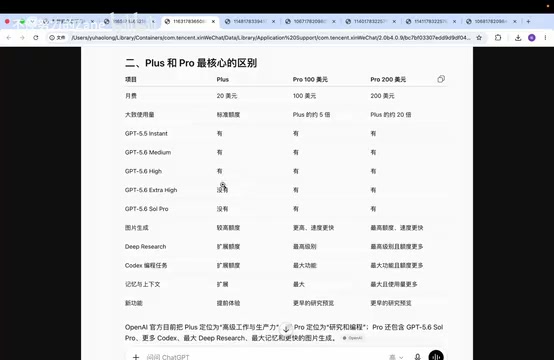
Is "GPT-5.6 Sol/Terra/Luna" a Real Release?
The Naming Style Doesn't Match OpenAI's Official Convention
As of now, OpenAI has never released a model called "GPT-5.6" or a series using celestial names like "Sol/Luna/Terra" (Sun/Moon/Earth). To understand why this naming scheme is suspicious, you need to understand OpenAI's actual product naming logic: the GPT series uses version numbers to distinguish capability generations (e.g., GPT-3.5, GPT-4, GPT-4o); the o-series (o1, o3) focuses on enhanced reasoning; and models like Codex, DALL·E, and Whisper are function-specific. This naming system has an internal technical logic that also differs sharply from competitors like Google (Gemini Ultra/Pro/Flash) and Anthropic (Claude Opus/Sonnet/Haiku) — both of which use non-numerical naming but back it up with clear official documentation explaining each tier.
The video mixes references to "Codex coding," "context memory," and "extra high mode" — blending old and new concepts to create the illusion of insider knowledge. In reality, Codex was an early OpenAI model focused on code; it stopped offering standalone API access in 2023, with its capabilities folded into the GPT-4 series. "Extra high" does not appear as a reasoning mode in any official OpenAI documentation. A quick comparison with OpenAI's official blog and developer docs reveals that none of these claims have any official backing.
"Launched at 1 AM Last Night" — A Classic FOMO Tactic
The video repeatedly emphasizes phrases like "official launch event at 1 AM last night" and "now live," exploiting behavioral economics concepts of loss aversion and FOMO (Fear of Missing Out). Research shows people are roughly twice as sensitive to potential losses as to equivalent gains, which means "missing out on the latest AI tool" is a stronger motivator for immediate action than "gaining access to a new tool." This tactic is especially effective in the AI space, where the pace of technological change is genuinely fast — making it easy for audiences to believe in overnight paradigm shifts and skip rational verification before making purchasing decisions.
A legitimate technology launch typically comes with a full set of verifiable materials: an official blog post with a technical report (such as the GPT-4 Technical Report, which runs over 100 pages), updated API documentation, a live pricing page, synchronized benchmarking by third-party evaluators (e.g., MMLU, HumanEval), and announcements from verified official Twitter/X accounts. Major OpenAI launches are also commonly accompanied by live demos or press events. Any "release" lacking these cross-verifiable materials should be treated as unsubstantiated — not taken at face value based on a single narrated video.
The Video's Real Goal: Funneling Traffic to Third-Party Top-Up Services
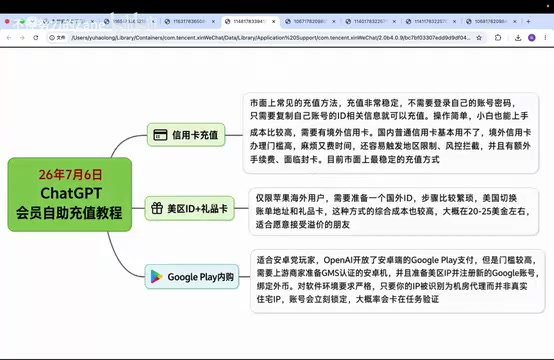
The video spends considerable time walking through so-called "three mainstream top-up methods" — which is where the content's true purpose becomes clear:
- Credit card top-up (card charging): Claimed to be "most stable," but requires an overseas bank card;
- US Apple ID + gift card: For Apple users with overseas accounts only, with a $20–$25 markup;
- Google Pay in-app purchase: For Android users, but "accounts with impure environments will be immediately locked."
The video then directs viewers to a specific store on Xianyu (China's second-hand marketplace) to purchase "¥158 Plus card top-ups," "¥59 two-day exclusive ready-made accounts," and even "¥730 or ¥1,228 Pro card top-ups" — complete with a customer service QQ contact.

What Are the Risks of Third-Party Top-Up Services?
The third-party ChatGPT Plus top-up market is essentially a gray-market industry built on geographic payment restrictions. Since OpenAI has not officially opened payment channels in mainland China, some users turn to platforms like Xianyu and Taobao for proxy top-up services. These typically work through bulk purchases of US gift cards, virtual credit cards, or shared accounts — and OpenAI's risk control systems continuously flag abnormal login behavior (such as the same account logging in from multiple geographic locations in a short period, or use of proxy IPs), triggering account bans.
Account security risk: So-called "ready-made accounts" or "exclusive accounts" are often bulk-registered or of unknown origin, and can be banned at any time for violating OpenAI's Terms of Service. OpenAI's terms explicitly prohibit account sharing and resale. Once a violation is detected, the platform can ban the account without a refund, leaving users with virtually no recourse — making post-purchase disputes extremely difficult.
Payment and compliance risk: Bypassing official payment channels through third-party gift cards and proxy top-ups is itself operating at the edge of platform rules. The video's own warning that "accounts with impure environments will be immediately locked" inadvertently reveals the inherent instability of these gray-market operations — even the sellers acknowledge this is a high-risk practice.
Misinformation risk: Using the fabricated "GPT-5.6" as a selling point is a textbook case of false advertising — using fictitious product claims to drive impulsive purchasing decisions.
How to Spot AI Marketing Traps

Faced with an endless stream of "exclusive first releases" and "world's most powerful" claims, here are a few dimensions to stay alert to:
1. Use Official Sources as the Only Benchmark
For any model release, the only reliable sources are OpenAI's official website (openai.com), its official blog (openai.com/blog), or verified official social media accounts. Major OpenAI releases typically appear simultaneously across multiple official channels and can be confirmed in the update logs of the API platform. Never believe a "new model" exists based solely on a narrated video — even if it looks polished and includes "screenshots," those can be fabricated or taken out of context.
2. Be Wary of Content That Pivots Straight from "New Release" to "How to Top Up"
If a video spends its first half hyping a powerful new product and its second half directing you to "how to top up" or "buy from this store," it's almost certainly marketing content rather than genuine technical coverage. This two-part structure — "tech hype + purchase funnel" — is a well-established conversion funnel design in content marketing. Genuine technical reviews don't rush to get you to spend money; they provide reproducible test methods and citable data sources.
3. Always Prioritize Official Payment Channels
For users who genuinely need access, subscribe to ChatGPT Plus or Pro through OpenAI's official channels. While domestic payment does involve some friction, official channels are far more reliable than third-party top-up services in terms of account security, feature completeness, and after-sales support. An official subscription also ensures you receive new feature updates first — proxy-purchased accounts are often restricted and unable to access the latest capabilities.
Conclusion: The More Something Claims to Be "First," the More You Should Ask for Proof
The so-called "major launch" of "GPT-5.6 Sol/Luna/Terra" — with zero official backing — looks far more like a marketing narrative fabricated to drive third-party top-up sales. In an era of sustained AI hype, content that invents models, exaggerates capabilities, and nudges consumers toward purchases is not rare. It thrives precisely because most users can't instantly verify real technical developments.
For tech enthusiasts, the best defense is maintaining critical judgment about information sources, sticking to cross-verification (checking official blog, developer documentation, and reputable tech media), and defaulting to official channels. The louder something screams "first on the internet" or "most powerful on earth," the more worth asking: Where's the evidence?
Key Takeaways
Related articles

Disaster and Glory of the Apollo Program: The History We Must Revisit Before Returning to the Moon
From the fatal Apollo 1 fire to Apollo 8's daring lunar orbit to Apollo 11's successful landing—revisiting the disasters, fears, and compromises of the Apollo program and their lessons for today's return to the Moon.

Netflix Trust Exercise Turns Into Firing Trap: Where Are the Boundaries of Corporate Trust?
A Netflix employee was fired after sharing private info in a trust exercise. We analyze the risks of corporate trust exercises and how employees can protect themselves.

AMD CDNA5 Architecture Deep Dive: Technical Evolution and the AI Computing Competition Landscape
Deep analysis of AMD's CDNA5 architecture covering Chiplet packaging upgrades, HBM memory evolution, and low-precision compute optimization, examining how AMD challenges NVIDIA's AI chip dominance.