Free Access to Top AI Models? The Hidden Security Risks Behind Aggregator Sites

Free AI aggregator sites use fake model versions and expose users to serious privacy and data risks.
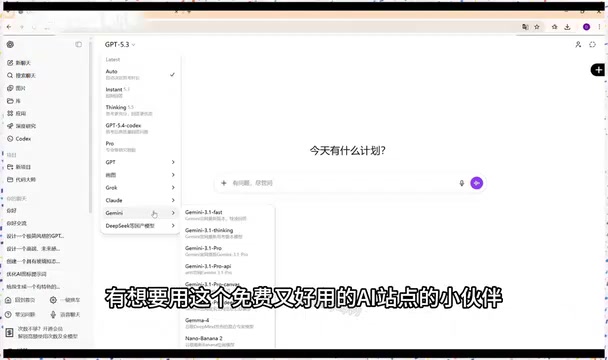
Videos promoting free AI aggregator sites are going viral, claiming access to nonexistent model versions like "GPT 5.5" and "Claude 4.7." These sites are typically API proxies or reverse proxies that route all user data through untrusted third-party servers, creating serious privacy and security risks. With official platforms already offering generous free tiers, there's no reason to risk your data on these sketchy alternatives.
AI Sites That Seem Too Good to Be True
Recently, platforms like Bilibili have been flooded with videos promoting "free access to the world's top AI models," claiming that a single "incredible hidden gem site" lets you use ChatGPT, Claude, Gemini, Grok, and every other major LLM at full capacity — with zero barriers and unlimited usage. These videos feature irresistibly clickbait titles, casually throwing around cutting-edge-sounding model version numbers like "GPT 5.5" and "Claude 4.7."
But is it really that good? This article takes a deep dive into the true nature of these AI aggregator sites from both technical and security perspectives, helping you avoid potential privacy and data risks.
Fake Version Numbers: The First Red Flag
The most glaring issue with these videos is the abundance of model version numbers that simply don't exist.
Take a recent typical example: the video mentioned models like "GPT 5.5 Syncing," "Grok 4.2," and "Claude 4.7." However, as of now:
- OpenAI's latest models are the GPT-4o and o3 series — there is no "GPT 5.5"
- Anthropic's latest Claude version is Claude 4 (Sonnet/Opus) — there is no "4.6" or "4.7"
- xAI's latest Grok version is Grok 3/4 — there is no "4.2"
- Google's Gemini series has no "3.5" version number either
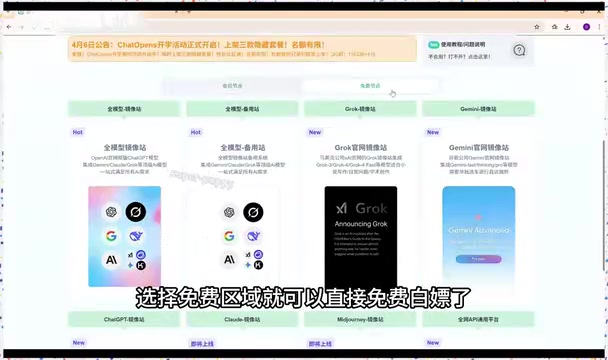
These fabricated version numbers alone expose the content's unreliability. The creators either have zero understanding of the AI industry, or they're deliberately inventing inflated version numbers to create a sense of cutting-edge technology and attract unsuspecting users.
Industry Standards for LLM Version Naming
To understand why these version numbers are obviously fake, you need to know how major AI companies name their models. OpenAI's naming progresses from GPT-3 to GPT-4, then to GPT-4o (where "o" stands for "omni") and the o-series reasoning models (o1, o3, etc.) — each version number corresponds to a major architectural upgrade or significant capability breakthrough. Anthropic's Claude series progresses from Claude 1 to Claude 4, passing through Claude 2 and Claude 3 (with Haiku/Sonnet/Opus tiers), and each release is accompanied by official technical reports and benchmark data.
These companies don't quietly release "half-generation" updates (like 5.5 or 4.7), because each version iteration involves enormous training costs — typically in the hundreds of millions of dollars — along with rigorous safety evaluation processes (including red-teaming, alignment assessments, etc.), and is invariably accompanied by formal public launches and media coverage. Anyone who genuinely follows the AI space would never be fooled by these fabricated version numbers.
The Technical Reality Behind AI Aggregator Sites
API Proxying and Reverse Engineering
These so-called "direct access to official sites" aggregator platforms are typically one of the following:
-
API Proxy Sites: The site operator purchases API keys from various model providers and serves users through a custom-built frontend. What users see isn't the actual official site, but a third-party page mimicking the official interface.
-
Reverse Proxies: Using technical methods to reverse-proxy the official website, where user requests are forwarded through an intermediary server. This means all your conversation content passes through a third-party server.
-
Shared Account Pools: The operator maintains a pool of paid accounts, and users are essentially taking turns using these shared accounts.
Technical Details Explained
An API (Application Programming Interface) is a standardized way for software systems to communicate with each other. Taking OpenAI as an example, developers can purchase API keys to programmatically access GPT model capabilities, billed by the number of input and output tokens. A token is the basic unit that large language models use to process text — one token corresponds to roughly 3/4 of an English word or 1-2 Chinese characters. API call costs for GPT-4-level models range from approximately $2.5 to $10 per million input tokens, meaning that operating an aggregator site for thousands of free users could cost thousands or even tens of thousands of dollars per month in API fees alone.
A reverse proxy is a network architecture technique originally used for legitimate purposes like load balancing, cache acceleration, and security protection. In this context, however, it's being misused as a traffic interception tool — it inserts a middle layer between the user and the target server that can fully read, log, and even tamper with all data transmitted in both directions. The interface users see in their browser may look virtually identical to the official site, but in reality, all data is being routed through an untrusted third-party server.
The Cost of "Free": You Are the Product
There's no such thing as a free lunch. These sites have significant operating costs — API calls at the GPT-4 level are quite expensive. So behind the "free" label, the price users actually pay may include:
- Privacy Exposure: Your conversation content, query patterns, and even sensitive information you input all pass through third-party servers, with the risk of being logged and misused
- Data Harvesting: Personal information like email addresses and phone numbers provided during registration may be used for other commercial purposes
- Traffic Monetization: The typical pattern in these videos — "follow + like + comment" to get the link — is essentially a traffic monetization scheme
The Real Cost of AI Services
Understanding the cost structure of AI services helps identify the implausibility of "free" offerings. Take OpenAI's GPT-4o as an example: its API pricing is approximately $2.5 per million input tokens and $10 per million output tokens. A single conversation might consume thousands of tokens, and an active user might have dozens of conversations per day. By this calculation, even with just 1,000 active users, monthly API costs could reach thousands of dollars. This doesn't even include server hosting, bandwidth, frontend development, and maintenance costs. When a site claims to offer these services completely free, its business model necessarily involves monetization methods invisible to users — and your data is very likely the "product" being monetized.
Deeper Security Risks
When users access AI services through third-party aggregator sites, the security risks extend far beyond conversation content leaks. Man-in-the-Middle Attacks are among the most typical threats: the third-party server can fully log users' IP addresses, browser fingerprints, device information, access time patterns, and other metadata — combined, this information is sufficient to build detailed user profiles. More seriously, if users input code snippets, business plans, personal health information, or other sensitive content in conversations, once collected, this data could be used for targeted advertising, social engineering attacks, or even traded on the dark web. Under data protection regulations like GDPR (the EU's General Data Protection Regulation), legitimate AI service providers must clearly disclose their data processing practices and provide deletion mechanisms, while these third-party sites are typically completely outside the scope of such regulations, leaving users' data rights entirely unprotected.
Distinguishing Real from Fake AI Image Generation
These videos also showcase supposed AI image generation capabilities, claiming the results "blow every other model out of the water" and displaying amusing images like "Elon Musk endorsing Lao Gan Ma chili sauce."

Objectively speaking, current mainstream AI image generation models (such as DALL-E 3, Midjourney V6, Flux, etc.) can indeed produce highly realistic images. However, several points deserve attention:
- The image quality shown in the videos cannot be verified as actually coming from the featured site
- Even if the results are genuine, that doesn't mean the site itself is safe or reliable
- The same results can be achieved through official channels
The Current State of Image Generation Technology
Current mainstream AI image generation technology is primarily based on the Diffusion Model architecture. It works by gradually adding noise to an image until it becomes pure noise, then training a neural network to reverse this process — progressively restoring a clear image from noise. DALL-E 3 is OpenAI's image generation model integrated into ChatGPT, excelling at precisely understanding complex text instructions; Midjourney V6 is known for its distinctive artistic style and aesthetic expressiveness; and Flux, developed by Black Forest Labs, is widely popular in the open-source community, allowing users to deploy and run it locally.
Notably, the computational cost of image generation is far higher than text generation — generating a single high-quality image can consume computing resources equivalent to hundreds of text conversations (involving extensive GPU parallel computation), which is why image generation features typically have stricter usage limits. A site claiming to offer unlimited free high-quality image generation faces even more implausible cost pressures.
How to Safely Use AI Large Language Models
Official Channels Are Always the Best Choice
| Model | Official URL | Free Tier |
|---|---|---|
| ChatGPT | chat.openai.com | GPT-4o includes free quota |
| Claude | claude.ai | Daily free conversation quota |
| Gemini | gemini.google.com | Free to use |
| Grok | grok.com | Free to use |
In reality, all major AI model platforms offer some degree of free usage quota. ChatGPT's GPT-4o model, Claude Sonnet, Google Gemini, xAI Grok, and others can all be experienced for free directly — there's absolutely no need to risk your privacy on sketchy third-party sites.
Legitimate Alternatives
If you need higher usage limits or more features, here are some legitimate options:
- Official Subscriptions: ChatGPT Plus ($20/month), Claude Pro ($20/month), etc. — transparent pricing with guaranteed data security. These subscription services are protected by comprehensive privacy policies and terms of service, giving users clear rights to know about and control their data.
- Self-hosted via API: Build your own interface using official APIs, pay per usage, and maintain complete control over your data. This approach suits users or teams with some technical ability, who can use open-source frontend projects (like ChatGPT-Next-Web, LobeChat, etc.) to quickly set up a private AI chat interface where all data flows only through their own servers.
- Domestic Compliant Platforms (for users in China): Models like Tongyi Qianwen, Wenxin Yiyan, Kimi, and DeepSeek can be used without special network configurations and comply with domestic data security regulations. These models already perform excellently in Chinese language understanding and generation, meeting the vast majority of everyday use cases.
Conclusion: Stay Rational, Resist the Temptation
As AI tools become increasingly mainstream, the temptation of "free access to the world's top AI models" is undeniably strong. But as rational users, we need to recognize the following:
- Fake version numbers are the most direct warning sign — if the content can't even get model names right, its credibility speaks for itself
- "Free" almost always comes with hidden costs — your data and privacy may be the real price you're paying
- Official channels already provide generous free tiers — more than enough for most everyday use cases
Rather than chasing unreliable "freebie" channels, invest your time in learning how to use official tools more effectively. After all, in the age of AI, the quality of your prompts matters far more than the model's version number.
Related articles

The Truth Behind Codex 'Build a Website in 5 Minutes': AI Isn't Creating Sites—It's Helping You Copy Them
Exposing the truth behind viral Codex 5-minute website videos: creators aren't building original sites with AI—they're copying shared prompts or scraping others' work. Learn AI coding tools' real limits.

Getting Started with AI Agent Development: A Complete Guide from Concept to Practice
A comprehensive guide to AI Agent architecture and development, covering automated marketing, intelligent customer service, and investment analysis scenarios with single and multi-agent collaboration.

The Truth Behind Codex 'Build a Website in 5 Minutes': AI Isn't Creating Sites — It's Helping You Copy Them
Exposing the truth behind viral Codex 5-minute website videos: creators aren't building original sites with AI — they're copying shared prompts or scraping others' work.