Getting Started with Claude Code: Why Terminal Agents Are the Top Choice for Enterprise AI Testing

Why terminal agents like Claude Code are the safest, most controllable choice for enterprise AI testing.
Terminal agents such as Claude Code operate on a per-project basis, keeping full control in human hands—ideal for enterprises. Device agents are easy to use but pose serious permission risks. Backed by Anthropic, Claude Code paired with DeepSeek offers a controllable, cost-effective stack for AI-driven testing.
In the technology selection for AI-driven testing, the combination of Claude Code + DeepSeek is becoming an increasingly mainstream solution. Based on hands-on teaching, this article systematically explores the core positioning of Claude Code, the key differences between terminal agents and device agents, and why it is better suited for enterprise-level project implementation.
What Exactly Is Claude Code
Compared to widely known conversational AI tools like DeepSeek and Doubao, Claude Code seems relatively niche. The reason is that it is fundamentally a highly specialized development tool—a command-line programming tool launched by Anthropic, primarily aimed at the development field and running in a terminal (command-line) environment.
Choosing this company's product is no accident. Anthropic has deep expertise in the field of artificial intelligence: its Claude series of models boast top-tier coding capabilities globally, and the now-popular MCP (Model Context Protocol) was also first proposed and promoted by this company. It is precisely this technical foundation that makes Claude Code a trustworthy choice.
However, before diving deeper into its use, it's worth clarifying a core concept first: the two major categories of AI Agents.
Terminal Agent vs. Device Agent: The Key Divide in Enterprise Selection
To implement AI-driven testing, the core idea is to select an Agent and let it think independently, advance tasks, and continue until the work is complete. Agents fall into two major categories, and understanding their differences is the first step in technology selection.
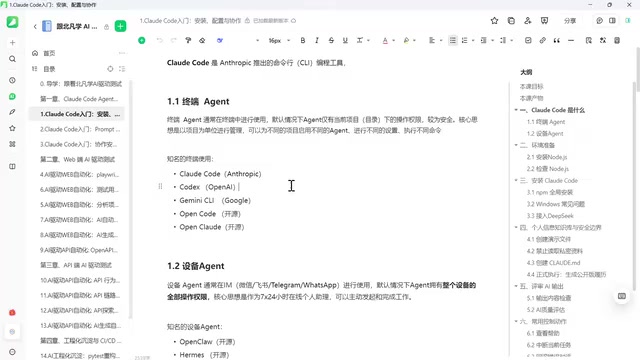
Terminal Agent: A Controllable Solution Managed by Project
The Terminal Agent is exactly the category that Claude Code belongs to, and it has two distinct characteristics.
First, it runs in the terminal command line. This interaction style was historically favored by developers and tech enthusiasts, with ordinary users having little exposure to it, creating a certain entry barrier.
Second—and most importantly—it is managed on a per-project (or per-directory) basis. This means you do not hand over your entire computer to the AI; the user always retains the highest decision-making authority over the entire device. You simply take a single directory or a single project and hand it over to the AI for use.
This design aligns very well with actual enterprise needs. For enterprises, computers are core assets and cannot be casually entrusted to an uncertain AI. Terminal agents allow you to set up independent agents for different projects, execute different commands, and apply differentiated configurations, while global control always remains in human hands and the AI only takes on part of the work. This is the fundamental reason it has become the most mainstream and most reliable application solution in enterprise environments.
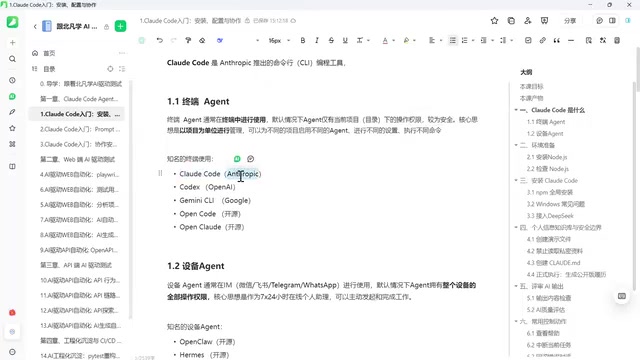
Besides Claude Code, well-known terminal agents include OpenAI's Codex, Google's Gemini CLI, and Cline. These commercial tools share one common trait: when in use, they are typically bound to their own models—Claude Code calls Claude by default, Codex calls GPT by default, and the Gemini series follows the same pattern.
Of course, users are not restricted to only the official models. The open-source community offers many alternatives, such as Open Code and Open Cloud. Just from their names, you can see the tribute to and benchmarking against Claude Code—which in turn is proof of Claude Code's excellence and influence in the industry.
Device Agent: The Permission Risks Behind Convenience
In contrast to terminal agents is the Device Agent, which is used in a completely different way. Device agents are generally invoked through IM tools—chat software such as WeChat, Feishu, and DingTalk all work.
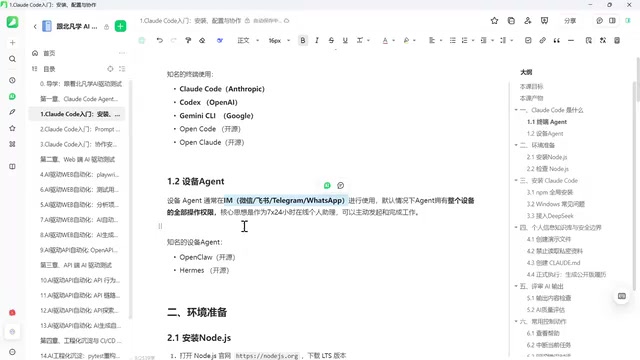
The biggest advantage of this approach is its extremely low barrier to entry: there's no need to open a computer or be familiar with the command line. Using the chat tools you're most familiar with, you can drive the AI to complete complex tasks through conversation.
But convenience comes at the cost of surrendering permissions. Since the operator may not even have opened a computer, they can only let the AI manage the entire device on their behalf. As a result, device agents often have full permissions over the entire device, equivalent to fully entrusting the computer to the AI.
This brings real security risks: in some cases, the AI has deleted system files and caused crashes, while others have led to leaks of confidential information. When such applications were at their peak popularity, national security authorities also issued clear security warnings. Therefore, the core positioning of device agents is that of a "personal assistant," suitable for individual personal use but not suitable for enterprise scenarios—many companies have already explicitly prohibited employees from using such tools in project work, because the risk of entrusting company assets and even confidential data to an uncontrollable AI is unbearable.
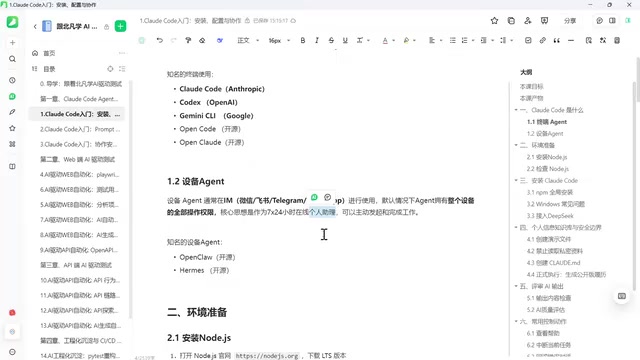
Well-known device agents include OpenClaude (commonly called "crayfish") and some new types of agents with self-evolution capabilities. The latter can continuously improve themselves and have considerable potential, but they consume more tokens and are full of uncertainty due to their continuous self-iteration—hand over your entire device to it, and the next day you might find the system unusable.
Why Enterprise AI Testing Should Choose Claude Code
On balance, the selection logic is quite clear: for personal entertainment or lightweight task scenarios, device agents like OpenClaude are perfectly viable; but for company projects, you should choose a solution with greater controllability.
This is exactly the core reason for choosing terminal agents, especially Claude Code—it maintains outstanding capabilities while also being controllable, avoiding the catastrophic risks of "handing everything over to the AI." And Claude Code's influence in the industry is already evident from the tributes and references made by numerous open-source tools.
The finalized tech stack is: Claude Code as the Agent + DeepSeek as the underlying large model. This combination fully leverages Claude Code's advantages in engineering and controllability, while using DeepSeek to strike a balance between cost and capability, laying the foundation for subsequent hands-on scenarios such as "one-click generation of Excel test cases."
Summary
For teams looking to introduce AI into their testing workflows, understanding the classification of agents is the key starting point for selection. Terminal agents operate on a per-project basis, with humans always retaining the highest decision-making authority, making them the most reliable implementation path in enterprise environments; device agents, while easy to get started with, carry prominent risks due to their blurry permission boundaries and are better suited for personal use scenarios. Backed by Anthropic's deep technical expertise and broad ecosystem influence, Claude Code has become the benchmark choice in the terminal agent domain.
Related articles

Disaster and Glory of the Apollo Program: The History We Must Revisit Before Returning to the Moon
From the fatal Apollo 1 fire to Apollo 8's daring lunar orbit to Apollo 11's successful landing—revisiting the disasters, fears, and compromises of the Apollo program and their lessons for today's return to the Moon.
Netflix Trust Exercise Turns Into Firing Trap: Where Are the Boundaries of Corporate Trust?
A Netflix employee was fired after sharing private info in a trust exercise. We analyze the risks of corporate trust exercises and how employees can protect themselves.

AMD CDNA5 Architecture Deep Dive: Technical Evolution and the AI Computing Competition Landscape
Deep analysis of AMD's CDNA5 architecture covering Chiplet packaging upgrades, HBM memory evolution, and low-precision compute optimization, examining how AMD challenges NVIDIA's AI chip dominance.