GLM5.2 Frontend Development Capabilities Tested: Better Aesthetics Than GPT5.5?

GLM5.2 beats GPT5.5 in frontend aesthetics but struggles with slow inference and limited API access.
Real-world testing reveals that Zhipu's GLM5.2 slightly outperforms GPT5.5 in frontend page aesthetics and design polish, marking a significant leap from the GLM4.x era. However, painfully slow inference speed and limited API availability remain critical shortcomings that hinder practical adoption. While the results demonstrate rapid progress in Chinese-developed LLMs for specific domains, challenges in productization and developer ecosystem building must be addressed to translate technical strength into real-world competitiveness.
A Surprising Ranking: GLM5.2 Breaks Into the Top Tier of Frontend Development
Recent AI model rankings in web development have drawn considerable attention — Zhipu's GLM5.2 ranks just behind Firebolt 5 in frontend development capabilities, placing remarkably high. This result surprised many developers, as GLM4.x was generally not highly regarded for its coding abilities.

Frontend development capability evaluations for AI models typically cover multiple dimensions including HTML/CSS/JavaScript code generation, UI component construction, and responsive layout implementation. Common evaluation methods in the industry include WebArena, SWE-bench, and various customized frontend task benchmarks. These tests require models to generate complete web pages or components from natural language descriptions, then score them comprehensively on functional correctness, visual fidelity, code quality, and maintainability. Notably, frontend development evaluation is more subjective than pure algorithm challenges, as it involves aesthetic judgment and user experience — factors that are difficult to quantify.
From GLM4 to GLM5.2, Zhipu appears to have made a qualitative leap. GLM (General Language Model) is a large language model series developed by Zhipu AI based on their proprietary GLM pre-training framework. The GLM architecture was originally proposed by a Tsinghua University team, employing an autoregressive blank-filling pre-training objective that differs from both GPT's pure autoregressive approach and BERT's masked language modeling. From GLM-130B to the ChatGLM series, and then to GLM4 and GLM5.2, Zhipu has continuously iterated on model scale, training data quality, alignment techniques, and reasoning capabilities. During the GLM4 era, the model performed well in general conversation and Chinese language understanding, but had a noticeable gap with top international models in code generation. GLM5.2's leap forward likely stems from larger-scale high-quality code training data, improved reinforcement learning strategies, and targeted optimization for structured output. So does this ranking hold up in practice? Let's dive into a detailed analysis based on real-world usage.
Head-to-Head Test: GLM5.2 vs. GPT5.5 in Frontend Development
GLM5.2 Has a Slight Edge in Page Aesthetics and Polish
Based on hands-on testing, after comparing frontend page generation between GLM5.2 and GPT5.5, one clear takeaway stands out: GLM5.2 is slightly superior to GPT5.5 in page aesthetics and polish.
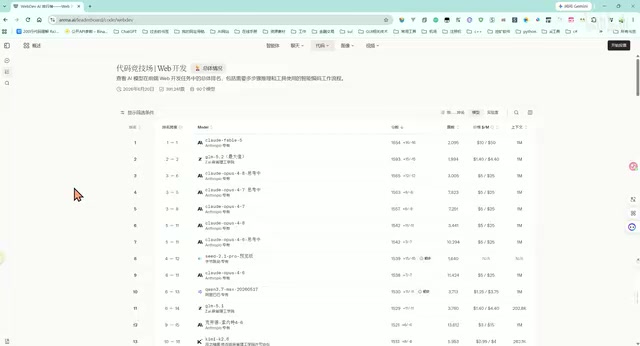
Specifically, when both models are asked to generate frontend pages, GLM5.2's output tends to be more visually refined — with better color schemes, layouts, and attention to detail that convey a stronger "design sense." This difference may stem from variations in the proportion of high-quality frontend code and design specifications in the training data. If a model was exposed to more code samples following modern design systems (such as Material Design, Ant Design, etc.) during training, its generated pages would naturally align better with current aesthetic trends. That said, this advantage isn't dramatic — the gap between the two hasn't reached a transformative level, and it's more of a subtle experiential difference.
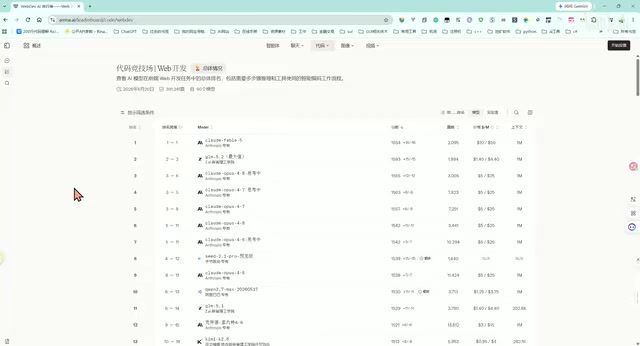
Beyond frontend development, GLM5.2 hasn't shown particularly standout advantages in other capability dimensions so far. But its frontend performance alone demonstrates that Chinese-developed LLMs are rapidly gaining competitiveness in specific vertical domains.
Slow Inference Speed Is GLM5.2's Biggest Weakness
Of course, GLM5.2 is not without flaws — and this one is quite significant: inference speed is too slow.
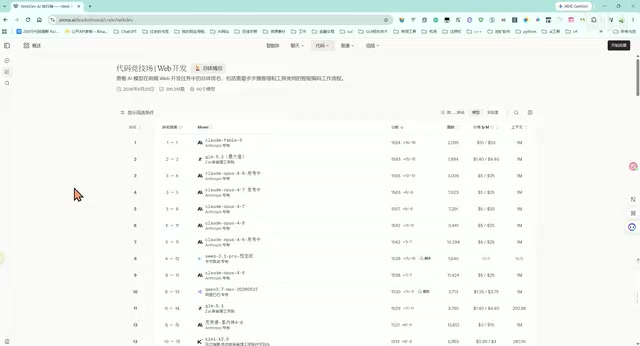
In actual use, GLM5.2's thinking process requires a long wait, and completing a task typically takes more time than other models at the same level. For users who prioritize development efficiency, this is a pain point that cannot be ignored. In AI-assisted programming scenarios, response speed directly affects developers' workflow fluidity and overall experience — even a few extra seconds per interaction can significantly impact productivity when accumulated over time.
LLM inference speed is influenced by multiple factors, including model parameter count, attention mechanism computational complexity, KV Cache management strategies, quantization precision, and the optimization level of the underlying inference framework. When a model employs deeper Chain-of-Thought reasoning, the number of generated tokens increases significantly, leading to longer perceived latency. Additionally, while MoE (Mixture of Experts) architecture can reduce per-inference computation while maintaining large parameter counts, its routing mechanism and expert scheduling introduce additional overhead. Common inference acceleration techniques in the industry include Speculative Decoding, FlashAttention, PagedAttention, and Continuous Batching. Inference speed optimization is a systems engineering challenge that requires coordinated improvements across model architecture, compiler optimization, and hardware deployment.
This issue may be related to model architecture, inference optimization strategies, or current compute resource allocation constraints. Hopefully, Zhipu can significantly improve inference efficiency in future versions while maintaining quality.
Insufficient API Availability: GLM5.2's Real-World Dilemma
Beyond speed, there's an even more practical issue — availability. As one tester put it: "What's the point of something great if you can't actually get it?"
Currently, GLM5.2 appears to have certain limitations in API openness and integration convenience, which directly affects developers' ability to incorporate it into their actual workflows. No matter how strong a model's technical capabilities are, if developers can't easily access and use it, its practical value is significantly diminished.
In the competitive landscape of LLM commercialization, API availability and developer experience have become just as important as model capabilities. OpenAI's success is largely attributable to its stable, user-friendly API service and comprehensive developer documentation. A mature model API ecosystem needs to include: reliable service availability (SLA guarantees), reasonable pricing strategies, rich SDK support, well-designed rate limiting and quota management, and advanced features like Function Calling. Challenges facing Chinese LLMs in API openness include: some models only being available on proprietary platforms without standard API access, opaque pricing structures, and lack of deep integration with mainstream development toolchains. For developers looking to embed AI capabilities into their products, whether they can conveniently call a model through standardized interfaces directly determines their technology choices.
This is also a common challenge for Chinese-developed LLMs: they need to not only catch up with or surpass international competitors on technical metrics, but also invest heavily in productization, commercialization, and developer ecosystem building.
A Balanced Perspective: Progress and Remaining Gaps in Chinese LLMs
Objectively speaking, GLM5.2's performance in frontend development is genuinely exciting. Going from being rated as "mediocre at coding" in the GLM4.x era to surpassing internationally renowned models like Claude in specific rankings with version 5.2 — this pace of improvement deserves recognition.
But we should remain level-headed:
- A single-dimension ranking doesn't represent overall capability: Frontend development is just one subset of AI programming ability. Comprehensive code capabilities, complex logical reasoning, multi-turn dialogue, and other aspects still require more thorough evaluation. The complete picture of AI programming capability should also include backend development, database operations, system architecture design, code debugging and refactoring, test case generation, and many other dimensions. Any single ranking can only reflect one facet of a model's capabilities.
- Benchmarks have limitations: Different benchmarks emphasize different aspects, and rankings can shift depending on the test set chosen. For example, HumanEval primarily tests function-level code completion, MBPP focuses on basic programming problems, while SWE-bench targets bug-fixing in real software engineering scenarios. Each benchmark has its specific coverage and blind spots, and developers should understand the methodological details when referencing rankings.
- Real production environments are the ultimate test: Stability, consistency, and reliability in real projects matter more than benchmark scores. Production environment challenges include handling ambiguous requirements, maintaining context consistency across large codebases, and compatibility with existing tech stacks — scenarios that standardized tests can rarely cover completely.
Overall, GLM5.2's performance shows that Chinese-developed LLMs are rapidly closing the gap with top international models, and have even gained competitive advantages in certain niche areas. The key going forward is: can they solve the inference speed and API availability issues to turn great technology into a great product experience?
Related articles

The Truth Behind Codex 'Build a Website in 5 Minutes': AI Isn't Creating Sites—It's Helping You Copy Them
Exposing the truth behind viral Codex 5-minute website videos: creators aren't building original sites with AI—they're copying shared prompts or scraping others' work. Learn AI coding tools' real limits.

Getting Started with AI Agent Development: A Complete Guide from Concept to Practice
A comprehensive guide to AI Agent architecture and development, covering automated marketing, intelligent customer service, and investment analysis scenarios with single and multi-agent collaboration.

The Truth Behind Codex 'Build a Website in 5 Minutes': AI Isn't Creating Sites — It's Helping You Copy Them
Exposing the truth behind viral Codex 5-minute website videos: creators aren't building original sites with AI — they're copying shared prompts or scraping others' work.