GPT-5.6 Launches, Siri Gets a Major Overhaul: Your Complete AI Industry Roundup

GPT-5.6 launches, Siri rebuilt, China regulates AI companionship — a packed global AI roundup.
A landmark day in AI: OpenAI rolls out GPT-5.6 across ChatGPT, Codex, and its API; Apple debuts a rebuilt Siri in iOS 27 with a Personal Context Engine; China enforces its first AI companionship regulations; Google begins labeling AI-generated images in the EU; and Chinese AI tools continue gaining traction with global enterprises on the strength of their price-performance ratio.
The global AI world saw a packed day of news: domestic regulations took effect, AI applications accelerated their rollout, and tech giants including OpenAI, Apple, Samsung, and Google all made major moves. This article organizes the day's highlights by category to help you understand what's really happening in the AI industry.
China: The First Regulatory Framework for AI Companionship Arrives
The most significant domestic news: ByteDance's Doubao and Alibaba's Qwen both issued announcements confirming they had officially taken down user-created anthropomorphic AI agent features. The virtual companions and "emotional support friend" characters that users had custom-built were shut down as a result.
In tandem, the Interim Measures for the Administration of Anthropomorphic Interactive Services Using Artificial Intelligence, jointly issued by the Cyberspace Administration of China and four other ministries including the NDRC, officially came into effect — marking China's first dedicated regulatory document targeting LLM-powered AI companionship services.
The regulatory logic isn't hard to follow. "Anthropomorphic interactive services" rely on large language models' (LLMs) role-playing capabilities and emotional simulation mechanisms, using persistent context memory and personalized personas to give users a stable sense of interacting with a genuine personality. Psychologists call this phenomenon a "parasocial relationship" — users invest real emotions in virtual characters without any reciprocal social interaction. For minors, whose prefrontal cortex is still developing and whose ability to distinguish reality from fiction is weaker, long-term reliance on AI emotional companionship may impair the development of normal social skills. When algorithms can simulate near-convincing emotional feedback and a sense of presence — and when many minors have already formed deep emotional attachments to virtual characters — the boundary between human and machine must be clearly defined. This policy signals that the AI emotional companionship sector has formally transitioned from unchecked growth to a new era of compliant operation.
AI Applications: From Classrooms to Shopping Malls
A Xinhua News Agency investigative report painted a vivid picture of how quickly AI is being deployed in the real world. One standout example: iFlytek upgraded its "Tongchuang AI Blackboard" so that when a teacher writes a mathematical function on a physical chalkboard, the adjacent digital screen instantly displays a corresponding dynamic visualization — making abstract concepts intuitively accessible.

The numbers back this up: in the first five months of this year, retail sales of wearable smart devices — including smart glasses — more than doubled year-on-year, while unmanned retail store sales grew by over 20%. AI is no longer a concept confined to trade shows; it has genuinely entered classrooms, shopping malls, and everyday life.
Watch Out for AI Study Camp Marketing Traps
Over the summer break, AI-themed study camps have been proliferating rapidly. But according to media reports, many of these programs amount to little more than taking children on tours of universities and tech companies — checking off boxes rather than delivering real learning. The curriculum typically stays at a superficial level, such as using AI to generate PowerPoint slides or write short copy, yet fees often run into the tens of thousands of yuan. Some educators have put it bluntly: many so-called AI study camps aren't selling education — they're selling a placebo for anxious parents. Before signing up, it's worth asking a few pointed questions about the actual curriculum rather than being swayed by marketing language.
International: GPT-5.6 Rolls Out Across the Board
The biggest international tech story was OpenAI's official release of its next-generation model, GPT-5.6. The upgrade was sweeping — from the ChatGPT assistant to the Codex coding tool and the developer-facing API, all were updated to the new model simultaneously.

The new model family is clearly tiered: a flagship version for peak capability, a balanced version that weighs intelligence against cost, and a lightweight version optimized for high-volume tasks. This tiered strategy reflects a deeper shift in how large model commercialization is maturing. On the technical side, inference costs for LLMs scale strongly with parameter count — a top-tier flagship model can consume dozens of times more compute per call than a lightweight one. To address this, OpenAI continues to rely on model distillation, compressing a large model's reasoning capabilities into a smaller parameter footprint, trading a small amount of accuracy for a dramatic reduction in cost. This tiered model strategy has become standard across the industry — Anthropic's Claude series and Google's Gemini series both use similar architectures. For enterprise users, intelligently routing different model tiers between high-precision tasks and bulk low-cost tasks has become a core strategy for managing AI costs. For everyday users, the most immediate takeaway is that ChatGPT gives smarter answers and handles complex tasks more capably.
Apple's Siri Reborn: A Deeper Understanding of Your Personal Context
Around the same time, Apple opened the iOS 27 public beta to developers, with the headline feature being a completely rebuilt Siri.
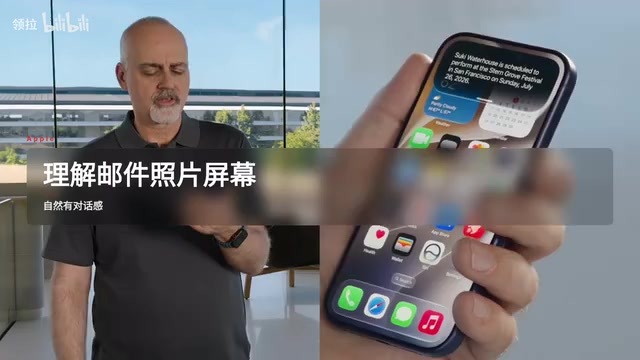
Apple's Siri rebuild represents a significant milestone in the collaborative architecture between on-device AI and cloud-based large models. The traditional Siri relied on rule-based engines and limited intent recognition models, with no ability to understand context across apps. The new Siri introduces a "Personal Context Engine" that can read users' local data — emails, calendars, photos — and perform multimodal reasoning in combination with on-screen content. Apple's technical approach differs sharply from the cloud-first model favored by OpenAI and others: honoring its commitment to user privacy, Apple keeps most personal data processing on the device itself, only sending anonymized requests to servers via "Private Cloud Compute" when necessary. This architectural choice is both a technical differentiator and a core pillar of Apple's competitive brand identity. According to Apple, the new Siri can also recognize what's currently displayed on screen and respond in a more natural, conversational way — marking a key breakthrough in Apple's vision for a personalized AI assistant. One caveat: beta software is inherently unstable, and Apple itself recommends against installing it on a primary device. Waiting for the official release is the safer move.
Samsung: AI Features Come to Budget Phones
Hot on Apple's heels, Samsung launched its entry-level Galaxy A27. Despite targeting the value segment, it still ships with a range of AI features, including more natural selfie enhancement and improved main camera clarity. This signals that AI capabilities are no longer exclusive to flagship devices — even budget phones are starting to treat AI as a standard selling point.
Google Labels AI-Generated Images with Dedicated Tags
A notable change in Google's latest monthly update: in EU markets, the Google Play Store has begun labeling AI-generated images with dedicated tags, making it easier for users to tell at a glance whether an image was machine-generated.

Behind this move is an emerging industry technical standard: C2PA (Coalition for Content Provenance and Authenticity), championed by Adobe, Microsoft, Intel, and others. Its core mechanism involves embedding cryptographic signatures into the metadata of digital content — images, videos, and more — to record the content's origin, edit history, and generation method. However, Google has candidly acknowledged the problem of "metadata loss," which reveals a fundamental limitation of this approach: when an image is screenshotted, recompressed, or converted to another format, the embedded metadata often disappears along with it, rendering the labeling system effectively useless. This is why the industry broadly agrees that technical labels alone cannot solve the AI content verification problem — the solution also requires platform moderation mechanisms and media literacy education for users. Still, it gives ordinary users at least one additional layer of help in distinguishing real from synthetic content, and represents an important step toward more regulated AI content governance.
Chinese AI Tools Go Global: Price-Performance as Core Competitive Advantage
The final international observation is particularly telling. According to the Financial Times, a growing list of major international companies — including food delivery platform DoorDash, German industrial giant Siemens, and home-sharing platform Airbnb — have begun adopting AI tools developed in China. The reason is simple: lower prices, with no compromise on capability.
This price-performance advantage is rooted in the overall cost structure of China's AI industry. First, the GPU clusters used for training and inference in Chinese large models benefit from relatively lower data center electricity and labor costs. Second, Chinese research teams — DeepSeek being a prime example — have achieved systematic breakthroughs in model training efficiency, using Mixture-of-Experts (MoE) architectures and refined engineering optimization to match near-frontier model performance with significantly less compute. Beyond this, Chinese AI companies broadly adopt aggressive market penetration pricing — including offering free API quota — to rapidly accumulate international users and feedback data. As one industry insider put it directly: if Chinese AI models are already more than sufficient for most real-world applications, why would enterprises pay a steep premium for models from international players? This "trade volume for price" approach closely mirrors the logic that drove Chinese manufacturing's global expansion — except this time, the competitive battleground has shifted from factory floors to compute clouds. The global AI race is no longer just about technological leadership; price-performance is equally decisive.
Summary
From the shutdown of AI companionship features and controversies around AI summer camps in China, to a wave of model and hardware upgrades from major international players, the information density of a single day is enough to confirm: the AI industry is changing in concrete, measurable ways every day. Tightening regulation, accelerating deployment, and intensifying competition are three converging threads that together trace the clear trajectory of an industry moving toward maturity.
Key Takeaways
Related articles

AI Art Prompt Structure Breakdown: Creating a Desert Crystal Pyramid Scene
Breaking down a popular Reddit AI artwork to reveal the five core elements of structured prompts: subject, material, lighting, environment, and atmosphere for AI art scene creation.

$100 Million Deal: AI Gives 50,000 Ukrainian Kamikaze Drones Autonomous Target Lock
A U.S. company struck a $100M deal with Ukraine to deploy AI visual lock-on capabilities on 50,000 cheap kamikaze drones, enabling terminal autonomous guidance to defeat electronic warfare jamming.

The Privacy Boundaries of AI Data Collection: Your Bedroom Is Becoming a Model Training Ground
A humorous tweet about clothes entering AI training data reveals the privacy dilemma of AI data collection. We explore machine unlearning challenges, consent issues, and how users can balance convenience with privacy.