GPT-Live Real-Time Voice AI: How Full-Duplex Conversation Redefines Human-Computer Interaction

GPT-Live's full-duplex voice AI breaks the turn-taking feel, moving toward a true conversational partner.
OpenAI's GPT-Live uses a full-duplex audio architecture to enable thinking while listening, seamless real-time translation, natural backchannel feedback, and parallel foreground chat with background task execution. Combined with multimodal collaborative output, it shifts voice AI from command-response toward genuine conversational companionship.
A Late-Night Launch That Redefines Human-Computer Conversation
OpenAI has once again set the industry ablaze with a late-night release—this time the star is GPT-Live, an entirely new system built around real-time voice interaction. Many observers describe it as a disruptive blow to both simultaneous interpretation and traditional voice assistants. So where does its real strength lie? The key isn't that it "can speak," but that it fundamentally rewrites the rhythm and texture of how we converse with AI.
In the past, AI voice interaction always carried an inescapable sense of "turn-taking": you say something, it pauses, then mechanically replies. Stay silent for a couple of seconds and it rushes to jump in; try to interject and it completely fails to keep up. This fragmented experience kept voice interaction stuck at the level of "giving commands to a machine" rather than genuine conversation.

This fundamental experiential gap is exactly what GPT-Live sets out to solve. According to a Bilibili content creator's analysis of the official demo, this time the AI "truly comes alive," reaching a level of interactive naturalness never seen before.
Seamless Translation and "Thinking While Listening"
In the official demo, the most striking impact comes from the real-time translation scenario. Facing two elderly women's rapid-fire live conversation and highly challenging colloquial expressions, GPT-Live not only delivers instant, seamless translation output—more crucially, it achieves "thinking while listening." It doesn't wait for the other person to finish a complete sentence before processing; instead, like a true simultaneous interpreter, it continuously parses, organizes, and outputs within the flow of speech.
It's worth noting that Simultaneous Interpretation is itself a widely recognized challenge at the limits of human cognition. Professional interpreters must synchronize semantic parsing, cross-language reconstruction, and real-time output within a brief memory buffer of about 2–4 seconds (the Ear-Voice Span), and they typically need to rotate every 30 minutes to prevent cognitive fatigue. Certified simultaneous interpreters are extremely scarce worldwide, requiring over five years of systematic training. The difficulty of AI simultaneous interpretation lies not only in speed, but also in the real-time handling of colloquial ellipsis, cultural metaphors, and linguistic ambiguity. GPT-Live's smooth handling of rapid-fire colloquial speech in the demo suggests that its context modeling and ambiguity resolution capabilities have reached considerable heights.

Behind this lies a qualitative leap in streaming processing capability. Traditional voice assistants use a serial pipeline of "listen—recognize—generate—play," where the latency of each stage stacks up, often accumulating to 1–3 seconds and creating awkward pauses. GPT-Live, through a Full-Duplex audio processing architecture, allows "listening" and "speaking" to happen simultaneously—which is precisely the technical foundation that lets it match or even surpass human simultaneous interpreters.
Full-duplex communication technology is nothing new in telecommunications—ordinary telephone networks achieved bidirectional simultaneous conversation back in the early 20th century. But truly bringing this capability into AI voice systems is extremely difficult: GPT-Live's breakthrough lies in transforming the three-stage serial pipeline into an end-to-end parallel architecture. The model works continuously at the audio-stream level, able to initiate response inference without waiting for complete sentence boundaries, compressing perceived latency to within the threshold of natural human conversation.
Conversational Feedback with a "Human Touch"
An even more subtle breakthrough is that GPT-Live has mastered the "social presence" of real human conversation. When you speak, it emits gentle acknowledgment signals like "mm-hmm" and "right" at appropriate moments, making you feel it's genuinely listening. When you interrupt it, it doesn't descend into chaos like older systems—instead it naturally stops and seamlessly switches topics.
These seemingly minor design touches correspond, in linguistics, to an implicit rule system known as Paralinguistic Cues, including backchannels (i.e., "mm," "right," "oh," etc.), pause rhythms, and turn-taking mechanisms for interruption and yielding the floor. This implicit grammar was systematically documented through Conversation Analysis by linguists such as Harvey Sacks in the 1970s. Research shows that the absence of these signals makes conversational partners feel ignored or that communication has failed—which is precisely why traditional AI voice assistants always come across as "cold" and "mechanical." GPT-Live's simulation of backchannels and its graceful handling of interruptions touches on core challenges in computational sociolinguistics, likely integrating dedicated speech-act classification models and real-time Voice Activity Detection (VAD) technology behind the scenes.
Only by mastering this rule set does the AI truly take a key step from "tool" toward "conversational partner."
Chatting in the Foreground, Executing Tasks in the Background
If natural conversation is a breakthrough at the experiential level, then GPT-Live's truly astonishing feat is its parallel ability to "chat in the foreground while working in the background."

Picture this scenario: you're casually chatting with the AI and offhandedly toss it a complex task. On the surface, it keeps the conversation going with you, never letting things go quiet; meanwhile, in the background, it has quietly gone online to complete the research. By the time you've chatted your fill, the answer is already prepared.
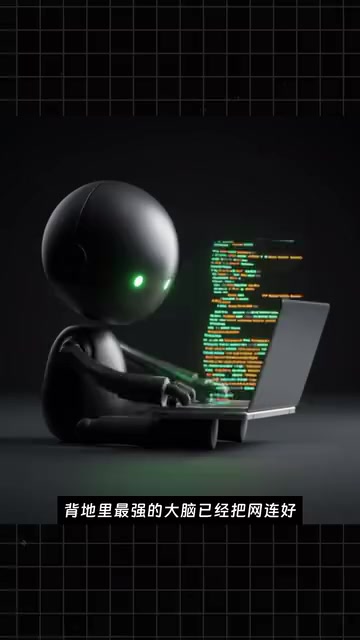
This capability corresponds to the deep integration of AI Agents with real-time voice interaction. AI Agents have been one of the hottest AI research directions since 2023, with the core idea of letting large language models go beyond merely "answering questions" to actually planning tasks, calling external tools (like search engines, code executors, and API interfaces), and autonomously completing multi-step complex goals. However, previous Agent systems almost all ran on text interfaces, with an obvious experiential gap between them and voice interaction—after triggering a task by voice, users often had to switch to a screen and wait for text results. GPT-Live, by contrast, hides time-consuming operations like tool calls and web searches behind the "curtain" of natural conversation, using chit-chat to mask the wait so the entire process feels free of any mechanical interruption. This is essentially a redesign of the human-computer interaction paradigm, not merely a technical add-on.
Real-Time Voice Guidance and Multimodal Collaborative Output
Extending this capability to everyday scenarios opens up even more possibilities. The demo showed that whether you're asking how to chop vegetables in the kitchen or discussing salary negotiation strategy before an interview, GPT-Live can continuously guide you with real-time voice while simultaneously popping up corresponding data cards on screen.
Voice handles instant, continuous companion-style guidance, while visual cards handle structured, reviewable supplementary information. This layering is not arbitrary: cognitive science research shows that the human auditory and visual channels have relatively independent information-processing capacities, and reasonably allocating dual-channel input can significantly reduce cognitive load and improve information retention. Which content is suited for instant spoken delivery (step-by-step guidance, emotional support) and which is better presented in structured visual form (data comparisons, operation checklists)—this kind of intelligent layered decision-making requires the model to have a deep understanding of the cognitive characteristics of information. This multimodal collaboration elevates the AI from a single-purpose "auditory assistant" into a truly personal, all-around advisor.
What It Means for the Industry
In terms of product form, GPT-Live's significance goes far beyond a mere feature upgrade. It marks the migration of voice AI from a "command-response" paradigm to a "conversational companionship + proactive execution" paradigm.
For the simultaneous interpretation industry, real-time, seamless, low-latency translation capability constitutes a direct impact. For traditional voice assistants (such as various smart speakers), that mechanical turn-based interaction seems to have become obsolete almost overnight. Of course, there may still be a gap between demo performance and stable behavior in real, complex environments, and the actual experience awaits large-scale user validation.
But the direction is now clear: the endgame of AI voice interaction is a conversational partner that responds instantly, understands emotions, and knows everything. GPT-Live shows us, at the very least, that this endgame is arriving faster than imagined.
Key Takeaways
Related articles

The Truth Behind Codex 'Build a Website in 5 Minutes': AI Isn't Creating Sites—It's Helping You Copy Them
Exposing the truth behind viral Codex 5-minute website videos: creators aren't building original sites with AI—they're copying shared prompts or scraping others' work. Learn AI coding tools' real limits.

Getting Started with AI Agent Development: A Complete Guide from Concept to Practice
A comprehensive guide to AI Agent architecture and development, covering automated marketing, intelligent customer service, and investment analysis scenarios with single and multi-agent collaboration.

The Truth Behind Codex 'Build a Website in 5 Minutes': AI Isn't Creating Sites — It's Helping You Copy Them
Exposing the truth behind viral Codex 5-minute website videos: creators aren't building original sites with AI — they're copying shared prompts or scraping others' work.