HaloBraid Raises $7 Million: How an AI Braiding Device Is Revolutionizing the Hair Braiding Industry

HaloBraid raises $7M to build an AI-powered braiding assistant that cuts hours-long braiding sessions for stylists.
HaloBraid has closed a $7 million funding round led by Seven Seven Six to develop an AI-powered braiding assistant for professional hairstylists. The device aims to dramatically reduce braiding times — which can take 6+ hours — while preserving the craft's artistry. Targeting the $8B+ U.S. braiding market through a B2B model, the startup addresses labor shortages, stylist burnout, and rising demand, with plans to launch later this year.
A Technological Transformation Comes to the Hair Industry
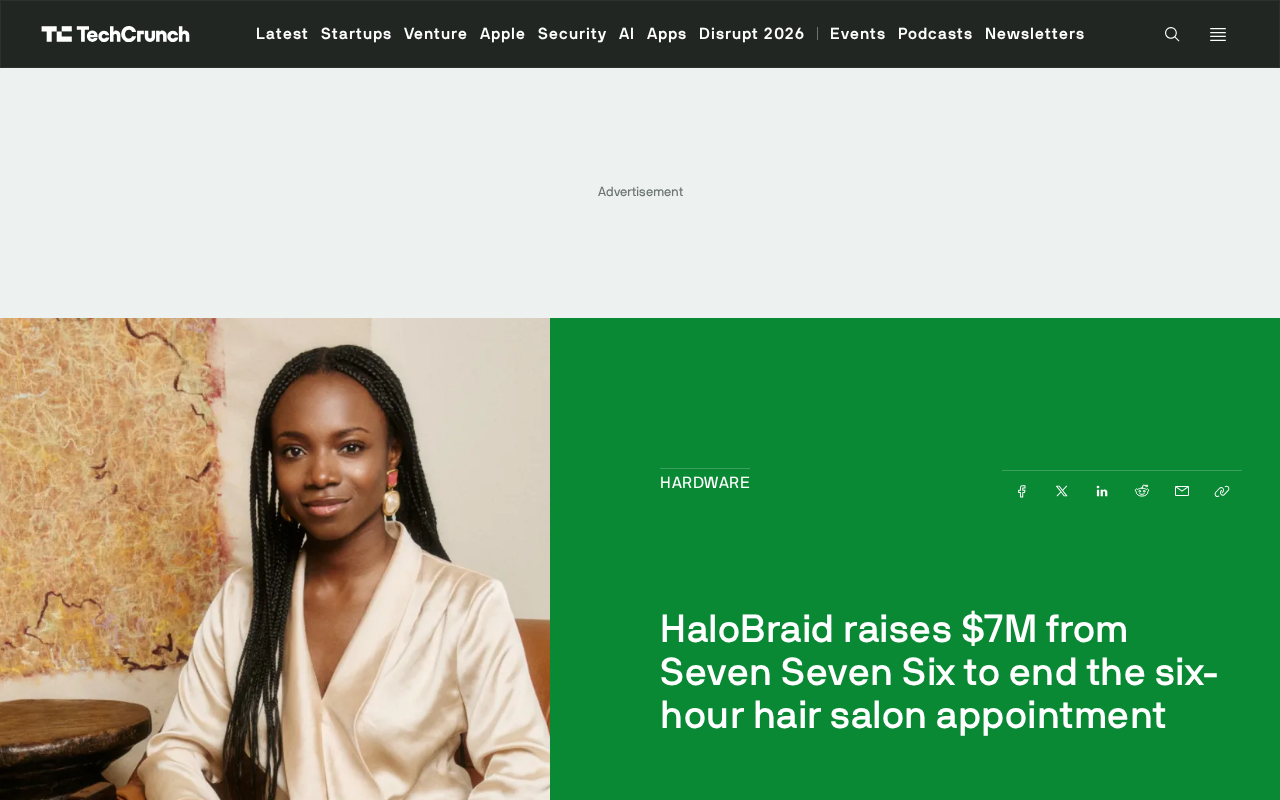
A startup called HaloBraid recently announced the completion of a $7 million funding round led by prominent venture capital firm Seven Seven Six. The company is developing an AI-powered braiding assistant designed specifically for professional hairstylists, with the goal of fundamentally transforming the hours-long braiding process in traditional hair salons.
Solving the Industry's Pain Point: Saying Goodbye to Six-Hour Waits
In traditional hair salons, intricate braiding services often take up to six hours or even longer. This represents not only a massive time commitment for clients but also extreme physical labor for stylists, severely limiting the number of customers they can serve. Prolonged manual work frequently leads to occupational health issues such as hand fatigue and neck and shoulder strain. According to data from the Occupational Safety and Health Administration (OSHA), hairstylists are among the professional groups at highest risk for repetitive strain injuries (RSI), and braiders face particularly severe conditions — a single Box Braids session can require 6–10 hours of continuous work, during which fingers must perform tens of thousands of repetitive braiding motions. Over time, this can easily lead to carpal tunnel syndrome, tendinitis, and other occupational diseases.
HaloBraid is targeting precisely this industry pain point. Its debut device is positioned as a "Braiding Assistant," designed to support professional hairstylists in their braiding work rather than fully replace human labor. This design philosophy reflects a deep understanding of industry realities — braiding is a highly personalized craft where full automation is neither practical nor welcomed by the market, but using technology to boost efficiency is a genuine need.
From a technical implementation perspective, developing such an AI-assisted braiding device presents multiple cutting-edge challenges. The device must rely on Computer Vision to identify different hair textures, hair volumes, and head contours in real time to adapt to personalized braiding patterns. A precision mechanical control system must apply exactly the right amount of gentle force to hair strands — too much can cause Traction Alopecia, while too little won't complete the braid. Haptic Sensing technology must detect strand tension and slippage, simulating the tactile judgment of human hands. Furthermore, as consumer hardware that directly contacts the human body, the device must pass rigorous certifications including FDA skin contact regulations and UL electrical safety standards.
HaloBraid's Business Model and Market Outlook
Precise Niche Market Positioning
HaloBraid has chosen a market segment that may seem niche but is actually substantial in scale. Braiding holds thousands of years of cultural heritage within the African American community, tracing back to tribal traditions on the African continent, where different braiding styles were used to signify social status, age, religious beliefs, and even tribal affiliation. Common braiding styles include Box Braids, Cornrows, Senegalese Twists, and more — each with unique techniques and cultural significance. In recent years, as multicultural aesthetics have spread globally, braiding has moved beyond the African American community into mainstream fashion, driven by numerous Hollywood celebrities and fashion influencers to become a cross-racial, cross-cultural trend.
According to industry estimates, the U.S. braiding and related hair care services market alone exceeds $8 billion, growing at an annual rate of 5%–7%. Yet this market has seen virtually no technological innovation over the years and remains heavily dependent on purely manual labor. At the same time, the hair industry faces severe labor shortages — skilled braiders require long training periods and have high turnover rates. If HaloBraid's device can effectively offload repetitive labor, it could not only improve stylists' work experience and career longevity but also potentially lower the barrier to entry, attracting more practitioners to the field.
B2B Go-to-Market Strategy
Based on currently available information, HaloBraid is adopting a B2B model, selling or leasing devices directly to professional salons. This strategy offers several advantages:
- Lower adoption barriers: Professional hairstylists can more easily understand and appreciate the value of new tools
- Higher revenue per client and faster table turnover: Salons can serve more clients in the same amount of time
- Building industry reputation: Rapidly accumulating user feedback and brand recognition through professional channels
This strategy also aligns with the "Vertical SaaS + Hardware" theme that has attracted venture capital attention in recent years — delivering integrated hardware-software solutions for specific vertical industries. Several successful precedents exist: Toast provides POS systems and operations management platforms for the restaurant industry (now publicly traded with a market cap exceeding $10 billion); ServiceTitan provides scheduling management software for home services (plumbers, electricians, etc.); Fresha provides booking and payment systems for the beauty and hair industry. These cases demonstrate that seemingly "low-tech" traditional service industries harbor enormous potential for technological transformation. Unlike pure software solutions, HaloBraid is taking a hardware-centric approach, which means higher barriers to entry and stronger customer stickiness, but also longer R&D cycles, greater capital requirements, and more complex supply chain management challenges.
Investor Background and Industry Signals
Seven Seven Six (776) is a venture capital fund founded in 2020 by Reddit co-founder Alexis Ohanian, with over $750 million in assets under management. The fund's investment philosophy emphasizes "investing in underestimated founders and overlooked markets." Its portfolio spans multiple non-traditional tech sectors, including women's professional sports (investing in Angel City FC), Web3 infrastructure, and creator economy tools. Ohanian himself has publicly stated on multiple occasions that he is particularly drawn to startups that "use technology to empower traditional industry practitioners rather than replace them."
The fund's decision to bet on HaloBraid sends an important signal: the technological upgrading of traditional service industries is becoming a new investment hotspot. HaloBraid's positioning of its device as a tool to assist stylists rather than replace them reflects a "human-machine collaboration" product philosophy that carries a unique narrative advantage and market acceptance in today's climate of widespread AI-driven employment anxiety.
This also aligns with a clear trend in tech investing in recent years — as investment opportunities in internet and software sectors become increasingly saturated, more and more capital is turning its attention to traditional industries that have yet to be deeply penetrated by technology. Hair care, beauty, food service, and other service industries are prime examples of these "technology valleys."
Challenges and Future Outlook for HaloBraid
Despite the promising outlook, HaloBraid still faces considerable challenges. First, hardware product development and mass production are inherently fraught with uncertainty, especially for devices that come into direct contact with the human body, where safety and reliability standards are extremely high. From the real-time recognition accuracy of computer vision to the force control of mechanical actuators and the sensitivity of haptic sensing systems, every technical component must bridge an enormous engineering gap between laboratory prototypes and production-ready products. Second, the braiding community's acceptance of new tools will take time to validate — any tool that might affect a stylist's craftsmanship and creative expression could face resistance. Braiding is not just a technical skill; it's a process through which stylists build trust and emotional connections with their clients. Figuring out how to integrate technology into this process without disrupting it is a core challenge at the product design level.
The device is planned for official launch later this year. If HaloBraid can successfully slash braiding times significantly while maintaining or even improving braid quality, it will not only transform working practices in the hair braiding industry but could also provide a replicable blueprint for technological upgrading in other traditional manual service sectors.
In an era where AI and automation technologies are increasingly permeating every industry, HaloBraid's story reminds us: Truly valuable innovation often doesn't come from adding polish to hot trends — it comes from solving real pain points in overlooked corners.
Related articles

AI Art Prompt Structure Breakdown: Creating a Desert Crystal Pyramid Scene
Breaking down a popular Reddit AI artwork to reveal the five core elements of structured prompts: subject, material, lighting, environment, and atmosphere for AI art scene creation.

$100 Million Deal: AI Gives 50,000 Ukrainian Kamikaze Drones Autonomous Target Lock
A U.S. company struck a $100M deal with Ukraine to deploy AI visual lock-on capabilities on 50,000 cheap kamikaze drones, enabling terminal autonomous guidance to defeat electronic warfare jamming.

The Privacy Boundaries of AI Data Collection: Your Bedroom Is Becoming a Model Training Ground
A humorous tweet about clothes entering AI training data reveals the privacy dilemma of AI data collection. We explore machine unlearning challenges, consent issues, and how users can balance convenience with privacy.