Industrial Defect Detection: OpenCV vs. YOLO — A Complete Guide to Scenario-Based Decision Making

A practical guide to choosing between OpenCV and YOLO for industrial defect detection scenarios.
This article provides an in-depth comparison of OpenCV traditional image processing and YOLO deep learning for industrial defect detection. It analyzes selection criteria across data availability, detection accuracy, deployment complexity, and academic value, while offering a hybrid strategy for production use and a structured learning roadmap for practitioners.
Introduction
In the field of industrial defect detection, technology selection is a core issue that every practitioner and learner must face. Traditional image processing methods represented by OpenCV and deep learning methods represented by YOLO each have their own strengths. Which one to choose ultimately depends on your specific scenario, data conditions, and project goals.
This article takes a practical application perspective to deeply analyze the applicable scenarios and decision-making logic of both technical approaches, helping you make the most informed choice.
OpenCV Traditional Methods: The Go-To for Lightweight and Efficient Solutions
Applicable Scenarios
Traditional OpenCV methods are suitable for the following types of industrial defect detection projects:
- Simple detection tasks: Projects with modest requirements that only need basic surface defect identification
- Data-scarce scenarios: Industries where accumulating large amounts of labeled data is impractical
- Rapid deployment needs: Projects that need to go live within a short timeframe
In the industrial sector, many scenarios face a practical problem — it's impossible to collect enough defect sample data. For example, in certain precision manufacturing industries, defects are inherently low-probability events, making it nearly impossible to collect thousands of labeled samples. In such cases, traditional OpenCV methods based on threshold segmentation, edge detection, and morphological operations become the only viable option.
Core Technical Principles of OpenCV
OpenCV (Open Source Computer Vision Library) is an open-source computer vision and machine learning software library containing over 2,500 optimized algorithms. In industrial defect detection, commonly used traditional methods include: threshold segmentation (binarizing images by setting grayscale thresholds to isolate defect regions), Canny edge detection (detecting object edge contours using gradient changes), morphological operations (dilation, erosion, opening and closing operations for denoising and connecting broken regions), template matching (comparing standard templates with images under inspection for similarity), and Blob analysis (detecting geometric features such as area and shape of connected regions). These methods share common characteristics: they rely on manually designed feature extraction rules, have transparent and interpretable algorithm logic, require minimal computational overhead, and are suitable for real-time operation on embedded devices.
Limitations of Traditional Methods
However, traditional algorithms have a significant drawback: they are highly susceptible to environmental interference and have poor generalization ability. Once an algorithm is migrated from one scenario to another, the entire algorithm pipeline may need to be re-tuned or even redesigned. Changes in lighting, background differences, and product model switches can all cause algorithm failure.
The root cause of this limitation is that traditional methods rely on manually defined low-level features (such as grayscale values, gradient directions, texture frequencies, etc.), which are highly sensitive to imaging conditions. When the environment changes, the same type of defect may appear completely different in images, and manual rules cannot cover all possible variations.
YOLO Deep Learning Methods: A Powerful Data-Driven Detection Solution
Applicable Scenarios
When your industry meets the following conditions, prioritize deep learning solutions:
- Sufficient data accumulation: A large volume of labeled or labelable defect samples is available
- High detection accuracy requirements: Complex and diverse defect types need to be identified
- Multi-scenario deployment needs: The model should have a certain degree of generalization capability
The advantage of deep learning is that, as long as there is enough data with a reasonable distribution, the model can learn more abstract feature representations and typically far outperforms traditional methods in complex scenarios.
Evolution of the YOLO Algorithm Series
YOLO (You Only Look Once) is a single-stage object detection algorithm proposed by Joseph Redmon in 2016. Its core idea is to transform the object detection problem into a regression problem, predicting bounding boxes and class probabilities simultaneously through a single forward pass. From YOLOv1 to the latest YOLOv11, the series has undergone several major architectural upgrades: YOLOv3 introduced multi-scale prediction and residual networks; YOLOv4 integrated CSPNet and PANet; YOLOv5 was engineered by the Ultralytics team; YOLOv8 introduced Anchor-Free detection heads and the C2f module; YOLOv9 proposed the GELAN and PGI (Programmable Gradient Information) architecture. Compared to two-stage detectors (such as Faster R-CNN), the YOLO series achieves a better balance between speed and accuracy, making it particularly suitable for detection tasks in industrial scenarios that require real-time performance.
Challenges Facing Deep Learning
It's important to note that deep learning is not a silver bullet. When data distribution changes (e.g., switching production lines or cameras), model performance can also drop dramatically. This is known as the Domain Shift problem. Common solutions include data augmentation, transfer learning, and domain adaptation techniques.
Domain shift is one of the core challenges in machine learning, referring to distribution differences between training data (source domain) and actual deployment data (target domain) that lead to degraded model performance. In industrial defect detection, common sources of domain shift include: lighting condition changes (day/night, different light source types), camera parameter differences (resolution, focal length, white balance), product batch variations (material color, subtle texture changes), and production environment changes (thermal expansion due to temperature, oil contamination buildup). Mainstream techniques for addressing domain shift include: Domain Adaptation (aligning feature distributions of source and target domains through adversarial training), transfer learning (fine-tuning a pre-trained model with a small amount of target domain data), and Test-Time Adaptation (dynamically adjusting model parameters during inference).
Technology Selection for Academic Research
Go Directly with Deep Learning for Papers
If your goal is to publish papers, the answer is crystal clear — go directly with the deep learning route. The reasons are straightforward:
- OpenCV is essentially an image processing toolkit with limited room for algorithmic innovation
- Academia focuses on model improvements, architectural innovation, and performance gains
- Improving upon detection frameworks like YOLO provides clear benchmarks and directions for advancement
The core of paper research lies in proposing new methods and validating new ideas, and traditional image processing can hardly provide sufficient innovation points in this regard. Current hot research topics in industrial defect detection in academia include: Few-Shot Learning, unsupervised anomaly detection, lightweight model design, attention mechanism improvements, and multi-modal fusion detection. All these directions are built on deep learning frameworks, offering researchers rich opportunities for innovation.
Recommended Learning Roadmap for Defect Detection
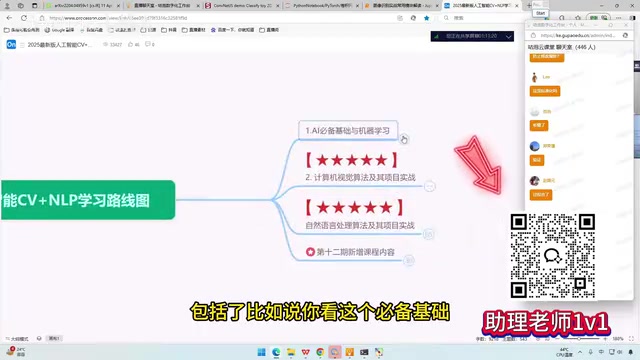
Foundation Stage
Regardless of which technical route you choose, a solid foundation is indispensable:
- Python programming fundamentals
- Basic image processing concepts (OpenCV basic operations)
- Machine learning and deep learning theoretical foundations
- Principles of common detection algorithms (YOLO series, SSD, etc.)
Advanced Directions
After mastering the basics, you can choose to go deeper based on your career direction:
- Computer Vision (CV) track: Object detection, semantic segmentation, instance segmentation, defect classification
- Natural Language Processing (NLP) track: Cross-disciplinary applications such as multi-modal inspection report generation
Practical Project Recommendations
For those who want to add defect detection projects to their resume, here's a recommended step-by-step approach:
- Choose a public dataset: Such as the NEU steel surface defect dataset or the MVTec anomaly detection dataset
- Build a baseline model: First run through the complete pipeline with YOLOv8 or YOLOv9
- Optimize incrementally: Data augmentation, model improvements, post-processing optimization
- Quantify results: Record key metrics such as mAP and inference speed
- Production deployment: Consider model lightweighting and practical deployment solutions
Recommended Datasets in Detail
The NEU steel surface defect dataset, released by Northeastern University (China), contains 6 typical steel surface defects (rolled-in scale, patches, crazing, pitted surface, inclusion, and scratches), with 300 images per class totaling 1,800 images at a resolution of 200×200 pixels. It is a classic dataset for getting started with defect detection. The MVTec Anomaly Detection dataset (MVTec AD), released by Germany's MVTec company, contains 15 categories (5 textures and 10 objects) with a total of 5,354 high-resolution images covering over 70 defect types. Its distinctive feature is that only normal samples are provided for training, following an unsupervised/few-shot anomaly detection paradigm that more closely mirrors the real-world industrial situation where defect samples are scarce. Additional datasets available for research include the DAGM texture defect dataset and the KolektorSDD surface defect dataset.
Understanding Evaluation Metrics
mAP (mean Average Precision) is the most critical evaluation metric in the object detection field. It first calculates the AP (Average Precision, i.e., the area under the Precision-Recall curve) for each class, then averages across all classes. Under the COCO evaluation standard, mAP@0.5 represents the mAP at an IoU (Intersection over Union) threshold of 0.5, while mAP@0.5:0.95 averages over multiple IoU thresholds from 0.5 to 0.95 in steps of 0.05, providing a more rigorous evaluation. Inference speed is typically measured in FPS (Frames Per Second) or per-frame inference time (ms), with industrial production lines usually requiring real-time detection capability of 30 FPS or above. Additionally, in defect detection, Recall deserves special attention because the cost of a missed defective product reaching the market is often far greater than that of a false positive.
Summary: Match Your Technical Solution to Your Needs
There is no absolute right or wrong in technology selection — the key is to match your actual needs:
| Dimension | OpenCV Traditional Methods | YOLO Deep Learning |
|---|---|---|
| Data Requirements | Minimal or no labeling needed | Large amounts of labeled data |
| Deployment Difficulty | Low | Medium |
| Generalization Ability | Weak | Relatively strong |
| Detection Accuracy | Scenario-dependent | Generally higher |
| Academic Value | Low | High |
| Computational Resources | CPU is sufficient | Typically requires GPU |
| Interpretability | Strong | Weak |
| Development Cycle | Short (when rules are clear) | Long (requires data preparation and training) |
For real-world industrial applications, a hybrid strategy is recommended: use OpenCV for preprocessing (ROI extraction, image enhancement) and deep learning for core detection. This approach leverages the efficiency advantages of traditional methods while fully utilizing the accuracy advantages of deep learning, making it the most pragmatic technical solution in current industrial defect detection.
Specifically, the typical workflow of a hybrid strategy is as follows: first, perform image preprocessing through OpenCV (denoising, contrast enhancement, region of interest cropping) to reduce the input complexity for the deep learning model; then feed the preprocessed images into detection models like YOLO for defect localization and classification; finally, apply traditional image processing methods for post-processing of detection results (such as sub-pixel edge refinement, precise defect area calculation, etc.). This pipeline architecture is widely adopted in actual industrial deployments, ensuring both detection accuracy and optimized overall inference efficiency.
Key Takeaways
Related articles

The Truth Behind Codex 'Build a Website in 5 Minutes': AI Isn't Creating Sites—It's Helping You Copy Them
Exposing the truth behind viral Codex 5-minute website videos: creators aren't building original sites with AI—they're copying shared prompts or scraping others' work. Learn AI coding tools' real limits.

Getting Started with AI Agent Development: A Complete Guide from Concept to Practice
A comprehensive guide to AI Agent architecture and development, covering automated marketing, intelligent customer service, and investment analysis scenarios with single and multi-agent collaboration.

The Truth Behind Codex 'Build a Website in 5 Minutes': AI Isn't Creating Sites — It's Helping You Copy Them
Exposing the truth behind viral Codex 5-minute website videos: creators aren't building original sites with AI — they're copying shared prompts or scraping others' work.