Jimeng Seedance 2.0 Practical Guide: Six Use Cases & Money-Saving Tips

A full breakdown of ByteDance's Seedance 2.0 video model: capabilities, costs, and practical techniques.
ByteDance's Jimeng platform released Seedance 2.0, a video diffusion model built on DiT architecture that supports multimodal inputs (images, videos, text) with first-last frame control and universal reference modes, generating 4–15 second 720P videos. This guide covers three access platforms, first-time recharge discounts, referral credit strategies, and six practical scenarios including precise frame control, video extension, trending video replication, novel-to-video conversion, JSON per-second control, and more — along with key pitfalls around asset labeling, multi-character scenes, and real-person content compliance.
Why Is Seedance 2.0 Making the Entire AI Creative Community Buzz?
Seedance 2.0, released by ByteDance's Jimeng platform, has completely taken over the AI creative community in recent days. Countless creators have been promoting it organically, content built on this model has exploded across short-video platforms, and some creators have gained over a thousand followers from a single video in one day.
What exactly makes this model so powerful? How can everyday users experience it at low cost — or even for free? This article provides a comprehensive breakdown across three dimensions: model capabilities, cost control, and practical techniques.
Seedance 2.0 Core Capabilities Explained
Seedance 2.0 is the latest generation of Video Diffusion Models. The core principle behind these models is training a denoising network on massive video datasets, progressively restoring high-quality video frames from pure noise. Compared to earlier GAN (Generative Adversarial Network) approaches, diffusion models offer significant advantages in frame stability, temporal consistency, and diversity. ByteDance's Seed series incorporates the DiT (Diffusion Transformer) architecture, replacing the traditional U-Net backbone with a Transformer. This gives the model stronger capabilities in understanding complex prompts and processing multimodal inputs — which is the technical foundation enabling Seedance 2.0 to accept images, videos, and text simultaneously.
Input and Output Specifications
Seedance 2.0 represents a quantum leap in interaction capabilities. Key parameters include:
- Image input: Up to 9 images
- Video input: Up to 3 videos, total duration not exceeding 15 seconds
- Output duration: Freely selectable between 4–15 seconds
- File limit: Up to 12 files total (images + videos combined)
- Video resolution: Up to 720P
Regarding 720P resolution — this is the current mainstream standard in AI video generation. Competitors like Runway Gen-3, Kling, and Pika also default to 720P or below. Higher resolution means the number of pixels grows quadratically, causing GPU memory and compute demands to skyrocket. At this stage, 720P represents the sweet spot between performance and quality — meeting short-video platform publishing standards without making inference costs prohibitive. For scenarios requiring higher resolution, creators typically use upscaling tools like Topaz Video AI or Real-ESRGAN in post-production.
It's worth noting that using reference videos consumes more credits than pure image or text inputs — factor this in when planning your usage budget.
Two Core Modes: First-Last Frame and Universal Reference
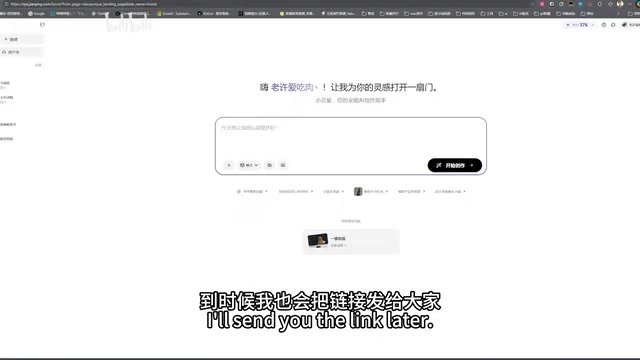
Seedance 2.0 offers two core modes: First-Last Frame and Universal Reference. Although the interface no longer displays the previous version's separate "Smart Multi-Frame" and "Subject Reference" options, these capabilities have been integrated into a unified model called "Immersive Short Film."
First-Last Frame Conditioning is a key technique in current AI video generation. Traditional Image-to-Video can only specify the starting frame, leaving the model to freely generate subsequent content — resulting in unpredictable outcomes. First-Last Frame mode constrains both the start and end points simultaneously, requiring the model to generate reasonable transition animation between the two frames. This is essentially a conditional interpolation problem where the model must satisfy three constraints simultaneously: motion plausibility, physical consistency, and visual aesthetics. Seedance 2.0 further layers motion transfer from reference videos on top of this, adding action style conditioning above the first-last frame constraints — a significantly more technically challenging feat.
The usage method is intuitive: in your prompt, use "@material_name" to precisely tell the model how to use your uploaded images, audio, and video assets.
Seedance 2.0 Usage Costs & Money-Saving Strategies
Comparing the Three Access Platforms
Seedance 2.0 is currently available through three channels:
- Jimeng official website (recommended, most stable)
- Jianying Xiaoyunque (official partner platform, requires app registration first)
- Doubao/Yunque (some users already experiencing restrictions)
Due to the model's extreme popularity, some users on the Xiaoyunque and Doubao pathways can no longer generate videos normally. If you encounter issues, switch to the official Jimeng platform first.
First-Time Recharge Discounts & Savvy Saving Tricks
The first-time recharge discount is the key to saving money — Jimeng offers substantial discounts to first-time paying users:
- Annual subscription: 50% off
- Monthly subscription: 40% off
- Premium membership: 299 CNY/month, includes 15,000 credits
Credit-based pricing is one of the most popular business models for AI generation tools today. Compared to per-use billing, credits offer flexibility — different features consume different amounts, and users can allocate freely based on their needs. Jimeng's credit pricing also reflects the underlying compute cost structure: video references consume more credits than image references because the model needs additional processing for temporal information, significantly increasing inference time and GPU memory usage. This differentiated pricing exists on overseas platforms like Midjourney and Runway as well — it's fundamentally about passing GPU compute costs to consumers in a user-friendly way.
The platform also offers a 1 CNY trial for 7 days of membership (with 200 bonus credits), but there's an important trap hidden here: once you use the 1 CNY trial, it no longer counts as a "first-time recharge," and you'll lose access to the 50%/40% discount going forward.
Recommended strategy: Use one account to spend 1 CNY and test the model's capabilities. Once satisfied, use a new account to purchase a full membership at the first-time recharge discount.
Earn Free Credits Through Referral Invitations
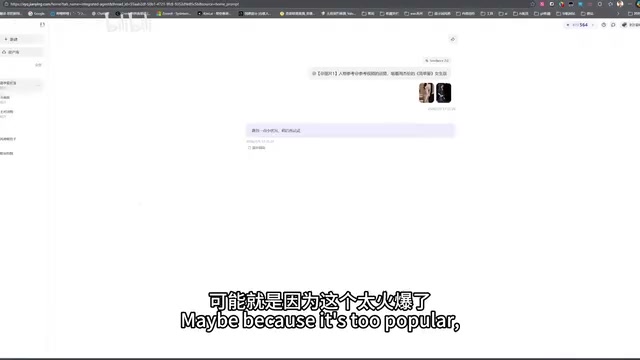
Both Jimeng and Xiaoyunque support referral programs with the following rules:
- Xiaoyunque registration grants 130 credits
- Each successful referral earns 188 credits
- Daily referral cap: 3 people (up to 564 credits/day)
- Total referral cap: 30 people
- Jimeng and Xiaoyunque referrals are counted independently, theoretically allowing 1,128 credits per day
Referral invitations have a high operational cost for most people, but for heavy users, this is a substantial source of free credits.
Six Practical Scenarios & Prompt Techniques
Scenario 1: First-Last Frame + Reference Video for Precise Control
This is one of Seedance 2.0's most powerful capabilities. You can simultaneously set a first-frame image, a last-frame image, and reference a video's action or camera movement style. Example prompt:
"Use @image1 as the first frame, reference the fighting action in @video1, and end with the scene from @image2"
This approach allows the model to precisely replicate the dynamic effects of a reference video while maintaining visual consistency.
Scenario 2: AI Video Extension & Multi-Segment Fusion
After uploading an existing video, you can extend it by using the prompt "@video1 extend 5 seconds," with extensions up to 15 seconds maximum. It also supports inserting transition scenes between two videos for natural multi-segment fusion.
Scenario 3: Trending Video Replication & Remix Creation
This is currently the hottest technique on short-video platforms. Find a trending video as reference, replace the characters or objects in it, and quickly produce high-quality remix content. The model supports referencing up to 3 videos — whether for camera movements, fight choreography, or character replacement, the results are impressive.
The core technology behind trending video replication is Motion Transfer — extracting motion information from a reference video (such as body pose sequences, camera trajectories, and object motion paths), then applying that motion to new characters or scenes. Earlier motion transfer relied on pose estimation tools like OpenPose to extract skeletal keypoints, then used conditional control modules like ControlNet to guide generation. Seedance 2.0's advancement lies in making this process end-to-end — users don't need to manually extract poses; the model implicitly learns motion patterns directly from reference videos and transfers them to target content. This dramatically lowers the barrier to entry but also introduces legal risks around copyright and likeness rights.

Scenario 4: One-Click Novel/Comic to Video Conversion
Feed the model screenshots or text from novel passages, and it automatically generates matching video content. Nine-panel comics, single illustrations — all work. One or multiple images can be directly transformed into dynamic video.
Scenario 5: JSON Format for Per-Second Precise Control
Seedance 2.0 supports JSON-format prompts for precise control over every second of video content. JSON (JavaScript Object Notation) format prompts represent an important evolution in AI video generation — moving from natural language control toward structured control. Traditional natural language prompts can be ambiguous when describing complex temporal changes. For example, "move left first then turn right" might be interpreted differently by the model than what the user intended regarding timing. JSON format allows creators to precisely specify content, camera movement, and character actions for each time segment using key-value pairs — similar to storyboards in traditional filmmaking. This structured input reduces the model's interpretation difficulty while giving creators frame-level precision, making it an essential component of professional AI video workflows.
For professional creators who need strict control over pacing and cinematography, this feature is extremely practical.
Scenario 6: AI Cover Song Easter Egg
A fun hidden feature: upload a character image, pair it with a prompt like "@image1 cover Jay Chou's 'Sunny Day'," and the model generates a cover video of that character singing — with surprisingly good results.
Three Key Pitfalls to Avoid with Seedance 2.0
Asset Labels Must Be Clear and Explicit
Testing revealed that if uploaded images aren't explicitly labeled with @ in the prompt, the model easily gets confused. For instance, an unlabeled uploaded image ended up appearing three times in the generated video. Every uploaded asset must have its role and purpose clearly stated in the prompt.

Multi-Character Scenes Require Full-View Reference Images
In multi-character fight scenes, without a wide-angle reference image showing both characters, the first few frames often have character positioning issues.
Solution: Pre-create a composite image showing both characters standing face-to-face as the first frame — generation quality improves significantly.
Real-Person Video Generation May Face Policy Restrictions
Because Seedance 2.0 has triggered a wave of parody videos featuring real people on short-video platforms, regulatory pressure may lead the platform to restrict real-person video generation.
Notably, China formally implemented the "Interim Measures for the Management of Generative AI Services" in 2023, explicitly requiring that AI-generated content must not infringe on others' portrait rights, reputation rights, or other legal interests, and that generated content must carry AI labels. The "Provisions on the Governance of the Online Information Content Ecosystem" implemented in September 2024 further strengthened platform responsibilities for reviewing AI-generated content. Internationally, the EU AI Act similarly imposes strict labeling and transparency requirements on deepfake content. The wave of real-person parody videos triggered by Seedance 2.0 directly touches these regulatory red lines, making policy tightening virtually inevitable. Creators should be especially aware: even if technically feasible, using someone's likeness for AI video creation without authorization may still result in legal liability.
Creators are advised to monitor the latest platform policies and prepare alternative content directions in advance.
Conclusion: Is Seedance 2.0 Worth Getting Into?
Seedance 2.0 is one of the most impactful AI video generation models at the start of 2025. Its performance in multi-asset referencing, prompt adherence, and character consistency has reached a level suitable for direct content creation. For short-video creators, this is a productivity tool you can't afford to miss.
That said, a rational perspective is needed: the model is still in gradual rollout testing, platform policies may change at any time, and compliance risks around real-person content must be taken seriously. While enjoying this technological advantage, pay attention to content compliance and originality — avoid getting trapped in copyright and regulatory risks by over-relying on "replication" techniques.
Related articles
 Tutorials
ChatGPT Plus Subscription Guide: Are GPT-5.5, image-2, and Codex Worth the Upgrade?
A detailed look at ChatGPT Plus features — GPT-5.5, image-2, and Codex — with a Plus vs Pro comparison and a complete step-by-step subscription guide for users outside the US.
 Tutorials
Harness AI Engineering in Practice: Using Claude Code to Master Enterprise-Level E-Commerce Development
Deep dive into Harness AI Engineering: master enterprise e-commerce development with Claude Code using the Rules, Skills, Wiki, and Changes framework.
 Tutorials
Cursor + Codex Dual-IDE Collaboration: A Practical Methodology for Open-Source Project Customization
A complete methodology for open-source project customization based on real-world experience, detailing the Cursor+Codex dual-IDE workflow, seven-stage process, MVP validation, and AI source code reading techniques.