Kimi K3 Shakes the World: Is Open-Source AI Closing the Gap?

Kimi K3's 2.8T open-weight model matches US frontier AI, reigniting debate over the global AI race.
Moonshot AI's Kimi K3 — the world's largest open-weight model at 2.8 trillion parameters — has matched or exceeded Anthropic and OpenAI flagship models on key benchmarks, triggering what observers are calling a new 'DeepSeek moment.' The release raises urgent questions about U.S. chip export controls, the economics of open-source AI, and whether the real competition is not about peak performance but about global adoption and diffusion.
Another "DeepSeek Moment" Has Arrived
Last week, the release of Kimi K3 by Moonshot AI sent shockwaves through the global AI community — comparable in impact to the DeepSeek moment earlier this year. Observers from multiple corners of the industry converged on the same verdict: this is a genuine capability shock.
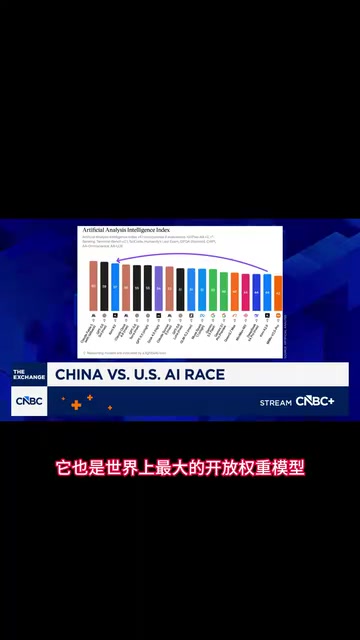
According to independent benchmark evaluations, Kimi K3 matches — and in some tests surpasses — flagship models from Anthropic and OpenAI across multiple dimensions, including frontend design and software engineering. These evaluations typically use benchmarks like WebDev Arena and SWE-bench. The former borrows Chatbot Arena's human-preference voting mechanism, asking real users to blind-compare web UIs generated by two models and ranking them with ELO scores. The latter, developed by a Princeton team, presents software engineering tasks drawn from real GitHub Issues, requiring models to directly modify codebases to fix actual bugs rather than generate isolated code snippets. Both methods use an "open-ended task + human verification" design that is significantly harder to game with training data than fixed multiple-choice benchmarks. Evaluators also constructed entirely new demo sets to mitigate "benchmark contamination" — the risk that test set content may have appeared in a model's training data. Most notably, Kimi K3 is open-source and currently the world's largest open-weight model.
The term "open-weight" means the developer publicly releases the model's trained weight parameters, allowing anyone to download, deploy, and modify them — though training code or datasets are not necessarily included, distinguishing it from fully open-source. Kimi K3's massive scale means local deployment still carries a high hardware barrier, but cloud inference services can significantly reduce adoption costs for small and mid-sized enterprises.
As one evaluator put it after testing 50 different demos: "When China releases something that's better than our best models and also open-source, things get really serious." The once-common refrain that "Chinese AI lags far behind America" is no longer something anyone dares to say lightly.
Kimi K3: The Technical Impact Behind 2.8 Trillion Parameters
Scale and Performance
Kimi K3 has approximately 2.8 trillion parameters and outperforms the vast majority of mainstream models on multiple frontier benchmarks, trailing only Anthropic and OpenAI's top products.
To appreciate this scale: GPT-3 had 175 billion parameters, GPT-4 is estimated at roughly 1.8 trillion (unconfirmed by OpenAI), and 2.8 trillion is approaching the largest known model sizes. Comparisons sometimes made to the number of synapses in the human brain are more intuitive analogies than functional equivalences — the human brain has roughly 100 trillion synaptic connections, and parameters and synapses differ fundamentally in how they work.
It's worth noting that such a large parameter count doesn't mean every inference call activates all parameters. Kimi K3 likely uses a Mixture of Experts (MoE) architecture — which activates only a small subset of "expert sub-networks" during each inference pass, with active parameters potentially in the tens of billions. This allows the model to maintain powerful expressive capacity while controlling inference costs. GPT-4, Gemini Ultra, and DeepSeek V3 all use similar architectures. The core challenge in MoE is the "routing mechanism" — deciding which expert handles which token — which directly affects training stability and generalization ability.
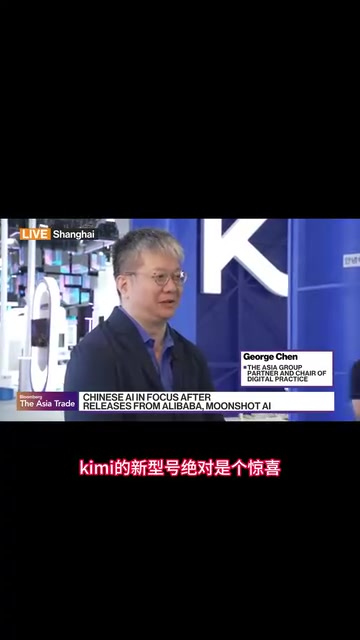
But what surprised Wall Street and Silicon Valley this time wasn't just performance — it was cost. Bloomberg Executive Editor Peter Elstrom noted that the training and operating costs of these Chinese models are "still unclear just how low they actually are."
Is Open-Source Really Cheaper? The Industry Is Divided
There is no consensus in the industry on whether open-source models are truly more cost-effective. OpenAI Chairman Brett Taylor pushed back on this narrative in a CNBC interview: "Open-weight models are somewhat overhyped — they aren't necessarily cheaper to run. And as for training costs, users don't really care about that."
This stands in contrast to the "low cost + open-source = perfect alternative" narrative. The truth may lie somewhere in between: open-source does lower the adoption barrier, but inference costs for large models remain substantial.
The Paradox of Chip Restrictions
The most subtle dimension of this development points directly at U.S. chip export control policy.
A model of Kimi K3's scale requires enormous compute. Under GPU export restrictions, Moonshot AI reportedly trained primarily on a combination of some H100 chips alongside domestic Chinese chips. Alibaba's newly released Qwen series, released around the same time, is similarly unlikely to have relied heavily on H200s.
In response to these constraints, Chinese AI companies have broadly explored heterogeneous compute cluster strategies: mixing a small number of high-performance chips with domestic options like Huawei Ascend and Cambricon, and optimizing communication protocols and parallel training frameworks to compensate for per-chip performance gaps. The core technical challenge is overcoming the "communication wall" — when inter-chip bandwidth is insufficient, large amounts of time are wasted on data synchronization rather than computation. Huawei's latest AI cluster solution (such as the CloudMatrix 384) uses all-optical interconnects to link 384 Ascend 910C chips at ultra-high bandwidth in a full mesh, achieving cluster-level bandwidth several times that of an H100 NVLink cluster — effectively aggregating many individually weaker chips into a high-efficiency cluster through high-bandwidth interconnects to deliver compute at scale.
This raises an awkward question Washington must confront: Have export controls actually worked?
The current U.S. framework for chip controls on China primarily sets thresholds on compute performance (TOPS) and inter-chip interconnect bandwidth. History suggests, however, that technology blockades tend to generate alternative paths rather than halt progress. The more critical variable is algorithmic efficiency gains — as demonstrated by DeepSeek R1's reinforcement learning training paradigm — which can reduce compute requirements through algorithmic innovation, gradually eroding the marginal effectiveness of chip controls over time. Blocking a single class of chips may not be enough to block system-level compute supply — this is the core critique analysts raise against the current strategy.
Constraints do exist, of course. Alibaba itself "humbly" acknowledged that its new models still trail Claude and similar top-tier products — suggesting Chinese companies have clear-eyed awareness of their own limits. But as one analyst put it: "That's where things stand today. In five years, the story could be completely different."

Is the "AI Race" Framework Even the Right One?
It's worth noting that not all experts buy into the "race" narrative.
Some technologists offer a more measured perspective: There is no single AI race. "Competition" is a more accurate framing — like business competition among firms in a market. The word "race" presupposes a finish line, as if whoever gets there first wins. But in most real AI application scenarios, that premise doesn't hold.
These experts further argue that what truly matters may not be "who has the most powerful model this month," but rather "whose model actually gets used." From a technical standpoint, you don't always need the most cutting-edge model — frontier models tend to be large, slow, and expensive to run.
What China is actually competing in is the game of diffusion and adoption. This logic has deep historical precedent: the Linux kernel was released in 1991, initially inferior in performance to commercial Unix systems, but its open ecosystem attracted global developer contributions that ultimately established Linux's dominance in servers and supercomputing — over 99% of the world's TOP500 supercomputers run Linux. Android similarly expanded rapidly into emerging markets by licensing freely to device manufacturers, now holding over 70% of the global smartphone market. Both cases illustrate the "diffusion flywheel" effect: openness lowers adoption barriers → user base expands → developer ecosystem grows → toolchain matures → adoption costs fall further. DeepSeek, Moonshot AI's Kimi K3, and Alibaba's Qwen are all open-source, replicating this classic playbook, seeking to establish a first-mover advantage at the global developer ecosystem layer. By contrast, U.S. frontier labs trend toward closed models.
The Deeper Game: Containment or Cooperation?
According to Axios reporting, the U.S. is considering banning some Chinese frontier AI models from its domestic market. Commentators have compared this to a "BYD of AI": technically competitive or superior, cheaper — but unavailable to buy in the U.S.
However, this strategy faces an obvious dilemma. Bloomberg's Peter Elstrom noted that banning Chinese open-source models could actually harm American companies: "If you take away the tools that enterprises want to use to access AI, you may be helping AI frontier companies while penalizing businesses across the rest of the economy." After all, the cheapest and most capable open-source models available today largely come from Chinese companies.
The longer-term trends are even more striking:
- According to on-site citations, China is reportedly directing roughly "70 to 80 percent of government resources" toward AI development (this is a single-source claim and should be treated with caution);
- Bloomberg reports that China has announced plans to integrate AI education into core curricula across all levels of schooling, covering students of all ages over the next five years;
- One data point suggests approximately 47% of the top 20% of global AI researchers were born in China — which is a key reason why companies like Meta and Nvidia actively recruit Chinese AI talent.
Multiple commentators have reached similar conclusions: pure sanctions and containment are unlikely to work, and "the best option is to work with China, because China isn't going away."
Conclusion: Beyond the Narrative, the Win Goes to Whoever Gets Adopted
Drawing on analysis from Bloomberg, CNBC, and multiple other sources, several points of consensus emerge: Kimi K3 represents a credible and real capability shock; the open-source plus low-cost strategy is undermining the premium pricing logic of U.S. frontier labs; and the practical effectiveness of export controls is facing serious scrutiny.
But clarity is also warranted: there is genuine disagreement about "whether open-source is truly cheaper," the "finish line" framework deserves to be questioned, and some government investment figures come from single sources. The limitations of benchmarks must also be kept in mind — while SWE-bench and WebDev Arena are more realistic than traditional evaluations, sample size, evaluator subjectivity, and potential benchmark contamination all make it difficult to treat any single evaluation result as definitive. The parameter scale under MoE architecture also deserves rational scrutiny — "2.8 trillion parameters" is the total, not the activated count, and using this figure directly to gauge inference capability can be misleading.
The real decisive factor may not be who scores a few percentage points higher on a benchmark, but whose model is actually put to use by more developers, more enterprises, and more countries. In this deeper contest over diffusion, open-source has become China's sharpest competitive weapon.
Key Takeaways
Related articles

The Truth Behind Codex 'Build a Website in 5 Minutes': AI Isn't Creating Sites—It's Helping You Copy Them
Exposing the truth behind viral Codex 5-minute website videos: creators aren't building original sites with AI—they're copying shared prompts or scraping others' work. Learn AI coding tools' real limits.

Getting Started with AI Agent Development: A Complete Guide from Concept to Practice
A comprehensive guide to AI Agent architecture and development, covering automated marketing, intelligent customer service, and investment analysis scenarios with single and multi-agent collaboration.

The Truth Behind Codex 'Build a Website in 5 Minutes': AI Isn't Creating Sites — It's Helping You Copy Them
Exposing the truth behind viral Codex 5-minute website videos: creators aren't building original sites with AI — they're copying shared prompts or scraping others' work.