MasterGo AI + Cursor: A New Paradigm for AI Full-Stack Development and Developer Capability Reinvention

How MasterGo AI and Cursor are defining a new AI full-stack development paradigm for developers.
AI is driving a third revolution in software development tools. This article explores how MasterGo AI generates high-fidelity designs from prompts and how Cursor enables natural language coding, forming a powerful new AI full-stack workflow. It also examines how developers must reinvent their capability models — mastering prompt engineering, tool integration, and architectural thinking — to stay competitive in the AI era.
AI Is Driving the Third Revolution in Software Development Tools
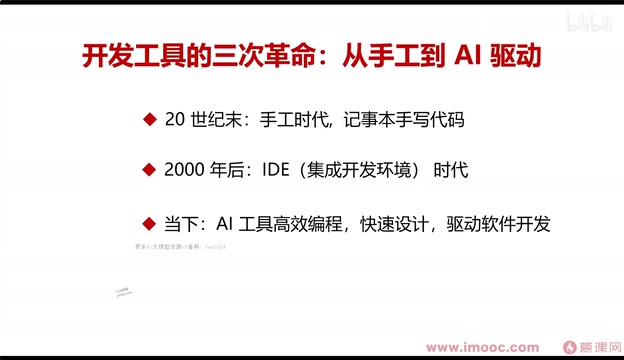
The history of software development tools is, at its core, a history of efficiency gains. Looking back over the past few decades, we can clearly identify three pivotal leaps.
In the early days, constrained by technology, programmers had no choice but to write code manually using simple tools like Notepad — an extremely inefficient process. As the new millennium arrived, integrated development environments (IDEs) like VS Code rose to prominence, bringing developers syntax highlighting, code completion, and debugging capabilities that dramatically boosted productivity and freed programmers from pure manual coding.
A Brief History of IDEs: The evolution of integrated development environments spans nearly half a century. From Borland Turbo Pascal's first integration of editing and compilation in 1983, to the enterprise-grade ecosystems of Eclipse and IntelliJ IDEA, to Microsoft's launch of the lightweight VS Code in 2015 — the latter quickly became the world's most popular development tool thanks to its open-source architecture and an ecosystem of over 40,000 plugins. According to Stack Overflow's 2023 Developer Survey, more than 73% of developers use VS Code daily, making it the de facto standard infrastructure of modern software development. The core value of IDEs lies in unifying code editing, compilation, debugging, and version control into a single workbench, significantly reducing the cognitive overhead of switching between different tools.
Today, AI is driving the third revolution in software development tools. It can automatically generate code and web designs from prompts, offering developers unprecedented productivity gains. More importantly, AI's capabilities in software development continue to evolve rapidly, and every developer now stands at a crossroads where rethinking professional competitiveness has become essential.
MasterGo AI: From Prompts to High-Fidelity Designs
In traditional development workflows, web design typically requires deep involvement from professional designers — a time-consuming and labor-intensive process. AI tools are fundamentally changing this reality.
Take MasterGo AI as an example: it supports rapid generation of complete design mockups from text prompts. Interfaces that once had to be drawn by hand can now be generated as high-fidelity web designs within minutes simply by entering a description of the requirements, with continuous refinement based on feedback. This means developers no longer have to rely on dedicated designers — as long as you have a clear product vision, you can quickly visualize it.
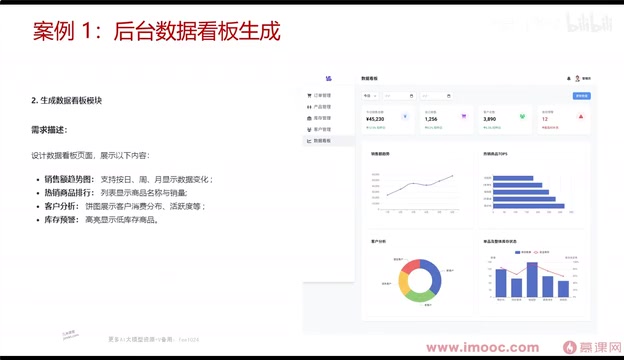
Case Study 1: Admin Dashboard with Data Analytics
The first typical example is an admin system data dashboard page generated by AI. On the left is the input prompt, which primarily describes the modules the dashboard needs to include; on the right is the finished page generated by AI. From sales trend charts to inventory warning graphs, each functional element is not only accurate but also richly detailed, closely aligned with real business needs.
Case Study 2: From Wireframe to High-Fidelity UI
The second case is even more representative — transforming a rough wireframe into a polished web design. On the left is the prototype wireframe uploaded for AI recognition; on the right is the generated result. The page accurately reproduces functional modules including news categories, homepage carousels, featured news, and trending recommendations, while also auto-generating image assets, elevating a plain wireframe into a visually stunning, high-fidelity UI that looks as though it was meticulously crafted by a professional designer.
Cursor: Writing Code in Natural Language
For the coding stage, Cursor is currently one of the most representative AI programming assistants available. Simply describe your requirements in natural language — for example, "Write a paginated user list component using the Vue framework" — and Cursor will automatically generate the corresponding Vue file, HTML structure, and CSS styles.
The Technical Core of Cursor: Cursor is not a simple code completion plugin. It is an AI-native IDE deeply customized from VS Code, developed by Anysphere, with GPT-4 and Claude among the large language models integrated under the hood. Its most significant technical advantage is "Codebase-aware" capability — the ability to perceive and understand the context of an entire code repository, not just the currently open file. This makes it far superior to GitHub Copilot's traditional inline completion mode when handling complex tasks like multi-file linked modifications and code architecture refactoring. Developers can describe system architecture intent in natural language, as if talking to a colleague, while the AI handles the specific code implementation — significantly advancing the boundary of human-AI collaboration.
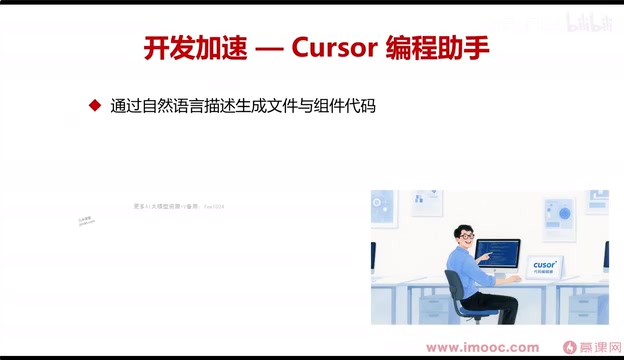
The value of this AI code generation model lies not only in reducing repetitive workload, but in freeing developers' attention to focus on higher-value work — requirements analysis, system architecture, performance optimization — the areas that truly determine project quality.
When AI takes over writing foundational code, developers have more bandwidth to think about product design and architectural logic. This shift transforms developers from mere "coders" into true software product creators, significantly elevating their sense of professional purpose and value.
A New AI Full-Stack Development Paradigm Is Taking Shape
Combining MasterGo AI with Cursor reveals a brand-new development paradigm emerging across three dimensions:
- AI toolchains have permeated the entire development workflow: From UI design mockups to front-end and back-end code, automatic generation now covers the core stages of software development.
- "AI generation + human review and optimization" has become the mainstream working mode: Developers decompose requirements, write prompts, review outputs, and apply manual refinements to rapidly drive project delivery.
- The bar for comprehensive developer capabilities has risen in parallel: You need to understand the business, ask the right questions, and be able to evaluate the accuracy of AI-generated outputs. The real goal is to master and leverage AI — not to be replaced by it.
Industry Impact of AI Full-Stack Development: The rise of the "AI full-stack development" paradigm is closely tied to breakthroughs in large model multimodal capabilities. Traditionally, full-stack development required developers to simultaneously master front-end interaction, back-end logic, database design, and DevOps — an extremely steep learning curve that typically took years to climb. The emergence of AI toolchains has enabled individual developers to command a complete tech stack with a much lower skill barrier. According to a 2024 research report by leading venture capital firm a16z, AI-assisted development has compressed the prototype delivery cycle for small and medium-sized projects from weeks to days. This trend is profoundly reshaping the software outsourcing market and giving rise to a wave of "Indie Hacker" business models — where a single person, armed with an AI toolchain, can deliver products that once required an entire team.
Developers Must Reinvent Their Capability Models
Against this backdrop, developers' capability models must evolve accordingly, centering on three dimensions.

First is the ability to articulate requirements precisely — in other words, prompt engineering. Only by accurately conveying ideas and functional requirements to AI can you obtain outputs that meet expectations. This is the first gate of effective human-AI collaboration.
Prompt engineering is not simply "asking questions" — it is a systematic methodology. It includes defining a clear role and task boundary for the AI, injecting sufficient contextual background, using Chain-of-Thought reasoning to guide the model step by step, and calibrating output format through Few-shot Examples. Research shows that for the same requirement, the quality gap between a well-crafted prompt and a poorly written one can be more than tenfold. In the AI era, "knowing how to ask effectively" is becoming a core skill on par with programming languages.
Second is the ability to integrate tools. Developers need to intelligently combine different AI tools for specific scenarios to achieve synergistic effects, rather than using any single tool in isolation.
Third is domain understanding and architecture design capability. The core of workplace competition in the future will increasingly hinge on your depth of business understanding, ability to decompose systems, and capacity for architectural design. These are precisely the tasks AI currently struggles to handle — and the professional moat that developers need to build and reinforce.
The Future Competitiveness Formula
Facing the AI wave that has already arrived, one formula clearly captures the direction developers must evolve toward:
Future Competitiveness = Full-Stack Technical Skills + AI Tool Proficiency + Real-World Project Experience
Full-stack technical skills form the solid foundation of career growth; AI tool proficiency acts as a force multiplier, rapidly amplifying individual output efficiency; and real-world project experience is what transforms technical skills and tools into deliverable business value.
Rather than anxiously fearing replacement by AI, developers are better served by proactively mastering it — using it to expand their own technical boundaries. Shifting from passive acceptance to active command: that mindset change may be the most critical factor in helping developers find their footing and move to the forefront in this era of transformation.
Key Takeaways
Related articles

The Truth Behind Codex 'Build a Website in 5 Minutes': AI Isn't Creating Sites—It's Helping You Copy Them
Exposing the truth behind viral Codex 5-minute website videos: creators aren't building original sites with AI—they're copying shared prompts or scraping others' work. Learn AI coding tools' real limits.

Getting Started with AI Agent Development: A Complete Guide from Concept to Practice
A comprehensive guide to AI Agent architecture and development, covering automated marketing, intelligent customer service, and investment analysis scenarios with single and multi-agent collaboration.

The Truth Behind Codex 'Build a Website in 5 Minutes': AI Isn't Creating Sites — It's Helping You Copy Them
Exposing the truth behind viral Codex 5-minute website videos: creators aren't building original sites with AI — they're copying shared prompts or scraping others' work.