MCP for Beginners: The Essential Protocol for AI Agent Development
A beginner's guide to MCP — the open protocol reshaping how AI agents connect with tools and data.
MCP (Model Context Protocol), launched by Anthropic in late 2024, is fast becoming the go-to standard for AI agent development. Unlike Function Calling, which suffers from inconsistent standards and tight coupling, MCP enables standardized, secure, remote tool invocation over a network — breaking down data silos and allowing agents to tap into tools from any team or company worldwide.
As AI Agent development becomes increasingly mainstream, a protocol called MCP is quietly becoming an indispensable core technology. Some bold predictions suggest: more than 90% of enterprise AI agents will rely on MCP in the future. This article offers a systematic breakdown of MCP — what it is, why it matters, and how it fundamentally differs from traditional Function Calling.
Why Developers Are Moving Away from Function Calling
Before MCP arrived, large language models primarily used Function Calling to invoke external tools. But as the technology has evolved, the limitations of this approach have become increasingly apparent.
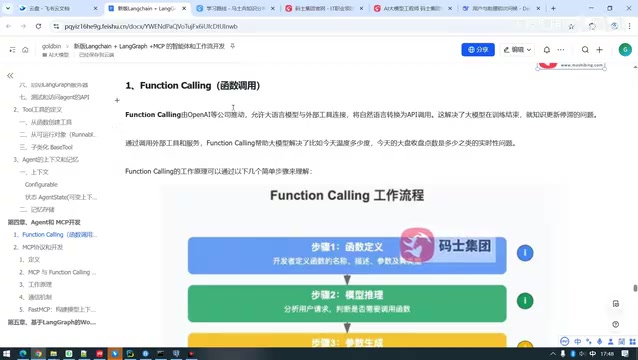
Function Calling has two core pain points:
First, there's no unified standard. Different model providers use different interfaces and formats, with no shared specification. This means switching model vendors often requires significant code rewrites.
Second, tool execution is heavily dependent on external frameworks — and the framework ecosystem is wildly inconsistent. Actual tool execution is handled by third-party frameworks, and the sheer number of combinations between different frameworks and different model providers leads to constant code churn and sky-high maintenance costs.

These fragmentation issues created an urgent need for a unified protocol. For developers actively building AI agents, Function Calling is now more of a concept to understand than a go-to choice for new projects.
What Exactly Is MCP?
MCP stands for Model Context Protocol, an open standard introduced by Anthropic in late November 2024.
Officially, it's defined as "a unified communication protocol between large language models and external data sources and tools." In plain terms:
MCP is essentially a communication protocol between models and tools.
So why do we need such a protocol? The key reason is to fully decouple agents from their tools.
From Local Tools to Remote Tools
In traditional development, tools and agents typically run in the same process — a tightly coupled arrangement.
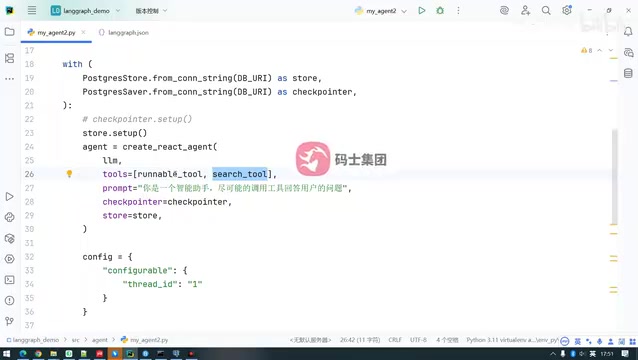
In real enterprise projects, however, this creates serious problems: if one team builds a general-purpose tool and wants multiple agents to reuse it, does every project team need to copy the code into their own codebase? That's clearly not sustainable.
This is precisely where MCP delivers value — it enables remote tool invocation over network protocols. Tools can be developed independently by other departments, and callers only need to know a network address. Tools can even be standardized services published on the public internet by major companies.
It's worth noting that MCP includes a built-in local communication mechanism called Stdio (Standard Input/Output). However, in production environments, you'd almost never use MCP to call local tools — local tools can simply be invoked directly within the same process, and routing through MCP's Stdio conversion layer would only slow things down.
Therefore, MCP's true role in production is enabling agents and workflows to call remote, network-based tools.
How MCP Breaks Down AI Data Silos
MCP's core goal is to solve a critical problem: AI models are constrained by "data silos" that prevent them from reaching their full potential.
With MCP, AI applications can securely access and operate on both local and remote data and tools. The word "secure" here has concrete technical backing — when calling public internet tools, authentication mechanisms can be enforced. For example, a token can be generated and passed in for user verification, and the tool is only accessible after successful authentication.
Internal company MCP services often skip authentication in favor of speed, but MCP tools published for public use — such as those offered by Alibaba, Tencent, Zhipu AI, and other major players — typically require authentication via JWT or similar encryption schemes, directly addressing security concerns that critics have raised about MCP.

Freely Integrating Global Tool Resources
A simple analogy helps illustrate MCP's potential:
Before MCP, it was like everyone had their own isolated personal computer with no way to connect. With MCP, not only can different departments within a company connect their agents through an internal network — any company on the public internet that exposes an MCP interface becomes a tool that any developer can call when building their own agents.
This means the capabilities of every company in the world, along with every department's internal tools, can all be integrated into a single agent. In fact, within just months of MCP's launch, many major companies both domestically and internationally have already published their own MCP interfaces, and the ecosystem is forming rapidly.
The Fundamental Difference Between MCP and Function Calling
It's important to clarify that MCP and Function Calling operate at different levels of the stack:
- Function Calling is a function invocation mechanism — it addresses the question of how a model triggers tool execution
- MCP is a communication protocol — it addresses the question of how tools can offer their services in a standardized, distributed way
They belong to different technical categories and don't simply replace each other. In an agent architecture, they each play their own distinct role.

In practice, three tool-calling scenarios often coexist in agent development: calling locally written tools, calling internal-network MCP tools provided by other departments, and calling MCP tools published by major companies on the public internet. This flexibility is the fundamental reason MCP has generated so much excitement.
Key Version Information Before You Get Started
For developers who want to dive into MCP quickly, the following version updates are worth noting:
- The MCP server has been updated to version 2.0, with significant API changes
- LangChain-MCP-Adapters (the adapter library for calling MCP tools via LangChain) has been recently updated, changing how client-side code is written
- On the communication layer, a new mechanism called Streamable-HTTP has been introduced, which the industry widely expects to become the dominant communication method going forward
In terms of architectural roles, both LangChain and LangGraph act as MCP "clients" — they are responsible for calling tools hosted on MCP servers.
Closing Thoughts
MCP's significance goes beyond standardizing communication between models and tools. More importantly, it opens a door to "free integration of resources" for agent development.
As more and more major companies open up their MCP interfaces, the value of this ecosystem will continue to grow. For AI application developers, investing time early in understanding MCP's principles and practices is a high-return skill. The natural next step — deeply mastering MCP's three communication mechanisms — will be the key to successfully deploying it in real-world applications.
Related articles

Disaster and Glory of the Apollo Program: The History We Must Revisit Before Returning to the Moon
From the fatal Apollo 1 fire to Apollo 8's daring lunar orbit to Apollo 11's successful landing—revisiting the disasters, fears, and compromises of the Apollo program and their lessons for today's return to the Moon.

Netflix Trust Exercise Turns Into Firing Trap: Where Are the Boundaries of Corporate Trust?
A Netflix employee was fired after sharing private info in a trust exercise. We analyze the risks of corporate trust exercises and how employees can protect themselves.

AMD CDNA5 Architecture Deep Dive: Technical Evolution and the AI Computing Competition Landscape
Deep analysis of AMD's CDNA5 architecture covering Chiplet packaging upgrades, HBM memory evolution, and low-precision compute optimization, examining how AMD challenges NVIDIA's AI chip dominance.