MCP + Skills AI Reverse Engineering Toolchain: Technical Capabilities and Compliance Boundaries

A sober technical analysis of AI-powered reverse engineering workflows and their legal compliance boundaries.
This article examines the technical architecture of an "AI reverse engineering workflow" integrating MCP, a Skills library, and a modified Frida toolkit. It objectively assesses the real capabilities and limitations of AI-assisted reverse engineering across iOS, Android, and Web platforms, while clearly outlining the legal and ethical boundaries that practitioners must respect.
AI Is Lowering the Bar for Reverse Engineering
Recently, a livestream about "AI + reverse engineering" sparked widespread discussion in tech circles. The presenter claimed that by integrating MCP (Model Context Protocol), a Skills library, and a customized Frida toolkit, AI could automatically perform reverse engineering analysis across iOS, Android, and Web platforms — covering the full pipeline of unpacking, decompilation, dynamic signature analysis, and algorithm reconstruction.
This article examines the real capabilities and limitations of this so-called "AI reverse engineering workflow" from a technical perspective, helping readers develop a grounded understanding of where AI stands in the reverse engineering field. It must be emphasized: reverse engineering third-party commercial software, cracking paid tools, and bypassing risk-control systems often carries legal and compliance risks. This article is purely a technical analysis and does not constitute any operational advice.
The Technical Architecture of an AI Reverse Engineering Workflow
The Core Logic Behind MCP + Skills
MCP (Model Context Protocol) is an open protocol standard introduced by Anthropic in late 2024, designed to address the fragmentation problem in integrating large language models with external tools and data sources. Its core concept is analogous to USB standardization: before MCP, every AI application required custom integration code for each tool. MCP provides a unified communication specification, enabling AI models to call file systems, databases, APIs, and specialized software through a standardized interface.
In reverse engineering contexts, MCP's significance lies in transforming tools that previously required manual operation — IDA Pro, Frida, packet capture tools — into AI-callable nodes, enabling automated task orchestration.
This workflow consists of three components:
- MCP Configuration: Includes a custom-built iOS port operation MCP, an open-source Frida MCP, and an IDA Pro MCP — allowing AI to directly invoke various reverse engineering tools through standardized protocols.
- Skills Library: Handles workflow orchestration, defining the decision logic of "what to do first, what to do next," covering key steps like unpacking and algorithm processing.
- Modified Toolchain: Custom modifications to the Frida toolkit (injection, hooking, and unpacking tools) to evade detection mechanisms in target applications.
Frida is an open-source Dynamic Instrumentation framework supporting iOS, Android, Windows, macOS, Linux, and more. Its core capability is injecting custom JavaScript scripts into a running process — without modifying the target's source code — to perform function hooking, memory read/write, argument interception, and return value manipulation. A "modified Frida" typically refers to obfuscating its detectable signatures, process names, and communication ports to bypass Frida detection logic built into commercial apps. For example, a target app might scan /proc/maps or detect specific memory patterns to identify instrumentation; modified versions are built to counter exactly these detection mechanisms.
The presenter repeatedly emphasized a key point: "Decision-making is what matters most" — AI cannot replace human judgment. The real value lies in humans building the right "ecosystem" for AI: equipping it with tools and a knowledge base so it can iterate efficiently. This observation is accurate, but it also highlights how much this toolchain depends on the foundational capabilities of its operator.
The Real Logic Behind the Three-Platform Demo
The livestream ran three parallel workstreams: iOS reverse engineering (unpacking Kuaikan Manga), Android reverse engineering (MTGSIG algorithm reconstruction), and Web reverse engineering (PX3 CAPTCHA handling). This "cross-demo" approach was essentially a way to mask the slow execution speed of AI and the long wait times involved.
MTGSIG is a security parameter used in Meituan's mobile request signature verification system — a classic composite signature mechanism combining device fingerprinting, behavioral characteristics, and timestamps. Such mobile risk-control signature algorithms typically generate dynamic signatures by running multi-dimensional data (device hardware info, app runtime environment, user behavior sequences) through multiple rounds of encryption and hashing. The server verifies signature legitimacy to distinguish legitimate user requests from automated scripts. The presenter's remark that "only the last two parameters are missing" reveals the adversarial nature of such algorithms: risk-control teams at top internet companies continuously iterate on algorithm complexity, keeping reverse engineers perpetually in catch-up mode — a textbook example of the "cat and mouse game" in security engineering.
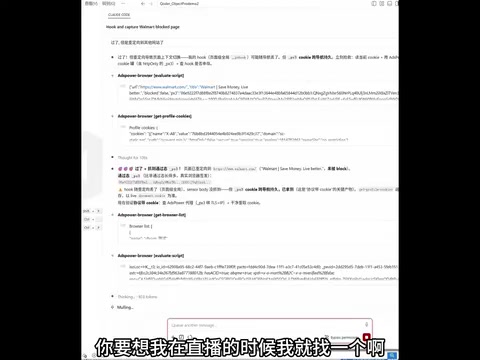
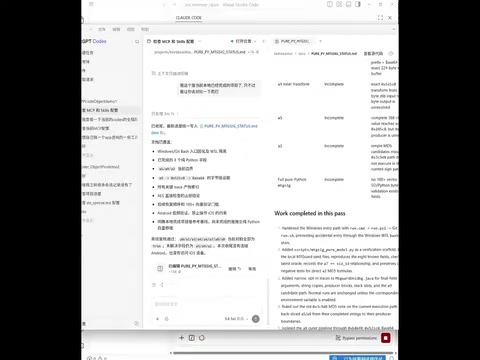
The presenter also acknowledged several limitations: on Android, "MTGSIG pure algorithm reconstruction is still missing the last two parameters"; on iOS, "we've only completed one project so far — Xiaohongshu — everything else is still empty"; for TikTok's Bashen algorithm, "the environment-patching version is done, but two gods remain for pure algorithm reconstruction." These admissions reveal that "three-platform coverage" is largely a marketing claim — actual completion rates vary considerably.
Technical Characteristics of iOS Reverse Engineering
Unpacking: The Core Pain Point of iOS Reverse Engineering
FairPlay is Apple's proprietary Digital Rights Management (DRM) system, originally developed for iTunes music encryption and later extended to protect all App Store application distribution. Its mechanism works by encrypting the __TEXT segment of an executable (Mach-O format) using a device-bound key when the app is downloaded and installed, making directly-obtained IPA files impossible to decompile or analyze. Since all App Store apps carry this FairPlay DRM encryption (known in the industry as a "shell"), the first step in iOS reverse engineering is typically "shell dumping" (砸壳) — exploiting the fact that iOS must decrypt the code into memory at app launch, then dumping the decrypted executable from the running process to restore it to a readable plaintext format. Mainstream tools include dumpdecrypted (via dynamic library injection) and frida-ios-dump (Frida-based), but both require a jailbroken device or a specific enterprise certificate signing environment.
The presenter argued that "iOS reverse engineering is simpler than Android" — a view with some merit. The iOS ecosystem is relatively closed and uniform, with less diversity in protection schemes than Android, and shell-dumping tools are quite mature. That said, iOS reverse engineering is far from trivial: dynamic debugging, anti-detection, and algorithm tracing all require solid technical grounding.
Breaking Down the Full Reverse Engineering Pipeline
Using Kuaikan Manga as the example, the full demonstrated workflow included:
- Connecting a real device for packet capture and analyzing dynamic signature endpoints
- Pulling the IPA file and performing the shell dump
- Using IDA Pro for static decompilation analysis
- Using Frida for dynamic debugging
- Locating core encryption points and attempting algorithm reconstruction
The presenter claimed the entire process "took about an hour." However, it's important to recognize that the target was relatively straightforward. Commercially hardened software with strong anti-tampering capabilities is far more challenging. Take VMP (Virtual Machine Protection) as an example — one of the highest-grade code obfuscation solutions in commercial software protection, with products like VMProtect and Themida as representatives. It works by converting original x86/ARM assembly instructions into a proprietary virtual machine bytecode and embedding a dedicated interpreter (VM Handler) that executes these bytecodes at runtime. Since the virtual machine architecture differs with every compilation, analysts cannot rely on general-purpose decompilation tools to reconstruct the logic. Even seasoned human experts may spend days or weeks on such analysis — far beyond the idealized one-hour scenario shown in the demo.
The Reality of Safety Boundaries in Large Language Models
The Inherent Instability of "Jailbreaking"
"Safety Alignment" refers to the technical process of training large language models — through methods like RLHF (Reinforcement Learning from Human Feedback) and Constitutional AI — to adhere to human values and safety guidelines when generating content. Mainstream commercial models implement multiple layers of safety mechanisms: an input filtering layer that detects sensitive intent, an output monitoring layer that flags harmful content, and value constraints internalized at the model weight level through training. One intriguing detail from the demo was the discussion of "jailbreaking" — attempts to bypass safety mechanisms through prompt engineering, roleplay setups, or context manipulation. The presenter noted that the model's jailbreak success rate was "only 70–80%," and that after repeated context compression, safety mechanisms would trigger, interrupting the task.
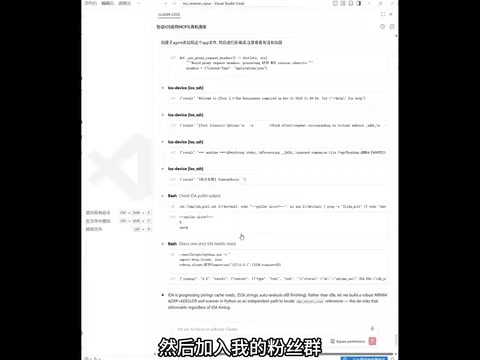
The livestream saw multiple instances of the model refusing to execute tasks or triggering safety blocks. This actually illustrates an important fact: the safety alignment mechanisms in mainstream large language models are working effectively, maintaining vigilance toward sensitive tasks involving reverse engineering, cracking, and bypassing risk-control systems. Major model providers continuously conduct adversarial training to improve safety robustness — this is a success of safety-by-design, not an obstacle to be circumvented.
The Real Capability Boundaries of AI-Assisted Reverse Engineering
The presenter himself repeatedly cautioned viewers about "AI hallucinations":
"A lot of people who've been using AI for a while start to think they're really capable — that they can do anything. But take AI away, and you still can't do anything."
This is one of the few genuinely sound observations in the entire presentation. AI's value in reverse engineering primarily lies in handling repetitive tasks, assisting with reading obfuscated code, and accelerating decompilation analysis. But when it comes to critical decision-making and understanding the architecture of complex algorithms, human experience remains irreplaceable — as the presenter noted, "AI doesn't have enough training data in the reverse engineering security domain." This observation has technical merit: reverse engineering relies heavily on private knowledge accumulated about specific application versions and specific hardening schemes. This kind of highly privatized, adversarial knowledge is extremely difficult to obtain from public corpora, leaving models with limited generalization ability when facing new targets.
Compliance Warnings and Rational Guidance
The Legal Boundaries of Technical Behavior
It must be clearly stated: the workflow analyzed in this article demonstrates scenarios that largely involve reverse engineering third-party commercial software, cracking paid features, and bypassing CAPTCHA and risk-control systems. These activities may violate regulations including the Computer Information System Security Protection Regulations, the Copyright Law, and the Anti-Unfair Competition Law.
The presenter repeatedly emphasized disclaimers like "I won't share the cracking files" and "I won't open-source the algorithm — I'm afraid of the legal exposure" — the density of these disclaimers itself reveals the legally gray or outright unlawful nature of the activities involved.
A Few Recommendations for Technical Learners
For readers interested in learning reverse engineering, the following principles are worth keeping in mind:
- Legal authorization is a prerequisite: Reverse engineering is a legitimate security research technique and should be conducted within authorized scope — applied to your own software or targets for which you have explicit permission.
- Understanding fundamentals beats depending on tools: Don't be seduced by the fantasy of "one-click cracking." Building solid foundations in assembly language, cryptographic algorithms, and operating system internals is the sustainable path.
- Stay away from gray-market scenarios: Using reverse engineering to build purchase bots, exploit promotional loopholes, conduct large-scale data scraping, or automate bulk account registration may constitute illegal activity.
AI has undeniably lowered the technical bar for reverse engineering — but a lower bar does not mean legal and ethical boundaries have disappeared. Technology should serve security defense, vulnerability research, and compliant compatibility development, not be used to undermine the security of others' systems or pursue illegal gains.
Related articles

The Truth Behind Codex 'Build a Website in 5 Minutes': AI Isn't Creating Sites—It's Helping You Copy Them
Exposing the truth behind viral Codex 5-minute website videos: creators aren't building original sites with AI—they're copying shared prompts or scraping others' work. Learn AI coding tools' real limits.

Getting Started with AI Agent Development: A Complete Guide from Concept to Practice
A comprehensive guide to AI Agent architecture and development, covering automated marketing, intelligent customer service, and investment analysis scenarios with single and multi-agent collaboration.

The Truth Behind Codex 'Build a Website in 5 Minutes': AI Isn't Creating Sites — It's Helping You Copy Them
Exposing the truth behind viral Codex 5-minute website videos: creators aren't building original sites with AI — they're copying shared prompts or scraping others' work.