Microsoft Signs 20-Year Deal with Chevron to Build America's Largest Natural Gas Data Center

Microsoft partners with Chevron on a 20-year natural gas data center deal as AI power demands clash with climate goals.
Microsoft has signed a 20-year Power Purchase Agreement with Chevron to build one of the largest natural gas-powered data centers in the US. Driven by explosive AI compute demand, the deal highlights the growing tension between tech giants' carbon neutrality pledges and the urgent need for reliable, large-scale power. The partnership structurally locks in decades of emissions, challenging Microsoft's 2030 carbon negative target and signaling that even ESG-focused companies face hard trade-offs in the AI race.
A 20-Year Energy Gamble
Microsoft recently signed a 20-year Power Purchase Agreement (PPA) with energy giant Chevron to jointly build one of the largest natural gas-powered data center projects in the United States. This means that over the coming decades, a brand-new natural gas power plant will be dedicated to providing electricity for Microsoft's data center infrastructure.
A Power Purchase Agreement (PPA) is a long-term electricity procurement contract in which the buyer commits to purchasing power from a generator at a fixed or predictable price over an agreed period. In the data center space, PPAs have become the mainstream approach for tech companies to secure power supply. Unlike traditional grid purchases, PPAs allow buyers to establish a direct supply-demand relationship with power generators, ensuring supply stability while hedging against future electricity price volatility. A 20-year PPA is considered an ultra-long-term contract in the industry, typically implying that the buyer has shared or guaranteed some portion of the generation facility's construction costs in exchange for long-term pricing advantages.
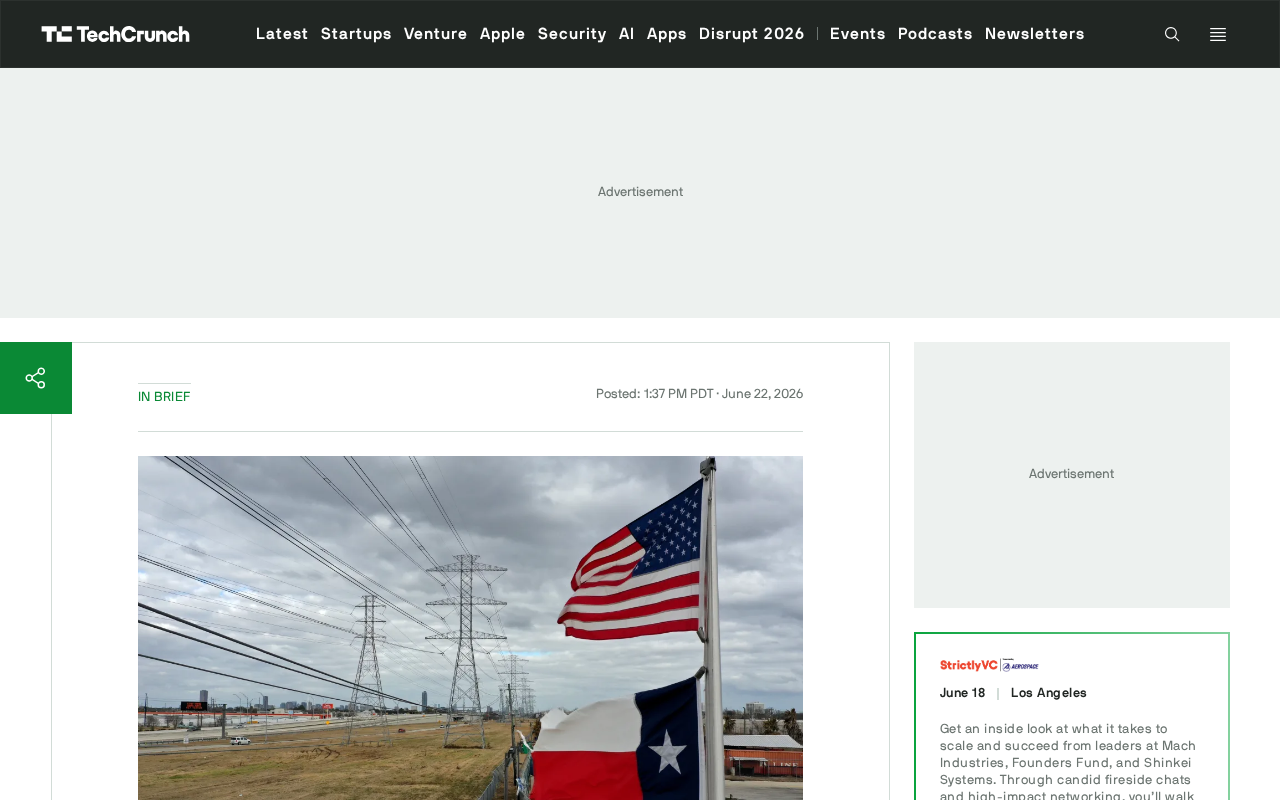
This decision has drawn widespread attention across the tech industry — at a time when global tech giants are announcing carbon neutrality targets, Microsoft has chosen to deeply align with a fossil fuel company, signing an agreement that will "lock in decades of carbon emissions."
AI Compute Hunger Drives Explosive Growth in Data Center Energy Demand
The Power Supply Dilemma Facing Data Centers
Behind this deal is the explosive growth in compute demand driven by the AI wave. As Microsoft continues to invest heavily in its OpenAI partnership, the AI inference and training workloads on the Azure cloud platform are growing exponentially, and data center power consumption has become the core bottleneck constraining expansion.
AI workloads fall into two main categories: Training and Inference. Training refers to the process of optimizing parameters of large language models using massive datasets, typically requiring thousands of GPUs working in concert for weeks or even months, with a single training run consuming millions of kilowatt-hours. Inference is the process of handling user requests after model deployment. While the energy consumption of a single inference is far lower than training, the sheer volume and continuous nature of user requests means that total inference-stage energy consumption is actually rapidly surpassing that of training. It's estimated that a single GPT-4-level query consumes roughly 10 times the energy of a traditional search, which explains why scaled AI deployment causes exponential growth in data center power demand.
According to industry data, a large AI data center can consume hundreds of megawatts — equivalent to the electricity usage of a mid-sized city. Traditional cloud computing data centers typically have per-rack power densities of 5-15 kilowatts, while AI training clusters have surged to 40-100 kilowatts or higher. NVIDIA's latest GB200 NVL72 rack system consumes up to 120 kilowatts, meaning a hyperscale AI data center with thousands of such racks can easily exceed 1 gigawatt (GW) of total power consumption — equivalent to the full-load output of a large nuclear power plant. This unprecedented power density demand not only challenges grid capacity but also increasingly constrains data center site selection based on power infrastructure availability.
Traditional renewable energy — whether wind or solar — still struggles to meet the 24/7 uninterrupted power demands of hyperscale data centers in terms of both stability and supply scale.
Natural Gas Power: A Pragmatic but Controversial Choice
Compared to coal, natural gas power generation produces approximately 50% less carbon emissions and offers the advantage of rapid load response, making it a "bridge fuel" in the transition from fossil fuels to clean energy. For Microsoft, choosing natural gas represents a pragmatic compromise between the speed of compute expansion and environmental commitments.
However, the 20-year contract term means these carbon emissions will be "structurally locked in" — even if renewable energy technology achieves breakthroughs in the future, this natural gas plant will continue operating into the mid-2040s. This creates obvious tension with Microsoft's previously announced goal of becoming "carbon negative by 2030."
Carbon Lock-in is an important concept in energy economics, referring to the phenomenon where once high-carbon infrastructure is built and operational, the enormous sunk costs and long-term contractual obligations mean these facilities will continue operating for decades even if cleaner alternatives become economically viable. A natural gas power plant typically has a design life of 30-40 years and a payback period of approximately 15-20 years. Early retirement within the payback period means investors face massive financial losses. This is why environmental organizations view 20-year PPAs as particularly dangerous commitments — they not only lock in emissions but also create economic incentives to resist energy transition.
Clear Divergence in Tech Giants' Energy Strategies
Google, Amazon, and Meta Each Scramble for Power Resources
Microsoft is not the only tech company facing energy challenges. Google, Amazon, Meta, and other giants are all aggressively securing power resources worldwide:
- Google has recently signed multiple nuclear power purchase agreements, betting on Small Modular Reactor (SMR) technology
- Amazon is investing heavily in wind and solar projects while also exploring nuclear options
- Meta has encountered data center siting resistance in multiple locations, partly due to insufficient power supply
Small Modular Reactors (SMRs) are nuclear reactor designs typically under 300 megawatts in capacity. Compared to traditional large nuclear plants, they offer shorter construction timelines, lower initial investment, and more flexible siting. SMRs can be prefabricated in factories and transported to sites for assembly, theoretically reducing construction time from the 10-15 years of traditional nuclear plants to 3-5 years. Currently, over 70 SMR designs worldwide are at various development stages, and NuScale's design in the US has received Nuclear Regulatory Commission (NRC) certification. For data centers, SMRs are attractive because they can provide zero-carbon, high-density, round-the-clock baseload power. However, commercial deployment is expected no earlier than around 2030 — this timing gap is precisely why companies like Microsoft must rely on natural gas in the interim.
Microsoft's choice to partner with a traditional energy giant like Chevron represents a more conventional but higher-certainty path. Chevron possesses a mature natural gas supply chain and power generation operational experience, enabling it to deliver large-scale, stable power output in a relatively short timeframe.
Environmental Commitments Collide Head-On with Business Reality
You might not have noticed, but Microsoft has long been one of the most environmentally prominent companies in the tech industry. Its carbon negative target, internal carbon tax mechanism, and investments in carbon capture technology were all once considered industry benchmarks. But the arrival of the AI era is forcing these commitments to face severe tests.
Microsoft has implemented an internal carbon tax since 2012, making it one of the earliest tech companies globally to adopt this mechanism. The system requires each business unit to pay an internal fee for its carbon emissions, currently covering Scope 1 (direct emissions), Scope 2 (purchased electricity emissions), and Scope 3 (supply chain emissions). Internal carbon tax revenue funds carbon reduction projects and carbon removal technology investments. The mechanism was designed to internalize the externalities of carbon emissions, encouraging departments to proactively seek low-carbon solutions. However, when the commercial value of AI business far exceeds carbon tax costs, the mechanism's constraining power is significantly diminished — paying the carbon tax is more economically rational than forgoing AI expansion.
According to previous reports, Microsoft's 2023 carbon emissions increased approximately 30% compared to its 2020 baseline year, with data center expansion being the primary driver. This partnership with Chevron will undoubtedly further intensify emissions reduction pressure.
The Ideal vs. Reality of Green AI: Compute Growth Far Outpaces Clean Energy Deployment
This deal reflects a deep contradiction in current AI industry development: the growth rate of compute demand far exceeds the deployment speed of clean energy.
In the short term, fossil fuels like natural gas will remain an important force supporting AI infrastructure expansion. In the long term, nuclear energy (especially SMRs and fusion technology), large-scale energy storage, and more efficient chip architectures are the true key pathways to achieving "Green AI." At the chip level, from NVIDIA's Blackwell architecture to Google's TPU v5, each generation of AI accelerators pursues higher energy efficiency (compute per watt), but the rate of model scale expansion continues to outpace hardware efficiency improvements, causing total energy consumption to keep climbing.
For the entire industry, Microsoft's partnership with Chevron sends a clear signal: under the intense pressure of the AI race, even the most ESG-conscious tech companies must make difficult trade-offs between ideals and reality. How to fulfill climate commitments while maintaining competitiveness will be one of the core challenges facing tech giants over the next decade.
Key Takeaways
Related articles

Disaster and Glory of the Apollo Program: The History We Must Revisit Before Returning to the Moon
From the fatal Apollo 1 fire to Apollo 8's daring lunar orbit to Apollo 11's successful landing—revisiting the disasters, fears, and compromises of the Apollo program and their lessons for today's return to the Moon.
Netflix Trust Exercise Turns Into Firing Trap: Where Are the Boundaries of Corporate Trust?
A Netflix employee was fired after sharing private info in a trust exercise. We analyze the risks of corporate trust exercises and how employees can protect themselves.

AMD CDNA5 Architecture Deep Dive: Technical Evolution and the AI Computing Competition Landscape
Deep analysis of AMD's CDNA5 architecture covering Chiplet packaging upgrades, HBM memory evolution, and low-precision compute optimization, examining how AMD challenges NVIDIA's AI chip dominance.