Multi-Model AI Aggregator Platforms Explained: Access GPT, Claude, Gemini & More from One Chat Interface

One chat box for all major AIs — the real value and hidden risks of multi-model aggregator platforms.
Multi-model AI aggregator platforms claim to unify GPT, Claude, Gemini, Grok, DeepSeek, and Kimi into a single interface. This article breaks down how context-sharing across models actually works, evaluates the genuine convenience these platforms offer, and exposes key risks — including man-in-the-middle data exposure, service instability, and unsustainable "free" pricing — while recommending safer open-source and commercial alternatives.
Starting from the Need: Why AI Aggregator Platforms Exist
As top-tier large language models — OpenAI GPT, Anthropic Claude, Google Gemini, xAI Grok, DeepSeek, Kimi, and others — continue to evolve rapidly, everyday users face a common frustration: each model has its own website, account system, and access requirements. Using multiple models simultaneously means constantly switching between platforms and logging in repeatedly — an incredibly inefficient workflow.
This fragmented access landscape has deep structural roots. OpenAI's GPT series runs on dual subscription and API tracks; Anthropic Claude has regional access restrictions; Google Gemini is tightly bound to Google accounts; xAI Grok operates within the X (formerly Twitter) ecosystem; and DeepSeek and Kimi, as products from Chinese teams, offer relatively smooth domestic access but with different functional focuses. This highly fragmented ecosystem has created strong user demand for a unified access point — and that's precisely what gave rise to AI aggregator platforms.
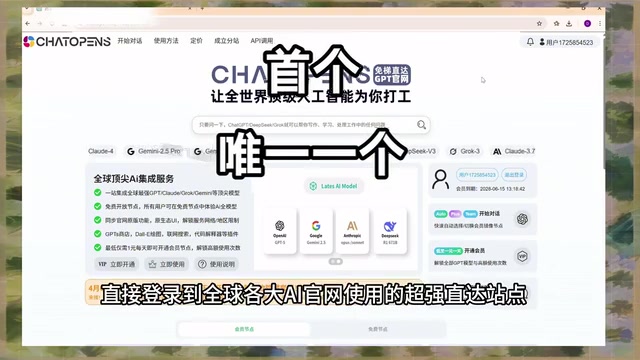
Recently, a wave of third-party sites promoting themselves as "aggregated portals" have appeared on platforms like Bilibili. They claim to offer free, unlimited access to DeepSeek, GPT, Kimi, Grok, Gemini, Claude, and other mainstream models — their core pitch being the integration of scattered AI capabilities into a single interface. This article takes an objective, technical look at the functionality, real value, and potential risks of these AI aggregator platforms.
Core Feature Breakdown
Seamless Model Switching with Full Context Retention
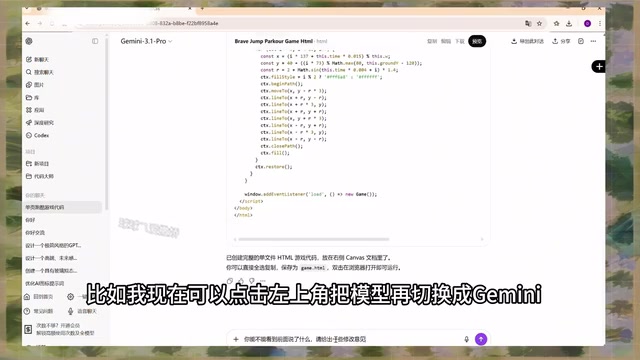
The most compelling feature of these platforms is the ability to switch between different AI models within the same chat window while preserving the full conversation history. A user can ask one model a question, then switch to Kimi or another model, and the new model can still read the prior conversation and respond coherently.
The underlying implementation is worth understanding. Large language models (LLMs) are strictly stateless at the engineering architecture level: each API call is essentially an independent matrix computation, and the model itself stores no session memory. This design stems from the Transformer architecture's inference mechanism — the model uses self-attention to build associations across all tokens in the input sequence simultaneously, rather than maintaining hidden states like an RNN. As a result, "memory" is implemented entirely by appending conversation history to each request's input sequence — a technique known as context injection.
Aggregator platforms handle this by maintaining a unified conversation history database on the server side. When a user switches models, the historical message sequence is serialized and injected into the new model's context window as a System Prompt or User message. It's worth noting that context window sizes vary significantly across models — GPT-4o supports 128K tokens, the Claude 3 series can handle up to 200K tokens, while some lightweight models only support 4K–8K tokens. This means that long conversations may get truncated when switching to a model with a smaller context window — the primary technical bottleneck of this feature.
This design addresses a genuine pain point: different models have different strengths — some excel at long-form reasoning, others at web search, and others at response speed. Switching models while sharing context allows users to leverage different models collaboratively on the same task, without repeatedly pasting conversation history.
Full-Model Arena + Single-Model Direct Access
These platforms typically offer two usage modes:
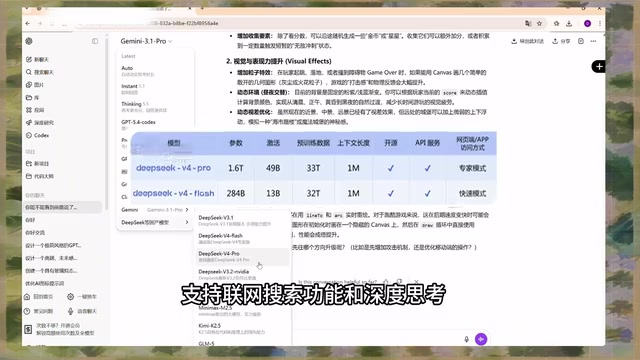
- Multi-model arena mode: Multiple models are aggregated in a single interface, making it easy to compare responses to the same prompt side by side.
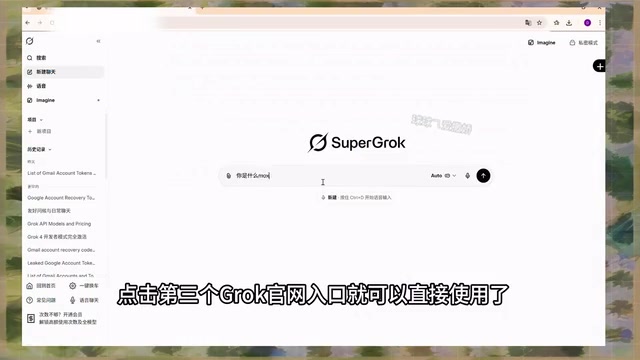
- Single-model direct access: Each AI gets its own dedicated entry point — Kimi, Grok, GPT, and others each have their own separate chat pages.
The "Arena" style multi-model comparison isn't a new concept — this interaction paradigm was systematically pioneered by UC Berkeley's LMSYS team with the Chatbot Arena project in 2023. Its core methodology is blind pairwise comparison: users vote on which of two responses is better without knowing which model generated them. The system computes Elo scores from large-scale voting data — a rating system borrowed from competitive domains like chess — dynamically reflecting model performance in real user scenarios. The Arena leaderboard has become an important reference benchmark in both academia and industry due to its large-scale, diverse human feedback data, complementing traditional fixed-benchmark evaluations like MMLU and HumanEval by better capturing real-world performance differences in open-domain conversations. Aggregator platforms productize this concept, letting ordinary users intuitively experience the differences between models based on daily use, without needing specialized evaluation expertise.
Commonly integrated models include the latest DeepSeek (with web search and deep reasoning support), high-tier Claude versions, the full Grok lineup, and GPT access points. This "arena" layout essentially frees users from the paralysis of choice — when you're unsure which model is more suitable, you can directly compare them.
An Honest Assessment: Value and Limitations
Core Value: Lower Barriers, Reduced Switching Costs
The genuine value of AI aggregator platforms lies in lowering access barriers and reducing the friction of switching between platforms. For tasks like academic writing, everyday Q&A, and content creation, users genuinely need to leverage the complementary strengths of different models. For instance, Grok responds quickly and has a conversational tone well-suited for everyday tasks and creative writing; the full DeepSeek model is better for deep reasoning and web-connected retrieval, and its API costs (approximately $0.27 per million input tokens) represent a pricing sweet spot among mainstream models.
Understanding token-based pricing helps evaluate platform sustainability. A token is the basic unit that LLMs use to process text — roughly equivalent to 3/4 of an English word or 1–2 Chinese characters. Mainstream models charge separately for input tokens and output tokens: input tokens correspond to all text submitted by the user (including conversation history), while output tokens correspond to the model's generated response. Since outputs are generated autoregressively one token at a time, the computational cost is typically higher than for input, and pricing reflects this. These differentiated strengths are the rational foundation for multi-model aggregation.
Risks You Shouldn't Overlook
However, behind the promise of "free unlimited access" lie several risks worth taking seriously:
-
Data security concerns: Third-party AI aggregator platforms typically function as Man-in-the-Middle Proxies at the technical architecture level — your requests are first sent to the aggregator's servers, which then forward them to each AI provider's official API, with responses returned along the same path. This means all your input content passes through third-party servers in plaintext. It's important to note that even if the transport layer uses TLS encryption (HTTPS), that encryption only protects data from being intercepted in transit — it does not prevent the intermediate node itself from reading the plaintext, because the platform's servers must decrypt requests in order to forward them. This is fundamentally different from end-to-end encryption (E2EE, such as the Signal protocol): with E2EE, intermediate nodes can only see ciphertext and cannot access plaintext — a capability that current AI aggregator platforms do not possess by design. Even if a platform claims it "doesn't store conversations," this cannot be externally verified at the technical level. Both GDPR and China's Personal Information Protection Law have clear regulations on this type of data processing, but compliance among small third-party platforms is generally difficult to verify. Extra caution is warranted when dealing with sensitive information like draft papers or business plans.
-
Questionable service stability: The "official direct access" these platforms advertise often relies on shared account pools or unofficial channels — approaches that explicitly violate the terms of service of major AI platforms and can be blocked at any time, making service continuity unreliable.
-
"Free and unlimited" is unsustainable: Mainstream LLMs charge per token usage (GPT-4o is approximately $2.5 per million input tokens; Claude 3.5 Sonnet approximately $3 per million input tokens). Because the token billing mechanism means costs can accumulate rapidly in long-conversation, high-concurrency scenarios, platforms claiming "free and unlimited" access can only cover costs through advertising revenue, user data monetization, early-stage subsidized user acquisition, or unauthorized use of others' API keys — all of which raise serious long-term sustainability concerns.
-
Traffic-baiting tactics: Some platforms repeatedly use phrases like "triple-tap to get the link" or "check the comments section" — these are classic engagement-baiting tactics, and users should exercise rational judgment.
More Reliable Alternatives
For users with genuine multi-model needs, there are several well-established, legitimate alternatives in the industry:
On the open-source client front, projects like LibreChat, Open WebUI, and LobeChat are all designed around a unified API specification. Their core approach is to adapt the API interfaces of major model providers to a standardized OpenAI-compatible API schema. This standard, originally established by OpenAI, has de facto become an industry norm due to its widespread adoption — most major model providers, including Anthropic, Google, and DeepSeek, offer compatible interfaces. Users simply deploy these clients locally or on a private server and fill in their API keys for each platform. The data flow then changes from "user → third-party platform → AI provider" to "user's local client → AI provider directly," completely eliminating the intermediary proxy node. This approach ensures data never passes through a third-party server at the architectural level, enabling flexible model switching without the data security risks.
On the commercial API aggregation front, OpenRouter.ai is currently one of the more reputable legitimate platforms, providing a unified API interface to dozens of mainstream models with transparent per-usage billing and no hidden data collection clauses. Enterprise users can also choose to deploy multi-model access layers on AWS Bedrock, Azure OpenAI, or other cloud providers, striking a balance between security, compliance, and flexibility.
These solutions may require some setup effort or modest costs, but the core logic is: exchange a small, controllable fee for data sovereignty and service reliability.
For academic writing in particular, AI should serve as an assistive tool, not a ghostwriter. Using AI to organize ideas, polish language, or search for references is a reasonable approach; relying entirely on AI-generated content risks academic integrity issues and is unlikely to survive peer review. Ultimately, what determines the quality of a paper is the researcher's deep understanding of the subject.
Summary
The rise of AI aggregator platforms reflects a genuine market demand at the application layer to consolidate fragmented capabilities. The product vision of "accessing all global AIs from one chat interface" is inherently worth acknowledging. However, behind the marketing of "free and unlimited" often lie hidden costs in data security and compliance — the man-in-the-middle proxy architecture means the platform's servers must inherently access users' plaintext data. Combined with opaque data handling practices and service stability issues stemming from reliance on unauthorized channels, these are all risk factors requiring rational evaluation. While enjoying the convenience, it's advisable to prioritize legitimate, controllable solutions for sensitive use cases. Tools themselves are neither good nor bad — what matters is how you use them.
Key Takeaways
Related articles

The Truth Behind Codex 'Build a Website in 5 Minutes': AI Isn't Creating Sites—It's Helping You Copy Them
Exposing the truth behind viral Codex 5-minute website videos: creators aren't building original sites with AI—they're copying shared prompts or scraping others' work. Learn AI coding tools' real limits.

Getting Started with AI Agent Development: A Complete Guide from Concept to Practice
A comprehensive guide to AI Agent architecture and development, covering automated marketing, intelligent customer service, and investment analysis scenarios with single and multi-agent collaboration.

The Truth Behind Codex 'Build a Website in 5 Minutes': AI Isn't Creating Sites — It's Helping You Copy Them
Exposing the truth behind viral Codex 5-minute website videos: creators aren't building original sites with AI — they're copying shared prompts or scraping others' work.