n8n from Beginner to Expert: A Complete Guide to Building AI Agent Workflows with Zero Code

A complete guide to building AI agent workflows in n8n using its three core AI modules with zero code.
This guide explores n8n's AI capabilities through its three core modules: AI Agent nodes for building intelligent agents, Chain nodes for sequential task processing, and Tool nodes for extending agent capabilities. It covers why n8n stands out with its open-source self-hosting and zero-code approach, and provides a structured learning path from environment setup to building RAG systems.
What Is n8n? More Than Just an AI Workflow Tool
When people hear n8n, their first reaction is often "AI workflow tool." But in reality, n8n is fundamentally a general-purpose workflow automation platform — AI is just one part of its broader capability landscape.
Even without AI, n8n can already handle a wide range of automation tasks: data cleaning, automated video publishing, web scraping, video comment analysis, and more. Think of it as a "universal glue" that connects various services and operations into automated pipelines.
The Workflow Automation market has grown rapidly in recent years, with notable products including Zapier, Make (formerly Integromat), and Power Automate. The core value of these platforms lies in using pre-built connectors to bridge different SaaS services, databases, and APIs, enabling non-technical users to build cross-system automation. n8n differentiates itself in two key ways: first, its open-source and self-hosting capabilities give enterprises full control over data sovereignty; second, its deep integration of AI-native capabilities evolves it from a traditional "if-then" rules engine into a hybrid automation platform that supports intelligent decision-making.
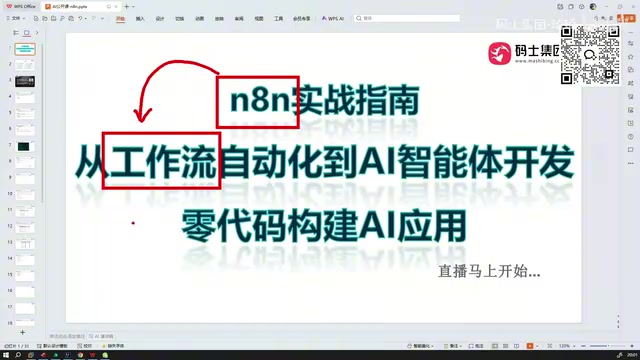
With the AI wave, n8n has made extensive AI-related feature updates and enhancements over the past year, making it a popular choice for building AI agent workflows. This is also the direction receiving the most community attention.
The Three Core AI Modules in n8n
To understand n8n's AI capabilities, you need to grasp three key modules. Together, they form the complete system for n8n's AI integration.
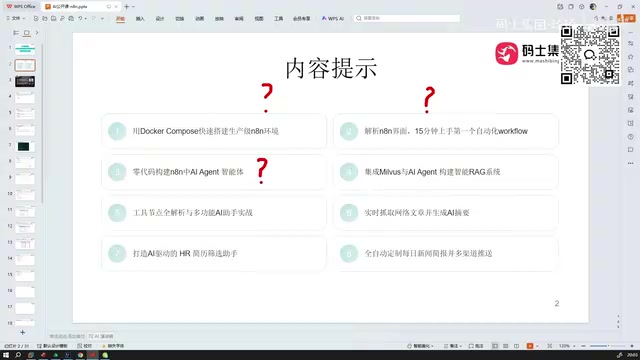
AI Agent: The Core Node for Intelligent Agents
AI Agent is n8n's top priority for AI integration. Simply put, it's the core node used to build AI agents within n8n.
With the AI Agent node, you can:
- Connect to large language models (such as OpenAI, Claude, etc.)
- Define the agent's behavioral logic and system prompts
- Let the agent autonomously decide next steps based on user input
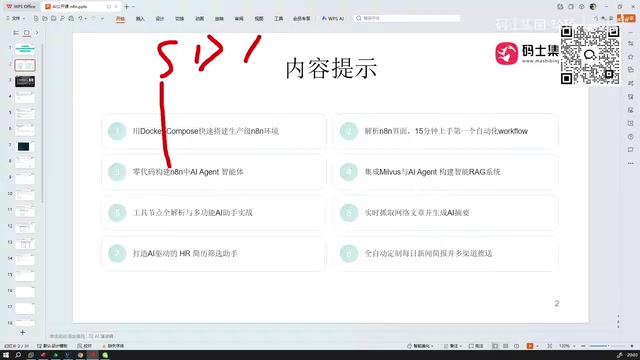
The power of AI Agent lies in the fact that it's not a simple "Q&A chatbot" — it's an intelligent agent capable of autonomously calling tools and executing multi-step tasks. This aligns perfectly with the popular Agent architecture concepts in the industry today.
AI Agents are one of the most closely watched technical paradigms in AI today. Unlike traditional single-turn Q&A models, Agents possess a closed-loop capability of "perceive-reason-act": they understand user intent, autonomously plan task steps, call external tools to execute operations, and dynamically adjust subsequent strategies based on execution results. This architecture is heavily promoted by organizations and frameworks like OpenAI and LangChain. The core idea is to transform large language models from merely "generating text" into decision-making hubs that can drive real business processes. ReAct (Reasoning + Acting) is the most classic implementation pattern — the model reasons at each step, then decides which tool to call, repeating this cycle until the task is complete. n8n's AI Agent node is a visual implementation of this paradigm.
Chain Nodes: Sequential Task Processing
n8n includes three types of Chain nodes, each responsible for different types of AI task processing. Chain nodes integrate with AI models to handle different subtasks following sequential logic.
The concept of Chains originates from the LangChain framework, which abstracts the process of interacting with large language models into a series of composable processing stages. Each Chain encapsulates specific prompt templates, model invocation logic, and output parsing rules, allowing developers to connect multiple Chains in series or parallel like building blocks. n8n visualizes this programming concept as nodes, dramatically lowering the implementation barrier.
The advantage of this design is breaking complex tasks into multiple stages, with each stage handled by a dedicated Chain node, ultimately linked together into a complete workflow. For example:
- Text Summarization Chain: Distills long text into key points
- Q&A Chain: Answers questions based on context
- Retrieval-Augmented Chain: Generates answers by combining external knowledge bases
This modular design allows developers to flexibly combine components to build AI processes adapted to different business scenarios.
Tool Nodes: Extending the Agent's Capabilities
If AI Agent is the brain, then tool nodes are its "hands and feet." One of an Agent's core capabilities is calling tools, and n8n provides a rich set of tool nodes for Agents to use.
These tool nodes enable AI Agents to:
- Access databases to query information
- Call external APIs for real-time data
- Execute code for computational tasks
- Operate file systems to read and write documents
- Send emails, messages, and other notifications
The richness of tool nodes directly determines the practical capability ceiling of an AI Agent. As a platform with hundreds of integration nodes, n8n has a natural advantage here. In Agent architecture, Tool Use / Function Calling is the key mechanism for enabling agents to leap from "can talk" to "can do." When a large language model determines it needs external information or must perform a specific operation, it generates a structured tool call request. The platform routes this request to the corresponding tool node for execution and returns the result to the model for continued reasoning. n8n encapsulates this complex interaction process as visual connections — users simply drag and connect tool nodes to the Agent node to complete configuration.
Why Choose n8n for Building AI Workflows?
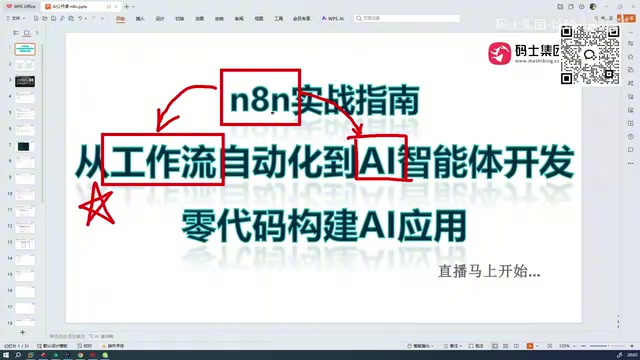
Zero-Code Barrier, Enterprise-Grade Capabilities
n8n uses a visual drag-and-drop approach to build workflows, allowing even users without programming backgrounds to get started quickly. But "zero-code" doesn't mean "low capability" — through thoughtful node combinations, you can build enterprise-grade automation systems.
Open-Source Self-Deployment, Secure and Controllable Data
n8n supports self-hosted deployment, meaning all data flows through your own servers with no risk of sensitive information leakage. This is particularly important for enterprise users.
Self-hosted deployment is especially critical in AI workflow scenarios: workflows often involve customer data, business documents, API keys, and other sensitive information. With SaaS-hosted services, this data passes through third-party servers, potentially creating compliance risks — particularly as regulations like GDPR (EU General Data Protection Regulation) and China's Data Security Law become increasingly strict. n8n supports one-click deployment to private servers or private cloud environments via Docker containers, while also offering a cloud-hosted version for small and medium teams to quickly get started, balancing flexibility and convenience.
Rich Ecosystem, Continuous Evolution
n8n has an active community and a continuously updated node library. Especially in the AI direction, the pace of updates over the past year has been remarkable, constantly adapting to the latest AI models and development paradigms.
n8n Learning Path: From Beginner to Expert
The recommended learning sequence for n8n's AI capabilities:
- Environment Setup: Complete local or cloud deployment of n8n
- Basic Workflows: Familiarize yourself with node operations and process logic through simple examples
- AI Agent Introduction: Understand the configuration and runtime mechanics of Agent nodes
- Deep Dive into Chain Nodes: Master the use cases and configuration methods for the three types of Chain nodes
- Tool Node Extension: Learn how to configure various tool nodes for Agents
- RAG System Construction: Combine all the above knowledge to build a Retrieval-Augmented Generation system
This learning path progresses from fundamentals to advanced topics in a structured manner. Building a RAG (Retrieval-Augmented Generation) system is a comprehensive hands-on project that effectively tests your mastery of n8n's AI capabilities.
RAG (Retrieval-Augmented Generation) is the mainstream technical solution for addressing large language models' "knowledge cutoff" and "hallucination" problems. The core process works as follows: enterprise private documents are first converted into vectors via Embedding models and stored in vector databases (such as Pinecone, Qdrant, Weaviate, etc.). When a user asks a question, the system first retrieves the most semantically relevant document fragments from the vector database, then injects these fragments as context into the large language model's prompt, enabling the model to generate accurate answers based on real data. RAG allows enterprises to implement intelligent Q&A based on private knowledge bases without fine-tuning models, making it one of the most widely deployed AI application patterns today. In n8n, building a RAG system requires the combined use of document loader nodes, vector store nodes, Embedding model nodes, and retrieval-augmented Chain nodes — representing a comprehensive application of the platform's AI capabilities.
Summary
n8n is rapidly evolving from a general-purpose automation tool into critical infrastructure for the AI era. Its three core AI modules — AI Agent, Chain nodes, and Tool nodes — form a complete AI workflow development system. For developers and enterprises looking to quickly deploy AI applications without diving deep into coding, n8n is a platform well worth investing time to learn.
Key Takeaways
Related articles

The Truth Behind Codex 'Build a Website in 5 Minutes': AI Isn't Creating Sites—It's Helping You Copy Them
Exposing the truth behind viral Codex 5-minute website videos: creators aren't building original sites with AI—they're copying shared prompts or scraping others' work. Learn AI coding tools' real limits.

Getting Started with AI Agent Development: A Complete Guide from Concept to Practice
A comprehensive guide to AI Agent architecture and development, covering automated marketing, intelligent customer service, and investment analysis scenarios with single and multi-agent collaboration.

The Truth Behind Codex 'Build a Website in 5 Minutes': AI Isn't Creating Sites — It's Helping You Copy Them
Exposing the truth behind viral Codex 5-minute website videos: creators aren't building original sites with AI — they're copying shared prompts or scraping others' work.