Nothing Ear 3A Review: $99 Entry-Level Earbuds with Call Recording

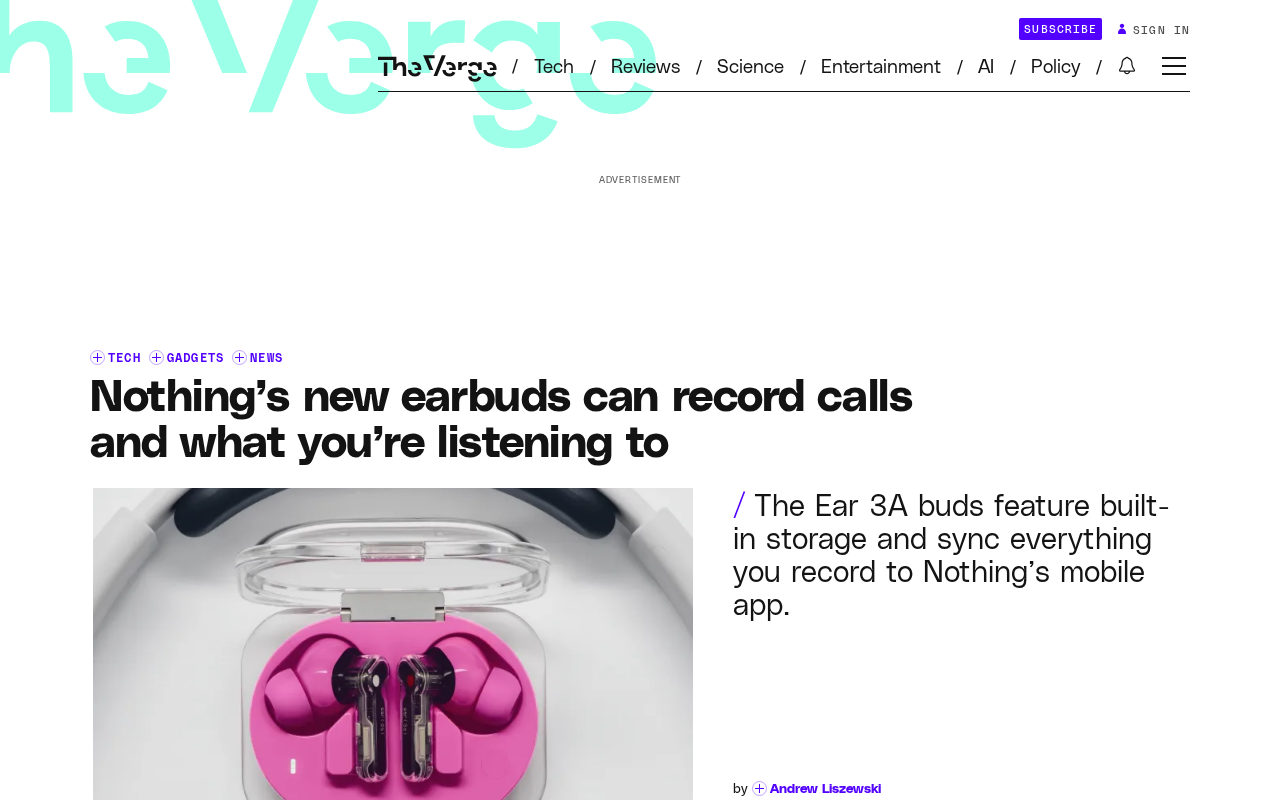
Nothing Ear 3A is a $99 TWS earbud with call recording — an uncommon feature at this price point.
Nothing has launched the Ear 3A at $99 under its main brand rather than sub-brand CMF. The standout feature is call recording and live audio capture, rare at this price tier. While the value proposition is strong, real-world performance — especially on iOS — and audio quality still need further validation through hands-on reviews.
Nothing's Affordable New Product Strategy
Nothing has officially launched its latest entry-level wireless earbuds — the Nothing Ear 3A — priced at $99 and available now through the brand's official online store. Notably, this product isn't being released under Nothing's budget-focused sub-brand CMF, but directly under the Nothing name.
The $99 price point matches Nothing's earlier Ear (a), and in a tech landscape where prices keep climbing, holding the line at an entry-level price is a welcome signal for consumers. This pricing strategy also reflects Nothing's determination to use "value for money" as a key differentiator in the fiercely competitive true wireless stereo (TWS) market.
The Market Significance of an Affordable Positioning
The TWS market is already deeply saturated, with prices ranging from tens of dollars to several hundred across brands from Apple AirPods to various manufacturers. Since Apple AirPods popularized the form factor in 2016, the core technical challenges have centered on latency control and power management — the industry generally treats sub-100ms latency as the baseline for audio-video sync, while premium products must also balance active noise cancellation (ANC), multipoint connectivity, and more. On the audio transmission side, mainstream options include Bluetooth A2DP, Qualcomm aptX variants, Sony LDAC, and Apple AAC, each striking a different balance between audio quality, latency, and power consumption. The widespread adoption of Bluetooth 5.x has improved connection stability, while the emerging LE Audio standard promises to reshape low-latency experiences through Auracast multi-device broadcasting. Whether a $99 earphone can simultaneously deliver on audio quality, features, and battery life remains the central competitive challenge.
By focusing on the $99 sweet spot, Nothing sidesteps direct competition with flagship products while continuing to attract younger consumers through strong brand identity and distinctive design language.
The Key Highlight: Call Recording and Audio Capture
The most attention-grabbing feature of the Nothing Ear 3A is what the company describes as the ability to "record calls and audio currently being listened to." This capability is uncommon at this price point and gives the Ear 3A a unique competitive edge on any affordable TWS recommendation list.
Real-World Use Cases for Call Recording
Call recording has genuine practical value for professionals, journalists, students, and anyone who needs to retain important conversations. Previously, this typically required third-party apps or dedicated recording devices. Integrating it directly into the earbuds enables a smoother audio capture and storage workflow.
From a technical standpoint, earphone-based recording generally takes two approaches: the earphone's microphone array captures a mixed audio feed locally — demanding significant DSP (digital signal processing) capability and local storage — or a companion app intercepts the call audio stream on the phone and syncs it to earphone storage or the cloud, relying more heavily on software ecosystem and OS-level permissions. It's worth noting that the DSP in modern TWS earbuds must handle multiple microphone inputs, real-time mixing, and audio encoding simultaneously, which is demanding in terms of processing power and efficiency. Leading TWS chip vendors (such as Qualcomm's QCC series and Bestechnic's BES series) already support local recording at the hardware level, but actual performance varies by product due to storage capacity and battery constraints within the earphone housing. Nothing listing recording as a core selling point means its underlying chip solution must have the necessary hardware support — something worth examining closely in future in-depth reviews.
It's also important to note that iOS's sandboxing mechanisms severely restrict third-party app access to call audio streams, meaning this feature may work very differently on iPhone compared to Android devices. Buyers should check platform compatibility before purchasing.
Call recording also raises significant privacy and compliance concerns. The legality of recording calls varies considerably across jurisdictions, generally following two principles: "one-party consent" and "two-party consent." U.S. federal law follows one-party consent, but more than a dozen states — including California and Illinois — require all parties to be informed. The EU's GDPR imposes strict requirements on personal data processing involving recordings, and Chinese law similarly requires explicit authorization before recording another party's calls. Embedding recording functionality directly into consumer hardware shifts more compliance responsibility onto the end user. Whether Nothing will build in compliance prompts within the product or app is an important indicator of the product's overall maturity. Always familiarize yourself with local regulations before using this feature, and avoid recording without the other party's knowledge or consent.
The Broader Implications of Audio Capture
Beyond call recording, the Ear 3A can also record "audio currently being listened to" — a feature likely aimed at content creators, podcast enthusiasts, or users who need to save audio clips on the fly. It somewhat blurs the line between consumer earbuds and professional recording equipment, reflecting Nothing's continued willingness to explore functional innovation.
Nothing's Product Philosophy
Nothing was founded in 2020 by Carl Pei, co-founder of OnePlus. Pei's experience building the "Never Settle" brand identity at OnePlus — including deep community engagement — carried over fully to Nothing: the brand cultivates its products as cultural artifacts rather than mere hardware through invite-only pre-orders, active Reddit community involvement, and co-created content with KOLs. The brand's signature aesthetic centers on the transparent design — not merely decorative, but conveying a philosophy of "demystification" that resonates with Gen Z's preference for transparency and anti-black-box consumerism, aligning in spirit with the growing Right to Repair movement. On the software side, Nothing OS is a heavily customized Android build featuring a dot-matrix typeface, monochrome icon packs, and other minimalist UI elements that reinforce brand consistency. This cohesive hardware-software brand narrative gives Nothing a distinct cultural identity among Android brands, particularly with strong community loyalty among Gen Z consumers.
From Nothing Phone to each generation of the Ear series, transparent casings, a minimalist UI, and bold visual language together form the brand's most recognizable identity.
Redrawing the Line Between Main Brand and Sub-Brand
CMF (Color, Material, Finish) is an independent sub-brand Nothing launched in 2023, with its name drawn directly from core industrial design terminology — signaling a strong emphasis on perceived product quality. CMF focuses on more affordable consumer electronics including earphones, watches, and phones, generally priced below the main Nothing brand. While deliberately retaining the parent brand's aesthetic DNA, CMF also lowers the barrier to entry and drives repeat purchases through modular accessories such as interchangeable watch faces. This strategy mirrors the "brand matrix" approach common in the tech industry — Realme to OPPO, Redmi to Xiaomi — where the main brand maintains a premium image while the sub-brand penetrates the mass market. The key challenge is dynamically adjusting the price anchors between the two over time to avoid brand hierarchy confusion.
Deciding to release an affordable earphone under the Nothing brand rather than CMF is a notable strategic choice. It may reflect Nothing's desire to avoid diluting the main brand's image too far downmarket, while also signaling that the $99 price point has been repositioned within their ecosystem as "mainstream" rather than "ultra-budget." For consumers, the brand hierarchy adjustment may not change actual purchase decisions, but it reveals how Nothing continues to refine its overall product lineup during a period of rapid expansion.
Verdict: Is the Ear 3A Worth Buying?
The Nothing Ear 3A brings a fresh option to the affordable TWS market with its $99 entry price and differentiated features like call recording and audio capture. In a broader tech landscape where prices keep rising, Nothing's commitment to holding the line at an entry-level price point is itself a meaningful value proposition.
For users who prioritize value and want genuinely useful differentiating features, the Ear 3A is worth adding to your shortlist. However, key questions remain — particularly around how call recording actually performs in practice (especially the iOS versus Android gap), whether the underlying chip can handle the processing demands of recording, audio quality, and battery life — all of which will require more real-world testing to fully evaluate. As more reviews come in, the Ear 3A's overall competitive standing will become much clearer.
Key Takeaways
Related articles

The Truth Behind Codex 'Build a Website in 5 Minutes': AI Isn't Creating Sites—It's Helping You Copy Them
Exposing the truth behind viral Codex 5-minute website videos: creators aren't building original sites with AI—they're copying shared prompts or scraping others' work. Learn AI coding tools' real limits.

Getting Started with AI Agent Development: A Complete Guide from Concept to Practice
A comprehensive guide to AI Agent architecture and development, covering automated marketing, intelligent customer service, and investment analysis scenarios with single and multi-agent collaboration.

The Truth Behind Codex 'Build a Website in 5 Minutes': AI Isn't Creating Sites — It's Helping You Copy Them
Exposing the truth behind viral Codex 5-minute website videos: creators aren't building original sites with AI — they're copying shared prompts or scraping others' work.