Open-Source Repairable Printers: Breaking Closed Ecosystems and Ending E-Waste

An open-source, repairable printer challenges the closed, planned-obsolescence model dominating the printing industry.
Mainstream printers lock users into expensive proprietary consumables and closed firmware, generating massive e-waste through planned obsolescence. A new open-source, repairable printer project — spotlighted on Hacker News — challenges this model by prioritizing transparent design, modular parts, and open firmware, aligning with the global Right to Repair movement and circular economy principles.
Why Printers Have Become "Disposable" Devices
Among consumer electronics, printers are arguably one of the most frustrating product categories. The "Razor and Blades" model — cheap hardware, expensive ink — is no secret. Entry-level inkjet printers sometimes retail for less than a single set of original cartridges, while the per-milliliter cost of OEM ink can reach tens of dollars, surpassing even luxury perfumes. Proprietary cartridge chips, DRM firmware locks, and legal tactics (including invoking the Digital Millennium Copyright Act, or DMCA, to sue third-party cartridge makers) all serve as moats protecting this business ecosystem.
What makes it even more frustrating is that many printer models use closed firmware and proprietary consumables to lock users in. Built-in "page counters" force devices to throw errors and stop working after a certain print volume, even when the hardware is still perfectly functional. Cartridge chips refuse to operate after a manufacturer-set date or capacity limit is reached, even if ink remains. When a small component breaks, there are no replacement parts to be found, no repair manuals to consult — the whole machine ends up in the trash.
This business logic of "Planned Obsolescence" was not invented in the internet age. American businessman Bernard London formally proposed the concept as early as 1932. The most famous historical example is the "Phoebus Cartel" — secretly formed in 1924 by lighting giants including General Electric and Philips — which used technical means to artificially limit bulb lifespan to 1,000 hours, ensuring consumers would keep buying. Today, the printer industry has refined this logic to an even greater degree of sophistication, generating vast amounts of preventable e-waste every year.
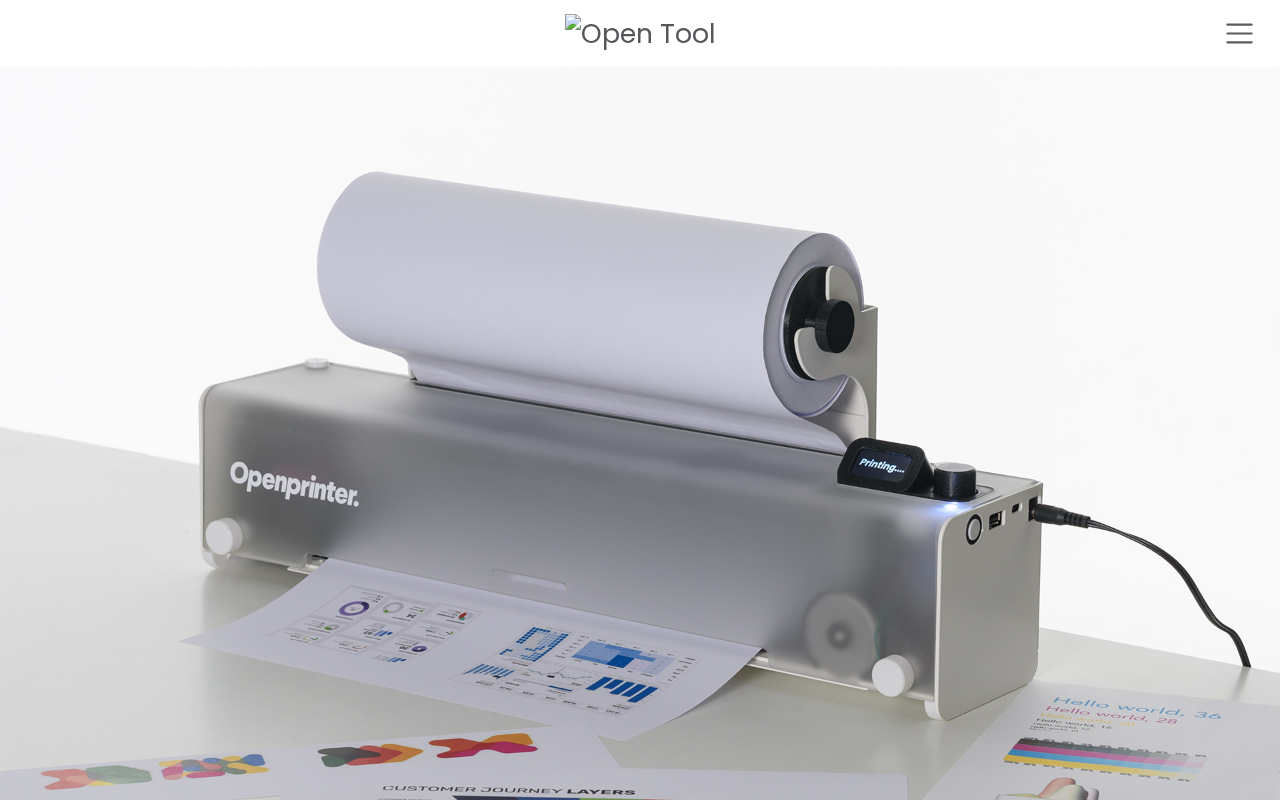
Recently, a project that earned 80 upvotes on Hacker News and sparked lively discussion reignited the community's interest in "repairable hardware" — a repairable, open-source paper printer. This project challenges the closed ecosystems of mainstream manufacturers from the ground up, giving users a device they truly control.
Core Design Philosophy of Open-Source Hardware
Repairability as the Top Priority
The most defining feature of this project is placing "repairability" at the very top of the design priority list. This means the mechanical structure, electronic components, and firmware should all be transparent and replaceable. Unlike commercial printers sealed with glue and requiring specialized tools to disassemble, this device uses standardized screws, modular component design, and fully public repair documentation.
When a part fails, users can replace it individually rather than scrapping the entire machine. This not only lowers long-term costs but fundamentally extends the device's lifespan, making a genuine reduction in e-waste possible.
Open Firmware Returns Control to Users
The value of open source extends beyond hardware — open firmware is equally critical. Mainstream printer manufacturers routinely use firmware to lock out third-party consumables, force premature consumable cycles, or artificially trigger "expired" warnings on devices that still function perfectly well. Open-source firmware returns all of this control to users — anyone can audit the code, modify its logic, fix bugs, or customize printing behavior to suit their own needs.
This philosophy draws from years of accumulated work in the open-source hardware movement. The Arduino board, born in 2005, was a milestone for open-source hardware, demonstrating that fully public circuit designs could cultivate thriving ecosystems. The RepRap project then applied the same principles to 3D printers, even enabling machines to "self-replicate" some of their own parts. The Open Source Hardware Association (OSHWA) established a certification standard in 2012 requiring complete disclosure of design files, bills of materials, and source code — providing community infrastructure for today's open-source consumer electronics projects. For developer communities, an open codebase also means space for collaborative improvement: contributors worldwide can jointly optimize print quality, add new features, or adapt the device to a wider range of use cases.
Real Debates in the Community Discussion
Across 22 comments on Hacker News, participants engaged in pragmatic debate around several core issues.
The real-world gap between cost and performance is the first hurdle. Open-source repairable devices struggle to compete on upfront price with commercial models that "sell hardware at a loss and make money on ink." Open-source projects typically require users to pay something closer to the true cost of the hardware, which isn't friendly to price-sensitive buyers.
Print quality and scope of use also present unavoidable limitations. DIY or small-scale open-source hardware generally cannot match the precision and speed of mature industrial products. This determines that, at least in the short term, it is better suited to tech enthusiasts who prioritize controllability, privacy protection, and long-term use — not everyday consumers seeking plug-and-play convenience.
The ongoing availability of consumables is another critical standard for whether the project can succeed in practice. One of the core values of open-source design is freedom from proprietary consumables. Whether it can truly achieve this by using common, readily available materials will directly determine how repairable this printer actually is.
Why Projects Like This Deserve Continued Attention
Echoing the Global "Right to Repair" Movement
The emergence of this open-source printer is no coincidence — it is a concrete practice within the wave of the global "Right to Repair" movement. This movement has moved substantively from advocacy into legislation: the U.S. Federal Trade Commission (FTC) recognized in 2021 that manufacturer restrictions on repair harm consumers; by 2023, more than 40 U.S. states had introduced related bills, with Minnesota becoming the first to pass a repair rights law covering consumer electronics. The EU's Ecodesign Regulation and Right to Repair Directive require manufacturers to supply spare parts for at least 10 years after a product is discontinued, and prohibit using software to obstruct independent repair. Under pressure, giants like Apple and Samsung have launched "self-repair programs," though critics argue that parts pricing and pairing restrictions still constitute a substantial barrier.
The central legal tension in this movement is: where should the line be drawn between a manufacturer's intellectual property protections and a consumer's right to use what they have purchased? Various open-source hardware projects are demonstrating through action that transparent, repairable design is not a utopia — it is an entirely feasible engineering choice.
A Structural Path Out of the E-Waste Problem
E-waste is one of the fastest-growing categories of solid waste in the world. The UN University's Global E-waste Monitor 2024 reports that 62 million tonnes of e-waste were generated globally in 2022 — equivalent to discarding roughly 44 nineteen-inch monitors every second — at a growth rate of approximately 2.6% per year, with only 22.3% being collected and recycled through formal channels. Printers account for a significant share of this, not just from the machines themselves, but from more than 1 billion cartridges discarded every year, many containing residual ink and hard-to-decompose plastic casings.
The "Circular Economy" framework offers a systemic alternative: products should be designed to be continuously repaired, upgraded, and have their materials recovered, rather than flowing one-way toward disposal. An open-source printer that can be repeatedly repaired and uses generic consumables carries environmental value far beyond a single device — it provides a replicable alternative paradigm, demonstrating that consumer electronics are not destined to be disposable.
Limitations and Outlook
Objectively speaking, projects like this currently serve primarily the technical community and remain a considerable distance from the true mass market. They require users to have basic hands-on skills, be willing to accept a relatively basic feature set, and trade convenience for complete control over their devices.
But their significance lies precisely in offering the possibility of a choice. When the mainstream market is almost entirely dominated by closed ecosystems, an open-source, repairable alternative is itself a powerful challenge to the status quo. As communities continue to invest, designs mature, and awareness of repair rights spreads widely, projects like this have the potential to gradually lower the barrier to entry and give more people the chance to own a printer they truly control.
For readers interested in sustainable technology and hardware freedom, this open-source printer is more than just a tool — it is a concrete realization of an idea: technology should serve users' long-term interests, not be co-opted in reverse by business models.
Key Takeaways
Related articles

Disaster and Glory of the Apollo Program: The History We Must Revisit Before Returning to the Moon
From the fatal Apollo 1 fire to Apollo 8's daring lunar orbit to Apollo 11's successful landing—revisiting the disasters, fears, and compromises of the Apollo program and their lessons for today's return to the Moon.

Netflix Trust Exercise Turns Into Firing Trap: Where Are the Boundaries of Corporate Trust?
A Netflix employee was fired after sharing private info in a trust exercise. We analyze the risks of corporate trust exercises and how employees can protect themselves.

AMD CDNA5 Architecture Deep Dive: Technical Evolution and the AI Computing Competition Landscape
Deep analysis of AMD's CDNA5 architecture covering Chiplet packaging upgrades, HBM memory evolution, and low-precision compute optimization, examining how AMD challenges NVIDIA's AI chip dominance.