OpenAI Launches Open Source Vulnerability Detection Initiative: Using AI to Safeguard Open Source Security

OpenAI launches an AI-powered initiative to detect and fix vulnerabilities in open source software.
OpenAI has announced a new initiative leveraging its large language model technology to help the open source community discover and fix software vulnerabilities. The program addresses critical security challenges in open source ecosystems, offering large-scale code analysis, contextual understanding, and automated fix suggestions. It positions OpenAI alongside Google's OSS-Fuzz and Microsoft's CodeQL in the growing AI-powered security detection landscape.
Overview
OpenAI recently announced a new initiative aimed at leveraging AI technology to help the open source community discover and fix software vulnerabilities. This move signals that the AI giant is directing its technical capabilities toward protecting the open source ecosystem, providing stronger security assurances for the global developer community.
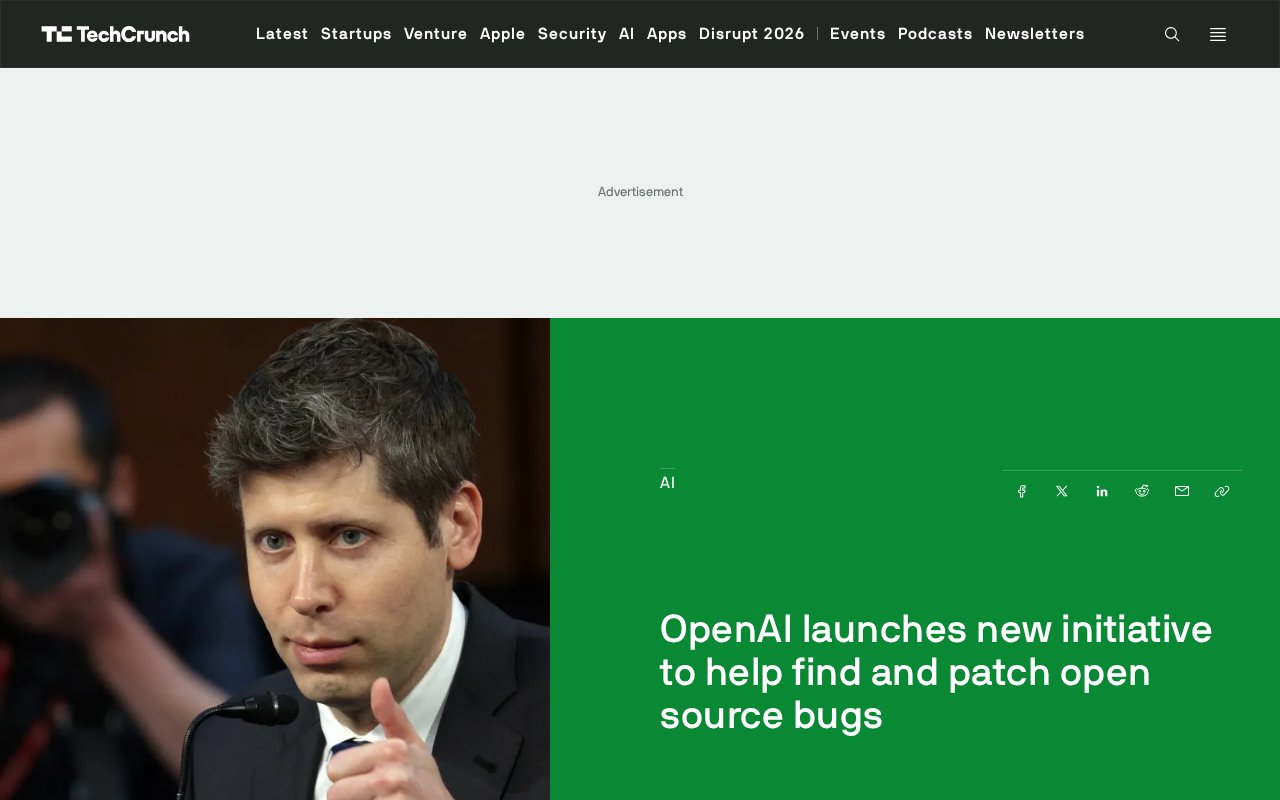
AI-Powered Open Source Security: Why It Matters
Security Challenges Facing Open Source Software
Open source software forms the cornerstone of modern internet infrastructure. From the Linux kernel to various web frameworks, from databases to cryptographic libraries, virtually all enterprise applications depend on open source components. According to Synopsys's open source security audit report, over 96% of commercial codebases contain open source components, with the average application depending on more than 500 open source packages. This deep dependency creates a complex Software Supply Chain, where a vulnerability in any single link can produce cascading effects. In recent years, the industry has begun promoting the concept of SBOM (Software Bill of Materials)—a detailed record of all open source components and their version information within software—to enable rapid identification of affected systems when vulnerabilities are disclosed.
However, open source projects often face insufficient maintainers and scarce security audit resources. Many critical projects are maintained by only a handful of volunteers, and vulnerabilities may remain hidden for extended periods. Linux Foundation surveys show that many core libraries depended upon by millions of systems may have only one or two full-time maintainers, or are maintained entirely in spare time.
In recent years, major open source vulnerability incidents like Log4Shell and Heartbleed have repeatedly demonstrated that open source security issues can trigger global cybersecurity crises. The Log4Shell vulnerability (CVE-2021-44228), disclosed in December 2021, existed in the Apache Log4j logging library—an attacker needed only to send a specially crafted log message to achieve Remote Code Execution (RCE), affecting hundreds of millions of devices and hundreds of thousands of enterprise systems worldwide. The 2014 Heartbleed vulnerability (CVE-2014-0160) existed in OpenSSL's heartbeat extension implementation, allowing attackers to read sensitive data from server memory, including private keys and user passwords—approximately 17% of HTTPS servers worldwide were affected at the time. These incidents share a common characteristic: the vulnerabilities existed in foundational components that were widely used but severely under-resourced in terms of maintenance.
Traditional manual code auditing can no longer keep pace with the growth rate of open source code, and this is precisely where AI technology can deliver tremendous value. Statistics show that GitHub alone sees millions of new lines of code committed daily, making manual auditing completely infeasible at scale.
OpenAI's Technical Advantages
OpenAI possesses industry-leading large language model technology, and its capabilities in code comprehension, generation, and analysis have been widely validated. Applying these capabilities to vulnerability detection represents a natural technical fit.
Traditional code security analysis primarily relies on two methods: Static Application Security Testing (SAST) and Dynamic Application Security Testing (DAST). SAST tools scan source code using predefined rules and pattern matching, capable of finding common security issues like SQL injection and buffer overflows, but often produce numerous false positives and struggle to understand complex business logic. DAST discovers vulnerabilities through runtime testing but has limited coverage and cannot pinpoint specific lines of code. The introduction of large language models brings a paradigm shift to code security analysis—they can understand code intent, data flow, and potential logic flaws like an experienced security researcher, rather than merely matching known vulnerability patterns.
Specifically, OpenAI's technology demonstrates unique advantages in the following areas:
- Large-scale code analysis: AI can rapidly scan massive codebases and identify potential security pattern issues. Unlike traditional SAST tools, AI models trained on vast amounts of code can identify complex vulnerability patterns that span files and modules, including logic vulnerabilities that require understanding multiple function call chains to discover.
- Contextual understanding: Large language models can understand the semantic logic of code rather than relying solely on pattern matching. This means AI can determine whether a seemingly dangerous operation truly constitutes a threat in a specific context, significantly reducing false positive rates. For example, the model can understand that a particular input has already been thoroughly validated and sanitized in an upstream function.
- Automated fix suggestions: Beyond just finding problems, AI can provide remediation solutions, reducing the workload on maintainers. AI-generated patches can be submitted directly as Pull Requests, requiring maintainers only to review and confirm before merging, dramatically shortening the time window from vulnerability discovery to fix.
Far-Reaching Impact on the Open Source Ecosystem
Lowering the Security Barrier
The most direct value of this initiative lies in lowering the barrier for open source projects to conduct security audits. In the past, professional security audit services were prohibitively expensive—a complete code security audit typically costs tens of thousands to hundreds of thousands of dollars, with audit cycles ranging from weeks to months. Many small and medium-sized open source projects simply cannot afford such costs. Even when a security audit is obtained, its results represent only a snapshot at a single point in time, and subsequent code changes may still introduce new vulnerabilities. AI-driven automated vulnerability detection can benefit more projects with professional-grade security analysis while enabling continuous security monitoring, with automatic security checks triggered on every code commit.
Industry Trends and Competitive Landscape
OpenAI is not the only tech company focused on AI-powered security detection. Google has previously applied AI to open source vulnerability discovery through projects like OSS-Fuzz. OSS-Fuzz is a continuous fuzzing service launched by Google in 2016 that discovers potential vulnerabilities by feeding programs large amounts of random or semi-random data to trigger abnormal behavior. In 2023, Google integrated large language models into OSS-Fuzz, using AI to automatically generate smarter fuzz test cases, significantly improving code coverage and vulnerability discovery efficiency. To date, OSS-Fuzz has helped over 1,000 open source projects discover more than 10,000 vulnerabilities.
Microsoft has also integrated security suggestion features into GitHub Copilot, and its code scanning tool CodeQL, combined with AI capabilities, can provide real-time alerts about potential security issues as developers write code. Additionally, DARPA (Defense Advanced Research Projects Agency) hosted the AI Cyber Challenge (AIxCC) in 2024, encouraging participating teams to use AI technology to automatically discover and fix open source software vulnerabilities, with a prize pool of several million dollars, further driving technological advancement in this field.
OpenAI's move can be seen as an important strategic expansion of its AI application scenarios, while also reflecting the industry's continuously increasing emphasis on open source security. From a commercial perspective, security is one of the most compelling application domains for AI technology, capable of directly demonstrating AI's practical value and social contribution.
Potential Challenges and Considerations
Despite the optimistic outlook, this initiative faces several noteworthy issues:
- False positive rate control: How can AI detection tools balance detection rates with false positive rates to avoid creating additional burden for maintainers? In the security detection field, this is known as the Precision vs. Recall tradeoff. Excessively high false positive rates lead to "alert fatigue"—after repeatedly confirming false positives, maintainers may begin ignoring genuine security warnings. The industry generally considers that a practical security scanning tool should maintain a false positive rate below 30%, and current AI tools still have room for improvement in this regard.
- Vulnerability disclosure mechanisms: How should AI-discovered vulnerabilities be responsibly disclosed to prevent malicious exploitation? The cybersecurity industry has established mature Responsible Disclosure or Coordinated Vulnerability Disclosure (CVD) mechanisms: the discoverer first privately notifies the software maintainer, allows a reasonable remediation period (typically 90 days), and only publicly discloses vulnerability details after a patch is released. Discovered vulnerabilities are assigned CVE (Common Vulnerabilities and Exposures) identifiers and entered into a globally unified vulnerability database. When AI can automatically discover vulnerabilities at scale, ensuring this vulnerability information isn't leaked or abused, and handling the maintainer capacity bottleneck when AI simultaneously discovers large numbers of vulnerabilities, are issues requiring new norms.
- Sustainability: Will this initiative remain free for the open source community long-term, and what business model will sustain it? Historically, many tech companies' open source security initiatives have ultimately faced challenges in sustained funding and resource investment. One possible model is tiered pricing—free for open source projects, paid for commercial users—similar to GitHub's model of free public repositories but paid private repositories.
- The double-edged sword of AI security: It's worth noting that the same AI technology could also be leveraged by attackers to more efficiently discover exploitable vulnerabilities. This asymmetry between offense and defense means that defenders must ensure AI security tools develop faster than attackers can exploit them.
Summary and Outlook
OpenAI's open source vulnerability detection initiative represents the extension of AI technology from "content creation" to "security assurance." In an era where open source software increasingly serves as the infrastructure of the digital world, using AI to protect this infrastructure is both an inevitable trend in technological development and an important expression of corporate social responsibility in the tech industry.
From a broader perspective, this initiative also marks an important milestone in the AI industry's transition from "capability demonstration" to "value delivery." Security applications differ from content generation—they demand extremely high accuracy and reliability, imposing stricter requirements on AI system robustness. If AI can prove its value in this high-standard domain, it will pave the way for applications in more critical infrastructure areas.
Looking ahead, we can expect to see deeper integration of AI and security, and the open source community will gain more powerful security protection capabilities as a result. For developers everywhere, this is undoubtedly a positive signal—AI is not just a productivity tool, but will become a guardian of code security.
Key Takeaways
Related articles

The Truth Behind Codex 'Build a Website in 5 Minutes': AI Isn't Creating Sites—It's Helping You Copy Them
Exposing the truth behind viral Codex 5-minute website videos: creators aren't building original sites with AI—they're copying shared prompts or scraping others' work. Learn AI coding tools' real limits.

Getting Started with AI Agent Development: A Complete Guide from Concept to Practice
A comprehensive guide to AI Agent architecture and development, covering automated marketing, intelligent customer service, and investment analysis scenarios with single and multi-agent collaboration.

The Truth Behind Codex 'Build a Website in 5 Minutes': AI Isn't Creating Sites — It's Helping You Copy Them
Exposing the truth behind viral Codex 5-minute website videos: creators aren't building original sites with AI — they're copying shared prompts or scraping others' work.