OpenAI Plugins Deep Dive: The Plugin System That Connects ChatGPT to the Real World
OpenAI Plugins connects ChatGPT to the real world, pioneering the architecture behind modern AI Agents and Tool Use.
OpenAI Plugins is an open-source plugin system that lets ChatGPT break past its training data cutoff and interact with external services in real time. By combining OpenAPI-based manifests, autonomous model-driven invocation, and OAuth 2.0 security, it gave AI the ability to fetch live data and execute real-world actions — establishing the foundational paradigm that evolved into Function Calling, AI Agents, and Anthropic's MCP protocol.
What Are OpenAI Plugins
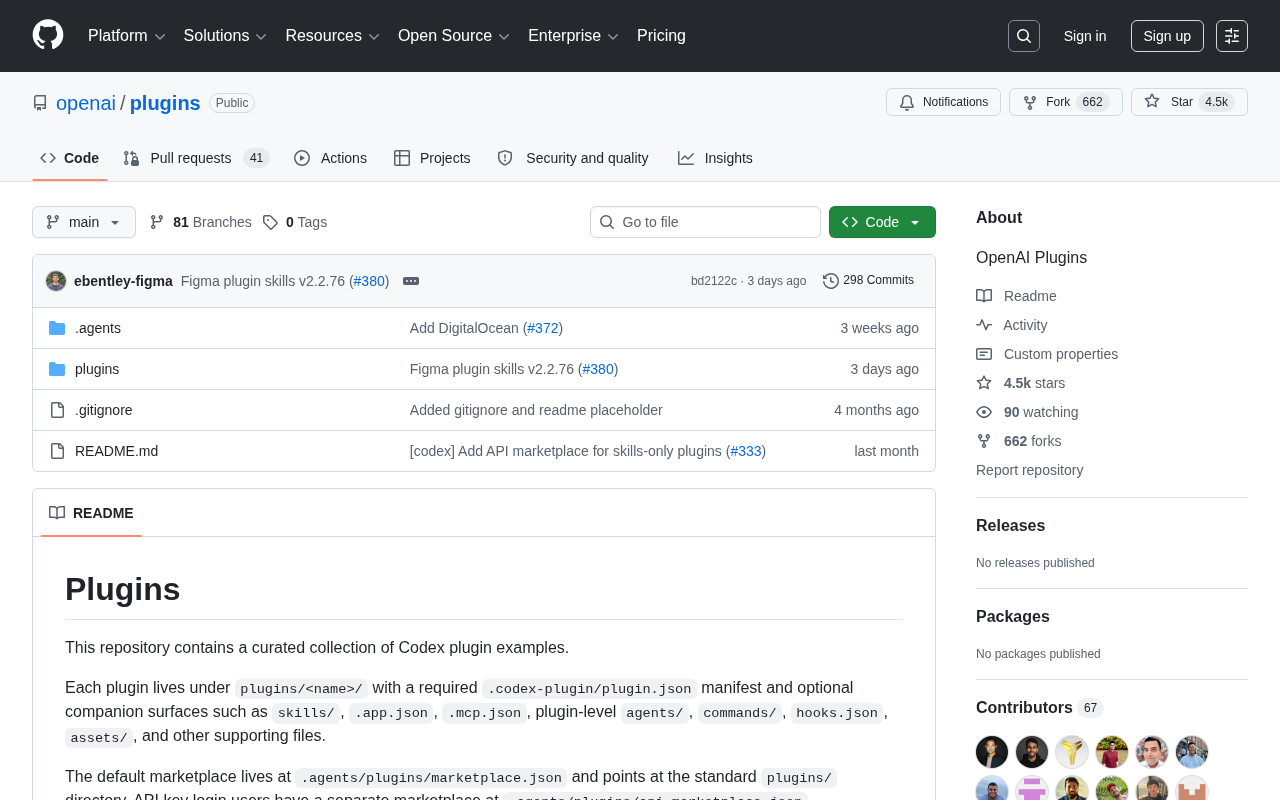
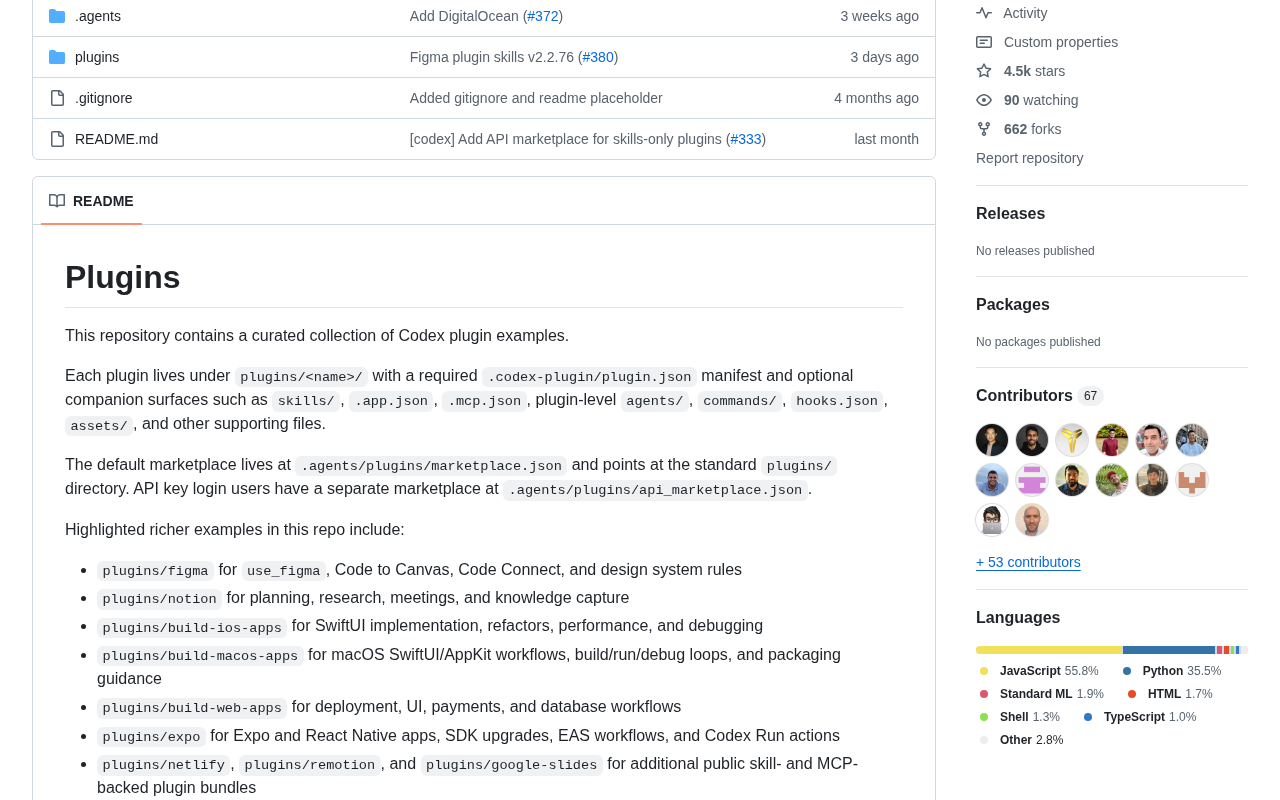
OpenAI Plugins is a plugin system developed by OpenAI, designed to help ChatGPT and other large language models break free from the boundaries of their training data and establish real-time connections with the outside world. The open-source project has accumulated 4,398 Stars and 656 Forks on GitHub, with 75 new Stars added in a single day — a clear signal of strong developer community interest. The project is primarily written in JavaScript and provides a reference implementation for developers looking to build and integrate plugins.
Large Language Models (LLMs), while powerful, have two inherent limitations: first, their knowledge is frozen at the training cutoff date and cannot reflect the latest information; second, models can only generate text and cannot directly take actions in the real world. LLMs are neural networks pre-trained on massive text datasets — typically at the trillion-token scale — with knowledge "baked into" model weights during training, making it impossible to update automatically once training is complete. This fundamental characteristic means that simply scaling up model size or increasing training frequency can never fully bridge the information gap between the model and the real world. OpenAI Plugins was built specifically to address both of these architectural shortcomings.
Three Core Problems ChatGPT Plugins Solve
Breaking Through the Knowledge Freshness Barrier
Traditional language models can only answer questions based on static data from their training period. With ChatGPT plugins, models can query real-time information such as weather, stock prices, news, and flight schedules, delivering more accurate and timely responses. This fundamentally changes the model's inherent limitation of operating in an information vacuum.
It's worth noting that the knowledge freshness problem has a specific term in the LLM world: Knowledge Cutoff. Since model training can take weeks to months, training data collection often concludes months before the model's public release date — meaning even a "newly released" model may already be over half a year behind. The issue runs even deeper due to the distribution characteristics of training data: online discussions, analyses, and references about any given event typically accumulate richly only months after the event occurs. This causes a noticeable degradation in model understanding for events that happened shortly before the cutoff, creating what's known as the "soft cutoff" effect. The plugin mechanism bypasses this inherent limitation at the architectural level by introducing real-time retrieval, rather than relying on more frequent model retraining to keep pace with current information.
Giving the Model Real-World Action Capabilities
More critically, plugins allow ChatGPT to evolve from a "talking assistant" into a "doing assistant." Through plugins, the model can call third-party service APIs to perform actual operations — booking restaurants, placing orders, searching internal enterprise documents, and executing code calculations. This marks a significant leap forward for AI: from information generation to task execution.
At its core, this capability grants language models side effects — the ability to change the state of the external world. Previously, all language model outputs were idempotent text generation with no impact on real systems. The plugin mechanism breaks down the boundary between models and real business systems, allowing an AI's "intent" to translate into quantifiable, traceable real-world actions. This is precisely the core capability that enterprise AI deployments care about most.
It's also worth noting that granting models side-effect capabilities introduces irreversible operation risks — if the model misinterprets user intent, it could trigger hard-to-undo actions in real systems (such as sending an unintended email or placing a duplicate order). This has driven the industry to broadly adopt "confirmation steps" and "least-privilege" principles in plugin design: the model must obtain explicit user authorization before executing write operations, with read and write operations strictly separated at the permission model level. This safety approach later became an important standard in AI Agent engineering practice.
Providing a Standardized Plugin Integration Method
OpenAI Plugins uses a manifest file design based on the OpenAPI specification. Developers only need to provide an ai-plugin.json manifest describing the plugin's capabilities and an OpenAPI interface document, and the model can "understand" the plugin's scope and how to invoke it. This approach — combining natural language descriptions with structured interfaces — dramatically lowers the barrier to plugin development.
The OpenAPI specification (formerly Swagger, which was created in 2010 and renamed after being donated to the Linux Foundation in 2016) is the industry-standard format for describing RESTful APIs, defining interface paths, parameter types, authentication methods, response structures, and other metadata in JSON or YAML files. It has been widely adopted in enterprise development. Its core value lies in machine-readable self-description: a single specification file can be used to auto-generate SDKs, test cases, and API documentation, or parsed and executed directly by tooling. OpenAI cleverly incorporated this into the plugin system: rather than hardcoding any interface logic, the model simply reads the natural language description fields (summary, description) in the OpenAPI document to understand each endpoint's purpose and trigger conditions. This means services with well-documented APIs can integrate into the ChatGPT ecosystem with virtually zero modification — which is precisely the strategic value of this standard selection. It's estimated that millions of OpenAPI-compliant interface documents already exist globally, meaning OpenAI effectively brought the entire RESTful ecosystem into the model's potential tool library.
OpenAI Plugins Technical Architecture
Manifest File–Driven Mechanism
At the core of each plugin is a manifest file containing metadata such as the plugin name, capability description, authentication method, and API endpoint. The description fields are especially critical — these natural language descriptions are provided directly to the model to help it determine when and how to invoke the plugin. Writing clear, accurate capability descriptions is therefore the central quality factor in plugin development.
From a prompt engineering perspective, the description fields in a manifest file are essentially a structured extension of system-level prompts (System Prompts). The quality of these descriptions directly determines the model's tool-selection accuracy: descriptions that are too vague cause the model to trigger calls at inappropriate moments, while overly verbose descriptions consume precious context window space. The context window refers to the maximum number of tokens a model can process in a single inference pass — early GPT models supported only 4K tokens, though this has since expanded to the million-token range. In the plugin ecosystem, however, description text from multiple plugins is injected into the context simultaneously, making competition for window resources significant. This design challenge gave rise to "tool description optimization" as an emerging sub-discipline of prompt engineering, and pushed researchers to explore dynamic tool retrieval — rather than statically injecting all plugin descriptions into the context, real-time retrieval identifies the most relevant tool subset based on user intent, fundamentally alleviating context window pressure.
Model-Driven Autonomous Invocation
Unlike traditional hardcoded API calls, the timing of plugin invocation is determined autonomously by the model based on conversational context. When a user's need matches a plugin's capabilities, the model automatically constructs request parameters conforming to the interface specification, triggers the call, and integrates the result into the final response. This design philosophy of "AI autonomously orchestrating tools" is the important prototype of what later became Function Calling and AI Agent architectures.
Function Calling, officially introduced by OpenAI in June 2023, can be seen as a lightweight evolution of the plugin mechanism: developers define function signatures using structured JSON Schema, the model decides when to invoke them and returns formatted parameters — no external service hosting required, with lower latency and simpler integration. Compared to Plugins, which requires maintaining a separate HTTPS service endpoint, Function Calling inlines tool definitions within the API request itself, greatly simplifying the path for integrating local tools and private services. AI Agents extend this further — through prompting frameworks like ReAct (Reasoning + Acting), models can make multiple rounds of tool calls within a single conversation, observe execution results, and dynamically adjust next steps, forming a closed-loop capability for autonomously completing complex, multi-step tasks. ReAct's core innovation is the structured, alternating output of "Thought" and "Action", making the model's reasoning chain interpretable and debuggable. Tracing this technical evolution — Plugins → Function Calling → Tool Use → AI Agent — each step pushes the model's "action boundary" further outward while progressively lowering the engineering complexity of tool invocation into foundational infrastructure.
Security Authentication and Permission Design
Because plugins may involve real-world operations and sensitive data, OpenAI Plugins was designed with security as a priority. It supports multiple authentication methods — no-auth, API Key, and OAuth — ensuring that plugin developers can expose service capabilities within a secure, controlled framework.
OAuth 2.0 is the dominant authorization protocol on the modern internet, published as RFC 6749 by the IETF in 2012. It allows users to authorize third-party applications to access their account resources without exposing their credentials. The core mechanism is token-based delegated authorization: users authenticate once with an authorization server, which then issues an Access Token with limited scope and time validity. Third-party applications use this token to proxy access to resources without ever touching the user's original credentials. In the ChatGPT plugin scenario, OAuth is especially critical when a plugin needs to act on behalf of the user (e.g., accessing Google Calendar, sending emails, or managing cloud storage): users complete the authorization redirect on first plugin use, after which the plugin service can operate using a time-limited Access Token. This design protects user data sovereignty, prevents credential leakage, and provides an auditable standard path for enterprise plugin compliance — every authorization event has a complete timestamp, scope definition, and revocation mechanism, fully aligning with data protection regulations like GDPR in their requirements for user authorization controllability. It is an indispensable security foundation for plugins reaching production environments.
Far-Reaching Impact on the AI Ecosystem
The value of OpenAI Plugins extends far beyond a toolkit. It pioneered the architectural paradigm of "language model as orchestration core, external tools as execution units" — profoundly influencing the trajectory of the entire AI application ecosystem.
In academia, this paradigm is known as the Tool-Augmented Language Model (TALM), with the earliest systematic treatment traceable to a paper of the same name published by Google in 2022. The core insight is this: rather than internalizing all capabilities within model parameters (which requires continuously high training costs and has inherent limitations in covering long-tail knowledge), let the model focus on understanding intent and orchestrating tools, outsourcing specialized capabilities to the systems best suited for each domain — computation to code interpreters, real-time data to search engines, structured queries to databases. This aligns closely with the software engineering principle of Separation of Concerns, which also explains why this architectural approach has transcended individual model providers and frameworks — from LangChain to AutoGen, from OpenAI to Anthropic's MCP protocol — to become the industry's consensus direction. Worth highlighting is Anthropic's Model Context Protocol (MCP), launched in 2024, which can be viewed as the latest standardization attempt within this paradigm — seeking to establish a unified context-passing protocol between different models and tools, further reducing the fragmentation cost of cross-platform tool integration.
The AI Agents, Tool Use capabilities, and LLM-based automated workflows that attract so much attention today can largely be traced back to the feasibility demonstrated by the plugin mechanism. In this sense, Plugins was the pivotal step that moved large language models from "chat toys" to "productivity tools."
For developers, this open-source project provides invaluable practical reference. By studying the implementation of its example plugins, developers can quickly understand how to connect their own services to the LLM ecosystem, and from there, build more imaginative AI applications.
Summary
The OpenAI Plugins project may be modest in code size, but the design philosophy behind it is remarkably forward-thinking. It connects large language models to the real world in a standardized, autonomous way, giving AI the genuine ability to access real-time information and execute real-world actions. From the clever reuse of the OpenAPI specification, to the complete integration of the OAuth 2.0 security framework, to the architectural innovation of model-driven autonomous invocation — these design choices together form an important foundation for modern AI application engineering. Looking forward along the technical trajectory that Plugins pioneered, the successive emergence of Function Calling, AI Agents, and the MCP protocol confirms the remarkable vitality and extensibility of the "model orchestration + tool execution" paradigm. For any developer seeking a deep understanding of modern AI application architecture, this project is well worth serious study and hands-on exploration.
Related articles

The Truth Behind Codex 'Build a Website in 5 Minutes': AI Isn't Creating Sites—It's Helping You Copy Them
Exposing the truth behind viral Codex 5-minute website videos: creators aren't building original sites with AI—they're copying shared prompts or scraping others' work. Learn AI coding tools' real limits.

Getting Started with AI Agent Development: A Complete Guide from Concept to Practice
A comprehensive guide to AI Agent architecture and development, covering automated marketing, intelligent customer service, and investment analysis scenarios with single and multi-agent collaboration.

The Truth Behind Codex 'Build a Website in 5 Minutes': AI Isn't Creating Sites — It's Helping You Copy Them
Exposing the truth behind viral Codex 5-minute website videos: creators aren't building original sites with AI — they're copying shared prompts or scraping others' work.