Terence Tao: AI Will Take Over Much of Mathematicians' Work Within a Decade — But That's Not the Core of Mathematics

Terence Tao argues AI will take over math's routine work within a decade, but that's never been the discipline's true core.
In a wide-ranging interview, Fields Medalist Terence Tao argues that AI will handle much of what mathematicians currently do within ten years — but that only reveals those tasks were never mathematics' most essential work. Drawing on historical analogies from computing to genomics, Tao sees AI as complementary rather than a replacement, while cautioning that hyper-optimization may eliminate the serendipity that drives breakthrough discoveries.
Fields Medalist Terence Tao's Take: Will AI Replace Mathematicians?
Fields Medalist Terence Tao was asked in an interview about a question that has captured intense attention across the field: When will AI be able to perform frontier mathematical research as well as the world's top human mathematicians — or replace them entirely?
Background: The Fields Medal and Terence Tao The Fields Medal is the highest honor in mathematics, awarded every four years to outstanding mathematicians under the age of 40 — often called the "Nobel Prize of Mathematics." Tao received the award in 2006 at just 31 years old. He has made foundational contributions across harmonic analysis, partial differential equations, combinatorial number theory, and more. Among his most celebrated results is the Green-Tao Theorem, proved jointly with Ben Green, which states that the prime numbers contain arbitrarily long arithmetic progressions — considered one of the most important results in number theory in the early 21st century. This pedigree gives his views on whether AI can replace top mathematicians exceptional weight.
This preeminent mathematician of our era offered a response that is both carefully measured and deeply informed by historical perspective. His core argument: AI will take over a large portion of what mathematicians do on a daily basis within a decade — but that will only reveal that the work being replaced was never the most important part of mathematics to begin with.
AI Will Handle Much of Mathematicians' Routine Work Within a Decade
Tao was direct: within the next ten years, much of what mathematicians currently spend their time doing — and much of what ends up in papers today — will be handled by AI.

But he immediately followed with a deeper insight: once AI takes over that work, we will discover that it was never where the core value of mathematics resided. This is a counterintuitive but deeply perceptive point — automation tends to absorb what can be formalized and standardized, while the true frontier of any discipline lies in the unstructured terrain that still demands creative intuition.
The interviewer also raised an interesting angle: in a sense, AI is already doing "frontier mathematics" that humans cannot — just in a different sense of the word. Just as a calculator handles numerical computations far beyond human speed, yet that isn't what we normally mean by "mathematical research." The very definition of the frontier keeps shifting as our tools evolve.
History Shows: Tools Never Replace the Discipline Itself
Tao drew on a range of historical analogies to support his argument — arguably the most compelling part of the entire interview.
He pointed out that a century ago, a major part of many mathematicians' work was solving differential equations. When physicists needed an exact solution to a fluid equation, they would hire a mathematician to work through the calculus step by step. Today, the same task can be accomplished in minutes using Mathematica, Wolfram Alpha, a computer algebra system, or simply by asking an AI.
The Rise of Computer Algebra Systems (CAS) Mathematica, released by Stephen Wolfram in 1988, is a symbolic computation platform representing a class of tools known as Computer Algebra Systems (CAS). These systems perform symbolic manipulation of mathematical expressions — not just numerical approximation — including solving differential equations, factoring, and computing integrals. Before Mathematica, tasks like these could take mathematicians weeks or months to work out by hand. Wolfram Alpha later democratized this capability further, allowing anyone to query complex equations in natural language and receive analytic solutions. The disappearance of the "differential equation solver" as a professional role is a direct consequence of this technological wave — exactly what Tao is pointing to.
Yet mathematics didn't die — mathematicians simply moved on to different kinds of problems.
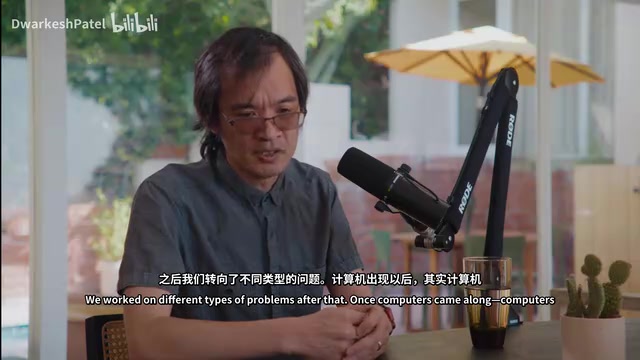
He also raised a fascinating historical footnote: the word "computer" originally referred to a human being. There was once a profession built entirely around computation — painstakingly compiling logarithm tables and calculating prime numbers, as Gauss himself once did. All of that work has since been handed off to machines.
The Human Origins of "Computer" "Computer" originally referred to a person employed to perform calculations — a usage that remained common well into the mid-20th century. During World War II, the U.S. military employed large numbers of women as human computers to manually calculate ballistic tables, including Katherine Johnson, who later became a lead mathematician at NASA. Gauss's own work compiling extensive numerical tables in the 19th century belongs to this same tradition. The arrival of the electronic computer ENIAC in 1945 gradually made this profession obsolete. This history provides Tao's argument with a real precedent: an entire category of cognitively demanding human work was rendered obsolete by a technological shift — and yet "mathematics" itself did not end.
The Genomics Lesson: Tool Replacement Elevates the Discipline
The same pattern of "tool replacement → disciplinary elevation" appears clearly in genetics. Tao noted that sequencing a single organism's genome was once a PhD student's entire doctoral project, requiring painstaking chromosomal separation. Today it costs roughly $1,000 and can be outsourced to a sequencing facility.
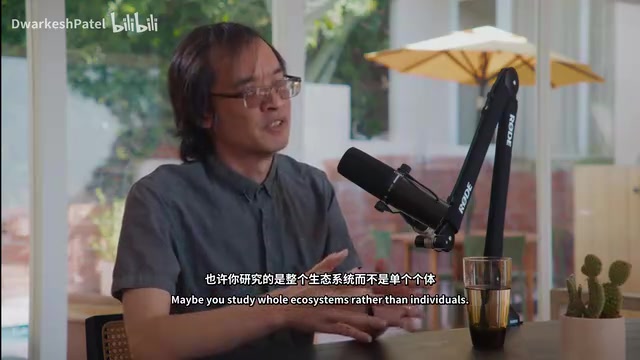
The Genomic Cost Cliff The Human Genome Project launched in 1990, took 13 years, and cost approximately $2.7 billion to complete the first full human genome sequence. Thanks to high-throughput sequencing technologies (Next-Generation Sequencing, NGS) driven by companies like Illumina, costs plummeted at a rate that far outpaced Moore's Law: down to roughly $10 million by 2007, $10,000 by 2010, and below $1,000 by 2014. This cost cliff directly gave rise to new fields like metagenomics — where researchers no longer study individual species but simultaneously sequence entire microbial communities or ecosystems. Tao uses this as a precise analogy for how a tool revolution forces the entire level of scientific inquiry to shift upward.
Genetics didn't end — it scaled up to entirely new dimensions, with researchers moving from individuals to entire ecosystems. The same logic applies to mathematics: as AI absorbs lower-level computation and derivation, mathematicians will migrate toward higher, more abstract levels of inquiry.
Will AI Independently Solve the Millennium Prize Problems?
The interviewer pressed further: could there come a year when nearly all mathematical progress is made by AI? If one of the Millennium Prize Problems were solved, would people be 95% confident it was done autonomously by AI?
The Millennium Prize Problems: The Everest of Modern Mathematics The Millennium Prize Problems were established by the Clay Mathematics Institute in 2000 — seven problems, each carrying a $1 million prize: P vs NP, the Hodge Conjecture, the Poincaré Conjecture, the Riemann Hypothesis, Yang-Mills Existence and Mass Gap, Navier-Stokes Existence and Smoothness, and the Birch and Swinnerton-Dyer Conjecture. To date, only the Poincaré Conjecture has been solved, by Grigori Perelman in 2003 (who declined the prize money). The remaining six are still open. What makes these problems special is that they are not merely computational challenges — they require deep structural insight, precisely the kind of "missing piece" Tao identifies as beyond current AI capabilities.
Tao's response was a qualified "perhaps." He made clear that he believes a hybrid human-AI model will dominate mathematical research for the foreseeable future. Achieving full autonomous replacement would require major breakthroughs beyond the current state of the art.
Complementary, Not Replacement: Tao's Assessment of Current AI Capabilities
Tao offered a lucid evaluation of where AI stands today. He believes current AI excels at certain tasks while performing extremely poorly at others.

While one can keep layering frameworks on top of AI systems to reduce error rates and improve how multiple systems collaborate, he argued that we do not yet have all the ingredients needed to replace every intellectual task. For now, AI's role is complementary, not a replacement.
This assessment is invaluable for broader discussions about AI in scientific research — it reminds us to distinguish between "engineering patches that reduce error rates within existing paradigms" and "fundamental capability breakthroughs." The former can make AI better at what it already does; but to independently pursue frontier creative work, key pieces are still missing.
AI Accelerates Science — But May Kill Serendipity
At the close of the interview, Tao demonstrated the dialectical thinking of a first-rate scholar. On one hand, he believes that even current AI will accelerate scientific progress in many respects, bringing new discoveries and breakthroughs faster than before.
On the other hand, he raised a concern that few have focused on: in optimizing processes, AI may undermine serendipity in research.
The Serendipity Paradox of AI Optimization Throughout scientific history, serendipity has contributed a remarkable number of landmark discoveries: Fleming's accidental discovery of penicillin due to laboratory oversight, Röntgen's unexpected observation of X-rays, the 3M engineer who accidentally invented the adhesive for Post-it Notes. What these discoveries share is deviation from the intended path. AI systems are fundamentally designed around optimization — they tend to reach preset goals by the shortest route, efficiently searching and inferring within established knowledge frameworks. This efficiency-first orientation may systematically suppress "valuable deviations." Tao's concern echoes philosopher Paul Feyerabend's "epistemological anarchism" — excessive methodological constraint can paradoxically limit scientific progress. How to balance AI-assisted efficiency with preserving exploratory randomness will be one of the central tensions in designing future scientific research paradigms.
Countless major scientific discoveries in history arose from accidents and unexpected detours. If AI makes everything efficient and deterministic, it may actually suppress certain kinds of progress.
"At this point in time, anything is possible," Tao concluded. "The world is very, very hard to predict."
Closing: A Migrating Frontier, An Unchanging Creative Impulse
Tao's remarks offer a rare moment of clarity amid the noisy "AI will replace everything" discourse. He neither denies AI's power nor overstates its threat. Instead, he draws on the evolutionary logic of mathematical history itself: tools will continually replace what can be automated, but the frontier of the discipline will ascend in response, and human creativity will migrate to new levels of inquiry.
Rather than anxiously asking "when will we be replaced," perhaps the more productive question is: in the new paradigm of human-AI collaboration, what is the truly irreplaceable value that mathematicians — and all knowledge workers — bring?
Key Takeaways
Related articles

Disaster and Glory of the Apollo Program: The History We Must Revisit Before Returning to the Moon
From the fatal Apollo 1 fire to Apollo 8's daring lunar orbit to Apollo 11's successful landing—revisiting the disasters, fears, and compromises of the Apollo program and their lessons for today's return to the Moon.
Netflix Trust Exercise Turns Into Firing Trap: Where Are the Boundaries of Corporate Trust?
A Netflix employee was fired after sharing private info in a trust exercise. We analyze the risks of corporate trust exercises and how employees can protect themselves.

AMD CDNA5 Architecture Deep Dive: Technical Evolution and the AI Computing Competition Landscape
Deep analysis of AMD's CDNA5 architecture covering Chiplet packaging upgrades, HBM memory evolution, and low-precision compute optimization, examining how AMD challenges NVIDIA's AI chip dominance.