Trae Deep Dive: ByteDance Launches China's First AI-Native IDE — How Will It Transform the Programming Industry?

ByteDance launches AI-native IDE Trae, accelerating AI's transformation of the programming industry.
ByteDance has released Trae, China's first AI-native IDE, integrating Doubao, DeepSeek, and Claude models with Chat and Build modes that enable full project generation from natural language. The tool dramatically lowers the coding barrier, undermines the commercial value of small tool development, delivers a structural blow to the software outsourcing market, and pushes developer skill requirements toward system design and AI tool mastery.
ByteDance Enters the AI Coding Arena
ByteDance has officially launched its AI coding tool — Trae — marking China's first truly AI-native IDE (Integrated Development Environment). It's worth noting the fundamental difference between an AI-native IDE and a traditional IDE (like VS Code or IntelliJ IDEA): traditional IDEs are built around code editing, with AI capabilities bolted on as plugins; an AI-native IDE, by contrast, treats AI as a first-class citizen from the ground up, with code generation, contextual understanding, and multi-file collaborative editing deeply embedded into the development workflow. Cursor pioneered this paradigm shift — built as a deep fork of VS Code, it surpassed one million monthly active users in 2024 and reached a valuation of over $2.5 billion, validating the commercial viability of this approach. With Cursor, Windsurf, and others already proving the market potential for AI coding tools, ByteDance's entry heats up competition in this space considerably.
Trae takes a dual-track approach to model integration: the domestic version integrates the latest models including Doubao and DeepSeek, while the international version connects to frontier models like Claude 3.5 and 3.7. DeepSeek is an open-source large language model series developed by DeepSeek (深度求索), which has reached world-class performance on benchmarks for code generation and mathematical reasoning — attracting global attention for its remarkably low training costs. Doubao is ByteDance's own in-house large model, deeply integrated with the company's strengths in content understanding and multimodal processing. The two models are complementary: DeepSeek excels at complex logical reasoning and code generation, while Doubao has advantages in Chinese-language comprehension and product ecosystem synergy. The dual-model strategy also reduces the risk of dependence on a single vendor. Notably, the release of Claude 3.7 represented a qualitative leap in model coding capability — Claude 3.7 introduced an "Extended Thinking" mechanism, where the model performs deeper internal reasoning chains before generating a final answer. It scored over 70% on SWE-bench Verified (a software engineering benchmark), meaning it can independently resolve over 70% of real-world bug-fix tasks from actual GitHub repositories — providing a powerful foundation for Trae's real-world performance.
Trae's Two Core Modes: Chat and Build
Trae offers two primary coding interaction modes, each targeting different development scenarios and user needs.

Chat Mode: Intelligent Coding Assistant
Chat mode delivers a conversational experience similar to ChatGPT, allowing developers to interact with AI using natural language to get code suggestions, logic explanations, bug localization, and other assistance. This mode is best suited for incremental optimization and troubleshooting within existing projects — essentially a senior programming assistant available on demand.
Build Mode: Full Project Generation from Scratch
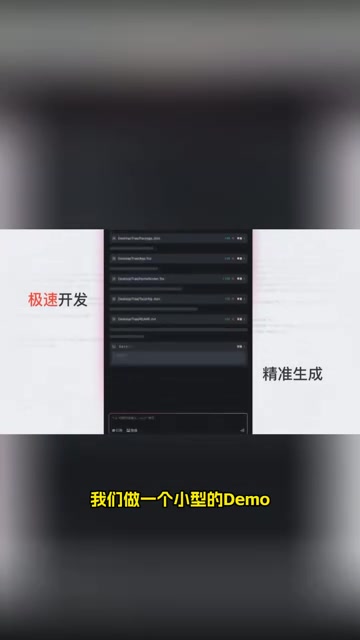
Build mode showcases Trae's more disruptive capability — users simply describe their requirements through conversation, and the AI automatically generates a complete project codebase. This mode is essentially the productized implementation of the "Vibe Coding" philosophy. The concept of Vibe Coding was introduced by OpenAI co-founder Andrej Karpathy in 2025, with the core idea being: developers no longer need to write code line by line — they simply describe their intent in natural language, let the AI handle all implementation details, and focus on expressing requirements and validating results. In Build mode, the AI automatically handles the entire workflow of file creation, dependency installation, and code debugging, lowering the barrier to programming from "mastering syntax and algorithms" to "being able to clearly describe what you need." For example, to build a small tool that batch-adds watermarks to Word documents, you simply describe the functional requirements in natural language, and Trae can complete the entire process — from writing the code to delivering a working feature — in a matter of minutes.
The AI Coding Era: Reassessing the Value of Small Tool Development
As AI-native IDEs like Trae mature, an unavoidable reality is emerging: developing a large number of small tools no longer holds the same commercial value it once did.

Whether it's a Snake game, a file-processing utility, or a simple itinerary management assistant, non-large-scale projects like these can now be rapidly completed and shipped within an hour using AI coding tools. This trend is delivering a structural blow to the software outsourcing market — a global industry worth over $200 billion, a significant portion of which consists of low-complexity tasks like small tool development, web page creation, and data processing scripts. Data from freelance platforms like Upwork and Fiverr shows that demand for listings in categories such as "simple web development" and "Python scripting" has been declining noticeably since 2024. This closely mirrors the historical logic of CAD software disrupting manual drafting, or Excel displacing entry-level finance roles: tools first replace standardized, highly repetitive tasks. Specifically, this shift brings several notable changes:
- Dramatically lower development barriers: Non-professional programmers can now fulfill simple needs using tools like Trae
- Radically compressed development timelines: Small projects that once took days can now be completed in tens of minutes
- Shifting labor cost structures: Demand for outsourcing simple, repetitive coding work will decline significantly

The Deeper Impact of AI Coding Tools on the Programming Industry
Short Term: Tool Substitution Effects Emerge
For junior developers and freelancers who primarily work on small projects, the impact of AI coding tools is direct and immediate. As clients gain the ability to generate simple tools themselves using Trae, this segment of the market will shrink rapidly.
Medium to Long Term: Developer Skill Requirements Shift Upward
That said, AI still struggles to independently handle high-level work such as architecting large, complex systems, performance tuning, and security hardening. The core competitive advantage of programmers will shift from "knowing how to write code" to "knowing how to design systems" and "knowing how to leverage AI tools effectively." This migration aligns closely with the current technical boundaries of AI tools — today's AI coding tools still face context window limitations when dealing with very large codebases (over a million lines), and in scenarios requiring deep engineering expertise such as distributed system consistency and high-concurrency performance optimization, human expert judgment remains irreplaceable.
Industry Landscape: The AI-Native IDE Race Intensifies
The AI-native IDE space currently shows clear tier differentiation: Cursor holds the professional developer market through its first-mover advantage and deep codebase indexing capabilities (using RAG technology to build vector indexes across entire code repositories); Windsurf (formerly Codeium) differentiates itself with more aggressive agentic capabilities; GitHub Copilot maintains scale advantages through the Microsoft ecosystem and VS Code's massive user base. ByteDance's advantages with Trae lie in: a domestically compliant model supply chain, traffic from ByteDance's product ecosystem, and deep understanding of the Chinese developer community. The key variables in this competition will be the pace of continuous model capability iteration and the ability to handle context in complex engineering projects. With ByteDance's deep foundation in large language models and its channel advantages in the domestic market, Trae is well-positioned to claim a significant place in this race.
Conclusion: What Does Trae's Launch Mean?
The release of Trae signals that domestic AI coding tools have officially entered the era of the "native IDE"
Related articles
 Product Reviews
The Programmer's Desk Setup Guide: Building a Workspace That Feels Like Home
Discover how programmers build productive, comfortable workspaces. From multi-monitor setups to ergonomic design, explore the desk philosophy that drives focus and flow.
 Product Reviews
Qoder vs Cursor Real-World Comparison: Which $20/Month AI IDE Is Better?
Hands-on comparison of Qoder vs Cursor AI IDEs: Agent autonomy, human interaction count, and architecture decisions. Qoder needed only 2 interactions vs Cursor's 8.
 Product Reviews
Cursor Cloud Agent Demo: Eliminating Bottlenecks Across the Entire Software Development Lifecycle
Deep analysis of Cursor's Cloud Agent demo showing how cloud VMs, automated test artifacts, and a full-chain control plane systematically eliminate human bottlenecks across the software development lifecycle.