Vibe Coding Beginner's Guide: The Right Way to Code with AI from Scratch

Vibe Coding lets you build software by expressing intent in plain language — AI handles the rest.
Vibe Coding, popularized by Andrej Karpathy in 2025, is a new programming paradigm where you describe what you want in natural language and AI generates the code. Powered by LLMs like GPT-4 and Claude, and tools like Cursor and GitHub Copilot, it compresses development feedback cycles to seconds — making software creation accessible to everyone, not just professional engineers.
What Is Vibe Coding?
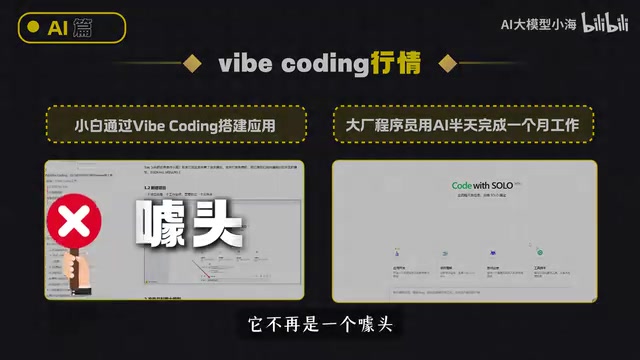
AI is no longer just a chatbot toy — it's a genuine productivity powerhouse. Scroll through any video platform and you'll find stories like these: a complete beginner builds a working app in half a day using Vibe Coding, or a seasoned developer at a tech giant uses AI to finish a month's worth of work in an afternoon.

"Vibe" refers to a sense of atmosphere and flow. Vibe Coding can be understood as an entirely new programming experience: you simply tell the AI what you want, it writes and runs code on the fly, and all you have to do is nod yes or shake your head no. The concept was formally introduced and popularized in early 2025 by Andrej Karpathy — OpenAI co-founder and a world-class expert in deep learning — who described on social media an experience of being fully immersed in the creative flow while letting AI handle nearly all the implementation work. Karpathy's endorsement sent the concept rippling from technical communities into mainstream awareness almost overnight.
In other words, the core of Vibe Coding isn't "writing code" — it's "expressing intent." This shift is profound. It brings the barrier to creating software down to its absolute lowest. Tasks that once required systematic study of syntax, frameworks, and debugging techniques can now be accomplished simply by describing what you need clearly enough for AI to turn your idea into reality.
The Technical Foundation Behind Vibe Coding
Vibe Coding is possible today thanks to major breakthroughs in code generation by large language models (LLMs). Next-generation models like GPT-4, Claude 3.5 Sonnet, and Gemini 1.5 Pro don't just understand natural language intent — they also support multi-turn conversational memory, automatic error correction, and cross-file context understanding. On the tooling side, AI-powered coding IDEs like Cursor, GitHub Copilot, Replit Agent, and Windsurf have wrapped these capabilities in friendly interfaces, making "conversation as programming" a daily workflow and putting the kind of productivity once reserved for professional engineers within reach of everyone.
From Writing Code to Expressing Intent: A Fundamental Paradigm Shift
Traditional programming centers on "how to implement" — programmers translate human intent into precise machine-readable instructions. Vibe Coding shifts that focus entirely to "what you want."
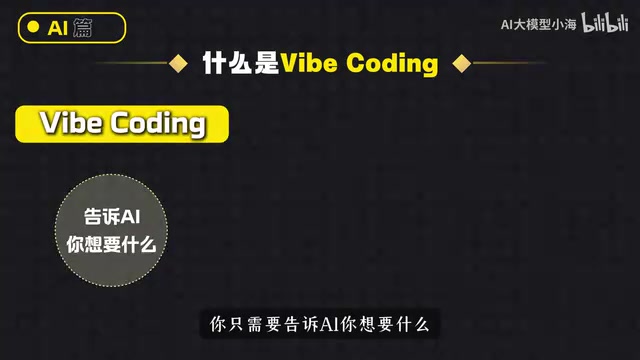
The key to this model is the instant feedback loop of human-AI collaboration: you state a requirement → AI generates and runs code → you review the result → you give feedback or adjust direction. This loop has a formal analog in software engineering — it combines the REPL (Read-Eval-Print Loop) with the iterative thinking of agile development. In traditional development, moving a feature from requirement to visible result can take hours or even days. Vibe Coding compresses that feedback cycle to seconds, making exploratory development and rapid prototyping the new normal, and fundamentally disrupting the linear "design first, implement later" model.
For beginners, this means you no longer have to be discouraged by complex syntax or cryptic error messages. Your attention can stay entirely on "what kind of thing do I want to build," while the tedious implementation details are handed off to AI. That said, this doesn't mean you can switch off your judgment entirely — understanding product logic and evaluating whether AI output meets your expectations remain core skills you can't afford to skip.
Why Learn Vibe Coding Now?
The answer is straightforward: AI large language models have delivered a genuine leap in productivity, and Vibe Coding is the best vehicle for that new productivity — and one of the mainstream ways software will be built in the future.

Here's a useful analogy: producing video or content used to require professional teams and expensive equipment, but the rise of independent media turned everyone into a potential creator. This isn't an empty comparison — around 2005, the emergence of YouTube and blogging platforms compressed the cost of content creation from a studio worth hundreds of thousands of dollars to a single smartphone, giving birth to the multi-billion-dollar creator economy. Vibe Coding is doing the same thing to software development, driving its marginal cost toward zero. According to GitHub's 2024 Developer Survey, 88% of developers who use AI-assisted programming report a significant increase in the speed at which they complete tasks. As Vibe Coding spreads, building software could become something anyone can do — just as anyone can run a social media channel today.
Underlying all of this is a deep restructuring of how value gets created. As the barriers to software development drop dramatically, whether you capture the dividends of the AI era depends largely on whether you've developed the skill to collaborate with AI. Getting ahead of Vibe Coding now means getting to the frontier of the new paradigm first.
A Vibe Coding Learning Path: Three Stages for Complete Beginners
Although Vibe Coding lowers the barrier to entry, getting truly good at it still requires deliberate, progressive practice. Here's a practical path designed for beginners:
Stage 1: Get Familiar with the Tools and the Conversational Style
Start by choosing one mainstream AI coding tool and getting comfortable with how it works. The focus at this stage is practicing "how to describe what you need clearly" — which is essentially a new discipline called Prompt Engineering. High-quality prompts typically include: a clear goal (what to build), specific constraints (which tech stack to use), clear context (the current project background), and the expected output format. Research shows that for the same task, a precisely worded prompt can produce output that is several times better than a vague description. The quality of your prompts largely determines the ceiling of what AI can produce for you.
Stage 2: Start with Small Projects
Begin with a simple application — a to-do list, a personal homepage, or a handy utility tool. Use real projects to experience the full loop of "state requirement → run → give feedback," and gradually develop your instinct for evaluating AI output.
Stage 3: Understand the Underlying Logic Behind the Code
Once you can comfortably complete small projects, it's worth spending some time understanding the basic principles behind what the code is doing. This isn't optional — it's the necessary path to leveling up. There's a well-known technical challenge in the industry called the "Hallucination Problem": AI large language models sometimes generate code that looks correct but contains logical errors, security vulnerabilities, or performance issues — without flagging any of this. Users with a basic programming foundation can recognize these risks and give more precise correction instructions; beginners who rely entirely on AI output may unknowingly carry problematic code into real-world use. This isn't about replacing AI — it's about being able to give sharper instructions, locate and diagnose problems more effectively when things get complex, and truly become someone who commands AI rather than just following it.
Final Thoughts
Vibe Coding is no longer hype — it's a productivity revolution that's actively unfolding. It elevates "expressing intent" above "writing code," and brings software creation back to its most essential form: turning ideas into reality.
For anyone who wants to ride the AI wave, now is a great time to get started. Rather than watching from the sidelines to see whether AI will replace some job or another, take the initiative to build your ability to collaborate with AI. After all, the real dividends always go to those willing to act early.
Key Takeaways
Related articles

Older Google Home Gets Gemini Live Upgrade: Conditions and Experience Fully Explained
Google is rolling out Gemini Live conversational AI to older Google Home speakers, but subscription or plan requirements may apply. Here's what you need to know.

Older Google Home Gets Gemini Live Upgrade: Complete Breakdown of Requirements and Experience
Google is rolling out Gemini Live conversational AI to older Google Home speakers, but subscription or plan restrictions may apply. Full breakdown of the upgrade details and impact.

GPT-5.6 Hands-On Review: Analyzing the Agent Capabilities Behind Its #1 Ranking on the Frontend Development Leaderboard
GPT-5.6 SoulX High tops the frontend dev leaderboard at 1636 points with Agent Arena rank #2. Hands-on tests of portfolio pages and mystery games reveal its task decomposition and self-correction capabilities.