Why Do Tech Entrepreneurs Periodically Disappear — and Then Come Back?

Why tech founders strategically disappear for months — and why it works.
A viral tweet about 'the tech bro you haven't heard from in months' captures a real industry pattern. This article explores why tech founders periodically go silent — from natural product development cycles and stealth mode strategy to the neuroscience of attention scarcity — and what it means for how professionals should think about visibility, focus, and credibility.
The Industry Insight Behind One Tweet
A social media post recently struck a nerve among tech professionals. The tweet read simply: "tech bro you haven't heard from in months" — a seemingly offhand joke that perfectly captured a pattern all too familiar in startup circles: the periodic disappearance and return of tech founders and practitioners.
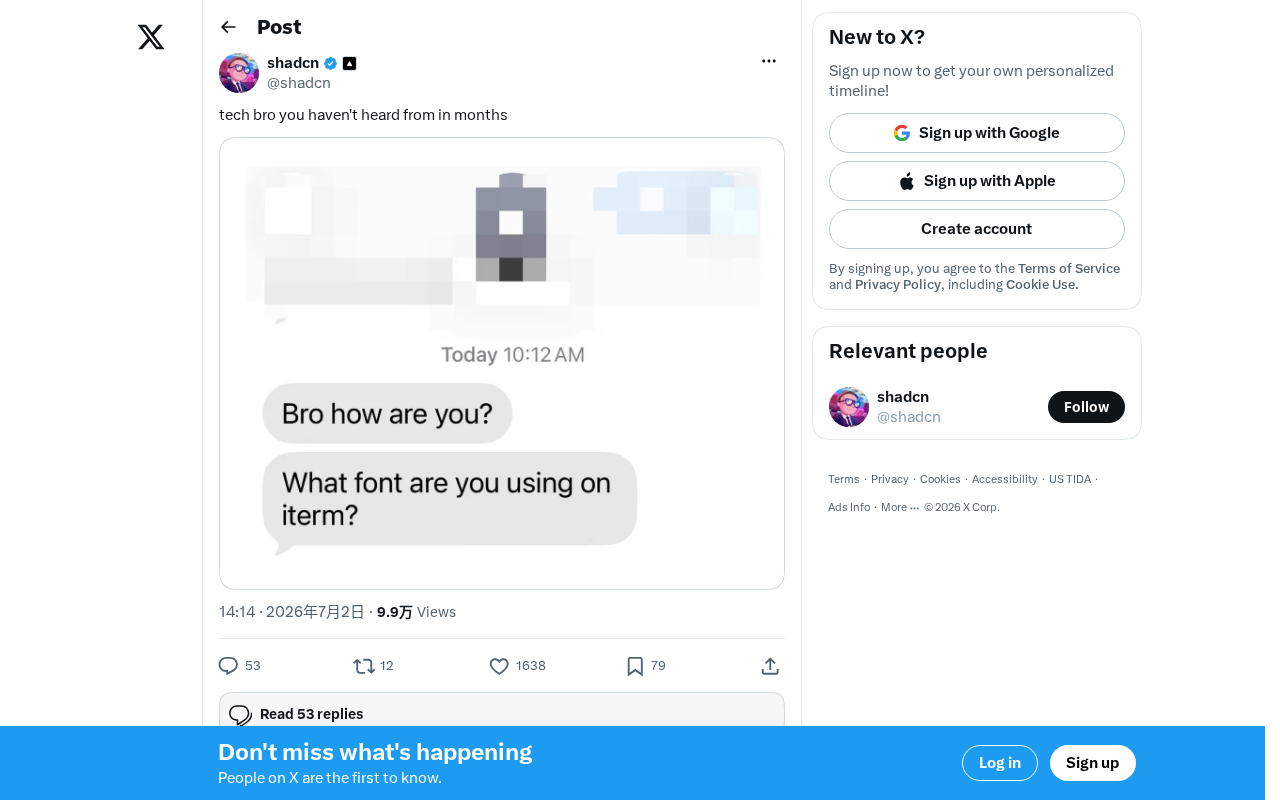
This isn't a coincidence. In a fast-moving industry built on rapid iteration, personal brands and product launches tend to follow a distinct rhythm: a burst of high-visibility activity, followed by a prolonged "silence," and then a re-emergence bearing a new project or tangible results. Behind this pattern lies both the objective logic of product development cycles and a deliberate content strategy.
Why Tech Founders "Disappear for Months"
The Natural Product Development Cycle
Building a serious technical product — from concept to launch — typically takes months of intensive work. During this phase, founders and core team members often enter a kind of "lockdown" mode: voluntarily stepping back from social media to channel every bit of energy into code quality, system architecture, and user experience details. The "disappearance" is simply the outward manifestation of deep, focused work.
The methodology of software development has evolved from Waterfall to Agile to Lean Startup — yet regardless of framework, the core phase of taking a product from zero to one, especially decisions around foundational architecture, core algorithm implementation, and security validation, cannot be replaced or compressed by social media activity.
In Silicon Valley startup culture, "stealth mode" is a widely accepted early-stage operating strategy. Its roots trace back to the garage-startup era of the 1970s and '80s, when information secrecy was primarily about patent protection. As venture capital ecosystems matured in the internet age, stealth mode evolved into a systematic competitive strategy: teams deliberately maintain a low public profile until they have a demonstrable product milestone, avoiding the pressure of premature market expectations, the risk of competitors copying their ideas, and the brand damage of being scrutinized before the product is ready. Notable examples include Stripe, which operated for years after its 2010 founding via private invitation only, and Notion, which went through years of internal iteration before its public launch in 2018. Top accelerators like Y Combinator explicitly advise founders to "build first, talk later."
Compared to accounts that post daily across every platform, founders who are genuinely heads-down building are naturally more likely to go quiet for stretches at a time — which is precisely why, when they resurface, they tend to bring something substantive with them.
The Deliberate Strategy of Avoiding Premature Exposure
In competitive tech markets, revealing product details too early can hand rivals a meaningful advantage. Many experienced founders choose to stay under the radar until there's something concrete to show — a working product, supporting data, a real milestone — before re-entering the public conversation. What looks like passive silence is often a carefully considered market entry strategy.
This approach also has grounding in cognitive science. Computer scientist and bestselling author Cal Newport argues in Deep Work that sustained social media use creates an "attention residue" effect — fragments of a previous task continue to occupy cognitive resources after switching, measurably reducing performance on the current one. Neuroscience research reinforces this: the prefrontal cortex activates in fundamentally different patterns during deep focused work versus social media browsing — the former engages circuits responsible for logical reasoning and creative thinking, while the latter continuously triggers emotional responses and social comparison mechanisms. High-value product creation is inherently the product of deep work, and deep work requires systematically distancing oneself from social media. For founders, going "dark" isn't just a business strategy — it's a form of cognitive hygiene that protects their core creative capacity.
The Communication Logic Behind the "Comeback"
Scarcity Drives Attention
When someone who rarely posts suddenly shares an update, that content tends to earn far more attention than usual. This "long-time-no-see" effect operates on the scarcity principle from attention economics.
The concept of the attention economy was first articulated by Nobel laureate Herbert Simon in 1971, and later systematized for the internet age by scholar Michael Goldhaber. The core premise: in a world of information abundance, the truly scarce resource is no longer content itself — it's human attention.
The scarcity principle maps onto what psychologists call "variable ratio reinforcement" — B.F. Skinner's research showed that unpredictable rewards sustain behavioral motivation more effectively than fixed-interval rewards. This has solid biological foundations in neuroscience: the brain's dopaminergic reward circuit responds more strongly to unpredictable stimuli. Neuroscientist Andrew Huberman's research further reveals that the dopamine system actually activates during the anticipation phase, not just when the reward arrives — meaning a creator's "comeback announcement" can itself trigger intense audience attention. By contrast, relentless high-frequency content output leads to adaptive downregulation of the dopamine system — what neuroscience calls "hedonic adaptation" — causing the excitement generated by each new post to diminish over time. For audiences, this mechanism operates behaviorally much like the appeal of a slot machine.
This explains why many influential tech figures don't chase high posting frequency, but instead choose to concentrate their output at key moments. One well-considered post regularly outperforms ten casual reposts.
Content Quality Compounds Professional Credibility
A comeback after sustained silence, when accompanied by a meaningful product launch or substantive insight, significantly elevates an individual's professional credibility. Audiences naturally interpret the "absence" as evidence of serious work, arriving at whatever follows with higher expectations and greater trust.
This dynamic has systematic backing in content marketing research. Multiple studies from HubSpot and the Content Marketing Institute show a clear pattern of diminishing marginal returns between content quality and posting frequency — beyond a certain threshold, higher frequency not only fails to drive more engagement, it actually causes average reach and engagement rates per post to decline.
This maps closely onto the concept of signal-to-noise ratio (SNR) — originally an electrical engineering metric measuring useful signal strength relative to background noise. Applied to content: when the proportion of high-value content (deep insights, substantive results) in a practitioner's output continuously declines, the overall SNR of their content feed drops, and audience filtering mechanisms gradually reclassify them as a "low-signal source." Platform algorithms amplify this effect — recommendation systems on Twitter/X, LinkedIn, and similar platforms dynamically weight content distribution based on historical engagement rates, creating a negative feedback loop where low-engagement content further suppresses the reach of even high-quality posts.
For tech professionals, the ability to be heard is itself a scarce asset that needs to be carefully stewarded. Overusing it triggers audience desensitization, while maintaining a high SNR is both a personal brand strategy and a rational play against platform algorithms. This kind of trust accumulation is difficult to achieve through constant posting.
Three Takeaways for Tech Professionals
What reads as a wry joke actually offers a few perspectives worth taking seriously:
Focus is more valuable than visibility. In an age of information overload, churning out low-quality content is no match for concentrating your energy on something genuinely valuable. Strategically "disappearing" is a prerequisite for deep work to happen at all. As Newport argues, the ability to do deep work is becoming increasingly rare — and therefore increasingly valuable. Those who actively protect their focused time are accumulating a competitive advantage that's hard to replicate.
Rhythm is itself a skill. Knowing when to speak up and when to stay quiet is a mark of professional maturity. Within the framework of attention economics, managing your "posting frequency" is fundamentally about managing the signal-to-noise ratio of your personal brand in your audience's minds. Blindly chasing exposure tends to yield diminishing returns — or worse, backfire. Under the dual forces of platform algorithms and audience neuroscience, overexposure can trigger irreversible desensitization.
Results are the only real credential. Rather than maintaining a presence through fragmented daily content, it's far more powerful to recapture attention through solid, substantive work. Lasting influence comes from consistently delivering value, not from sustaining noise. When the stealth mode ends and you return with real results, the silence itself becomes a form of credibility.
Closing Thoughts
"The tech bro you haven't heard from in months" — beneath the joke is a playful but pointed reflection on an entire industry's tension between focus and restlessness, between deep craft and surface-level noise. In an era where everyone craves visibility, having the discipline to "disappear" and do the work may be the rarest quality of all. The underlying logic of attention economics, the cognitive science of deep work, the neuroscience of the dopamine reward circuit, and the objective realities of product development cycles all converge to explain why this kind of "disappearance" is not a failure — it's a professional choice that deserves to be reframed. When you return with something real, the "long silence" itself becomes the most powerful opening line you could have.
Related articles

The Truth Behind Codex 'Build a Website in 5 Minutes': AI Isn't Creating Sites—It's Helping You Copy Them
Exposing the truth behind viral Codex 5-minute website videos: creators aren't building original sites with AI—they're copying shared prompts or scraping others' work. Learn AI coding tools' real limits.

Getting Started with AI Agent Development: A Complete Guide from Concept to Practice
A comprehensive guide to AI Agent architecture and development, covering automated marketing, intelligent customer service, and investment analysis scenarios with single and multi-agent collaboration.

The Truth Behind Codex 'Build a Website in 5 Minutes': AI Isn't Creating Sites — It's Helping You Copy Them
Exposing the truth behind viral Codex 5-minute website videos: creators aren't building original sites with AI — they're copying shared prompts or scraping others' work.