12 Open-Source AI Agent Projects Worth Exploring: Frameworks, Skill Packs, and Toolchains

12 open-source AI agent projects covering frameworks, skill packs, code engines, and more.
This article reviews 12 high-trending open-source AI agent projects curated by Matthew Berman, spanning video generation tools (OpenMontage, Hyperframes, Palmier Pro), long-horizon agent frameworks (DeerFlow, Hermes Agent), expert skill packs (Matt Pocock's Skills, G-Stack, Anthropic's Cybersecurity Skills), code understanding engines (Codebase Memory MCP), security scanners (Skill Spectre), and voice/OCR tools (VoicePack, Baidu OpenWays). Together they illustrate a composable, modular approach to building powerful AI agent workflows.
The open-source AI ecosystem is evolving at a breathtaking pace — especially around the toolchains built for AI agents. High-quality new projects seem to appear every week. AI content creator Matthew Berman recently compiled a list of 12 open-source projects that have been surging on GitHub and are genuinely production-ready. This article provides a systematic breakdown of that list to help you quickly find the right tools for your workflow.
What is an AI Agent? An AI agent is an AI system capable of perceiving its environment, autonomously planning, and executing multi-step tasks. Unlike traditional "question-and-answer" LLMs, agents have four core capabilities: Tool Use, Memory, Planning, and Action. Since 2023, as models like GPT-4 and Claude have made dramatic capability leaps and frameworks like LangChain and AutoGPT have gone mainstream, agents have rapidly moved from lab concepts to real-world engineering — giving rise to the entire toolchain ecosystem described in this article.
These 12 projects fall into several categories: video and content generation, agent frameworks, agent skill packs (Skills), code understanding engines, security scanning, and voice processing. Let's go through each one.
Turning Agents into a Content Production Team
The first category of projects shares a common vision: upgrading an AI coding assistant into a fully-fledged content production team.
OpenMontage is the standout here, with nearly 15,000 stars. It transforms an AI coding assistant into a complete video production studio — just describe what you need in natural language, and the agent automatically handles research, scriptwriting, asset generation, editing, and final compositing. It includes 12 types of video production pipelines covering scenarios like explainer videos, digital avatar presentations, screen demos, cinematic trailers, animated podcasts, content localization, and documentary montages, offering over 400 agent skills. Under the hood, it uses VO to generate dynamic clips and Remotion for compositing.
Hyperframes (from Hagen, with over 30,000 stars) takes a different technical approach. It converts HTML, CSS, media assets, and positionable animations into deterministic MP4 video output — ideal for product demos, slideshows, and motion graphics. It renders using Chrome alongside FFmpeg and is compatible with animation libraries like Three.js. For front-end developers, the barrier to generating high-quality video animations using a familiar web tech stack is dramatically lowered.
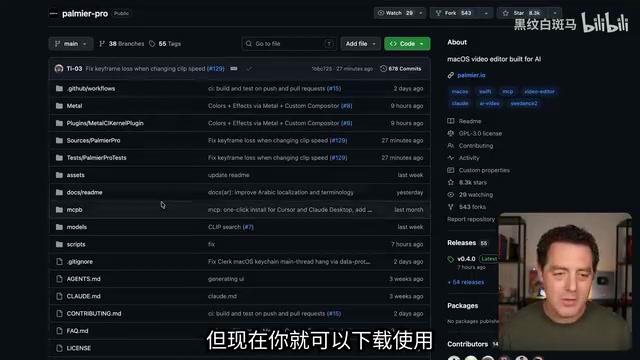
Palmier Pro (~8,000 stars) is a free, open-source AI-native video editor for macOS. Its biggest differentiator is a built-in MCP server that lets you connect agents like Claude, Codex, and Cursor via MCP — describe your editing intent in natural language and the agent operates this local video editor to get it done.
What is the MCP Protocol? MCP (Model Context Protocol) is an open protocol released by Anthropic in late 2024, designed to standardize how AI models interact with external tools and data sources. The core idea is similar to a USB interface — any tool that implements MCP can be directly invoked by MCP-compatible AI clients (like Claude, Cursor, etc.), regardless of the vendor. MCP has dramatically reduced the complexity of integrating third-party capabilities into agents, enabling local apps like Palmier Pro to seamlessly plug into mainstream AI workflows — and accelerating the rapid growth of the entire "skill pack ecosystem."
Agent Frameworks for Long-Horizon Tasks
If the previous category represents application-layer tools, framework-layer projects define the ceiling of what agents can do.
DeerFlow (from ByteDance, ~74,000 stars), short for "Deep Exploration and Efficient Research Flow," is positioned as an open-source super-agent framework. Its defining feature is that it's designed specifically for long-horizon tasks — once you assign a task, it can run continuously for hours or even days. It breaks down complex tasks by delegating to sub-agents, and comes equipped with a sandbox environment, memory module, tool-calling, and skill-use capabilities. Typical use cases from the official documentation include building data pipelines, generating slide decks, constructing dashboards, and automating content workflows.
Hermes Agent is one of the hottest projects on this list, with 200,000 stars. It's positioned as an excellent alternative to OpenClaude, with full agent capabilities. Its core differentiator is self-healing and self-iteration: when a skill fails, it automatically fixes the issue and optimizes execution for the next run. This self-correction capability is key to bringing agents into reliable production environments. The self-healing mechanism is fundamentally an "execute–feedback–replan" loop where the agent analyzes error stacks and execution logs to dynamically adjust its strategy — one of the core research directions in agent reliability today.
Skills: Packaging Expert Knowledge into Reusable Modules
"Skill packs (Skills)" are one of the most noteworthy trends on this list. The core logic: package an expert's complete methodology into an injectable skill module, so your AI agent works the way that expert would. Skill packs typically exist as structured system prompts, tool definitions, and workflow templates, and are injected into the target agent via MCP or direct configuration files.

Matt Pocock's Skills (143,000 stars — one of the most popular repos on GitHub) is a canonical implementation of this idea. Matt Pocock is the author of Total TypeScript and AI Hero and a former developer educator at Vercel. He has packaged an entire career's worth of engineering experience into this skill pack. It includes an "Ask Matt" routing layer that determines which skill best fits the current situation, plus a documentation-parsing feature that builds a domain model for the project and standardizes terminology while working through it section by section. The author emphasizes this is a tool for real engineers — not "vibe coding with no structure."
G-Stack (developed by Gary Tan, 114,000 stars) packages the product methodology of the President of Y Combinator. It upgrades an engineering agent into a full engineering team, structured around phases of Think, Plan, Build, Review, Test, Ship, and Retrospect — each with corresponding role modules. Particularly noteworthy is the built-in /office hours command, which simulates the YC partner coaching process of asking founders questions and giving feedback — highly valuable for teams in startup mode.

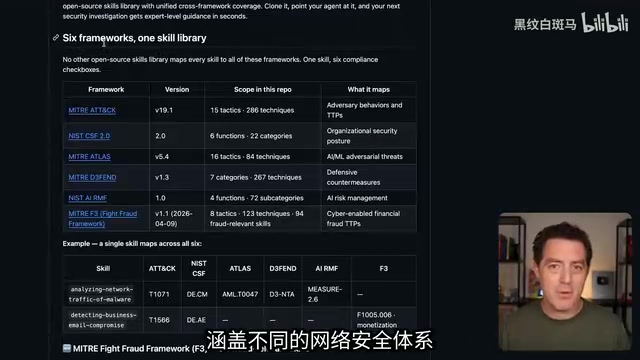
Anthropic's Cybersecurity Skill Pack (~20,000 stars) focuses on the security domain, equipping agents with everything needed to operate as cybersecurity experts. It supports major agents including Claude Code, GitHub Copilot, Codex CLI, and Gemini CLI. It ships with 6 authoritative frameworks — including MITRE ATT&CK and NIST — the same frameworks in active use at institutions like JPMorgan, Citibank, Standard Chartered, CrowdStrike, and Fortinet.
What are MITRE ATT&CK and NIST? MITRE ATT&CK is a knowledge base of adversarial tactics and techniques maintained by the US non-profit MITRE, covering the complete attack chain from initial intrusion to lateral movement and data exfiltration. It has become the de facto standard reference framework for the global cybersecurity industry, used by thousands of organizations worldwide for threat modeling and red team exercises. NIST (National Institute of Standards and Technology) publishes the Cybersecurity Framework (CSF) and the SP 800 series standards, widely used for security program development in high-compliance industries like finance and government. Injecting these two frameworks into an AI security skill pack means the agent can audit code and system configurations from the perspective of a professional security engineer — rather than relying on the vague security intuitions baked into general training data.
Installation is dead simple: just copy and paste the URL to the agent to complete configuration.
Code Understanding Engines and Agent Security Scanning
When an AI agent needs to work with massive codebases, a high-performance "code understanding engine" becomes essential.
Codebase Memory MCP (developed by Dayu Data, just over 12,000 stars) claims to be the fastest and most efficient intelligent code engine available. It can fully index a typical code repository in milliseconds. Even the complete Linux kernel at 28 million lines of code takes only three minutes to index, after which structured queries respond in under 1 millisecond.
How can code indexing be this fast? Traditional code search relies on keyword matching (like grep), whereas modern AI code engines build Abstract Syntax Trees (ASTs) and semantic vector indexes to achieve deep understanding of code structure, call relationships, and semantic intent. Tree-sitter is currently the most widely used multi-language incremental parsing framework, supporting 158 languages. Combined with vector databases (like FAISS or Qdrant), a code engine can perform semantic-level cross-file retrieval in milliseconds. More importantly, structured indexing can pinpoint the exact code snippets needed without stuffing the entire codebase into a context window — which is the technical foundation for Codebase Memory MCP's claim of consuming 120x fewer tokens than comparable solutions.
It supports 158 programming languages, consumes 120x fewer tokens than comparable solutions, is compatible with 11 frameworks including Claude Code, Cursor, and Codex, and includes built-in 3D visualization — installable with a single command.
As the skill pack ecosystem flourishes, security risks have followed. Skill Spectre (from NVIDIA, under 10,000 stars) is an agent skill security scanner built to address exactly this. It detects vulnerabilities, malicious code patterns, and various security risks. It supports scanning Git repositories, URLs, ZIP archives, folders, or individual files, covering 65 vulnerability patterns across 16 categories — including prompt injection, data leakage, privilege escalation, supply chain risks, and excessive permissions.
What is a prompt injection attack? Prompt injection is one of the most closely watched attack vectors in AI security today. Attackers embed malicious instructions into input content (such as documents, web pages, or code comments) to trick an AI agent into performing unintended actions — like leaking system prompts, calling dangerous APIs, or bypassing safety restrictions. As the skill pack ecosystem grows, supply chain risks are rising as well — malicious skill packs may silently plant backdoor instructions during installation, continuously exfiltrating data without the user's knowledge. This is precisely why specialized security scanning tools like Skill Spectre are valuable. It's recommended to run a security scan before installing any third-party skill packs in production environments.
Before installing any third-party skill pack, it's worth running a security check with this tool first.
Voice Processing and Document OCR
The final two projects cover document recognition and voice processing respectively.
Baidu's OpenWays Vision-Language Model (released just days ago, under 3,000 stars) leads with extremely fast OCR capabilities. It can not only read and analyze document content, but also achieve precise highlight localization within PDFs — a technically challenging feat that requires both understanding the page content and accurately pinpointing the spatial coordinates of that content. The entire model file is only about 6.5GB, making it lightweight and easy to deploy.
VoicePack (33,000 stars) claims to combine the capabilities of both ElevenLabs and Whisper, integrating voice generation, speech transcription, and voice input into a complete bidirectional voice processing solution.
What do Whisper and ElevenLabs each represent? Whisper is an automatic speech recognition (ASR) model open-sourced by OpenAI in 2022, known for multilingual support (99 languages) and strong noise robustness. It quickly became the benchmark for open-source speech-to-text, with significantly better accuracy than traditional solutions in noisy environments and with accented speech. ElevenLabs is renowned for high-fidelity text-to-speech (TTS) and voice cloning technology, but its commercial API is pricey and raises data privacy concerns. VoicePack integrates both ends of this capability and, paired with small local models (like Qwen 1.7B), enables a fully private voice interaction system on consumer hardware with no cloud API required — particularly appealing to enterprises with data security requirements.
It's completely open-source and free, and can be connected to local models to run entirely on-device. The demo using the Qwen 1.7B model produced impressive voice output. It also supports near-perfect voice cloning, and includes a built-in story editor, sound effects processing pipeline, and audio transcription.
Conclusion: A Composable Agent Toolchain Is Taking Shape
Looking across these 12 open-source AI agent projects, a clear trend emerges: agent capabilities are being broken down into composable, standardized modules — the framework layer handles orchestration and long-horizon execution, the Skills layer injects expert methodology, the code engine handles context understanding, security scanning handles risk management, and the application layer translates all of this into concrete outputs like video and audio.
This "LEGO-like" composable paradigm has emerged thanks to the standardization of open protocols like MCP and the open-source community's ongoing contributions to prompt engineering and tool-calling conventions. As interoperability between these modules continues to improve, it's not hard to imagine individual developers or small teams assembling AI workflows that rival the productivity of large engineering organizations.
For developers, this means you don't have to build from scratch — you can assemble your own AI agent workflow like building with blocks. Most of these projects are simple to install and free to use, making them well worth spending time to explore hands-on.
Key Takeaways
Related articles
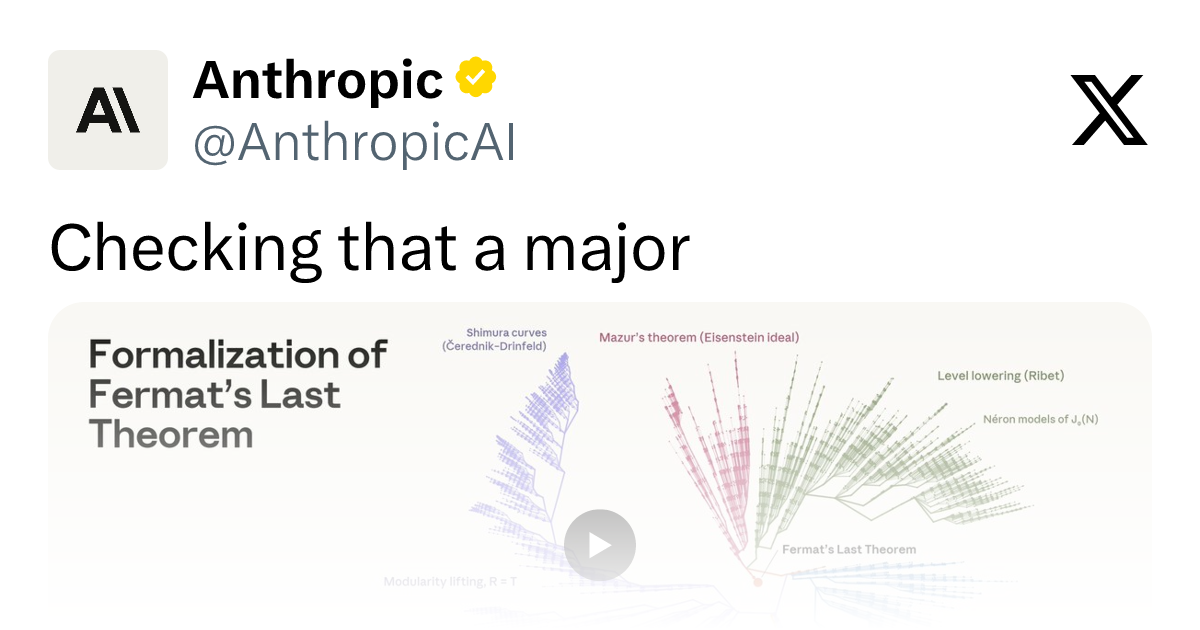
Claude Completes First Formal Proof of Fermat's Last Theorem: A Record-Breaking 13 Million Lines of Lean Code
Anthropic's Claude completes the first formal proof of Fermat's Last Theorem in over 13 million lines of Lean code — the largest ever — plus 29,000+ subsidiary theorems, opening new paths for AI-assisted math verification.

Microsoft Copilot Enters the NFL: How AI Is Supporting On-Field Decision-Making
Microsoft Copilot and Excel are entering NFL sidelines and booths, helping Seahawks analysts and coaches with real-time game decisions. Here's what it means for AI in pro sports.
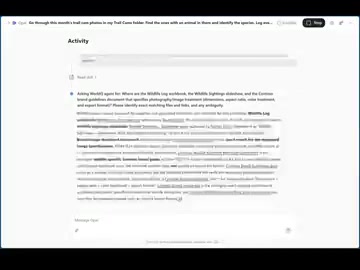
Microsoft Copilot Goes Autopilot: From Assistant to Autonomous Long-Running Task Execution
Microsoft is evolving Copilot into autonomous Autopilots powered by Opal and Windows 365 cloud PCs, enabling end-to-end completion of long-running tasks without human intervention.