2026 AI Coding Tools Comparison: Claude, ChatGPT, Gemini — Which Is the Best?
2026 comparison of five AI coding tools: Claude is best for pure coding, ChatGPT is the most versatile, Gemini and DeepSeek lead on value.
Based on public pricing, official documentation, and hands-on testing in October 2026, this article compares five AI coding tools: ChatGPT, Claude, Gemini, DeepSeek, and GitHub Copilot. The core conclusion: with no sponsorships or paid rankings, the real winner is the one with the lowest cost to fix. Claude Code scored highest overall in a 400-coding-task study, completed the most real-repo tasks, and required the least code cleanup, making it the top choice for pure coding; ChatGPT Codex is fast and capable on well-defined tasks, ideal for integrated coding, writing, and research; Gemini stands out for its generous free tier and Google ecosystem but is inconsistent; GitHub Copilot has the fastest autocomplete, but since June 2026 chat and agent work are credit-metered; DeepSeek is the budget pick with extremely low prices and open weights, though its hosted service carries data compliance risks. The article stresses that all tools can generate code that looks correct but contains bugs, so you must review line by line and run tests.
2026 AI Coding Tools Comparison: Claude, ChatGPT, Gemini — Which Is the Best?
Most developers have an AI assistant by now, but nearly half of them may be paying for the wrong one. Based on public pricing, official documentation, and hands-on testing in October 2026, I compared five mainstream AI coding tools — ChatGPT, Claude, Gemini, DeepSeekAd, and GitHub Copilot. No sponsorships, no paid rankings — just which tool leaves you with the fewest fixes in real projects.
First, an honest caveat: every one of these tools can generate code that looks perfect but actually fails. They invent non-existent functions, miss security vulnerabilities, and break code that previously worked. The real winner isn't the one with the flashiest demo — it's the one with the lowest cost to fix.
ChatGPT vs Claude: Two Leaders, Two Paths
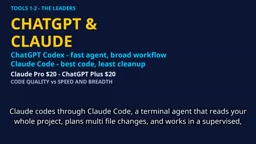
ChatGPT codes through the Codex agent, which lives in the web app, CLI, editor extensions, and even on mobile. Ask it to fix a bug, and it can read multiple files, make changes, and run tests. It's fast and strong on well-defined tasks like writing tests, generating boilerplate, and quick fixes. But on messy, unfamiliar codebases, its depth runs out — the first answer sounds confident but may completely miss your project's actual structure. On pricing: a limited free tier, an $8/month Go plan in some regions, and a $20/month Plus plan that includes Codex. Pro tiers are reported across multiple sources as ranging from $100 to $200, with one source even listing a $500 tier.
Claude codes through Claude Code, a terminal agent that reads the entire project, plans multi-file changes, and works in a supervised, step-by-step manner. In an October 2026 study of 400 coding tasks, Claude scored highest overall, and Claude Code completed the most real-repo tasks of any tested agent. Developer praise is consistent: it understands large codebases, follows your conventions, and writes code that needs less cleanup.
The catch is usage limits. On the $20/month Pro plan, heavy coding sessions can hit the cap quickly, which is why serious daily users upgrade to the $100 or $200 Max tiers. Pro itself is $20/month, or $17/month billed annually.
The verdict on this pair: in this test, Claude wrote the best code. ChatGPT is faster and broader — a better fit if your AI handles 10 tasks at once and coding is just one of them.
The Codex agent is not a single model but OpenAI's agent framework built around coding tasks: it connects the web app, command-line tool (CLI), editor extensions, and mobile, autonomously reading multiple files, making edits, and running tests — a closed loop of "perceive, modify, verify." Similarly, Claude Code is Anthropic's terminal-native agent that emphasizes supervised, step-by-step work: plan first, then act, with every step reviewable by the developer. Both represent a new form: AI is no longer just autocomplete or Q&A, but can operate on real repos, call tools, and take on multi-step tasks. Understanding this distinction helps you judge the cost difference between "agentic" and "completion" tools in real projects.
Gemini and GitHub Copilot: The Power of Platform Ecosystems
Gemini codes through the Gemini app, Gemini CLI, and Gemini Code Assist inside the editor. Its strengths are a huge context window, strong data and SQL handling, and a genuinely generous free tier — reports say the free personal version of Code Assist handles thousands of code requests per day. It's also deeply integrated into Google Cloud, Gmail, and Docs. Google AI Pro is priced at $19.99/month, with a cheaper AI Plus tier at around $5. Code Assist for Teams is $19 per user per month billed annually, or about $23 monthly.
Its honest weakness is consistency. Gemini can be stunning on one task and inexplicably careless on the next. Pricing for the top Ultra tier is muddled across sources, ranging from about $100 to $250 per month.
GitHub Copilot is different from all of the above. It lives in your editor, completing code and suggesting the next edit as you type, and now adds chat, code review, and cloud agents. For pure autocomplete, nothing is faster. Pricing changed significantly in June 2026: the sticker prices stayed the same — $10/month for Pro, $39/month for Pro Plus, $19 per user for Business, $39 per user for Enterprise — but chat and agent work now draw from a monthly AI credit pool. Heavy agent users report their code quality is worse than before and their bills far exceed the old flat prices. Completions remain unlimited, and light users may never notice.

Gemini is the best choice for free and the Google ecosystem. GitHub Copilot is the best autocomplete, but watch the credit meter.
Context window refers to the total number of tokens a model can "see" and process at once, including code files, conversation history, and instructions. One of Gemini's advantages is its huge context window, which can take in an entire code repository or a long document at once, reducing the need for repeated slicing and context loss. Tokens are the basic unit of text a model processes, roughly a fraction of an English word or a single Chinese character, and API pricing, context length limits, and credit consumption are all measured in them. GitHub Copilot's "AI credit pool" mentioned above is measured in tokens or requests, which is why heavy agent users feel their bills exceed the flat price. Understanding these two concepts is essential to accurately comparing each tool's pricing and limits.
DeepSeek: The Price Disruptor and Its Costs
DeepSeek is the cheapest option in this group. Chat on the web and app is free, no subscription required. The models are open-weight — you can even run them on your own hardware. API pricing is extremely low: current flagship models cost about $0.66 to $1.32 per million input tokens (depending on peak or off-peak hours) and about $2 to $4 per million output tokens, with a much faster Flash model at a fraction of that. On coding and math tasks, DeepSeek has repeatedly approached top-model scores at a fraction of the price.
The costs are real. There's no polished editor agent like Claude Code or Codex. The ecosystem is thin. Hosted service data is stored in China and governed by its privacy policy, which has led multiple governments to restrict its use on official devices. Never paste proprietary or client code into a hosted chat. If you have the hardware and skills, self-hosting eliminates this particular risk.

Open-weight models are those whose trained parameters can be downloaded publicly, letting anyone deploy and run them on their own hardware — in contrast to closed-source models offered only via API. For developers, the significance of open weights is: data stays local, you can fine-tune freely, and you can avoid the compliance risks of hosted services. DeepSeek entered the market with open weights plus extremely low API pricing, but it also offers a hosted chat service whose data storage is governed by local law. That's why the article stresses that "self-hosting eliminates this particular risk" — provided you have enough GPU hardware and operational capability. This also explains why government device restrictions target the hosted service rather than the model itself.
The Honest Limitations All Coding AIs Share
To put it bluntly: every tool in this article can generate code that compiles, looks fine at a glance, yet still contains security vulnerabilities or subtle bugs that only surface in production. Benchmarks measure clean test problems, not your 10-year-old codebase.
The safe habit is simple: review every line of code as if reviewing a fast, confident junior developer. Run the tests, and never ship code you don't understand.
Benchmarks are standardized problem sets used to evaluate model capabilities, such as the 400-coding-task study mentioned in the article. Their value lies in reproducibility and cross-comparison, but their limitations are equally obvious: problems are usually well-defined, have few dependencies, and have standard answers, whereas real codebases are often old, heavily coupled, and have obscure conventions. A high benchmark score doesn't mean the model understands the historical baggage left in your project a decade ago. In addition, security vulnerabilities (such as injection, privilege escalation, hardcoded secrets) often don't surface during compilation and basic testing — only under specific inputs or in production. Benchmark scores should therefore be treated as a reference, not a guarantee; human review and testing remain the last line of defense.
Which One Fits You? Match It to Real Work
If you code for a living and want the strongest agent on real projects, choose Claude. Claude Code on the Pro plan is the best $20 in this test, and heavy users should budget for the Max tier in advance rather than being caught short by limits.
If you want an assistant that handles coding, writing, research, and explanations in a single chat, choose ChatGPT. Codex is fast and capable, and everything around coding is deepest here.
If you're learning, prototyping, or on a tight budget in the Google world, choose Gemini. Start with the generous free tier and upgrade to the $19.99/month AI Pro only when the limits actually bite.
If you live in your editor and GitHub all day and mainly want excellent autocomplete and PR help, choose GitHub Copilot. Pro is $10/month — just watch the AI credits for chat and agent work.
If cost is the whole problem and the code isn't sensitive, try DeepSeek's free version first. Just keep company code, client code, and secrets away from the hosted service.

Pricing and Value: An Honest Accounting
The free stack costs $0 and is stronger than ever. Gemini's free coding tier is generous, DeepSeek chat is free, and the free tiers of ChatGPT and Claude cover casual questions and small scripts. For light use, paying is optional.
The $20 stack is where most developers land. Claude Pro and ChatGPT Plus are both $20/month, and Google AI Pro is one cent cheaper at $19.99. At this level, you're not choosing on price but on code quality, speed, or ecosystem.
The traps are in the middle tiers and the meters. Claude's Pro limits push daily agent users toward the $100 or $200 Max tier. OpenAI's Pro tiers are reported across sources as ranging from $100 to $500. Since June, GitHub Copilot has metered chat and agent work with credits, so the $10 plan is no longer a guaranteed $10 monthly bill for heavy users. DeepSeek is the exception — pennies per task on the API, if you accept the tradeoffs above. Pick one primary tool, read its limit documentation, and cancel the rest.
The Final Verdict
Based on public pricing, official documentation, and October 2026 coding research, no one paid to enter this ranking.
If you buy only one coding AI, buy Claude Pro at $20/month (or $17/month billed annually). Claude Code is included, it completed the most real-repo tasks in recent head-to-head testing, and its code consistently needed the least cleanup. To the question "which AI is best for coding in 2026," Claude is the answer.
The best all-rounder is ChatGPT Plus. If you code, write, and research in one place, Codex is fast and the workflow around it is unmatched.
The best budget path is Gemini free, then AI Pro, plus DeepSeek free for non-sensitive work. GitHub Copilot's in-editor autocomplete is worth $10 while you're working, but don't treat it as a full agent replacement.
The final honest truth: no coding AI deserves blind trust, including the winner. Review diffs, run tests, and understand what you ship. Pricing and features were verified in October 2026 and change often — verify them yourself before paying.
Related articles

OpenAI Partners with Shield: How the Astra Agent Revolutionizes IT Troubleshooting
OpenAI and Shield launch the Astra agent, which autonomously logs into computers and legacy systems to fix IT issues in real time, 35-40% faster than traditional models, with humans involved only when judgment is needed.

iPhone Duo Battery Life Tested: One Charge a Day Is Unavoidable, and the Large Screen Is the Culprit
iPhone Duo battery test: heavy use needs at least one charge a day, and about 30% remains after 6.5 hours of screen-on time. How often the large screen is unfolded is key; a MagSafe battery pack helps, and long-term degradation is also worth watching.

Kimi K3.1 Pro Open-Sourced: 2.8 Trillion Parameters Close In on Opus
Moonshot releases the open-source MoE model Kimi K3.1 Pro, with 2.8T total parameters and 104B activated, trailing Opus 5.5 by under 1 point on Terminal Bench 4.0.