2026 Nobel Prize Explained: Light-Controlled Brains, Chiral Molecules, and Neutrino Astronomy

2026 Nobel Prize explained: optogenetics, chiral molecules, and neutrino astronomy reshape understanding.
This article explains the 2026 Nobel Prizes in Physiology or Medicine, Chemistry, and Physics. It covers optogenetics and light control of neurons via ChR2, chiral molecules and enantiomers including nonlinear effects and autocatalysis, and neutrino astronomy with the Antarctic IceCube Observatory using Cherenkov radiation to trace blazars.
2026 Nobel Prize Explained: Light-Controlled Brains, Chiral Molecules, and Neutrino Astronomy
Every year, the Nobel Prize shines a spotlight on discoveries that seem remote from everyday life yet are quietly reshaping our understanding of the world. In 2026, the Physiology or Medicine Prize, the Chemistry Prize, and the Physics Prize happened to showcase three strikingly different yet equally stunning paths of research — from finding a switch to control the brain in a tiny alga, to understanding life's selectivity through the "left hand and right hand" of molecules, to capturing messengers from the depths of the cosmos beneath Antarctic ice. This article breaks down the core logic of these three Nobel-winning achievements using plain language and everyday analogies.
Physiology or Medicine Prize: Controlling Neurons with Light
Imagine holding a remote control in your hand. You press a button, and a specific neuron in the brain is "lit up" or "switched off." This sounds like science fiction, but modern science has already made it a reality in the laboratory. The technique is called optogenetics, and the 2026 Nobel Prize in Physiology or Medicine was awarded to three scientists who made key contributions in this field: Karl Deisseroth, Peter Hegemann, and Georg Nagel.
Why is this technique needed?
The human brain is made up of hundreds of millions of neurons that communicate with each other through electrical and chemical signals. Learning, memory, fear, movement — behind every behavior, different neural circuits are at work. The problem is this: when we observe that certain neurons become active during fear, does that prove they are the cause of fear? No. Two things happening at the same time does not mean one causes the other.
What scientists need is not just to "observe" the brain, but to precisely control the activity of specific cells, so as to truly understand causation.
Action potential is the basic unit of signal transmission by neurons, and can be understood as a brief, rapid reversal of voltage across the cell membrane: at rest, the inside of a neuron is negatively charged relative to the outside; when stimulation is strong enough, ion channels in the membrane open in sequence, sodium ions rush in and potassium ions flow out, causing the membrane potential to momentarily flip from negative to positive and then quickly recover. This "all-or-none" pulse travels along the axon and triggers the release of chemical neurotransmitters at the synapse. Optogenetics can control neural activity precisely because it directly alters the membrane potential through channel proteins such as ChR2, artificially triggering or suppressing action potentials. Understanding this helps clarify: controlling neurons does not equal controlling thought; it only intervenes in the most basic electrochemical events at the cellular level.
From a single alga to a brain switch
The story begins with a single-celled green alga called Chlamydomonas. This tiny organism can sense light and adjust its direction of movement accordingly. Research by Hegemann, Nagel, and others revealed a key light-sensitive protein — Channelrhodopsin-2 (ChR2).
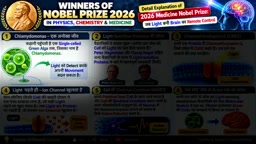
Think of ChR2 as a door embedded in the cell membrane: when light of a specific wavelength hits it, the door opens, allowing positively charged ions to flow into the cell and changing the cell's electrical state. If conditions are right, the neuron will fire an action potential — in other words, it has been "activated."
The breakthrough by Deisseroth's team was to introduce this type of light-sensitive protein into specific mammalian neurons through genetic methods, and then use light to precisely control their activity. The light-sensing mechanism of a single alga thus became a powerful research tool for neuroscience.
It is important to note that this is not simply a matter of shining light on the brain to control any cell at will. The target cells must first be engineered to be light-sensitive, and the light must precisely reach the correct location.
Here, gene delivery is usually accomplished with viral vectors, such as adeno-associated virus (AAV). Researchers package the gene encoding ChR2 into a virus, then inject the virus into the target brain region; the virus infects local neurons and causes them to express this light-sensitive protein. To achieve specificity, scientists often use promoters or the Cre-lox recombination system so that ChR2 is expressed only in specific types of neurons. Then, through an implanted optical fiber, laser or LED light is delivered to that brain region, and only neurons within the illuminated area are activated or inhibited. The whole process means that optogenetics experiments require a combination of genetic manipulation, optical devices, and surgery — it is not as simple as just "shining a light."
What can this be used for?
The application prospects of optogenetics span multiple directions: in basic neuroscience, it can reveal causal links between specific neural circuits and behavior; in the field of neurological disorders, conditions involving abnormal brain circuits such as epilepsy and Parkinson's disease can be studied through this technique; in research on emotion and behavior, scientists can directly test whether activation of certain neurons triggers specific behavioral changes.
But one thing must be made clear: proving the feasibility of a technique and turning it into a mature treatment are two completely different things.
Chemistry Prize: The Left and Right Hands of Molecules
Hold out your hands. Your left and right hands are mirror images of each other, but no matter how you rotate them, the left hand can never completely overlap with the right. A similar phenomenon exists in chemistry — two mirror-image forms of certain molecules are called enantiomers, and this property is called chirality.
Why do mirror-image molecules have different effects?
It is like the relationship between a key and a lock: two keys may be almost identical in material and shape, but their teeth are oriented in opposite directions, and only one can open the lock. Interactions between biological molecules are also highly specific. One chiral form of a molecule may produce a certain effect with a biological target, while its mirror form may have a completely different effect — though of course, it is not always one "good" and one "bad."
Henry Kagan and nonlinear effects
Henry B. Kagan's contribution was revealing nonlinear effects: under certain conditions, a tiny difference in catalyst chirality can have a huge impact on the ratio of the two enantiomers in the final product.
Use a cricket match as an analogy: two closely matched teams start with one side gaining only a slight advantage, but as conditions change over the course of the match, this small gap may ultimately lead to a lopsided score. The driving force behind this is the complex feedback of reaction mechanisms and intermolecular chemical interactions, not magic.
Autocatalysis and life's chiral preference
The most fascinating part of the story has to do with autocatalysis. Autocatalysis refers to the phenomenon in which the reaction product itself acts as a catalyst, driving the same reaction forward. Think of a snowball rolling down a hill: it keeps getting bigger and faster along the way.
In this type of reaction, one chiral product promotes the generation of more of its own kind, so an initially tiny molecular asymmetry is continuously amplified, potentially resulting in one enantiomer far outnumbering the other. In 1990, Japanese scientists demonstrated this type of autocatalytic reaction, in which one chiral form of a molecule promotes the continued generation of its own type.
Real-world applications
What do these findings have to do with daily life? In the pharmaceutical field, being able to selectively produce target chiral molecules in large quantities is extremely valuable for new drug development. In the field of flavors and fragrances, take the molecule carvone as an example: its two enantiomers smell completely different — one smells like spearmint, and the other like caraway. In advanced materials and chemical research, chiral control is equally critical.

But these discoveries by themselves cannot automatically make any drug safe. Drug safety must be ensured through independent testing and clinical trials.
The broader question is this: both mirror forms objectively exist in nature, so why do living organisms tend to use one of them? For example, the amino acids in human proteins mainly exist in one specific chiral form. Scientists use the term homochirality to describe this preference. The work of Kagan and his colleagues helps us understand how chemical reactions amplify tiny deviations, but the complete answer to the origin of life remains unknown to this day.
Physics Prize: Neutrino Astronomy Beneath Antarctic Ice
Neutrinos are fundamental particles with no electric charge, extremely low mass, and almost no interaction with matter. As an analogy: it is like an invisible person who can walk through a crowd without touching anyone at all. The Sun, supernovae, and active galactic nuclei all produce large numbers of neutrinos, and they arrive at Earth carrying information about distant cosmic events.
The problem is: if they hardly interact with matter, how can we detect them?
The IceCube Observatory
The answer lies in Antarctica. Scientists deployed the IceCube Neutrino Observatory in the Antarctic ice sheet, installing extremely sensitive arrays of optical sensors at great depths. The core idea of the project came from Francis Halzen: collisions between neutrinos and matter are extremely rare, so the detector must be large enough — using the entire ice sheet as the detection medium.
Cherenkov radiation: blue flashes in the ice
Neutrinos themselves are invisible. But occasionally one interacts with an atomic nucleus in the ice, producing charged particles. When these charged particles travel through the ice faster than the speed of light in that medium, they produce an effect similar to a sonic boom — Cherenkov radiation, emitting a faint blue glow.
IceCube's sensors capture the arrival times and intensities of these blue photons, and scientists use this to infer the direction and energy of the neutrino.
The physical principle of Cherenkov radiation is this: when a charged particle moves through a medium faster than the phase velocity of light in that medium, atoms in the medium become polarized and then, within an extremely short time, relax and emit coherent photons, forming a cone-shaped radiation of light. The speed of light in a vacuum is about 300,000 kilometers per second, but in ice or water it is reduced by about one quarter, so high-energy particles can potentially travel "faster than light" through the medium. The intensity and direction of the radiation are closely related to the particle's energy and direction of travel. IceCube's optical sensors reconstruct the tracks of charged particles precisely by measuring the arrival times and distribution of these blue photons, and from that infer the direction and energy of the original neutrino.
Tracing the cosmic source
The unique value of neutrino astronomy lies in this: neutrinos carry no electric charge, so they are not deflected by interstellar magnetic fields, and their direction of travel points directly back to the source. This stands in sharp contrast to charged particles such as cosmic rays, which are continuously bent by magnetic fields during propagation and lose information about their point of origin.
Using signals from IceCube combined with observations from other telescopes, astronomers once traced a high-energy neutrino event to what may have been a distant blazar — a type of active galactic nucleus with a supermassive black hole at its center and powerful jets of matter shooting outward.
For centuries, humanity mainly understood the universe through light, and later learned to use electromagnetic signals such as radio waves and X-rays. Neutrino astronomy opens a completely new observational window, allowing scientists to detect extreme high-energy cosmic events that are difficult to capture by traditional means.
The Common Logic Behind These Three Discoveries
Looking back at these three Nobel-winning achievements, a common thread emerges: from the most inconspicuous corners of nature, tools or insights are extracted that transform an entire discipline.
Optogenetics originated from the light-sensing ability of a single-celled green alga; the key insight of chiral chemistry came from a persistent inquiry into the "shape" of molecules; neutrino astronomy was built on the long-term pursuit of a particle that is almost impossible to detect.
Sometimes the greatest breakthroughs in science begin with a seemingly trivial question. And turning the results of basic research into practical applications often requires a long road of validation in between — this applies equally to the clinical prospects of optogenetics, the safety of chiral drugs, and further exploration in neutrino astronomy.
One-line Summary
2026 Nobel Prize explained: optogenetics, chiral molecules, and neutrino astronomy are three discoveries reshaping our understanding.
Paragraph Summary
This article explains the 2026 Nobel Prize in Physiology or Medicine, Chemistry, and Physics. The Physiology or Medicine Prize was awarded to three scientists in optogenetics, who used the algal light-sensitive protein ChR2 to achieve precise light control of specific neurons, providing a tool for causal studies of neural circuits. The Chemistry Prize focuses on chiral molecules and enantiomers, with Kagan revealing how nonlinear effects and autocatalysis amplify tiny molecular deviations and explain life's preference for a particular chirality. The Physics Prize highlights neutrino astronomy, in which the Antarctic IceCube Observatory uses Cherenkov radiation to detect high-energy neutrinos from deep space and trace extreme celestial objects such as blazars. Together, these three achievements show that basic research often begins with inconspicuous natural phenomena and ultimately opens entirely new disciplinary directions.
Related articles

iPhone Duo Battery Life Tested: One Charge a Day Is Unavoidable, and the Large Screen Is the Culprit
iPhone Duo battery test: heavy use needs at least one charge a day, and about 30% remains after 6.5 hours of screen-on time. How often the large screen is unfolded is key; a MagSafe battery pack helps, and long-term degradation is also worth watching.

Kimi K3.1 Pro Open-Sourced: 2.8 Trillion Parameters Close In on Opus
Moonshot releases the open-source MoE model Kimi K3.1 Pro, with 2.8T total parameters and 104B activated, trailing Opus 5.5 by under 1 point on Terminal Bench 4.0.

Costco Tech Price Guessing: Are Monitors, Keyboards, Mice, and Bose Speakers Worth It?
A YouTube blogger guesses prices of Costco tech products: 2K 180Hz monitor, Logitech keyboard and mouse, Bose speaker, and CyberPower UPS, revealing warehouse-store selection and brand premium.