2026 Nobel Prize in Chemistry Announced: The Mystery of Molecular Chirality Solved
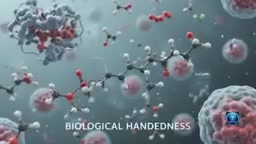
The 2026 Nobel Prize in Chemistry goes to Kagan and Soai for their foundational work on molecular chirality, non-linear effects, and autocatalysis.
The 2026 Nobel Prize in Chemistry was awarded to Henri B. Kagan and Kenso Soai for their pioneering contributions to asymmetric organic synthesis and molecular chirality. Kagan proposed the non-linear effect in 1986, revealing the non-intuitive amplification relationship between catalyst chiral purity and product selectivity; Soai discovered the first chiral autocatalytic reaction in 1995, proving that an extremely small chiral bias can be exponentially amplified through autocatalysis. These two discoveries corroborate each other and provide key experimental evidence for explaining the origin of homochirality in the molecules of life. The research has also profoundly influenced the pharmaceutical industry and promoted the development of new materials. From theoretical proposal to experimental verification and then to Nobel recognition, nearly forty years have passed, highlighting the value of long-term exploration in basic science.
A Century-Old Puzzle That Has Baffled Science
Why are the amino acids that make up life almost entirely in the "left-handed" form? Why does nature show such a strong preference at the molecular level? This question, known as "molecular chirality," has long been one of the most fascinating mysteries at the intersection of chemistry and biology.
Chiral molecules are like a person's left and right hands—they look similar but cannot be perfectly superimposed. In the chemical world, many molecules exist in two mirror-image forms: left-handed (L-type) and right-handed (D-type). According to a YouTube video, the 2026 Nobel Prize in Chemistry was awarded to two scientists, Henri B. Kagan and Kenso Soai, in recognition of their pioneering contributions to asymmetric organic synthesis—research that directly addresses the deepest chemical selection mechanism behind the origin of life.
Chirality is a fundamental geometric concept in chemistry and physics, referring to the property of an object or molecule that cannot be fully superimposed on its mirror image through rotation or translation—just as a left hand and a right hand are mirror images of each other but cannot be overlapped. At the molecular level, these mirror-image isomers are called enantiomers, and they are usually labeled L (left-handed) and D (right-handed). Enantiomers have nearly identical physical properties in an achiral environment, but in a chiral environment (such as enzymes and receptors in living organisms) they may behave completely differently. Life molecules such as amino acids and sugars exist almost exclusively in one enantiomeric form, a phenomenon known as homochirality, which is one of the central puzzles in research on the origin of life. Understanding chirality is not only a fundamental topic in chemistry, but also directly relevant to drug design, materials science, and theories of the origin of life.
The Two Laureates and Their Key Discoveries
Kagan: The Discovery of the Non-Linear Effect
According to analyses from multiple science channels on Bilibili and YouTube, French chemist Henri B. Kagan proposed the concept of the "Non-Linear Effect" in 1986. This discovery revealed a counterintuitive phenomenon: the relationship between the optical purity of a catalyst and the ratio of the final product is not a simple linear correspondence.
What does this mean? Even an extremely small chiral imbalance in the catalyst may be amplified to an entirely new level during the reaction. It is like the butterfly effect playing out at the molecular scale—a tiny initial deviation ultimately leads to a huge difference in outcome.
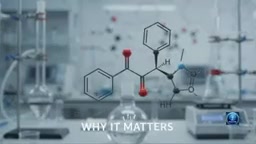
The Non-Linear Effect is a counterintuitive phenomenon in asymmetric catalysis, first systematically described by Kagan in 1986. In an ideal linear relationship, the enantiomeric excess (ee value) of the catalyst should be roughly equal to the ee value of the product; but real systems often deviate from this expectation, showing amplification or reduction. When the product ee value is higher than the catalyst ee value, this is called a positive non-linear effect, which usually arises from aggregation or interactions among catalyst molecules of different chirality, causing the dominant chiral species to be preferentially utilized. This concept is crucial for understanding chiral amplification and the origin of homochirality in life, because it shows that even if the initial chiral bias is very small, it may be significantly amplified through the catalytic cycle.
Soai: A Milestone in Autocatalytic Reactions
In 1995, Japanese scientist Kenso Soai discovered the world's first chiral chemical reaction exhibiting autocatalysis. In this reaction, a molecule can "copy" itself, generating a mirror-image form completely identical to itself.
Even more astonishingly, Soai proved that even starting from an extremely tiny chiral seed, exponential amplification can be achieved through an autocatalytic process. This provided strong experimental evidence for explaining why nature chooses a single chirality—once a certain chiral direction gains a slight advantage, the autocatalytic mechanism can rapidly lock in that advantage.

Autocatalysis refers to the process in which the reaction product itself acts as a catalyst to accelerate its own formation, and it is often regarded in theories of the origin of life as a prelude to self-replication. Chiral autocatalysis further requires that the product preferentially catalyze the formation of molecules with the same chirality as itself, thereby enabling the self-propagation of chiral information. The Soai reaction is the first organic reaction confirmed to have chiral autocatalytic properties: diisopropylzinc and an aldehyde generate a chiral alcohol under the catalysis of a small amount of chiral pyridyl alcohol, and the product itself can catalyze subsequent reactions, causing the ee value to increase exponentially. This discovery provides direct experimental evidence for "how a tiny initial chiral bias can be amplified to a macroscopic level," and is a key model for understanding the origin of homochirality in life.
The Non-Linear Effect: How Tiny Deviations Are Amplified
The key to understanding this research lies in grasping the core logic of the "Non-Linear Effect." In traditional understanding, if 60% of the catalyst is left-handed, the product should also be roughly 60% left-handed. But Kagan's discovery broke this intuition.
In fact, there may be a dramatic non-linear relationship between the chiral purity of the catalyst and the product—60% chiral purity may produce 90% or even higher product selectivity. Soai's reaction pushed this effect to the extreme: in an autocatalytic cycle, the initial tiny chiral bias is not only maintained, but continuously amplified in each round of reaction.
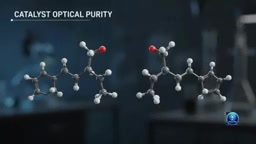
These two discoveries corroborate and complement each other. Kagan revealed the existence and mechanism of the non-linear effect, while Soai provided the most dramatic experimental proof. As many chemistry science creators on Bilibili have pointed out, these two bodies of work together constitute the theoretical cornerstone for understanding the origin of homochirality in life.
From the Laboratory to Reality: Applications That Change the World
A Revolution in the Pharmaceutical Industry
The most direct impact of this research is felt in the pharmaceutical field. Many drugs have completely different biological activities in their left- and right-handed versions—one may be a healing medicine, while the other may be ineffective or even harmful. The famous historical thalidomide incident is a typical case of a chiral drug tragedy.
The Soai reaction and Kagan's asymmetric synthesis methods allow chemists to precisely control the chiral direction of reactions and efficiently prepare single-enantiomer drug molecules. This not only improves drug safety but also greatly reduces production costs.
Breakthroughs in Materials Science
According to analysis in YouTube videos, this technology also has enormous potential in the fields of organic semiconductors and display technology. When scientists can precisely control the shape and "chirality" of molecules, they can design new materials with specific optical and electronic properties, such as circularly polarized luminescent materials and high-performance organic light-emitting diodes.
The Value of Basic Science
The awarding of the 2026 Nobel Prize in Chemistry to Kagan and Soai is a powerful affirmation of the long-term value of basic science. Their research began with curiosity about a fundamental question in nature—why did life choose one chirality?—but ultimately gave rise to practical methods that influence multiple industries, including pharmaceuticals, materials, and display technology.
From the proposal of the theory in 1986 to experimental verification in 1995, and now to recognition with the Nobel Prize, this path has taken nearly forty years. It reminds us that scientific discoveries that truly change the world often arise from a persistent inquiry into the most basic questions.
One-line Summary
2026 Nobel Prize in Chemistry awarded to Kagan and Soai for their foundational work on molecular chirality, non-linear effects, and autocatalysis. Translated Notes
Paragraph Summary
The 2026 Nobel Prize in Chemistry was awarded to Henri B. Kagan and Kenso Soai for their pioneering contributions to asymmetric organic synthesis and molecular chirality. Kagan proposed the non-linear effect in 1986, revealing the non-intuitive amplification relationship between catalyst chiral purity and product selectivity; Soai discovered the first chiral autocatalytic reaction in 1995, proving that an extremely small chiral bias can be exponentially amplified through autocatalysis. These two discoveries corroborate each other and provide key experimental evidence for explaining the origin of homochirality in the molecules of life. The research has also profoundly influenced the pharmaceutical industry, making the efficient and safe synthesis of single-enantiomer drugs possible, and has promoted the development of new materials such as circularly polarized luminescent materials. From theoretical proposal to experimental verification and then to Nobel recognition, nearly forty years have passed, highlighting the value of long-term exploration in basic science.
Related articles

iPhone Duo Battery Life Tested: One Charge a Day Is Unavoidable, and the Large Screen Is the Culprit
iPhone Duo battery test: heavy use needs at least one charge a day, and about 30% remains after 6.5 hours of screen-on time. How often the large screen is unfolded is key; a MagSafe battery pack helps, and long-term degradation is also worth watching.

Kimi K3.1 Pro Open-Sourced: 2.8 Trillion Parameters Close In on Opus
Moonshot releases the open-source MoE model Kimi K3.1 Pro, with 2.8T total parameters and 104B activated, trailing Opus 5.5 by under 1 point on Terminal Bench 4.0.

Costco Tech Price Guessing: Are Monitors, Keyboards, Mice, and Bose Speakers Worth It?
A YouTube blogger guesses prices of Costco tech products: 2K 180Hz monitor, Logitech keyboard and mouse, Bose speaker, and CyberPower UPS, revealing warehouse-store selection and brand premium.