2026 Nobel Prize in Chemistry: Chiral Amplification Mechanism Solves the Mystery of Life's Origin

The 2026 Nobel Prize in Chemistry reveals how tiny chiral biases are amplified through autocatalysis to determine the chirality of life's molecules.
The 2026 Nobel Prize in Chemistry was awarded to Henri Kagan and Kensō Soai for discovering and explaining the chiral amplification mechanism. Chirality is a geometric property in which molecules are mirror images that cannot be superimposed, and living organisms choose only one configuration. Kagan and Soai proved that tiny initial chiral biases can be amplified through autocatalytic positive feedback to extremely high enantiomeric excess, with the Soai reaction raising an initial purity of 54% to nearly 100%. This discovery provides a chemically feasible explanation for single-chirality selection in the origin of life and has profoundly influenced strategies for synthesizing single-enantiomer drugs in the pharmaceutical industry. Although its applicability in the real early Earth environment remains controversial, this work opened a key door to understanding the chiral origin of life.
In the laboratory, most chemical reactions produce a 50-50 mixture of left-handed and right-handed molecules, yet life on Earth chose only one of them. This seemingly simple preference has puzzled scientists for nearly two centuries. The 2026 Nobel Prize in Chemistry was awarded to Henri Kagan and Kensō Soai precisely because they found the answer to this question—how a tiny, almost negligible initial bias can be amplified layer by layer through chemical mechanisms, ultimately determining the molecular chirality of the entire biosphere.
What Is Molecular Chirality, and Why Is It So Important?
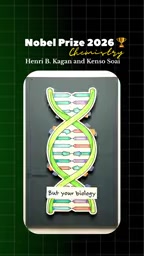
Chirality is a geometric property of molecules: the same chemical formula can exist in two mirror-image configurations in space that cannot be superimposed. Just like your left hand and right hand, they appear symmetrical yet can never fully overlap. Such molecules are called left-handed (L-form) and right-handed (D-form) molecules.
The problem is that conventional chemical synthesis often produces a 50-50 mixture of both chiral forms, known as a racemic mixture. But biological systems are extremely selective: the sugars in our DNA are right-handed, while the amino acids in proteins are almost all left-handed. This single-chirality preference is not a trivial detail—it directly determines whether a drug molecule can properly bind to its target in the body.
In other words, if the molecules that make up life lost this chiral consistency, the entire biochemical system would fail to function. So how did nature initially make its choice?
Enantiomeric excess (ee) is the core metric for quantitatively describing the purity of a chiral mixture, defined as the ratio of the difference between the mole fractions of the two enantiomers to their sum, usually expressed as a percentage. For example, if a mixture contains 77% right-handed molecules and 23% left-handed molecules, the ee value is 54%. An ee of 0% represents a racemic mixture with equal amounts of both chiral forms, while an ee of 100% represents complete single chirality. This concept is crucial in chiral chemistry because the biological activity of drugs is often directly related to the ee value: the higher the ee, the higher the purity of the target chiral molecule, and the better the controllability of side effects. Kagan himself was the key figure in systematically studying the nonlinear relationship between ee and reactions—his "Kagan model" explained why the product ee of certain catalytic reactions deviates from the catalyst's ee. This is one of the theoretical foundations of the chiral amplification phenomenon.
From 51% to Overwhelming Dominance: The Core Mechanism of Chiral Amplification
Kagan and Soai's research revealed the core of the answer: chiral amplification.
Imagine that in the primordial soup of early Earth, the number of right-handed molecules was only slightly more than left-handed molecules—say 51% versus 49%. Intuitively, this微弱 advantage should persist. But that is not what happens. In certain specific chemical systems, this initial bias is automatically amplified, ultimately forming extremely high enantiomeric excess.
The key mechanism is: molecules of one chirality can not only catalyze their own replication, but under certain conditions can also actively suppress the formation of the other chirality. This means the initial small bias is not diluted but instead continuously expands during the reaction, forming a self-reinforcing positive feedback loop.
The Soai reaction is the most classic experimental evidence for this mechanism. In this reaction, an extremely small initial chiral imbalance, after multiple rounds of catalytic cycles, can produce over 99% enantiomeric excess. An initial chiral purity of 54% can ultimately climb to nearly 100%. This amplification effect corresponds mathematically to nonlinear dynamic behavior—the relationship between reaction rate and catalyst concentration is not simply linear but exhibits exponential amplification characteristics.
Autocatalysis refers to the process in which the reaction product itself acts as a catalyst to accelerate its own formation, and it is the core chemical mechanism enabling chiral amplification. In the Soai reaction, the product molecule (a chiral alcohol) can combine with an organozinc reagent to form an active catalyst, promoting the generation of more homochiral products. More critically, this catalytic process is selective for its own chirality: the right-handed product preferentially catalyzes the formation of right-handed products while suppressing the formation of left-handed products. This combination of "positive feedback + negative feedback" constitutes a nonlinear dynamic system. From a mathematical perspective, the reaction rate exhibits a higher-order dependence on product concentration, causing tiny initial asymmetries to produce enormous differences in the final state after integration. Autocatalysis is not unique to life—it appears in inorganic mineral crystallization, certain organic reactions, and even atmospheric chemistry—but the Soai reaction achieved near-perfect autocatalytic chiral amplification in a homogeneous organic system for the first time.
Chemical Clues to the Origin of Life
This discovery provides a highly attractive hypothesis for origin-of-life research: chemical processes on early Earth may not have required some mysterious external force to "choose" chirality. All that was needed was an accidental yet statistically inevitable small perturbation—such as a reaction in which right-handed molecules happened to be slightly more numerous—and the chiral amplification mechanism could take over the subsequent process, gradually establishing a molecular library of single chirality.

This does not mean the Soai reaction is a complete explanation for the origin of life. As the research itself points out, chiral amplification is an important link, but the origin of life involves a long evolutionary chain from simple organic molecules to self-replicating systems, and chiral selection is only the first step on this chain. The value of Kagan and Soai's work lies in demonstrating that this step is feasible at the purely chemical level, without relying on any biological mechanism.
Circularly polarized light is light whose electric field vector rotates along a circular trajectory, with rotation directions classified as left-handed and right-handed. Among the many hypotheses for the origin of chirality, irradiation by circularly polarized light is considered one possible external source of early Earth's chiral bias. When circularly polarized light acts on a racemic mixture, it can selectively destroy or excite one of the enantiomers, thereby producing a small initial ee. Astronomical observations indicate that circularly polarized infrared radiation exists in nebulae and star-forming regions, meaning chiral bias may even have been generated in the interstellar medium and delivered to early Earth along with meteoric material and other celestial matter. Another related hypothesis is chiral selection on mineral surfaces: certain mineral crystals (such as quartz) themselves have chiral surfaces and can preferentially adsorb or catalyze molecules of a specific chirality. These physical mechanisms and the chemical amplification mechanism represented by the Soai reaction are not mutually exclusive; rather, they may act synergistically at different stages, jointly driving the evolution from tiny bias to macroscopic chiral uniformity.
Practical Significance for the Pharmaceutical Industry
Chirality-controlled chemistry occupies a pivotal position in the pharmaceutical field. The two chiral isomers of many drugs differ dramatically in biological activity—one may be the effective therapeutic component, while the other may be completely ineffective or even harmful. The most famous case is thalidomide: one chiral configuration has sedative effects, while the other causes severe teratogenicity.
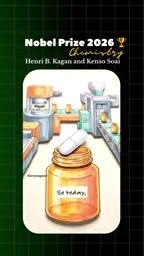
The chiral amplification strategies developed by Kagan and Soai provide the industry with a theoretical framework for efficiently synthesizing single-enantiomer drugs. By designing appropriate catalytic systems, chemists can start from extremely low chiral purity and obtain high-purity target chiral molecules through amplification reactions, greatly reducing separation costs and raw material waste. This directly affects the efficiency and safety of drug development.
Challenges and Unsolved Questions
Although the chiral amplification mechanism has been repeatedly verified experimentally, its applicability in the real early Earth environment remains controversial. The Soai reaction in the laboratory requires specific organozinc reagents and strict conditions, whereas the chemical environment of the primordial Earth was far more complex and chaotic. Some researchers believe that physical mechanisms such as chiral selection effects on mineral surfaces or circularly polarized light irradiation may have played a more important role in prebiotic chiral selection.
Moreover, the gap remains enormous from a single chemical system of chiral amplification to a protocell capable of self-replication and evolving metabolic networks. Kagan and Soai's contribution is more like opening a door—how long the corridor behind it is still needs to be measured step by step by future research.
One-line Summary
2026 Nobel Prize in Chemistry reveals how tiny chiral biases are amplified through autocatalysis to determine the chirality of life's molecules.
Paragraph Summary
The 2026 Nobel Prize in Chemistry was awarded to Henri Kagan and Kensō Soai for discovering and explaining the chiral amplification mechanism. Chirality is a geometric property in which molecules are mirror images that cannot be superimposed, and living organisms choose only one configuration. Kagan and Soai proved that tiny initial chiral biases can be amplified through autocatalytic positive feedback to extremely high enantiomeric excess, with the Soai reaction raising an initial purity of 54% to nearly 100%. This discovery provides a chemically feasible explanation for single-chirality selection in the origin of life and has profoundly influenced strategies for synthesizing single-enantiomer drugs in the pharmaceutical industry. Although its applicability in the real early Earth environment remains controversial, this work opened a key door to understanding the chiral origin of life.
Related articles

A Single Prompt Triggers a Global PHP Security Storm: Is AI a Savior or a Hidden Risk?
A single AI prompt triggered a global PHP security crisis affecting Wikipedia and the Internet Archive. This article reviews the incident, analyzes the OpenAI-Amazon controversy, and explores the security paradox of lowered vulnerability discovery barriers in the AI era and developer response strategies.

When AI Is Taken Away: How Reliance on Shortcuts Undermines Your Problem-Solving Resilience
A study of 1,222 people found that after using AI to answer questions, once AI was removed, people gave up on more problems than a control group that never used AI. The article analyzes the impact of AI reliance on learning resilience and metacognition, and explores design implications for AI learning tools.

Carta and NewView Partner to Let Startup Employees Cash Out Equity Early
Carta and NewView Capital partner to simplify startup tender offers, helping employees sell equity early. Analysis of the mechanism, liquidity pain points, and impact.