2026 Nobel Prize in Chemistry: How Asymmetric Synthesis Solves the Chiral Drug Challenge

2026 Nobel Chemistry Prize awarded to Kagan and Soai for asymmetric synthesis and autocatalysis research.
The 2026 Nobel Prize in Chemistry was awarded to French scientist Henri Kagan and Japanese scientist Kenso Soai for their pioneering contributions to asymmetric synthesis and asymmetric autocatalysis. The article starts from the basic concept of chiral molecules, explaining how R-type and S-type enantiomers are non-superimposable mirror images, and how nature precisely synthesizes single enantiomers while traditional lab synthesis typically yields racemic mixtures. This dilemma is especially critical in pharma—ibuprofen's S-type is active while R-type is not. Kagan developed chiral ligands and catalyst systems for asymmetric synthesis, while Soai's asymmetric autocatalysis enables chiral amplification, boosting tiny biases to near single-enantiomer products. This tech controls chirality at the source, simplifies drug production, and cuts costs.
2026 Nobel Prize in Chemistry Announced: Two Scientists Awarded for Asymmetric Synthesis
The 2026 Nobel Prize in Chemistry has been officially announced, with French scientist Henri Kagan and Japanese scientist Kenso Soai sharing the award for their pioneering contributions to asymmetric synthesis and asymmetric autocatalysis. These two concepts are familiar to researchers in organic chemistry, but the general public may not understand why they merit a Nobel Prize.
Simply put, this research solved a core problem that plagued laboratory synthesis for decades: how to precisely produce a single enantiomer of a chiral molecule, rather than obtaining a useless mixture.
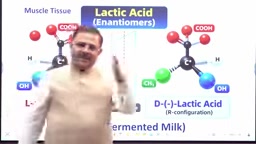
What Are Chiral Molecules? Starting with Lactic Acid
To understand the significance of this research, one must first grasp the concept of chiral molecules. Chiral molecules are like left and right hands—they are mirror images of each other but cannot be perfectly superimposed. Take lactic acid as an example: it exists in two enantiomeric forms, known as R-type and S-type (or levorotatory and dextrorotatory).
Nature demonstrates astonishing selectivity. According to a science popularization video on Bilibili, the lactic acid produced by human muscles through fermentation under oxygen-deficient conditions exists in only one enantiomeric form—namely S-type lactic acid. Similarly, the lactic acid bacteria in yogurt can precisely synthesize only a specific configuration of lactic acid.
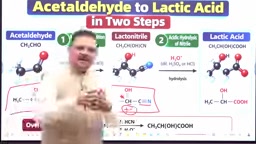
This precise synthetic capability of nature is exactly what laboratories have long struggled to replicate.
Enantiomers are a core concept in stereochemistry, referring to two molecules that are non-superimposable mirror images of each other, like the relationship between a left hand and a right hand. They are identical in chemical formula, with the same types of atoms and the same connectivity—the only difference lies in their three-dimensional spatial arrangement. This difference causes enantiomers to be nearly identical in physical properties (such as melting point, boiling point, and solubility), but to behave significantly differently when interacting with another chiral environment—for example, when binding to a chiral catalyst, receptor protein, or enzyme. It is precisely this characteristic of "same isomer but vastly different behavior in chiral environments" that makes it essential to strictly distinguish enantiomers in fields such as drug development, pesticide synthesis, and the fragrance industry. Chemically, they are typically distinguished using the R/S notation or optical rotation direction (+/-).
To determine whether a molecule is chiral, one can check whether it contains a chiral center—typically a carbon atom bonded to four different groups. A molecule with one chiral center necessarily has a pair of enantiomers; with multiple chiral centers, the number of enantiomers increases and the situation becomes more complex. Chirality exists not only in organic molecules but also in biological macromolecules such as proteins, DNA, and carbohydrates—this is precisely the chemical basis for the highly stereoselective nature of living systems.
The Laboratory Dilemma: Why Chiral Synthesis Matters So Much
When chemically synthesizing chiral compounds in the laboratory, researchers typically obtain a mixture of two enantiomers—equal parts R-type and S-type. This is known as a racemic mixture.
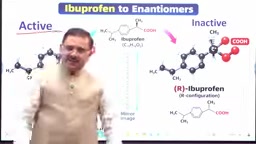
This problem is particularly critical in the pharmaceutical field. Take ibuprofen as an example: according to the science popularization video, the S-type enantiomer of ibuprofen has analgesic and anti-inflammatory activity, while the R-type is completely ineffective. After synthesizing ibuprofen through conventional processes, pharmaceutical companies must use additional steps to separate the two enantiomers, which significantly increases production costs.
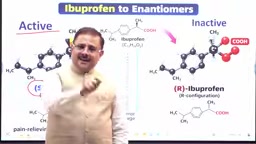
This phenomenon is not unique to ibuprofen. The two enantiomers of many chiral drugs may exhibit completely different activities in living organisms—one may be therapeutic, while the other may be ineffective or even harmful. Therefore, the core value of asymmetric synthesis lies in producing only the desired enantiomer from the very source of the reaction.
A racemic mixture refers to a system in which equal amounts of R-type and S-type enantiomers are mixed together, showing no optical activity overall. In traditional chemical synthesis, because achiral reagents or achiral catalysts cannot distinguish between the two enantiofaces, reactions typically produce both enantiomers with nearly equal probability, resulting in a racemate. To obtain a single enantiomer from this, commonly used methods include chiral chromatographic separation, diastereomeric salt crystallization resolution, and enzymatic resolution—but these methods can theoretically recover at most 50% of the product, with the other half becoming waste. This results in poor atom economy and high costs.
In contrast, asymmetric synthesis introduces chiral auxiliaries, chiral ligands, or chiral catalysts into the reaction, creating an energy difference between the two enantiofaces in the transition state, thereby preferentially generating one enantiomer. An ideal asymmetric synthesis should feature high enantioselectivity (typically measured by ee value, i.e., enantiomeric excess percentage), high yield, low catalyst loading, and catalyst recyclability. The breakthroughs made by Kagan and others in chiral ligand design are precisely the key to gradually making this ideal a reality.
The Core Contributions of Kagan and Soai
Henri Kagan and Kenso Soai each made foundational contributions in the fields of asymmetric synthesis and asymmetric autocatalysis, respectively.
Kagan developed chiral ligand and catalyst systems in the field of asymmetric synthesis, enabling chemical reactions to preferentially produce one enantiomer. Soai discovered asymmetric autocatalytic reactions—a unique mechanism in which the product itself catalyzes its own formation, achieving a chiral amplification effect. This means that even if the initial ratio of the two enantiomers has only a slight bias, the reaction can spontaneously amplify this bias, ultimately yielding a product that is nearly a single enantiomer.
The combination of these two works fundamentally changed the way chemists produce chiral molecules.
Asymmetric autocatalysis is a special type of autocatalytic reaction in which the product itself serves as both the reaction product and the chiral catalyst, catalyzing its own continued formation. The Soai reaction is the most famous example of this phenomenon: in the reaction system, a small amount of chiral product (such as pyrimidyl alcohol) preferentially catalyzes the formation of products with the same configuration as itself, thereby continuously amplifying the enantiomeric excess throughout the reaction. Even if the initial ee value is only a few percent or even lower, after multiple rounds of autocatalytic cycles, the final product ee value can approach 100%.
This chiral amplification effect has profound theoretical significance. It is regarded by some scientists as one of the important clues to explaining the origin of homochirality in life—that is, why life on Earth almost exclusively uses L-type amino acids and D-type sugars. If certain chiral molecules in the early Earth environment could amplify tiny initial biases through autocatalytic mechanisms, then single chirality might have been established before the emergence of life. Of course, this hypothesis remains controversial, but the discovery of the Soai reaction provides an experimentally verifiable chemical model for the fundamental scientific question of the "origin of chirality."
Profound Impact on the Pharmaceutical Industry
The most direct application value of this research is in the pharmaceutical field. Traditionally, after synthesizing chiral drugs, pharmaceutical companies need additional separation steps to obtain the active enantiomer, and sometimes even need to chemically convert the ineffective enantiomer into the effective form. According to the science popularization video's analysis, the maturation of asymmetric synthesis technology means that the chirality of drug molecules can be precisely controlled at the synthesis stage, thereby simplifying processes and reducing production costs.
From a broader perspective, this is not merely an improvement in laboratory technology. It represents an important step in humanity's effort to mimic nature's precise synthetic capabilities at the molecular level—the chiral selective synthesis ability that nature spent billions of years evolving can now be achieved by chemists in the laboratory.
Regulatory requirements for chiral drugs have also driven the development of asymmetric synthesis technology. In 1992, the U.S. FDA issued a policy requiring pharmaceutical companies to separately evaluate the pharmacological and toxicological properties of both enantiomers for drugs containing chiral centers, which directly prompted the industry to shift toward developing single-enantiomer drugs. Many classic drugs were consequently redeveloped as "chirally pure" versions, such as the antidepressant citalopram and the proton pump inhibitor esomeprazole.
The maturation of asymmetric synthesis technology not only reduces separation costs but also decreases the use of organic solvents and waste generation, aligning with the principles of green chemistry. Furthermore, this technology is widely applied in pesticides (such as chiral herbicides and insecticides), fragrances (such as menthol and vanillin), and liquid crystal materials. With deepening research into chiral ligands and organocatalysts, chemists are now able to achieve high enantioselective control across various reaction types, making it possible to move from "discovering chirality" to "designing chirality" in the laboratory.
Basic Research Deserves Attention
The science popularization video specifically mentions at the end that for students planning their career directions, fields such as scientific research, new discoveries, biotechnology, genetics, chemistry, and fundamental physics are all worth serious consideration. These directions offer not only academic prestige but also economic returns and social recognition.
The 2026 Nobel Prize in Chemistry once again proves that basic scientific research may seem far removed from daily life, but its results can often fundamentally transform industry landscapes. Asymmetric synthesis started from a purely chemical challenge and ultimately benefited pharmaceuticals, materials, agriculture, and many other fields—this is precisely what makes basic research so fascinating.
One-line Summary
2026 Nobel Prize in Chemistry awarded to Kagan and Soai for their research on asymmetric synthesis and autocatalysis.
Paragraph Summary
The 2026 Nobel Prize in Chemistry was awarded to French scientist Henri Kagan and Japanese scientist Kenso Soai for their pioneering contributions to asymmetric synthesis and asymmetric autocatalysis. Starting from the basic concept of chiral molecules, the article explains how R-type and S-type enantiomers are non-superimposable mirror images of each other, and how nature can precisely synthesize single enantiomers while traditional laboratory synthesis typically yields racemic mixtures. This dilemma is particularly critical in the pharmaceutical field, as exemplified by ibuprofen, where only the S-type is active. Kagan developed chiral ligand and catalyst systems to achieve asymmetric synthesis, while Soai discovered asymmetric autocatalytic reactions with a chiral amplification effect that can amplify tiny biases to near single-enantiomer products. This technology can control chirality from the reaction source, simplifying drug production processes and reducing costs, representing an important step in humanity's effort to mimic nature's precise synthetic capabilities at the molecular level.
Related articles

iPhone Duo Battery Life Tested: One Charge a Day Is Unavoidable, and the Large Screen Is the Culprit
iPhone Duo battery test: heavy use needs at least one charge a day, and about 30% remains after 6.5 hours of screen-on time. How often the large screen is unfolded is key; a MagSafe battery pack helps, and long-term degradation is also worth watching.

Kimi K3.1 Pro Open-Sourced: 2.8 Trillion Parameters Close In on Opus
Moonshot releases the open-source MoE model Kimi K3.1 Pro, with 2.8T total parameters and 104B activated, trailing Opus 5.5 by under 1 point on Terminal Bench 4.0.

Costco Tech Price Guessing: Are Monitors, Keyboards, Mice, and Bose Speakers Worth It?
A YouTube blogger guesses prices of Costco tech products: 2K 180Hz monitor, Logitech keyboard and mouse, Bose speaker, and CyberPower UPS, revealing warehouse-store selection and brand premium.