5 MCP Servers That Unlock New Skills for Your AI Agents
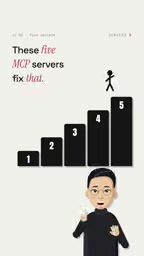
Five MCP servers fill in agents' docs, browser, content, payment, and calling capabilities.
The article reviews five MCP servers recommended by a YouTube creator, each filling a key capability gap for AI agents. Context 7 provides up-to-date library docs to prevent invented APIs, Playwright MCP lets agents drive a real browser without screenshot analysis, AgentWire converts content from 28 platforms into clean Markdown (cutting token use from ~198,000 to ~2,000), Stripe's official MCP handles customers and payments, and CallForMe makes phone calls and returns transcripts. The MCP ecosystem now lists over 900 servers and is systematically closing agents' capability gaps.
AI agents are moving from the chat box into the real world, but out of the box they often lack the ability to browse the web, handle payments, or even make phone calls. MCP (Model Context Protocol) servers are the key components that fill these gaps. Recently, a YouTube creator reviewed five MCP servers that significantly expand what agents can do, covering documentation retrieval, browser control, content acquisition, payments, and voice calls. These tools are not concept demos—they are products that can already be deployed in real-world workflows.
Context 7: Stop Agents from Making Up APIs
When developers call third-party libraries, the biggest headache is an agent inventing functions or parameters that don't exist. Context 7 is built specifically to solve this: it provides agents with the latest documentation for the library they're using, ensuring generated code is based on real interfaces.
According to the video, the project has earned more than 63,000 stars on GitHub, showing strong community recognition. For open-source libraries that iterate quickly, outdated documentation is the norm, which makes Context 7's real-time advantage especially valuable.
MCP (Model Context Protocol) is an open protocol proposed by Anthropic in late 2024, designed to establish a standardized way for AI models to connect with external tools and data sources. Think of it as the "USB-C port" of the AI world: whether the underlying system is a database, an API, or a local file system, as long as it implements the MCP protocol, the model can call it in a unified way. MCP uses a client-server architecture: the agent acts as the client and sends requests, while the MCP server exposes specific tools, resources, and prompt templates. This design changes tool integration from "adapting each application separately" to "implement once, use everywhere," which is the fundamental reason hundreds of servers have emerged in the MCP ecosystem in such a short time.
Playwright MCP: Let Agents Operate Browsers Like Humans
Playwright MCP, released by Microsoft, gives agents the ability to drive a real browser. Unlike traditional approaches that rely on screenshot analysis, it directly performs actions such as clicking, filling out forms, and scraping data—no visual recognition step required.
This means agents can complete complex tasks like logging in, submitting forms, and navigating across pages, with a more stable execution path. For scenarios that require automated web operations, this is a major leap in capability.

Playwright is an open-source browser automation framework from Microsoft that supports the Chromium, Firefox, and WebKit engines. It was originally aimed at software testing and provides capabilities such as page navigation, element location, form filling, and network interception. Compared with browser agents based on screenshots and vision models, Playwright locates elements through the DOM structure and accessibility tree, so it does not depend on image recognition, executes more deterministically, is easier to debug, and is unaffected by changes in page rendering styles. Playwright MCP packages these capabilities as MCP tools, enabling agents to complete browser operations with structured instructions rather than "looking at an image and guessing which button to press."
AgentWire: Turn Content from 28 Platforms into Clean Markdown
AgentWire converts content from 28 websites—including Reddit, X, GitHub, and YouTube—into well-structured Markdown that agents can consume directly. The video shares a highly convincing data point: after conversion, a single GitHub issue's token consumption dropped from about 198,000 to about 2,000.
This order-of-magnitude compression not only reduces costs but also lets agents process more information within their context window. For research tasks that require gathering material across platforms, AgentWire can greatly improve efficiency.

A token is the basic unit language models use to process text, roughly equivalent to part of an English word or one Chinese character. A model's context window is measured in tokens, and content beyond the limit cannot be processed. Raw web page HTML often contains large amounts of navigation bars, scripts, styles, and ad markup—noise that consumes a considerable number of tokens while carrying almost no useful information. Converting content into clean Markdown is essentially "information purification": removing structural noise and keeping only the semantic content, so more useful information fits within a limited context window. The drop from about 198,000 to about 2,000 tokens shown by AgentWire is a quantified demonstration of this purification effect, and it directly affects API call costs.
Stripe's Official MCP: Payment Capabilities Embedded Directly in Agents
The official MCP server provided by Stripe lets agents directly manage customers, invoices, and payment links. This means that in scenarios such as e-commerce and subscription management, agents are no longer just offering suggestions—they can execute real transactions.
Being officially maintained also means higher reliability and synchronized updates with the Stripe API, which is crucial for applications involving money flows.

Stripe is a leading global online payment infrastructure provider, and its API covers payment collection, subscription billing, invoicing, refunds, and customer management. When handing payment capabilities to agents, the key challenge is not technical integration but permissions and risk control: agents need to be constrained within clear limits, operation types, and approval processes to avoid financial losses from mistakes. The significance of Stripe officially maintaining an MCP server is that it stays synchronized with the official API at the protocol level, reducing version lag and compatibility risks introduced by third-party wrappers; the official status also makes it easier for enterprises to assess compliance and data security boundaries—a prerequisite for any application involving real money flows to go live.
CallForMe: Let Agents Make Calls for You
CallForMe fills a gap that is often overlooked: phone communication. Agents can place calls on your behalf, hold patiently in a waiting queue, navigate phone menus, and finally report back the call content as a text record.
Although the video does not show specific technical details, this capability has clear practical value in scenarios such as customer service appointments and information inquiries. It extends an agent's interaction scope from text and web pages to traditional voice channels.
The Ecosystem Is Expanding Rapidly
According to the end of the video, all five servers are included in an AI Agent list that also contains more than 900 other MCP servers. This number shows that the MCP ecosystem has entered a phase of rapid expansion, with developers and enterprises building a rich tool layer around the protocol.
From documentation and browsers to payments and phone calls, MCP servers are systematically filling in the gaps in agent capabilities. For teams that want AI agents to truly "get work done," following the evolution of this ecosystem is no longer optional.
One-line Summary
Five MCP servers fill in agents' documentation, browser, content, payment, and calling capabilities.
Paragraph Summary
The article reviews five MCP servers recommended by a YouTube creator, each filling a key capability gap for AI agents in the real world. Context 7 gives agents up-to-date library documentation to avoid invented APIs, with over 63,000 GitHub stars; Microsoft's Playwright MCP lets agents operate a real browser directly without screenshot-based visual analysis; AgentWire converts content from 28 platforms into clean Markdown, cutting a GitHub issue's token consumption from about 198,000 to about 2,000; Stripe's official MCP supports customer, invoice, and payment link management; and CallForMe lets agents make phone calls and return text records. The article notes that these tools are all ready for real-world use, and the MCP ecosystem already lists more than 900 servers, systematically closing agents' capability gaps—something teams that want AI to truly "get work done" should keep watching.
Related articles

Microsoft Fabric Database Agent in Action: From Reactive Firefighting to Intelligent Detective
A deep dive into the Microsoft Fabric Database Agent: how to enable it, supported monitoring scenarios, a blocking-issue demo, and the roadmap from reactive to autonomous operations.

Zendesk Uses ChatGPT Enterprise to Build a Sales Agent with 1,000 Daily Active Users
Zendesk opened ChatGPT Enterprise to all employees, who built about 600 apps themselves, including a sales expansion agent with about 1,000 daily active users. This article analyzes how it turns internal data into sales opportunities and its "don't wait" implementation strategy.
Google Releases Gemini 4 Carbon: Its Strongest Model Yet, Debuting with a Cybersecurity Focus
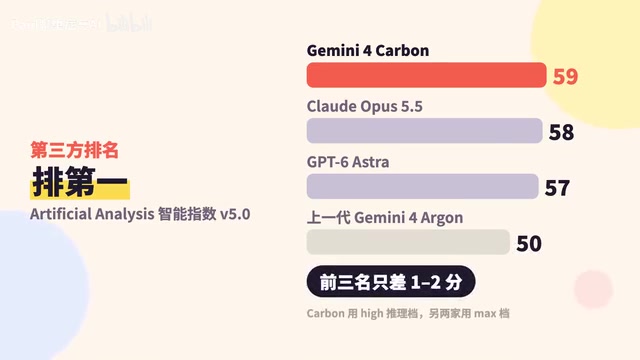
Google releases Gemini 4 Carbon, calling it its strongest model, with a cybersecurity focus. It tops the third-party composite ranking at 59 points but leads by only one or two. This article analyzes its security test results, staged rollout, token pricing, and the divergence between self-reported and third-party tests on hallucinations.