A Deep Dive into AI Agent Harnesses: The Core Engineering Behind Agent Frameworks

A systematic breakdown of the AI Agent harness—the engineering core behind high-performance agent frameworks.
The same LLM paired with different harnesses can perform dramatically differently. This article dissects the four engineering cores of an excellent AI Agent harness—precise context retrieval, high-quality tool design, prompt caching, and robust control loops—explaining why shorter system prompts often signal deeper engineering maturity.
Why the Harness Determines an AI Agent's Fate
Within the coding agent evaluation community, one phenomenon has sparked widespread discussion: in Databricks' benchmarks run against its multi-million-line codebase, solutions employing a superior "harness" (such as Pi) significantly outperformed competing products. The question naturally follows—when the underlying large language models are comparable, why can the "harness" produce such a dramatic gap?
Background: The Special Significance of the Databricks Evaluation As a leading company in the data and AI space, Databricks maintains a codebase spanning millions of lines and covering multiple complex subsystems such as Spark, MLflow, and Delta Lake. Evaluations against this kind of real-world, industrial-grade codebase are fundamentally different from academic standardized benchmarks like HumanEval and SWE-bench—the latter typically consist of isolated programming problems, whereas the former requires the agent to understand highly context-sensitive information such as cross-file dependencies, legacy code styles, and internal API conventions.
It's worth mentioning that although SWE-bench is one of the most widely cited Coding Agent benchmarks today (released by Princeton University in 2023, containing 2,294 issue-fixing tasks drawn from real GitHub repositories), its tasks are carefully curated and standardized, with each issue usually corresponding to a limited scope of file modifications. In real industrial codebases, however, a single requirement often involves dozens of modules, implicit dependencies, and undocumented internal conventions. This fundamental difference means that solutions performing excellently on academic benchmarks may not reproduce those results in actual engineering scenarios—which is precisely why Databricks' internal evaluations are regarded by the industry as a more valuable "stress test." Pi's outstanding performance in this setting directly reveals the decisive impact of harness engineering quality on real-world tasks, making the phenomenon of "comparable underlying models but divergent results" an important catalyst for the industry to reexamine agent architecture.
Even more counterintuitively, Pi's system prompt is actually shorter and easier to customize. So what exactly constitutes an excellent harness? Is it a triumph of prompt engineering, or is there a deeper engineering core behind it? This article systematically unpacks the concept.

What Is an Agent Harness?
In the context of AI agents, a "harness" refers to the entire engineering system that wraps around the large language model (LLM) and coordinates the model's interaction with the external world. If the LLM is likened to an engine, the harness is the transmission, steering wheel, and control circuitry—it is not the model itself, but rather the "operating system" that determines how the model is invoked, how it acquires context, how it executes actions, and how it recovers from errors.
A Deeper Analogy Between the Harness and Traditional Software Engineering Comparing the harness to an "operating system" is not mere rhetoric—it reveals a profound engineering philosophy: unleashing a model's capabilities depends heavily on the quality of its runtime environment. This idea aligns with the traditional software engineering principle that "the toolchain determines productivity." Just as the optimization quality of a C compiler (GCC vs. Clang) can produce several-fold performance differences from identical source code, or as a Java virtual machine's garbage collection strategy determines an application's throughput ceiling, an AI agent's harness plays the role of "runtime infrastructure." This also means that improvements to the harness have a multiplier effect—elevating underlying engineering quality amplifies the expression of all higher-level model capabilities. This insight has direct implications for engineering resource allocation: in a competitive landscape where underlying model capabilities are converging, harness engineering quality will become the primary battleground for differentiation.
The same model, paired with different harnesses, can perform dramatically differently in practice. This is precisely the root cause of the divergence among the solutions in the Databricks evaluation.
Core Components
A complete Agent Harness typically comprises the following layers:
- Context Management: Deciding what information to provide the model within a limited context window, and in what order and granularity to present it.
- Tool Use and Execution Environment: Defining the tools the model can invoke (file read/write, code execution, search, etc.), as well as how to parse and execute the model's action instructions.
- Agent Loop: Managing the iterative "think–act–observe" process, including when to terminate and when to retry.
- State and Memory Management: Maintaining task state and historical context across multiple rounds of interaction.
The Boundary Between Single-Agent Harnesses and Multi-Agent Architectures When a single Agent Harness confronts extremely complex engineering tasks, its limitations begin to surface: a single control loop struggles to process mutually independent subtasks in parallel, the consumption rate of the context window in long tasks becomes hard to sustainably manage, and domain-specific capabilities (such as security auditing or performance optimization) are difficult to fully express through a general-purpose toolchain. This has driven exploration of multi-agent architectures—such as the Orchestrator-Subagent pattern (a main agent handles task decomposition and coordination while subagents handle specialized execution) or message-queue-based asynchronous agent networks. However, the complexity and debugging difficulty of multi-agent systems rise exponentially, and the coordination overhead itself may offset the gains from parallelism. Understanding the engineering core of a single Agent Harness—especially the central challenges of context management and state maintenance—is a prerequisite for assessing when to introduce multi-agent architectures and how to design cross-agent communication protocols. The current industry consensus is: exhaust the potential of a single Agent Harness first, and introduce multi-agent complexity only when the task inherently requires parallelism or specialized division of labor.
Why Do Shorter System Prompts Actually Perform Better?
This is the key paradox to understanding the essence of a harness. The length of a system prompt is not proportional to harness quality—it often exhibits a negative correlation.
Piling On Prompts Is a Sign of Immature Design
Lengthy system prompts usually mean the developer is using large amounts of text to "teach" the model what to do—an approach that shifts engineering problems onto the prompt. A well-designed harness, by contrast, pushes this complex logic down to the system level, allowing the prompt to return to simplicity.
Take a Coding Agent as an example. Rather than cramming the prompt full of rules like "first read the file, then locate the function, then modify it," it's better to:
- Provide high-quality tools so the model can truly "understand" the code structure;
- Naturally guide the model's behavior through environmental feedback (compilation errors, test results);
- Use a concise prompt to state the core objective and boundary constraints.
True intelligence arises from a high-quality feedback loop of interaction between the model and its environment, not from piling on prompts. Behind short prompts lies solid engineering investment.
Cognitive Misconceptions in Prompt Engineering and a Maturity Model for Engineering Prompt Engineering was overly mythologized in the early days of agent development, partly because it has a low barrier to entry, iterates quickly, and can rapidly produce visible results at the prototype stage. However, as task complexity increases, the "prompt-piling" pattern exposes systemic flaws: fragility (small wording changes cause drastic behavioral swings), unmaintainability (system prompts thousands of words long are hard to version-control and iterate on collaboratively), and poor generalization (prompts optimized for a specific task degrade sharply in new scenarios). This closely mirrors the opposition between "hardcoding" and "architectural design" in software engineering. Mature agent engineering teams typically go through an evolution from "prompt-driven" to "system-driven": early on they rely on prompts to quickly validate hypotheses, then in the middle stage they push stabilized behavioral logic down to the harness layer, ultimately forming a layered architecture where "the prompt only declares intent, and the system guarantees execution." This evolutionary path is itself an important indicator of a team's agent engineering maturity.
The Four Engineering Cores of an Excellent Harness
1. Precise Retrieval and Compression of Context
Faced with a codebase of millions of lines, it's impossible to stuff all the content into the context window. One of the core competitive advantages of an excellent harness is presenting the right code snippets to the model at the right moment, which specifically includes:
- Indexing and semantic retrieval of the codebase
- Intelligent filtering of relevant files (rather than feeding everything in)
- Summarizing and compressing historical interactions
Why "Cramming in More" Actually Performs Worse—the Physical Limits of the Context Window Although mainstream models like GPT-4o and Claude 3.5 have extended their context windows to 128K or even 200K tokens, a codebase of millions of lines can easily reach hundreds of millions of tokens—far exceeding any model's practical processing limit. More critically, research shows that models exhibit a "Lost in the Middle" phenomenon in extremely long contexts—information located in the middle of the context is significantly ignored, with attention concentrating toward the beginning and end. This means that even if the window is large enough, indiscriminately cramming in code dilutes the weight of key information. Therefore, precise context filtering is not an engineering compromise, but a core design decision that determines the model's actual reasoning quality.
At the technical implementation level, precise retrieval in large-scale codebases combines multiple methods: AST (Abstract Syntax Tree)-based structural analysis can precisely locate function, class, and module boundaries; vector embedding techniques (such as UniXcoder, designed specifically for code, or general-purpose embedding models) map code snippets into semantic vectors, supporting cross-modal retrieval from natural language to code; traditional information retrieval algorithms like BM25 still hold an advantage in exact symbolic matching. High-quality harnesses usually adopt a "hybrid retrieval" strategy, combining semantic similarity with exact symbolic matching, then using a reranking model to score candidate snippets by relevance, ultimately injecting only high-confidence snippets into the context—a process that closely overlaps with RAG (Retrieval-Augmented Generation) but is specially optimized for code structure.
This also explains why, in large-scale codebase scenarios, the differences among harnesses are dramatically amplified.
The Challenge of State Management Across Multi-Round Tasks After an agent executes dozens of steps, how to retain key historical information without exceeding the context window becomes a core problem that determines the success or failure of long tasks. Solutions currently being explored in the industry include: Hierarchical Summarization—compressing and summarizing the observation results of earlier steps for retention; structured state representation—maintaining task progress as an explicit data structure (such as a list of modified files or a queue of hypotheses to verify) rather than relying on the model's implicit memory; and external memory stores—using vector databases to store semantic representations of historical operations, retrieved on demand. The design quality of these mechanisms directly determines whether an agent can maintain coherent "working memory" across complex tasks spanning dozens of steps, avoiding repeated labor or losing key information already acquired.
2. The Quality of Tool Design
The design of tool interfaces directly determines the ceiling of the model's capabilities. Tools with high information density and clear structure are far superior to tools that return large amounts of noise. High-quality tools should:
- Return precise line numbers, context, and error locations
- Support fine-grained operations (such as precise edits, rather than whole-file rewrites)
- Provide actionable feedback upon failure, rather than vague error messages
The Technical Evolution of Tool Use Tool-use capability is the key technical inflection point that elevated modern LLMs from "conversational systems" to "autonomous agents." Since OpenAI introduced Function Calling in 2023, Anthropic's Tool Use, Google DeepMind's ReAct framework, and others have successively refined the standard paradigm for models to interact with external systems. Its core logic is: the model no longer merely outputs text, but outputs structured "action instructions" (such as invoking a code executor or reading/writing files), which the harness parses and executes, then returns the result to the model in the form of an "observation." The design quality of the tool interface—whether parameter names are intuitive, whether return values are information-dense, whether error messages are actionable—directly determines the model's decision-making efficiency within the "think–act–observe" loop. Low-quality tool interfaces cause the model to iterate repeatedly on ineffective actions, wasting substantial reasoning budget.
The Human Factors Principles of Tool Design Excellent tool design is no accident—it is essentially human-computer interaction (HCI) design for the "special user" that is the LLM. Researchers have found that LLMs exhibit human-like cognitive preferences when using tools: they tend to choose tools with semantically clear names over similarly functioning but ambiguously named alternatives; they downsample information (ignoring key details) when return values are overly verbose; and when faced with multiple similar tools, they experience "choice paralysis" leading to erroneous invocations. These findings have given rise to API design principles specifically oriented toward LLMs: the number of tools should be kept within a range the model can effectively distinguish (usually recommended to not exceed 20 core tools); each tool should follow the single-responsibility principle; and return values should prioritize an "actionable summary" over raw data. The quality of tool design essentially determines the signal-to-noise ratio of the model's "perception of the external world," which in turn directly affects the accuracy of reasoning and decision-making.
3. Caching and Efficiency Optimization
Prompt Caching is an important means of harness efficiency optimization. Caching stable, unchanging context (system prompts, codebase structure) can significantly reduce latency and invocation costs, allowing the agent to iterate more smoothly across multiple loop rounds. While this doesn't directly boost "intelligence," it dramatically improves practical usability.
The Technical Principle of Prompt Caching Prompt Caching was first commercialized by Anthropic in 2024, followed by OpenAI and others rolling out similar mechanisms. Its principle is: when an LLM processes a request, it performs KV Cache (key-value cache) computation on the input tokens; if the prefix of the next request exactly matches the cache, the repeated computation can be skipped, reducing latency by about 85% and cost by about 90% (based on Anthropic's pricing). For agent scenarios, "stable prefixes" such as system prompts and codebase indexes can be continuously reused, while only user instructions and new observation results require incremental computation. This makes multi-round agent loops over long contexts economically viable, and is an important reason why harness engineering design must be aware of cache boundaries and organize prompt structure sensibly. It's worth noting that cache hit rate depends heavily on how prompts are organized—placing frequently changing content (user instructions, latest observations) after the stable prefix is a key engineering decision for maximizing cache benefit in harness design.
The Strategic Significance of Efficiency Optimization for the Boundaries of Agent Feasibility Optimizing latency and cost is not merely an engineering detail—it is a strategic factor that determines the boundaries of agent application scenarios. Take a typical Coding Agent task as an example: if each loop round costs $0.10 with 5 seconds of latency, executing a 50-step task requires $5 and about 4 minutes; by reducing per-round cost to $0.01 and latency to 1 second via Prompt Caching, the same task drops to $0.5 and under a minute. This order-of-magnitude difference directly determines whether an agent can evolve from an "occasional experiment" into a "daily tool." A more far-reaching impact is that efficiency optimization lowers the economic threshold for "exploratory attempts," enabling the agent to evaluate multiple solutions in parallel before execution (Monte Carlo-style search) rather than prematurely converging on a suboptimal solution due to cost pressure. Therefore, harness efficiency engineering is not purely cost control—it directly expands the design space for the agent's reasoning strategies.
4. The Robustness of the Control Loop
In real-world tasks, models make mistakes and go off track. An excellent harness builds error recovery and self-correction mechanisms into the control loop—for example, automatically running tests and feeding failure results back to the model for retry. This kind of closed-loop feedback is often the decisive factor in benchmark scores.
The ReAct Framework and Control Loop Design Paradigms The control loops of most modern Coding Agents are based on or derived from the ReAct (Reasoning + Acting) paradigm—a framework jointly proposed by Princeton and Google, whose core idea is to interleave the model's "reasoning trace" with "external actions," forming an observable, debuggable chain of thought. At the engineering implementation level, the control loop must handle a variety of complex situations: non-compliant model output formats (missing tool-call parameters), tool execution timeouts or exceptions, tasks falling into infinite loops (such as repeatedly generating the same erroneous code), and determining when a task is complete or should be declared failed.
Injecting automated test results as a feedback signal into the agent's control loop is essentially migrating the TDD (Test-Driven Development) paradigm from software engineering into the AI agent domain. Research in the SWE-agent paper shows that agents capable of receiving compilation errors and test failure feedback achieve significantly higher task completion rates than single-shot generation modes. Going further, some advanced harnesses have introduced "hypothesis-driven debugging"—the agent first forms a hypothesis about the cause of a bug, then designs targeted tests to verify it, rather than blindly modifying code, elevating self-correction capability from "reactive fixing" to a "proactive reasoning" level. Excellent harnesses automatically format test-failure stack traces and compiler errors and inject them back into the model, forming negative-feedback-driven autonomous debugging capability—precisely the key to how Coding Agents pull ahead of simple completion tools on complex tasks.
The Observability Engineering of Control Loops While pursuing task success rates, an excellent harness must simultaneously solve the "observability" problem—namely, how the engineering team understands, debugs, and continuously improves the agent's behavior. When an agent fails after 50 steps of operations, the cost of diagnosing the root cause is extremely high without a complete execution trace record. The industry is gradually forming engineering standards for agent observability: structured logging (input/output/duration of each tool call), decision trace replay (visualization tools that reproduce the agent's reasoning process), and automatic flagging of anomalous steps (identifying abnormal patterns in the control loop, such as abnormal tool-call frequency or sudden output length changes). This field has spawned a dedicated ecosystem of agent monitoring tools, such as LangSmith and Weights & Biases' Weave. It's worth emphasizing that observability serves not only troubleshooting but also as the data foundation for the harness's continuous iteration—by systematically analyzing the common patterns of agent failure cases, engineering teams can identify systemic flaws in context management, tool design, or control loops, forming a data-driven improvement feedback loop.
Conclusion: The Harness Is a Triumph of Systems Engineering
An excellent AI Agent Harness is by no means merely a concise system prompt. Conciseness is only the surface; behind it lies an entire precision engineering system: precise context retrieval, high-quality tool design, efficient caching strategies, and a robust control loop.
Solutions like Pi win in the Databricks evaluation precisely because they shift complexity from the "prompt" to the "system," allowing the model to fully exercise its capabilities in a better environment.
For developers hoping to build their own agents, the conclusion is clear: do not become obsessed with repeatedly polishing prompts; instead, invest your energy in the engineering of context management, tool quality, and feedback loops. This is the true core that determines an agent's final performance.
Key Takeaways
- The harness is the AI agent's "operating system." With equivalent models, harness engineering quality determines the ceiling of actual performance.
- Short prompts are a signal of system maturity, not a result of simplification—complex logic should be pushed down to the engineering layer, not piled into the prompt.
- Precise context retrieval is a core competitive advantage in large-scale codebase scenarios. Hybrid retrieval strategies (semantic + symbolic) and countering the "Lost in the Middle" phenomenon are key technical challenges.
- Tool design follows human-factors principles oriented toward LLMs. Tool interfaces with a high signal-to-noise ratio directly improve the model's reasoning and decision-making quality.
- Prompt Caching is the economic guarantee for multi-round agent loops. Sensibly organizing prompt structure to maximize cache hit rate is an important engineering decision in harness design.
- Closed-loop feedback (the migration of the TDD paradigm) is the core of control loop robustness. Using test failures as negative feedback signals to drive autonomous debugging is the key dividing line by which Coding Agents surpass simple completion tools.
- Observability is the foundation for the harness's continuous iteration. Structured execution trace records enable engineering teams to identify systemic flaws and improve in a data-driven manner.
Related articles
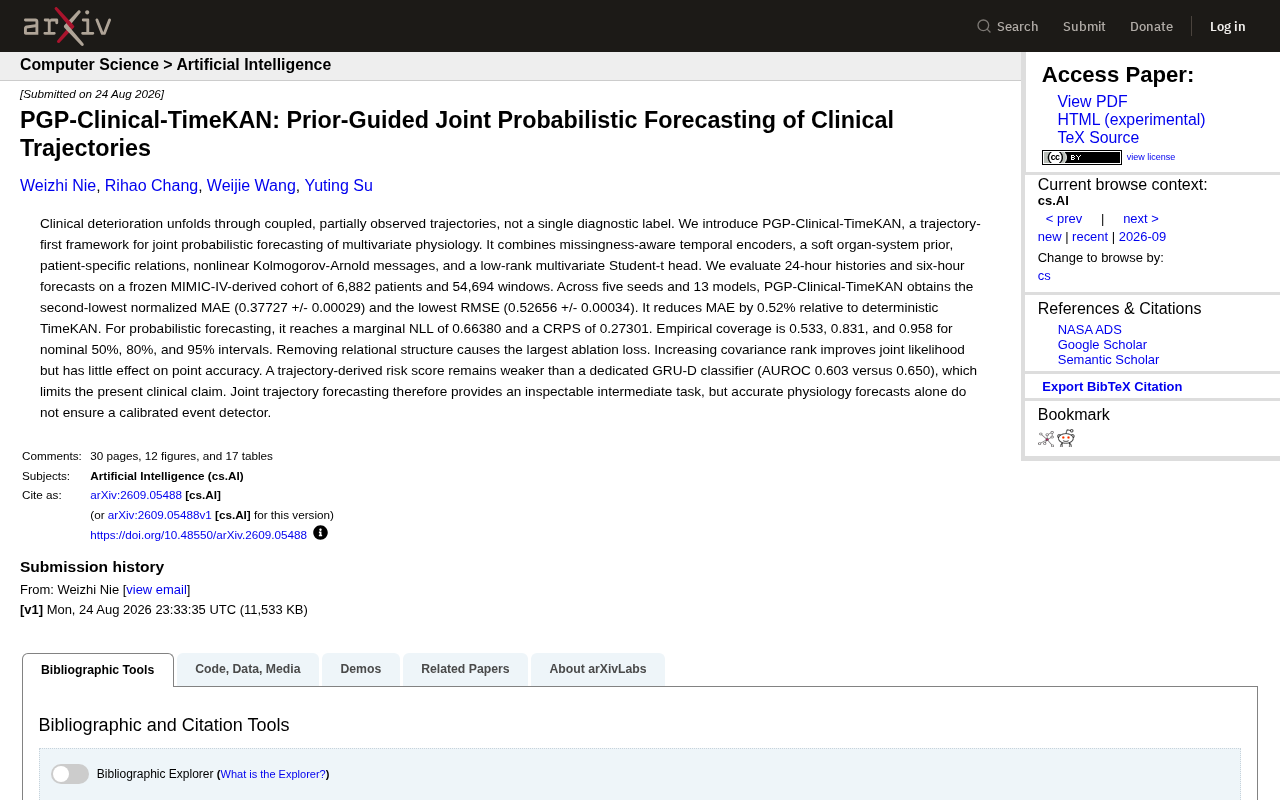
PGP-Clinical-TimeKAN: A Detailed Guide to the Multivariate Physiological Indicator Joint Prediction Framework
An in-depth analysis of the PGP-Clinical-TimeKAN framework for joint probabilistic prediction of multivariate physiological indicators, covering trajectory-first paradigm, KAN message passing, MIMIC-IV validation, and ablation studies.
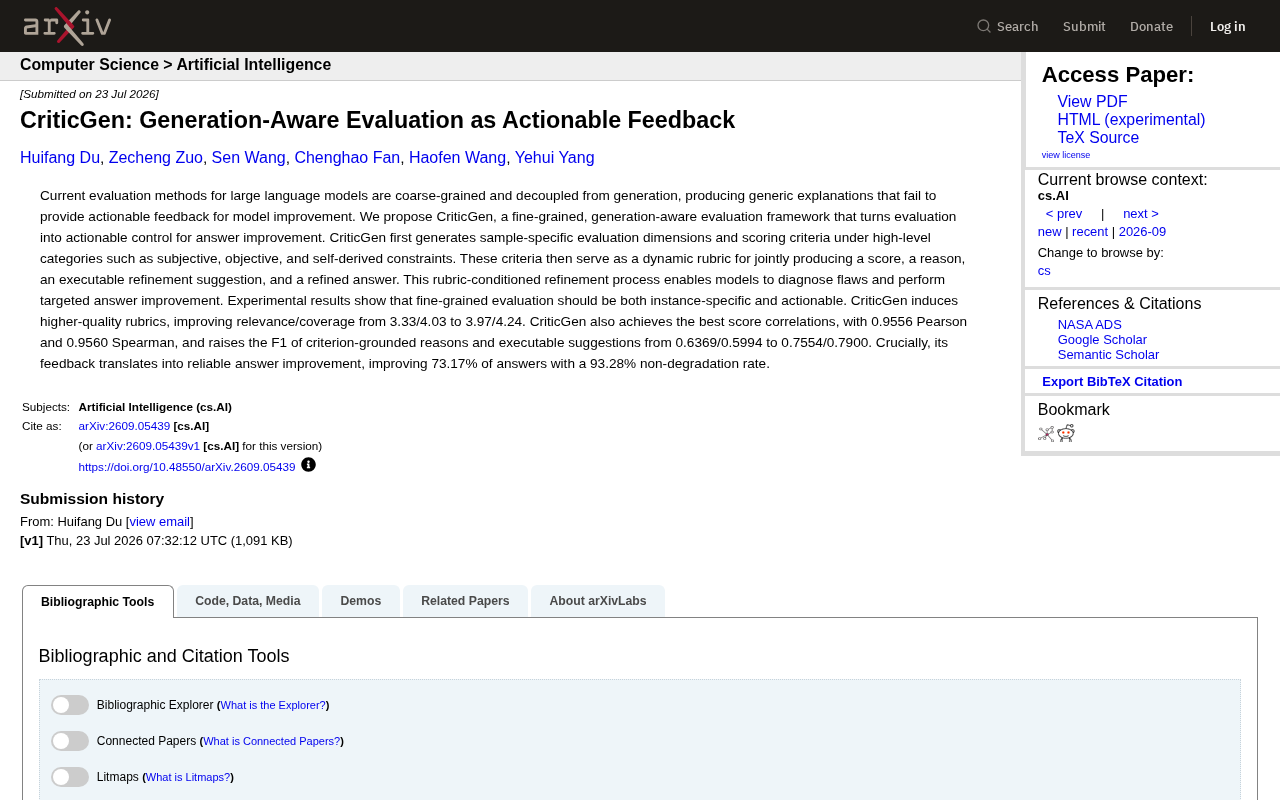
CriticGen: A New Framework That Transforms AI Evaluation into Actionable Improvement Feedback
CriticGen proposes a generation-aware evaluation framework that transforms AI assessment from passive scoring to an active optimization loop, achieving 73.17% answer improvement and 93.28% non-degradation rate.
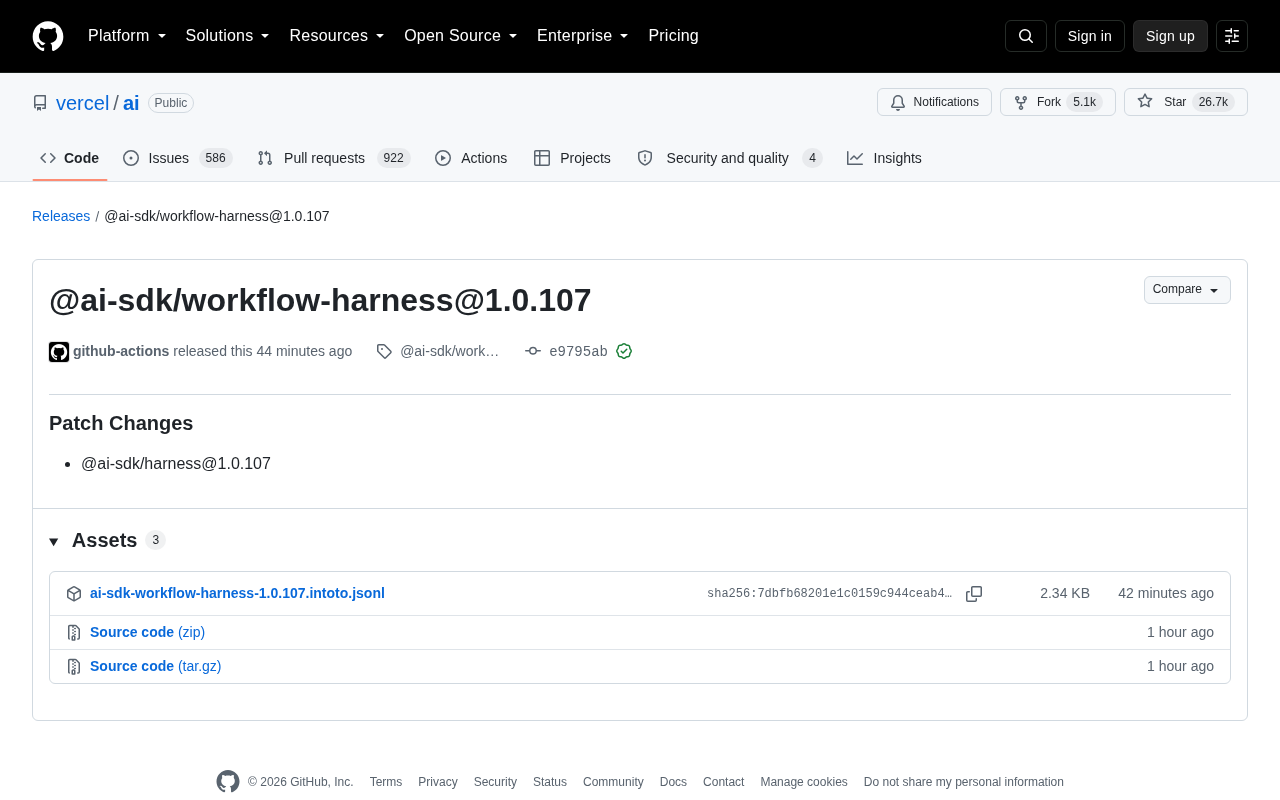
Vercel AI SDK workflow-harness Update Analysis
Deep analysis of Vercel AI SDK workflow-harness 1.0.107 update: architecture design, engineering practices, and developer value for building reliable AI apps.