A New Evaluation Method for Audio-Language Models: Same-Class Controls Reveal the True Impact of Local Audio Evidence

Matched same-class control experiments show audio-language model answer changes mainly reflect event categories, not waveform rewrites.
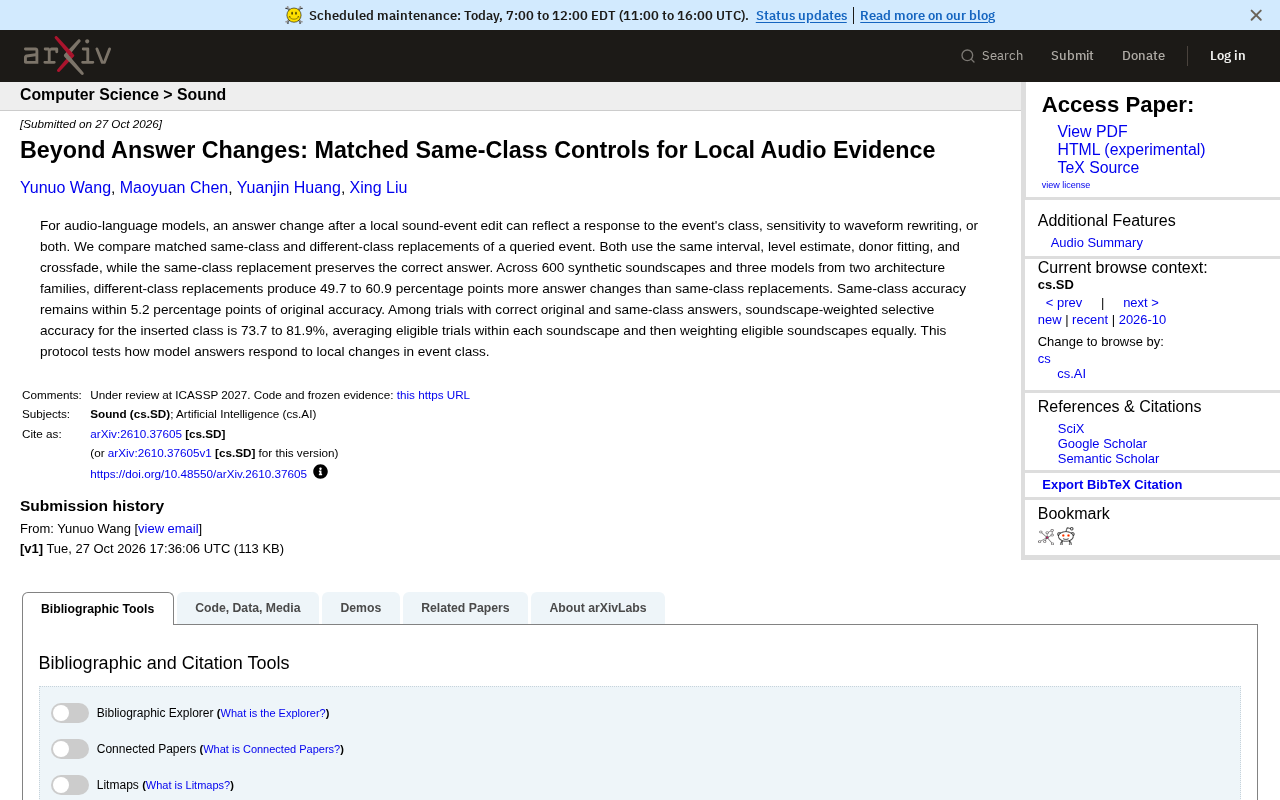
Addressing the unclear causes of answer changes in audio-language models after local sound event editing, this study proposes a matched same-class and different-class replacement control protocol. Covering 600 synthetic soundscapes and three models, results show different-class replacements cause 49.7-60.9 percentage points more answer changes than same-class replacements, indicating answer changes are mainly driven by event categories; same-class accuracy differs from original by within 5.2 percentage points, showing good robustness to waveform rewrites. In trials where both original and same-class answers were correct, soundscape-weighted selective accuracy ranged from 73.7% to 81.9%. This protocol provides a rigorous tool for separating category response from waveform sensitivity, but is limited to synthetic soundscapes and specific model families, requiring future validation on real recordings and more architectures.
What does a change in an Audio-Language Model's answer actually reflect when it responds to audio-related questions? A recent study proposes a "matched same-class control" experimental protocol designed to distinguish whether the model is genuinely responding to sound event categories or merely sensitive to waveform rewrites. This research provides a more refined tool for evaluating the robustness of audio models.
Background: Multiple Explanations for Answer Changes
In audio-language models, when local sound events are edited, a change in the model's answer may have two causes: either the model correctly identifies the change in event category, or the model is overly sensitive to the rewriting of the waveform itself (e.g., splicing, fade-in/fade-out operations), leading to unstable answers. Traditional evaluation methods often focus only on whether the answer changes, but cannot distinguish between these two cases.
The study points out that this ambiguity can overestimate the model's sensitivity to semantic content or underestimate its robustness. To clarify this, the authors designed matched same-class and different-class replacement experiments.
Audio-Language Models are a class of neural network models capable of processing both audio signals and natural language instructions simultaneously, typically pre-trained on large-scale audio-text pairs to acquire capabilities such as audio event recognition, audio description generation, and audio question answering. Their typical architecture includes an audio encoder (e.g., a Transformer-based acoustic feature extractor) and a text decoder, aligned through cross-modal attention or projection layers. Unlike pure speech recognition models, audio-language models need to understand various sound events such as environmental sounds, music, and speech, and perform reasoning based on language queries. Therefore, when the input audio is locally edited, the stability of the model's answer depends not only on the robustness of acoustic features but also on whether it truly binds sound event categories correctly to language semantics.
Method Design: Same-Class and Different-Class Controls
The study employs a matched control design: when replacing the queried sound event, it uses same-class and different-class replacement audio respectively. Both types of replacement are completely identical in processing such as time interval, level estimation, donor fitting, and crossfading; the only difference is that same-class replacement preserves the correct answer.
Thus, if the model's answer changes solely due to waveform rewriting, then same-class and different-class replacements should produce similar answer change rates; if the model genuinely responds to event categories, then different-class replacements should cause significantly more answer changes.
The experiment covers 600 synthetic soundscapes and three models from two architecture families. Through this controlled variable approach, researchers can quantify the contribution of category changes relative to waveform rewriting.
Synthetic soundscapes refer to audio scenes generated programmatically by mixing multiple sound events (e.g., dog barks, car horns, footsteps) at specified time intervals and levels, rather than real environmental recordings. Their advantage is that researchers can precisely control the timing, category, and signal-to-noise ratio of each event, and easily perform replacement edits. In audio-language model evaluation, synthetic soundscapes are often used to construct controlled question-answer pairs: given a query (e.g., "Is there a dog barking?"), the model must answer based on whether the corresponding event exists in the soundscape. Since event boundaries and mixing parameters are known, researchers can perform same-class or different-class replacements of specific events to observe answer changes—a level of experimental control difficult to achieve with real recordings.
Key Findings: Different-Class Replacements Trigger More Answer Changes
The results show that different-class replacements produce answer changes 49.7 to 60.9 percentage points higher than same-class replacements. This huge difference indicates that the model's answer changes are primarily driven by event categories, not mere waveform rewriting. Meanwhile, accuracy after same-class replacement differs from original accuracy by no more than 5.2 percentage points, indicating that the model has good stability against same-class replacements.
In further analysis, the researchers focused on trials where both the original answer and the same-class answer were correct, and calculated the soundscape-weighted selective accuracy. For inserted categories, this accuracy ranges from 73.7% to 81.9%. The calculation method is: first average over qualifying trials within each soundscape, then equally average over qualifying soundscapes. This metric reflects the model's selective recognition ability on the basis of correct answers.
Soundscape-weighted selective accuracy is an evaluation metric designed for multi-soundscape, multi-trial settings, used to measure the model's accuracy on a "qualified" subset of trials. Specifically, researchers first filter out trials where both the original answer and the answer after same-class replacement are correct, then average the accuracy of these trials within each soundscape, and finally equally average over all qualifying soundscapes. This weighting method prevents soundscapes with many trials from dominating the overall metric, giving each soundscape equal contribution. This metric reflects the model's ability to maintain correct choices when facing same-class replacements after having correctly identified the original event; higher values indicate that the model is less sensitive to waveform rewriting and more dependent on category semantics.
Significance and Limitations
This protocol provides a more rigorous framework for evaluating audio-language models, capable of separating the effects of category response and waveform sensitivity. However, the study is limited to synthetic soundscapes and specific model families, and future validation on real recordings and more architectures is needed. Additionally, the small decrease in same-class accuracy (within 5.2 percentage points) suggests that waveform rewriting still has some effect, but far less than that of category changes.
Overall, this research emphasizes the importance of matched controls for local audio evidence, taking a step toward building more reliable evaluation standards for audio understanding.
One-line Summary
Matched same-class control experiments show that answer changes in audio-language models primarily reflect event categories rather than waveform rewrites.
Paragraph Summary
Addressing the unclear causes of answer changes in audio-language models after local sound event editing, this study proposes a matched same-class and different-class replacement control experimental protocol. Covering 600 synthetic soundscapes and three models, the results show that different-class replacements cause answer changes 49.7 to 60.9 percentage points higher than same-class replacements, indicating that answer changes are mainly driven by event categories; accuracy after same-class replacement differs from original accuracy by within 5.2 percentage points, showing good robustness to waveform rewrites. In trials where both original and same-class answers were correct, soundscape-weighted selective accuracy ranged from 73.7% to 81.9%. This protocol provides a rigorous tool for separating category response from waveform sensitivity, but is limited to synthetic soundscapes and specific model families, requiring future validation on real recordings and more architectures.
Related articles
Ollama+RAG Local Knowledge Base Setup: A Step-by-Step AnythingLLM Tutorial
Based on a Bilibili tutorial, this guide details building a local RAG knowledge base with Ollama + AnythingLLM: from general LLM knowledge limits and RAG principles to document upload, vector storage, and verification.
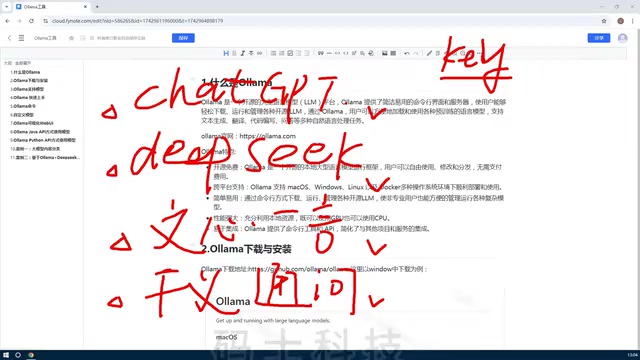
The Ultimate Ollama Tutorial: A Beginner's Guide to Running Large Models Locally for Free
Ollama is an open-source local large model management tool supporting free download and deployment of models like DeepSeek, with command-line and Web UI, cross-platform, automatic GPU/CPU scheduling — ideal for AI beginners and private deployment.
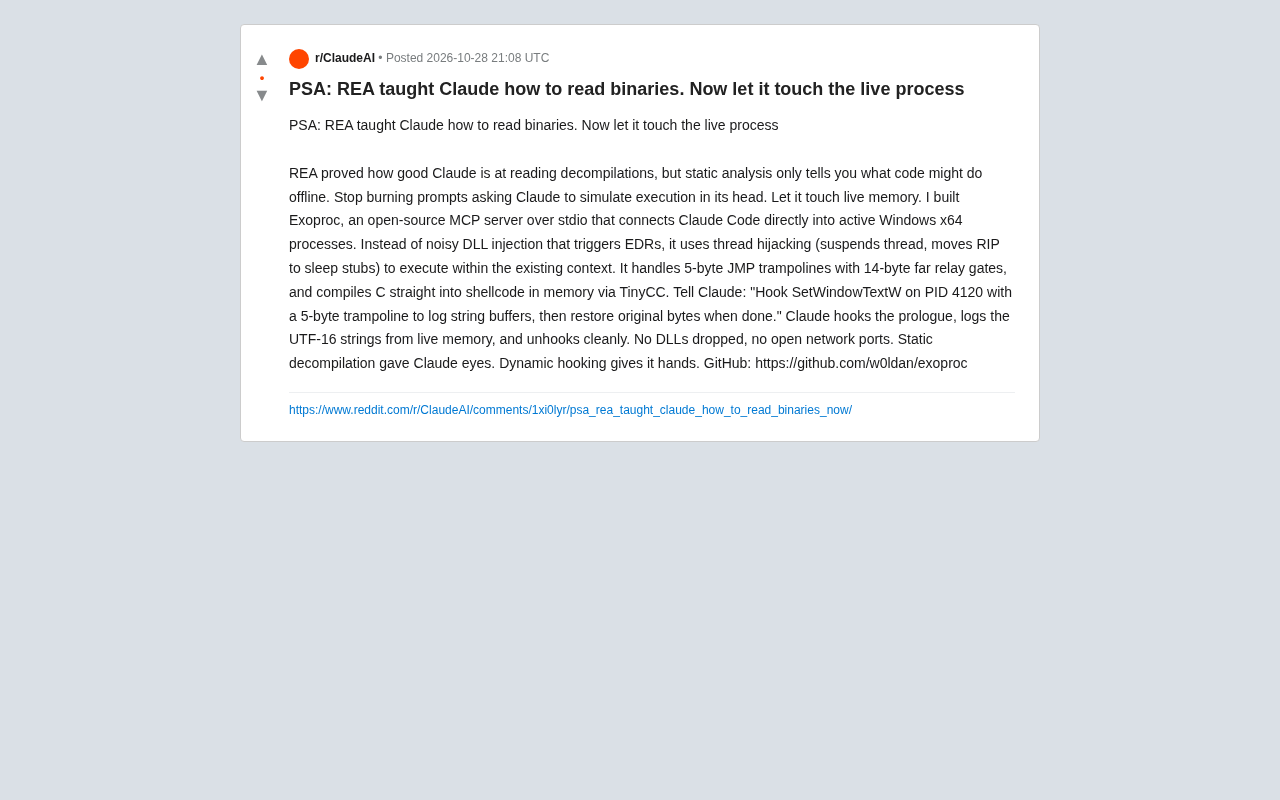
Giving Claude "Hands": Exoproc Open-Source MCP Server Enables Live Process Hooking
Exoproc is an open-source MCP server enabling Claude Code to hook live Windows x64 processes via thread hijacking, bypassing EDR for dynamic analysis. Static decompilation gave Claude eyes; dynamic hooking gives it hands.