A New Framework for Extractive Summarization: How CNN-BiLSTM Tackles Hallucination in Medical Text
CNN-BiLSTM extractive summarization eliminates hallucination in biomedical text by design, not post-hoc correction.
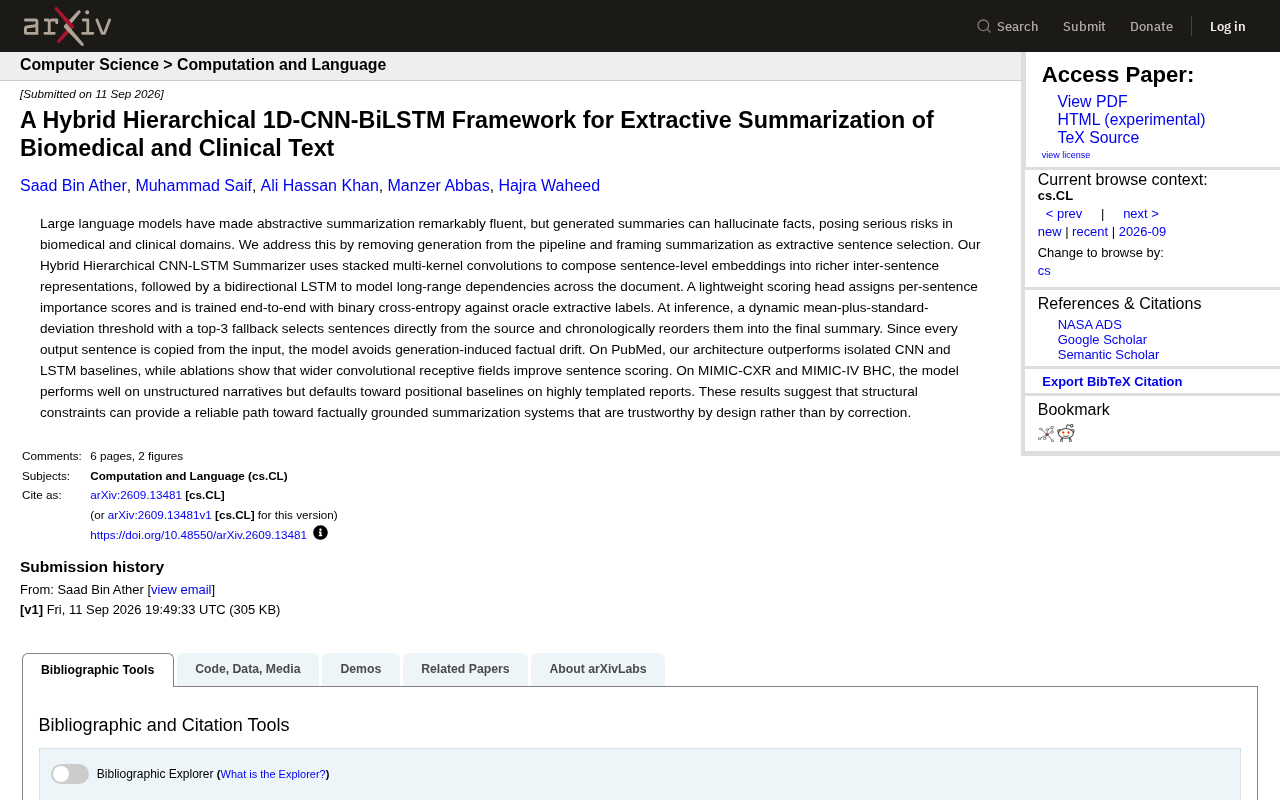
This arXiv paper addresses the hallucination problem in generative LLM summarization for clinical and biomedical text by reframing the task as extractive sentence selection. Rather than generating new text, the model selects sentences verbatim from the source, eliminating factual drift at the architecture level. A hierarchical hybrid of multi-kernel CNN and BiLSTM captures both local inter-sentence semantics and long-range document dependencies, with dynamic thresholding and chronological reordering for final output. The model outperforms single-component baselines on PubMed but degrades to positional baselines on highly templated clinical reports, clearly defining its scope of applicability.
Large language models have made summarization remarkably fluent — but in biomedical and clinical settings, a critical risk persists: abstractive summarization can "hallucinate" facts that never existed in the source text. A fabricated diagnosis or made-up lab value in an otherwise polished clinical summary could directly endanger patient safety. A newly published arXiv paper proposes a fundamentally different approach: eliminating the "generation" step entirely, and reframing summarization as extractive sentence selection.
Why Abandon Generative Summarization
The core problem with abstractive summarization is that the model rephrases content in its own words — a process that inevitably introduces information not present in the source, known as "factual drift." In news or general-purpose text, minor phrasing deviations are tolerable. But in clinical reports, radiology descriptions, and progress notes, any factual distortion can carry serious consequences.
This paper's approach returns to extractive summarization — rather than having a model "write" a summary, it selects the most important sentences directly from the source text. Because every output sentence is copied verbatim from the input, the architecture eliminates fact errors caused by generation at the design level. The authors describe this philosophy as "trustworthy by design rather than by correction" — and this framing is arguably the most important contribution of the work.
Technical Design of the Hybrid Hierarchical Architecture
The proposed model is called the Hybrid Hierarchical CNN-LSTM Summarizer, and its structure can be broken down into several cooperating modules.
Multi-Kernel Convolutions for Inter-Sentence Representation
The model first applies stacked multi-kernel convolutions to combine sentence-level embedding vectors into richer inter-sentence representations. Different kernel widths act as different "field-of-view windows," capturing local semantic relationships between adjacent sentences. Ablation experiments show that wider convolutional receptive fields improve sentence scoring accuracy, confirming that broader contextual coverage helps assess sentence importance.
Bidirectional LSTM for Long-Range Dependency Modeling
Built on top of the convolutional layers, a Bidirectional LSTM (BiLSTM) models longer-range dependencies across the full document. CNNs excel at extracting local features, while BiLSTM captures global document structure. Together they form a hierarchical design — local aggregation first, then global modeling — which is precisely what "Hierarchical" refers to in the model name.
Lightweight Scoring Head and End-to-End Training
A lightweight scoring head outputs an importance score for each sentence. The entire network is trained end-to-end using binary cross-entropy loss against oracle extraction labels, determining whether each sentence should be included in the summary.
Dynamic Threshold Sentence Selection Strategy
The model's inference-time selection mechanism is notably clever. Rather than selecting a fixed number of sentences, it uses a "mean plus standard deviation" dynamic threshold to decide which sentences qualify — only sentences with scores significantly above the document average are retained. A top-3 fallback mechanism is also in place to ensure at least three sentences are selected from any document.
Selected sentences are then reordered according to their chronological order of appearance in the source text to form the final summary. This step is particularly important for clinical text, where progress notes and test results follow a temporal logic — disrupting that order degrades both readability and clinical utility.
Experimental Results and Limitations
The architecture was evaluated across multiple datasets.
On the PubMed dataset, the hybrid architecture outperformed both the standalone CNN baseline and the standalone LSTM baseline, demonstrating the effectiveness of combining the two.
On MIMIC-CXR (chest X-ray reports) and MIMIC-IV BHC (discharge summaries), results showed more nuanced differentiation: the model performed well on unstructured narrative text, but degraded toward positional baselines on highly templated reports. In other words, when a report's format is highly rigid and key information consistently appears in fixed positions, the complex model offers little advantage over simple heuristics like "just take the first few sentences." This finding honestly delineates the method's scope of applicability — structural constraints provide the most value when processing free-form text.
Implications for Trustworthy AI
This work's significance extends beyond a single model. At a time when generative AI is sweeping across industries, it reminds us that not every use case calls for "fluent generation." In high-stakes medical settings where error tolerance is extremely low, trading architectural constraints for factual reliability is a tradeoff worth taking seriously.
Extractive summarization sacrifices some linguistic fluency and compression, but gains the verifiability that "every sentence traces back to the source text." For systems requiring regulatory review, legal accountability, or clinical decision support, this "trustworthy by design" philosophy may be far more pragmatic than continually patching generative models after the fact. That said, how to further improve summary coherence while preserving factual integrity remains an open challenge for this line of research.
Related articles

Why Is AI Agent Development So Fragmented? The Real Causes and How to Work Around Them
Why does AI Agent development feel so fragmented? Logic scattered across prompts, configs, and frameworks makes portability nearly impossible. Here's why — and how to cope.
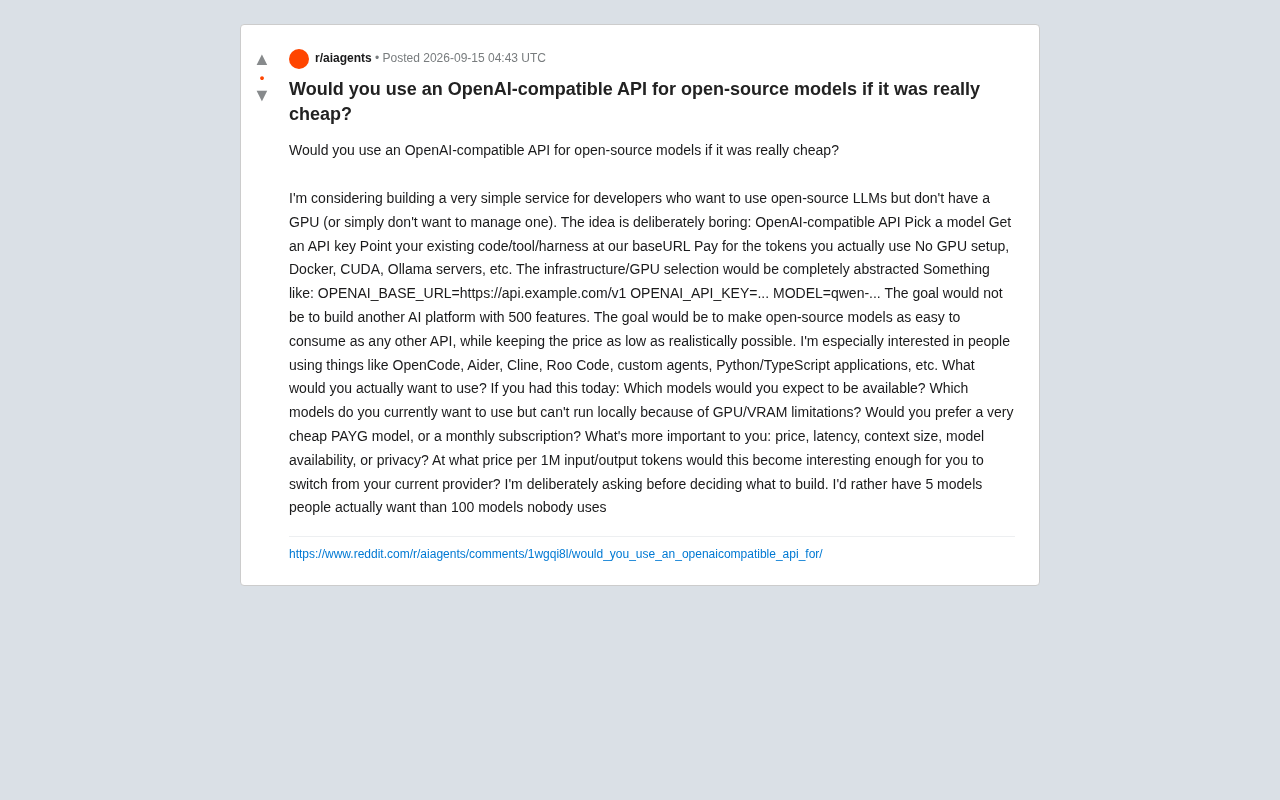
Cheap OpenAI-Compatible APIs: The Opportunity and Pain Points of Cloud-Hosted Open-Source LLMs
A developer explores building a cheap, OpenAI-compatible API for open-source LLMs like Qwen and Llama — no GPU required. Analysis of pain points, pricing models, and market challenges.
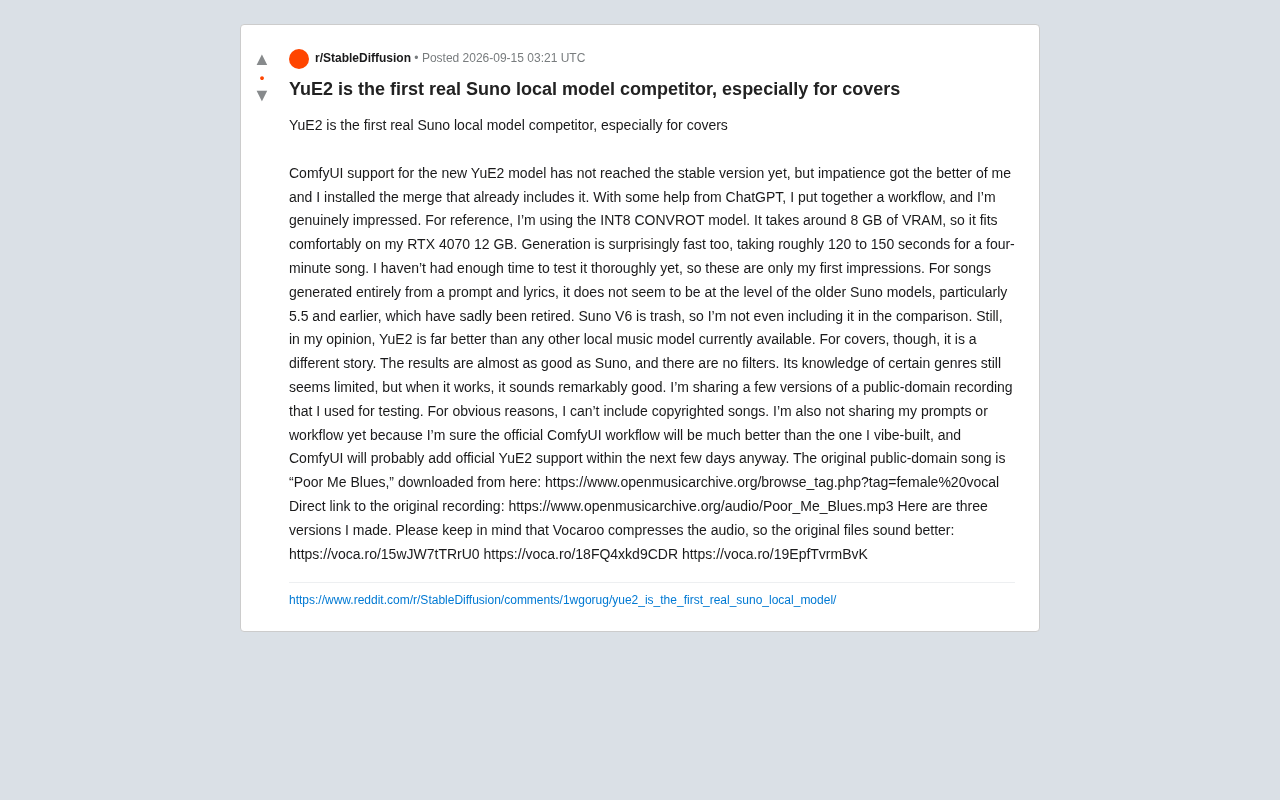
YuE2 Local Music Model Review: The Open-Source Suno Rival That Actually Delivers on Covers
YuE2 is the first local AI music model to seriously rival Suno — runs on 8GB VRAM, delivers near-Suno cover quality, and has no content filters. Based on real Reddit user testing.