ABC Pushes Back Against FCC Investigation: Government Must Not Interfere with Editorial Independence

ABC tells the FCC to stay out of its newsroom as a regulatory probe into The View sparks a First Amendment showdown.
ABC sent a forceful public letter to the FCC pushing back against its investigation into the talk show The View over equal airtime rules. The network argues the probe threatens editorial independence and creates a chilling effect on press freedom. The standoff raises fundamental questions about regulatory overreach, the limits of the First Amendment in broadcasting, and whether government tools are being weaponized against critical media.
Background: A Head-On Clash Between Press Freedom and Regulatory Power
ABC recently sent a forceful response to the Federal Communications Commission (FCC) after the agency launched a formal investigation into ABC's popular daytime talk show The View, citing concerns about airtime provided to political candidates. On Tuesday, ABC wrote to the FCC with a clear message: the government has no place in the newsroom.
The View, founded by Barbara Walters in 1997, has become one of the most politically influential programs in American daytime television. Its distinctive format — a panel of women with differing political viewpoints discussing current events — draws particular attention during presidential election cycles. In the lead-up to the 2024 election, Democratic presidential candidate Kamala Harris appeared on The View for an interview, while Republican candidate Donald Trump repeatedly declined to participate. This asymmetry became one of the direct triggers for the FCC investigation. The show's viewership skews toward urban women, and it consistently ranks among the top daytime talk programs — its political mobilization power pushing it well beyond the boundaries of ordinary entertainment media.
Established in 1934, the FCC is an independent federal agency responsible for regulating broadcast, television, cable, satellite, and telecommunications. It is composed of five commissioners nominated by the president and confirmed by the Senate. Its authority derives from the Communications Act, and its core functions include spectrum allocation, broadcast license approval, and content compliance review. Notably, the scope of the FCC's regulatory power has evolved dynamically over nearly 90 years.
Historically, the FCC enforced the Fairness Doctrine (1949–1987), which required broadcasters to present balanced viewpoints on controversial public issues. Formally established in 1949, it mandated that licensed broadcasters give reasonable opportunity for opposing views on matters of public importance. In 1987, however, the Reagan-era FCC under Chairman Mark Fowler abolished it, arguing that the doctrine actually suppressed rather than promoted public debate — because broadcasters, fearing compliance risk, avoided controversial topics altogether. After its repeal, conservative political talk radio, epitomized by Rush Limbaugh, exploded in popularity. Critics argue this trend accelerated the political polarization of American media. This historical precedent illustrates how regulatory tools are deeply intertwined with the media policy preferences of whoever holds power. The partisan composition of FCC commissioners directly shapes its enforcement priorities — by convention, the majority of seats belong to the party in power, making it difficult to fully decouple FCC enforcement from partisan politics.
The FCC's regulatory actions in recent years have displayed a clear political cyclicality. During the Biden administration, the FCC focused on broadband infrastructure investment and restoring net neutrality. During Trump's first term, it prioritized media ownership consolidation and stepped up compliance scrutiny of left-leaning outlets. Media law scholars describe this drift as a variant of "regulatory capture" — except what gets "captured" is not industry interests, but the political preferences of the ruling party.
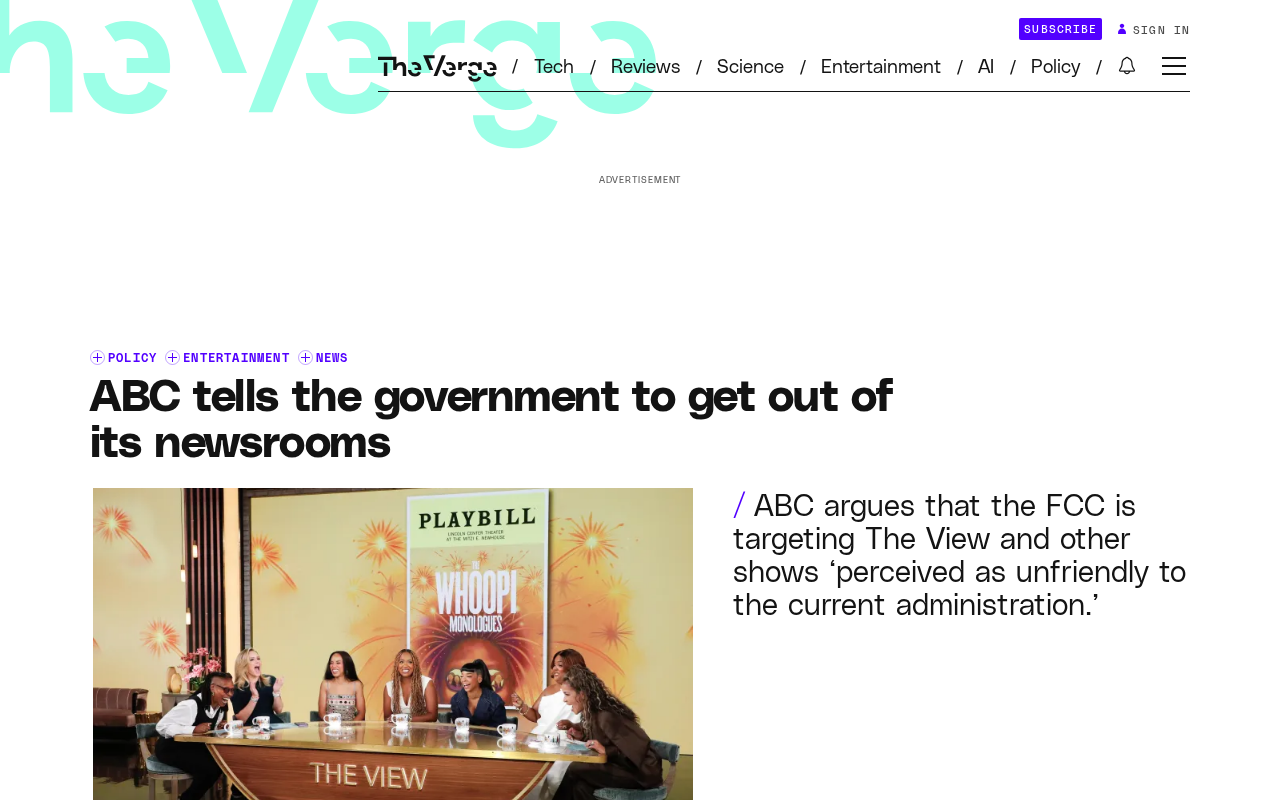
ABC's letter cuts to the heart of this dynamic: the network argues that the FCC's actions represent a threat to editorial independence, effectively targeting programs "perceived as unfriendly to the current administration." This framing transformed what appeared to be a routine compliance inquiry into a major public debate about the First Amendment and the boundaries of press freedom.
The Core Controversy: Rule Enforcement or Targeted Pressure?
Surface Justification and Deeper Suspicions
The FCC's investigation into The View nominally concerns whether the program complied with fairness principles in allocating airtime to political candidates. The Equal Time Rule in the American broadcast regulatory framework does require that licensed broadcasters who give airtime to one political candidate must offer equivalent opportunities to opposing candidates.
The Equal Time Rule stems from Section 315 of the Communications Act of 1934. It requires licensed broadcasters who provide airtime to one legally qualified candidate to offer "equal opportunities" to other candidates for the same office. The rule does not mandate identical amounts of airtime but prohibits discriminatory treatment. Its exemptions are broad: bona fide news interviews, live news coverage, news documentaries, and on-the-spot news events are all exempt — and whether The View qualifies for these exemptions is the crux of the dispute. It is worth noting that the rule was temporarily suspended in the 1960s to allow the historic Kennedy-Nixon televised debates, demonstrating that its application has always been subject to political flexibility and interpretive discretion.
Daytime talk shows like The View have long occupied a legal gray zone under American broadcast law. A 1959 Congressional amendment explicitly exempted "bona fide news" programs, but talk shows had not yet become a mainstream media format at the time, and legislators could not have anticipated their political influence. As The View, Today, and similar programs have come to play an increasingly important role in election coverage, their legal classification has grown more complex: they blend journalistic elements like interviews and reporting with hosts' personal political commentary, defying easy categorization under existing legal frameworks. Whether a talk show more closely resembles a "news program" or a "candidate platform" allows for considerable interpretive elasticity. If the FCC were to classify The View as a "candidate platform" rather than a news program, it would set a precedent for comprehensive scrutiny of similar programs — with implications far beyond this single case.
This regulatory dilemma is further amplified in the digital media era. Netflix, YouTube, and podcast platforms host a vast amount of politically influential interview content that is entirely exempt from Section 315 of the Communications Act — because these platforms do not hold FCC broadcast licenses, they fall outside the Equal Time Rule entirely. This institutional asymmetry means that regulated traditional broadcasters face complex compliance risks when hosting political candidates, while competing streaming platforms face none. Critics argue this not only creates unfair competition but may prompt regulated media to reduce political content to avoid risk — actually diminishing the public discourse function of traditional broadcasting.
The root of this institutional gap lies in the severe lag in American media regulation. The Telecommunications Act of 1996 was the most recent systematic revision of the 1934 Communications Act — yet YouTube, Twitter, and Netflix streaming services all emerged in the years that followed. In this legislative vacuum, the FCC has had to rely on administrative interpretation to stretch laws designed for the era of wireless broadcasting to apply to streaming, social media, and podcasts. The resulting interpretive elasticity simultaneously grants regulators discretionary latitude and creates institutional loopholes for the political use of administrative power.
ABC's response emphasized that when such investigations are selectively deployed to pressure outlets with particular viewpoints, they become a tool for silencing the press through a "chilling effect." ABC argues that the real problem is not the rule itself, but its targeting — why are programs critical of the current administration being singled out?
Editorial Independence: A Line That Cannot Be Crossed
The key phrase in ABC's letter is "editorial independence." In journalism, editorial independence means that a news organization's content decisions are free from government or outside interference — it is the foundational principle upon which the industry operates. ABC made clear that the FCC's investigation has crossed this line.
When regulatory agencies use compliance reviews as a cover for content interference, media organizations face a significantly heightened risk of self-censorship and deliberately avoiding sensitive topics. This is precisely what legal and communications scholars define as the "chilling effect." As a constitutional law concept, the chilling effect was systematically articulated by Supreme Court Justice William O. Douglas in the 1952 case Wieman v. Updegraff. Its core logic: the government need not directly prohibit a form of expression; it only needs to create sufficient uncertainty and potential punitive risk to prompt rational actors to voluntarily abandon constitutionally protected speech.
The empirical record of this effect in broadcast media is particularly rich. A systematic analysis by Stanford scholars of American broadcast content from the 1980s through the 2000s found that in the six months following an FCC public investigation of a media group, other uninvestigated stations within the same group reduced airtime for political discussion programs by an average of approximately 18%. This "spillover chilling effect" demonstrates that the deterrent impact of an investigation is not limited to the target — it diffuses across the entire media market. After the FCC launched an investigation into Clear Channel in 2003 over broadcast indecency, the group voluntarily pulled several programs without any enforcement order, making it one of the most prominent modern examples of the chilling effect in media regulation.
From a comparative media systems perspective, democracies like the UK, Germany, and France also have broadcast content regulatory bodies, but all use independent appointment mechanisms, open review processes, and explicit content classification standards to limit government intervention in editorial judgment — the core design logic being to preserve regulatory power while minimizing the institutional risk of chilling effects.
In broadcast regulation, the chilling effect is particularly pronounced — broadcasters are acutely sensitive to regulatory investigations because they hold licenses requiring periodic renewal. The Supreme Court has acknowledged in multiple rulings that the chilling effect erodes First Amendment protections, treating it as a key factor in assessing whether government action is unconstitutional. ABC's explicit invocation of the chilling effect in its letter is both a legal strategy and a warning signal to fellow journalists and the public. What ABC is really worried about is not the fate of one program, but whether the free space across the entire news ecosystem will be incrementally compressed.
The Deep Tension Between Media and Government: A Battle Over the Boundaries of Power
Can Regulatory Tools Become Political Weapons?
This incident is not an isolated case — it is a microcosm of the ongoing tensions between American media and government. The FCC holds substantial authority over broadcast license approval and renewal. Licensed broadcasters must apply for renewal every eight years, and licenses can be revoked or denied if stations are found to violate public interest standards. This means any investigation can create overwhelming implicit pressure on the target — even if the investigation ultimately goes nowhere, its mere initiation sends a powerful deterrent signal to the market.
Critics' concern is precisely the risk of abuse: once regulatory tools can be selectively deployed to pressure media outlets, regardless of their political orientation, it erodes the informational pluralism on which democratic societies depend. ABC's public pushback is, at its core, a direct challenge to this potential overreach.
The First Amendment Under Real-World Pressure
The First Amendment to the U.S. Constitution, which took effect in 1791, explicitly prohibits Congress from making any law "abridging the freedom of speech, or of the press." This protection has been extended to federal administrative agencies through the incorporation doctrine. In the media context, the First Amendment protects not just individual speech but also the editorial autonomy of news organizations — the Supreme Court established in Miami Herald Publishing Co. v. Tornillo (1974) that media outlets have the right to refuse to publish opposing viewpoints, effectively confirming that editorial judgment is not subject to government compulsion.
However, broadcast media has long been subject to more regulatory constraints than print media, on the grounds that it uses the public airwaves. This differentiated constitutional framework was established in the Supreme Court's 1969 ruling in Red Lion Broadcasting Co. v. FCC — decided 8-0 — which held that because the radio spectrum is a scarce public resource, the government may require broadcasters to bear greater public interest obligations than print media, the so-called "scarcity doctrine."
Yet this principle faces a fundamental challenge in the internet age. The widespread availability of broadband has technically undermined the premise of physical spectrum scarcity — a person posting political commentary on YouTube does not occupy any finite public resource, and digital information transmission is not physically constrained by total spectrum availability. Federal Seventh Circuit Judge Richard Posner and others began questioning the constitutional foundations of the scarcity doctrine as early as the 1990s. If courts ultimately conclude the doctrine is outdated, the FCC's authority over broadcast content could face significant curtailment — and the legal outcome of ABC's confrontation with the FCC could become an important catalyst for reconsidering this constitutional principle.
This institutional dilemma reflects a deeper problem of legislative lag. Some legal scholars argue that fundamentally resolving the issue requires Congress to enact new legislation clearly distinguishing regulatory frameworks for traditional broadcasting, cable television, internet platforms, and streaming services — rather than relying on the FCC to make uncertain analogical interpretations on a case-by-case basis.
In an era of political polarization, the fundamental question of how far the government can intrude into media content is once again on the table. For news organizations, defending editorial independence is not merely about protecting their own interests — it is about the public's basic right to access diverse information. ABC's choice to write a public letter rather than negotiate privately is itself a clear statement of intent: to bring the dispute into the open and seek broader public support.
Industry Implications: Can Reasonable Regulation and Press Freedom Coexist?
The Delicate Balance Between Self-Regulation and External Oversight
This episode is a reminder that the media industry must maintain a delicate balance between self-regulation and external oversight. Reasonable regulation helps maintain a fair public communications environment; but excessive or selective regulation can fundamentally undermine the foundations of press freedom.
How to design regulatory mechanisms that prevent abuse without infringing on editorial independence remains a long-term challenge for all regulators. Transparent, neutral, and predictable regulatory standards are the only path to earning the trust of both media organizations and the public.
Reference Value for the Global Media Ecosystem
Although this incident occurred in the United States, the tension between governments and media is a challenge faced globally. Practices vary significantly across countries in terms of press freedom, regulatory authority, and content governance. ABC's public pushback offers a vivid case study of how a mature democracy responds to conflicts between government and media.
For readers interested in the intersection of technology, media, and public policy, the subsequent developments — whether the FCC adjusts its investigative direction, whether ABC pursues legal action — are worth following closely. What is at stake is not just the fate of one television network or one program, but an important test of the boundaries of information freedom.
Conclusion
ABC telling the FCC to "stay out of our newsroom" is a clear and public declaration of principle. In the ongoing struggle between regulatory power and press freedom, whether editorial independence can be genuinely protected will directly affect public trust in media and the long-term health of the entire information ecosystem. The outcome of this dispute deserves the continued attention of everyone who cares about media freedom.
Related articles

iPhone Duo Battery Life Tested: One Charge a Day Is Unavoidable, and the Large Screen Is the Culprit
iPhone Duo battery test: heavy use needs at least one charge a day, and about 30% remains after 6.5 hours of screen-on time. How often the large screen is unfolded is key; a MagSafe battery pack helps, and long-term degradation is also worth watching.

Kimi K3.1 Pro Open-Sourced: 2.8 Trillion Parameters Close In on Opus
Moonshot releases the open-source MoE model Kimi K3.1 Pro, with 2.8T total parameters and 104B activated, trailing Opus 5.5 by under 1 point on Terminal Bench 4.0.

Costco Tech Price Guessing: Are Monitors, Keyboards, Mice, and Bose Speakers Worth It?
A YouTube blogger guesses prices of Costco tech products: 2K 180Hz monitor, Logitech keyboard and mouse, Bose speaker, and CyberPower UPS, revealing warehouse-store selection and brand premium.